

Every assumption people make about dating older women seems to arrive pre-loaded with either pity or prurience, and rarely with anything resembling actual information. She’s either desperate for commitment, hunting for a younger man like prey, or carrying so much emotional history that a relationship with her is basically a renovation project. These stories have been repeated so many times they’ve calcified into something that feels like fact, which is the most reliable way to keep a lie alive.
The reality of what it looks like to date a woman in her 40s, 50s, or beyond is considerably less dramatic and considerably more interesting than the mythology suggests. These are women who know their own minds, have usually built something real in the world, and bring a kind of clarity to relationships that can be genuinely disarming to people who are used to things being murkier. That is not a compliment dressed up as a fact – it is just what tends to happen when someone has been alive long enough to stop pretending.
So let’s go through the myths. All seventeen of them. Because apparently we need to.
1. She’s Only After Commitment
The assumption runs like this: she’s older, she’s serious, she’s checking her watch and mentally calculating timelines before the appetizers arrive. It is such a pervasive idea that it shapes how people behave around her before a single conversation has happened. For context on just how distorted that picture is, consider that according to the U.S. Bureau of Labor Statistics, women ages 45 to 54 had median weekly earnings of $1,166 in 2024, placing them at the peak of their earning years – women who have built careers and lives of their own, and whose priorities tend to reflect that complexity.
Older women’s relationship goals vary as widely as anyone else’s. Some are after long-term partnership. Others actively prefer something casual, especially if they have spent years in a serious relationship and emerged from it with a hard-won appreciation for their own company. The idea that age automatically translates to urgency around commitment misunderstands how desire actually works. It’s not a countdown clock that gets louder as you get older. It’s a set of preferences that gets clearer.
What often happens is the reverse of what the myth suggests: older women tend to be more selective and less desperate, precisely because they have already built a life they value on its own terms. The frantic quality that can accompany early-stage dating in your twenties – the need to figure out where this is going, right now – often softens considerably once you are secure in who you are outside of a relationship.
2. She Has Too Much Baggage
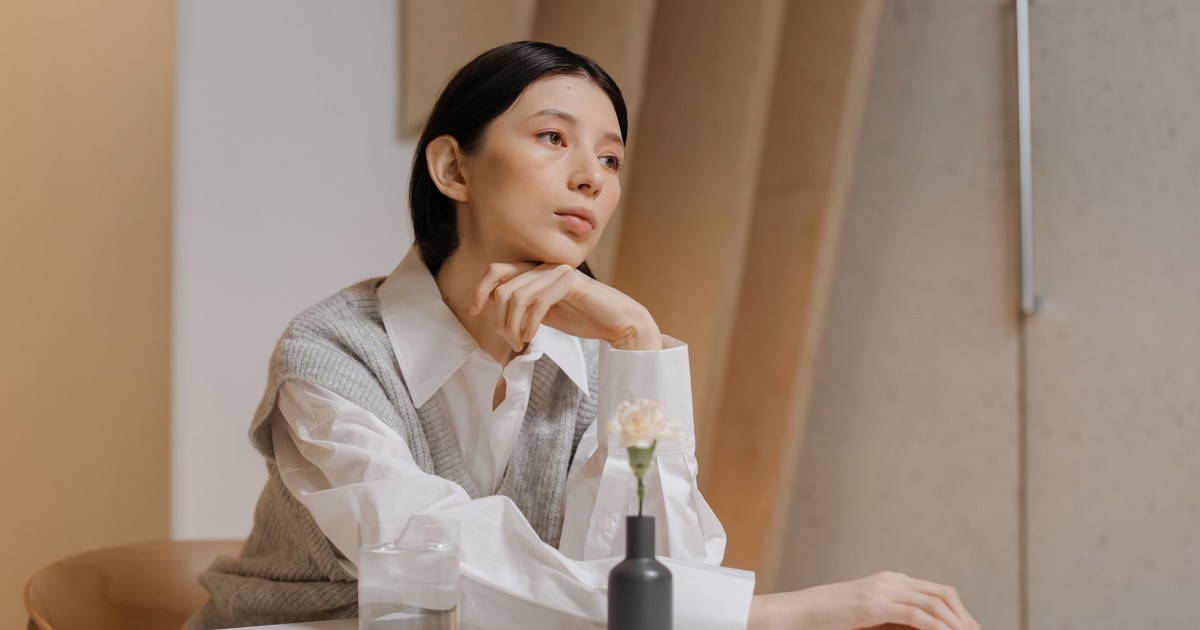
“Baggage” is one of those words that functions as a polite way of saying a person has lived. Everyone over the age of thirty has history. Everyone who has loved someone and lost that love carries something forward. The question is never whether someone has a past, but what they’ve done with it.
Older women have typically had more time to process their experiences, not accumulate them in a way that buries them. The grief of a difficult divorce, the grief of a relationship that ended without ceremony, the slow realization that a long partnership was wrong in fundamental ways – these are not pieces of luggage dragged through the airport of every subsequent relationship. For many women, they are the education. The difference between unprocessed pain and hard-won perspective is enormous, and conflating the two is not a neutral mistake.
The myth also applies an asymmetry that is worth naming. Men with complicated histories are often described as experienced or interesting. Women with the same histories are “a lot.” That is a double standard with a long track record, and it has nothing to do with what it’s actually like to date someone.
3. She’s Set in Her Ways

The image that tends to come with this myth is a woman with a fixed routine and no appetite for anything that disrupts it, someone who has essentially stopped being curious about the world. It is a portrait that manages to be both condescending and inaccurate.
People who have a strong sense of who they are tend to be more open to new experiences, not less. There’s a counterintuitive logic to it: when you are not busy performing a version of yourself for other people’s benefit, you can actually try things. An older woman who has already eaten at every type of restaurant in the city and traveled solo to countries where she didn’t speak the language is not someone who has run out of adventure. She’s someone who pursued it on her own terms.
The “set in her ways” label often mistakes self-knowledge for rigidity. She knows what she wants for dinner and she is not going to pretend otherwise. That is a feature, not a problem.
4. She’s Financially Dependent

This one reads like it was written in a different century, which in fairness to it, it was. The idea that a woman of a certain age would be looking for someone to take care of her financially does not survive even a brief encounter with current data. The provider narrative belongs to a specific model of domestic arrangement that has been eroding for generations. The women most people are actually encountering when dating older women have mortgages in their own names, retirement accounts they manage themselves, and absolutely no interest in a relationship that replicates an economic dependency they’ve worked hard to escape.
What she wants from a partner, if she wants a partner at all, is almost certainly not a paycheck. It is much more likely to be someone worth her time.
5. She’s Competing with Younger Women
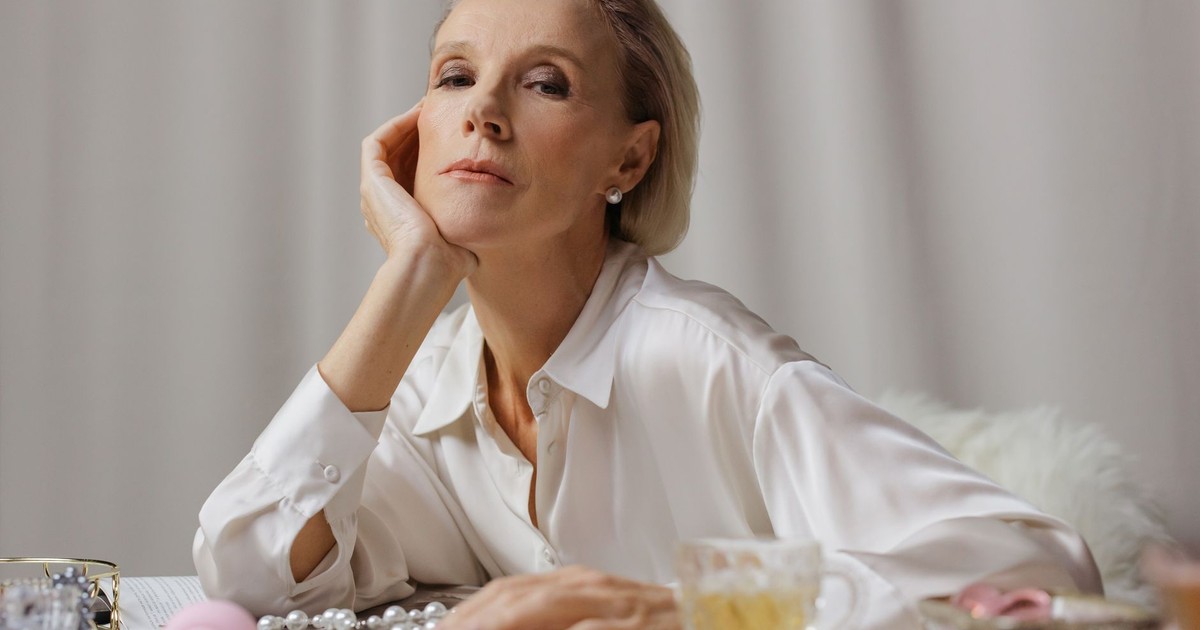
This myth requires older women to be in a state of constant, anxious comparison – measuring themselves against twenty-five-year-olds and coming up short. It is a story that says more about the people telling it than about the women it describes.
A woman who has spent decades figuring out what she actually values in life tends to have made peace with the fact that she is not twenty-five. That peace is not resignation. It is the thing that happens when you stop organizing your self-worth around criteria that were always arbitrary. The competitive dynamic that the myth describes is essentially about insecurity, and if there is one thing that tends to diminish with age when things have gone reasonably well, it is the kind of insecurity that turns other women into threats.
Many older women are actively mentoring younger women, celebrating their achievements, and building communities with them. The catfight narrative is good television. It has very little to do with how most women over forty actually experience their relationships with other women.
6. She’s a “Cougar” Hunting Younger Men

The word “cougar” has done a remarkable amount of work for a single piece of slang. It implies predation, calculation, and a certain kind of desperation dressed up as confidence. It reduces a woman’s romantic choices to a pathology.
The reality of age-gap relationships between older women and younger men is considerably more ordinary than the label suggests. Sometimes there’s genuine chemistry and connection that doesn’t care about the math. Sometimes a younger man approaches an older woman. Sometimes they meet doing something they both love and the age difference doesn’t come up until they’ve already decided they like each other. The predator framing requires a level of calculation that most actual relationships simply don’t involve.
The label also conveniently disappears when it’s an older man with a younger woman, which is statistically far more common. The asymmetry in how we talk about these pairings is a cultural choice, not a biological reality.
7. She Doesn’t Know How to Have Fun
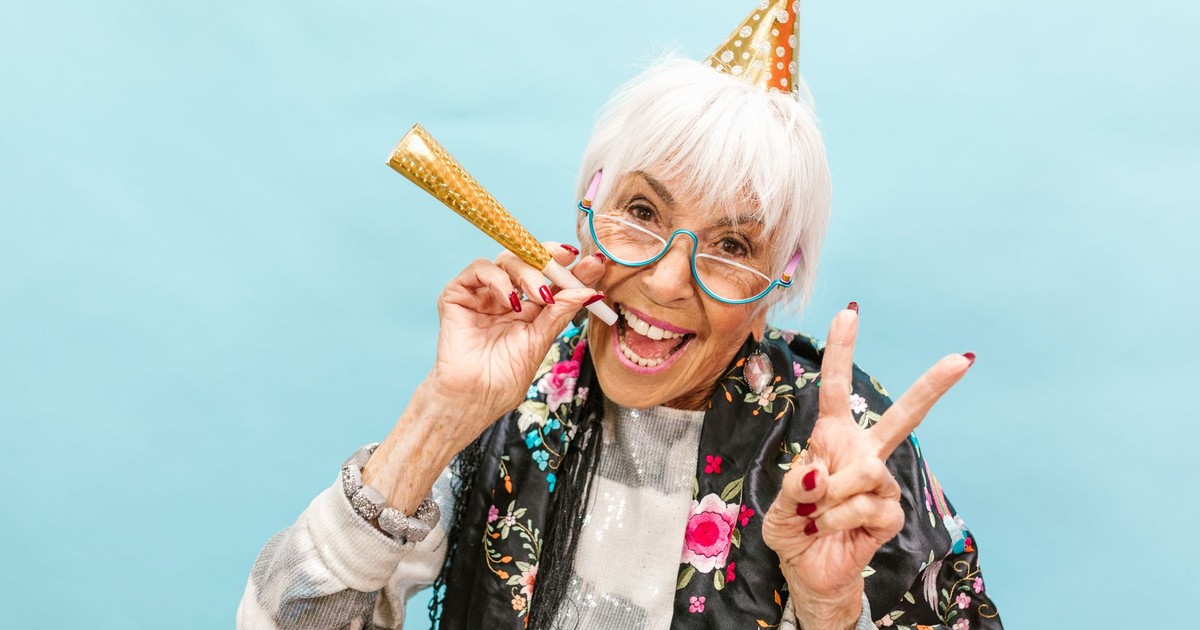
Somewhere in the mythology of older women, someone decided that fun has an expiration date. That after a certain age, the capacity for levity, spontaneity, or genuine play starts to fade. This is a myth so inaccurate it borders on comedy.
Women who have spent decades navigating the world tend to have built up substantial reserves of humor. The observational kind. The kind that comes from having seen enough of human behavior to find it genuinely entertaining. The kind that can make a difficult situation bearable, a boring dinner table interesting, and a partner feel like they’ve found someone they can actually relax with.
What sometimes gets misread as seriousness is simply a woman who is no longer performing enthusiasm she doesn’t feel. That is not the same as not having fun. It is, in fact, the prerequisite for having fun that is actually genuine.
8. She’s Desperate
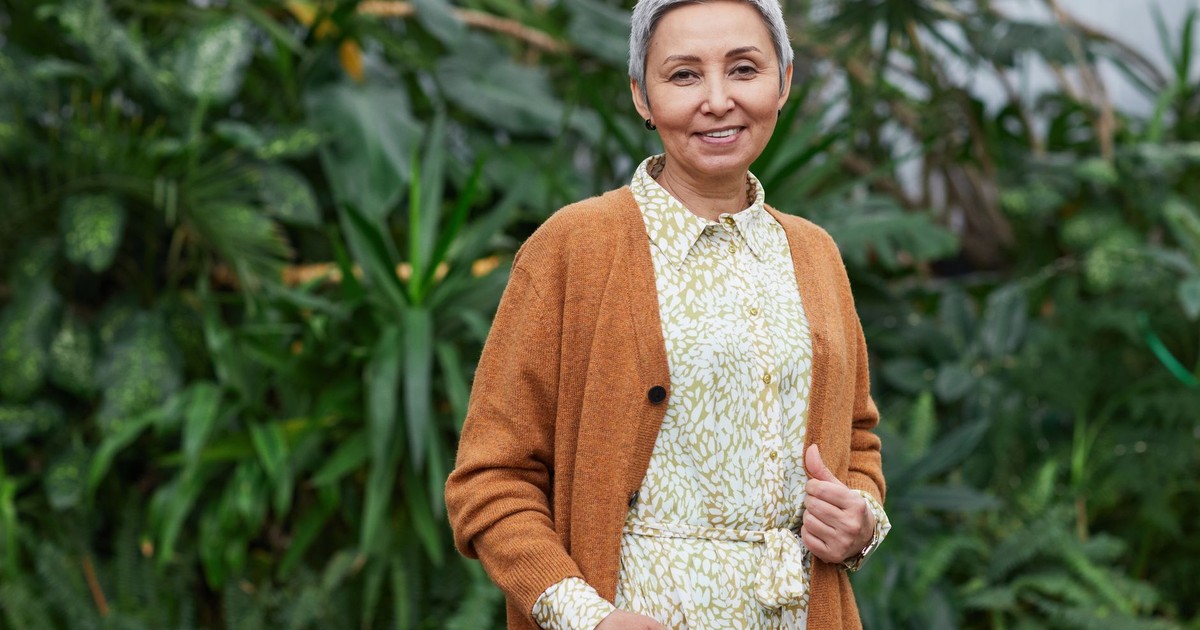
The desperation narrative is the mirror image of the commitment narrative from myth one. In one version, she’s rushing toward marriage. In the other, she’s so relieved to be wanted at all that she’ll settle for anyone. Both versions require her to be fundamentally anxious in a way that removes her agency entirely.
The data tells a different story. A 2020 Pew Research Center report found that 71 percent of women aged 40 and above were not actively looking for relationships, compared to just 42 percent of men in the same age group. The older women who are dating are, by and large, doing so by choice. The ones who have opted out are doing that by choice too. The common thread is agency, which is the opposite of desperation.
The women who get labeled desperate are often simply women who know what they want and say so directly. In a culture that still treats female directness as something between alarming and aggressive, that can get misread. But the misreading is the problem, not the directness.
9. She’s Looking for a Replacement Family

There is a specific version of this myth that imagines an older woman without children eyeing a younger partner with barely concealed biological urgency, and another version that imagines a woman with children looking for someone to step into a ready-made domestic situation. Both versions are reductive in ways that should be obvious.
Older women’s relationship goals are as varied as those of any other group of adults. Some have children and would prefer a partner who’s comfortable with that. Some don’t and have made peace with that. Some are ambivalent in ways that deserve an actual conversation rather than an assumption. The idea that age and female biology collapse into a single, overriding motivation is a fantasy, and not a flattering one.
What an older woman is usually looking for, if she’s looking for anything at all, is connection. The specifics of what that looks like are hers to define.
10. She Can’t Adapt to New Things
Technology, cultural references, changing social norms – the assumption is that an older woman exists at a fixed point in time and everything that happened after some unspecified year is lost on her. This is a myth that requires you to believe that curiosity is a young person’s trait.
Some of the most adaptable people in any room are the ones who have already survived multiple rounds of the world changing on them. They have watched industries transform, adapted to new ways of working, updated their relationships with technology, and generally continued to exist in a world that does not slow down for anyone. Adaptability is not a fixed trait that peaks at twenty-two. It’s a skill that develops through practice, and older women have had more practice.
The cultural reference gap is also considerably smaller than people assume. She has seen things you haven’t and has likely made room in her life for things you love too.
11. She Brings Nothing New to the Table
The version of this myth that surfaces most often is the one that implies an older woman’s best years – her most interesting, most vibrant, most worthwhile years – are already behind her. It is both incorrect and revealing about the values doing the work underneath it.
What an older woman brings to a relationship includes things that take time to develop: a clear sense of what she actually wants and doesn’t want, a capacity for honesty that tends to come with having survived the consequences of dishonesty, and a self-possession that is genuinely attractive in ways that are hard to fake. These are not consolation prizes for youth. They are the things that make relationships actually work.
Research by Banbury and colleagues, reported in 2025, found that older women who dated younger men scored higher in emotional intelligence, physical confidence, and intimate functioning compared to similarly aged women who dated men their own age. The table she brings to is, by several measures, quite full.
12. She’s Not Interested in Physical Intimacy
The “unsexy” attitude towards older women is one of the more persistent myths in Western culture, and it is also one of the least accurate. It operates by treating physical desire as something that belongs to youth, which manages to be wrong about both age and desire simultaneously.
Research in the field suggests that older women in relationships where they hold more autonomy relative to their partners often experience higher satisfaction and increased physical agency. The picture that emerges from the research is not of diminishing interest but of a shifting and often deepening one – desire that is less tied to performance and more connected to genuine pleasure, self-knowledge, and what a partner actually brings to the experience.
The myth persists partly because older women’s desire is rarely represented with any complexity in mainstream culture. Absence of representation is not the same as absence of reality.
13. Her Past Relationships Mean She’s Damaged
The logic runs: she’s had relationships that ended, which means something went wrong with her, which means she is now a compromised product. It is an extraordinary way to describe the normal accumulation of human experience.
Every person who has been in a long relationship and watched it end has learned something from it. Sometimes what they’ve learned is what they genuinely want from a partnership. Sometimes it’s what they will no longer tolerate. Sometimes it’s something harder and more private that takes longer to integrate. None of this is damage. It is biography.
The women who carry their history with the most grace are often the ones who have done the uncomfortable and necessary labor of actually understanding it, which requires time and a willingness to sit with discomfort. That is not a character flaw. It is the opposite.
14. She’s Not Open to a Younger Partner
The “cougar” myth gets the dynamic wrong in one direction. This myth gets it wrong in the other. It assumes that an older woman’s preferences are rigidly age-stratified – that she’s only interested in men her own age or older, and that a younger partner would be a mismatch she’d never entertain.
A 2025 study by Banbury and colleagues found that women, unlike men, could be very satisfied with both older and younger partners, with no significant effect of partner age on women’s overall relationship satisfaction. The women aren’t the ones doing the rigid age-sorting. That finding tends to complicate the myth considerably.
What an older woman is interested in is not an age bracket. It is someone who is actually worth her time, which is a criterion that doesn’t come with a date of birth requirement attached.
15. She’ll Be Embarrassed by the Age Gap
The assumption here is that a woman dating someone younger, or someone significantly older, is perpetually braced for judgment – mortified by the math, constantly preoccupied with what other people think. This requires her to be both self-conscious and somewhat lacking in the self-possession that life tends to build.
Women who have spent decades making choices that other people had opinions about – career choices, parenting choices, relationship choices – often develop a fairly robust immunity to external judgment. Not because they are reckless, but because they have learned that organizing your choices around other people’s approval is an exhausting and ultimately futile project. An age gap, visible at a glance, is not the catastrophe the myth suggests. It is just something that exists, and she knows it.
The social disapproval that sometimes accompanies age-gap relationships is real and worth acknowledging. But it falls very differently on someone who has been weathering other people’s opinions for forty-odd years than on someone for whom it is new.
16. She Has No Social Life Outside the Relationship
This is a myth that imagines an older woman whose world has contracted – fewer friends, fewer commitments, fewer places to be – and who would therefore organize herself entirely around a relationship. It is both inaccurate and oddly sad.
Women in their forties and fifties are, in aggregate, building and maintaining some of the most substantial social networks of their lives. They have friendships that have been tested by distance, children, career changes, and years of ordinary difficulty and are still standing. They have communities around their interests, their work, their families. They have, in many cases, finally figured out how to stop making time for people who don’t deserve it, which means the social lives they do have are unusually high quality.
A relationship with an older woman is not a rescue mission into isolation. She had plans before you and she will have plans after the dinner.
17. She’s Looking for Someone to Complete Her
The completing-each-other model of romantic partnership – the idea that you are half a person until someone else arrives to make you whole – is appealing in films and largely disastrous in practice. It also has nothing specific to do with age. But it attaches particularly stubbornly to older women who are dating after a period of being single, as if solitude must mean incompleteness.
An older woman who has navigated years of independent life – raising children, building a career, maintaining friendships, managing her own finances, surviving her own losses – is not a person with a missing piece. She is a complete person who may or may not want company. The distinction matters enormously, because the partner she chooses is not completing her. They are adding to something that already has weight and shape and a clear sense of itself.
Research by intimacy psychologist Dr. Justin Lehmiller found that women at least ten years older than their partners were in the most stable and happiest relationships, and that those younger male partners showed higher levels of commitment. The picture that emerges is not of a woman with a deficit. It is of a relationship between two complete people who decided the math was worth it.
Read More: What’s the Ideal Age Gap for a Lasting Relationship?
What the Myths Are Actually About
The persistence of these stories doesn’t reflect what dating older women is actually like. It reflects what a culture that has historically undervalued women over forty needed to believe about them – that they were past some kind of usefulness, that their romantic lives were either pitiable or predatory, that the shelf had an expiration date printed on it somewhere.
None of that holds up under the weight of any real evidence or any real conversation. What you actually find, consistently, is a person who has had enough time to figure out who she is and enough experience to know that pretending otherwise is a waste of everyone’s time. That is not a consolation prize for youth. It is, for a lot of people, the thing they were looking for all along.
The myths will probably outlast this correction, the way myths generally do. They are too useful as a way to organize anxiety about aging, about female independence, about what women are supposed to want and when they are supposed to stop wanting it. But they are myths. And the distance between what people assume about dating older women and what they actually find, when they stop assuming, is usually significant enough to be worth paying attention to.
AI Disclaimer: This article was created with the assistance of AI tools and reviewed by a human editor.