
Every woman has a list. At twenty-two, it probably ran to physical height, a certain kind of confident smile, and some vague notion of “ambitious.” By thirty-five, that same woman has likely revised it so thoroughly the original is basically unrecognizable. By forty-five, she may have burned the list entirely and started from scratch with entirely different criteria – ones that have nothing to do with jaw lines and everything to do with how someone speaks to a waiter.
The evolution in women’s dating priorities across the decades doesn’t happen in a dramatic moment of clarity. It accumulates. It’s the relationship that looked perfect on paper and then quietly hollowed her out. It’s the years she spent working on herself and the creeping realization that she now wanted someone who could meet her there. It’s the morning she woke up alone and noticed, with mild surprise, that she’d slept better than she had in years. Experience doesn’t lower standards. It just swaps out the superficial ones for the ones that actually hold up.
What drives women’s dating priorities with age is not disillusionment, and it’s not cynicism – even when it looks that way from the outside. It’s a kind of precision that only develops when you’ve paid close enough attention to what costs you and what doesn’t. Here are twelve reasons those priorities evolve.
1. Emotional Availability Stops Being Optional

At twenty-five, emotional unavailability can pass as depth. The brooding man who can’t quite articulate his feelings reads as complex. By the time a woman is in her thirties or forties, she has spent enough time decoding silences, managing moods that were never explained to her, and performing emotional labor for people who wouldn’t have recognized it if she’d invoiced them for it. The mystique has evaporated. What she’s looking at now is a communication problem, and she knows how much those cost.
Emotional availability means something specific: a partner who can name what he’s feeling without three days of stewing first, who actually listens when she talks rather than waiting for his turn to speak, and who steps up for difficult conversations rather than disappearing into work or a screen. Women increasingly value partners who can listen, empathize, and communicate openly – emotional intelligence means being present, validating feelings, and avoiding dismissive behavior. Younger women often say they want this too, and they do. Older women know how to recognize its absence faster and are far less willing to wait it out.
This is the dating priority that explains why a woman in her forties will walk away from a relationship that looks fine from the outside. The house can be beautiful. The vacations can be nice. If the person across the table can’t actually meet her, none of the scenery matters much.
2. Financial Status Falls, Financial Compatibility Rises

Dating in your twenties often treats financial status as a proxy for security, ambition, and future stability. All of that is understandable. What changes, as women build their own financial lives and watch enough marriages implode over money, is a more sophisticated read on what financial compatibility actually means.
According to Hinge Labs research, 72% of women say they prefer effort over income, and 84% value well-planned dates more than expensive ones. That’s not just a romantic sentiment – it’s a data point about what women have learned matters in the long run. A man who spends lavishly but avoids every practical money conversation, or who carries invisible debt behind a polished surface, is not actually offering security. He’s offering performance. Women who have had to unpick a joint financial life after a relationship ended know that difference viscerally.
What replaces the status question is a more direct one: are we compatible in how we manage money, plan for the future, and share financial decisions? That’s less glamorous, and it is also the right question. The one that determines whether a relationship survives contact with real life.
3. Kindness Gets Promoted to Non-Negotiable

Kindness tends to get dismissed in early dating as table stakes – obviously everyone wants a kind partner. What changes with age is that women start watching for it in places they didn’t think to look before. Not just how someone treats her, but how they speak about their ex, how they treat service workers, what they say about colleagues who can’t hear them, how they handle losing an argument.
Research from Ipsos found that while young men believe women prioritize attractiveness and financial status, women actually value kindness and humor more highly. The things that really move the needle – the daily texture of being with someone – are the things that get underestimated at the start. With age, they get weighted correctly.
A cruel wit that presents as clever, a sharpness toward others that gets called honesty, a competitive edge that flattens everyone else in the room – all of these get read much more accurately as warning signs by a woman who has lived with someone long enough to watch those traits turn inward. Kindness is not soft. It is structural. It holds a relationship together across years.
4. Personal Autonomy Becomes a Real Requirement
Women who have spent years building a life – careers, friendships, routines, a home that reflects who they are – arrive at midlife with something concrete to protect. Countries including Canada, Belgium, the Netherlands, and Sweden have seen notable adoption of relationship structures that prioritize personal space and independence. The living apart together arrangement, once considered an eccentricity, has gone mainstream enough to have a name and a research base. It isn’t about keeping emotional distance. It’s about keeping yourself intact within a relationship, which turns out to be how you keep the relationship intact, too.
What this looks like practically is a woman who won’t sacrifice her friendships, her schedule, her creative projects, or her right to a quiet Saturday morning to meet someone else’s idea of what couplehood requires. She’s not asking for a roommate and she’s not asking to be left alone. She’s asking for a partnership that respects the full life she built before the other person arrived, which is a completely reasonable ask that still somehow manages to surprise people.
Women who have lost themselves in relationships – who look back and can barely remember what they liked before a partner reshaped their preferences – arrive at this priority with particular clarity. The ask is love that doesn’t require shrinking.
5. Shared Values Replace Shared Aesthetic
In early dating, it’s easy to mistake shared taste for shared values. You both love the same band, you have the same sense of humor about the same things, you like the same kind of restaurant. That overlap feels like compatibility because it creates connection. It just doesn’t predict how two people will navigate something that actually costs them.
With age, women’s dating priorities move toward the kind of alignment that becomes legible when things get hard: how someone thinks about fairness and responsibility, what they believe about family, how they treat people who have less power than they do, whether their stated values match their actual behavior. Bumble’s 2025 research identifies stability, shared interests, and transparency as big priorities for singles. The transparency piece especially tracks with what older women report wanting – not just someone who says the right things, but someone whose life actually reflects them.
This is also the age at which the question of political and social alignment gets taken more seriously. A relationship can absorb differences in taste. It has a much harder time absorbing fundamentally different beliefs about human dignity, fairness, or the kind of world you’re trying to live in.
6. Time Gets Treated as a Real Currency
At twenty-three, time feels infinite. You can give months to a relationship that’s going nowhere, and there’s a feeling that whatever was lost can be recovered. By thirty-five or forty, the accounting is different. Women with careers, children, aging parents, full social lives, and a genuine sense of who they are have very little surplus attention. Giving time to someone represents a real cost.
This is why women’s dating priorities with age include something that reads as impatience but is really just efficiency: a much lower tolerance for prolonged ambiguity, for relationships that feel like they might be going somewhere but never quite get there, for partners who won’t say directly what they want. Older daters tend to value honesty and are more willing to have deeper conversations about expectations, boundaries, and future aspirations earlier in a relationship. That’s not pressure – it’s time management.
The woman who ends a three-month situationship because she realized it had no future isn’t panicking. She’s budgeting. The time she’s protecting isn’t empty – it’s full of a life she’s already built and wants to keep building, with or without a partner attached.
7. Emotional Labor Gets Weighed
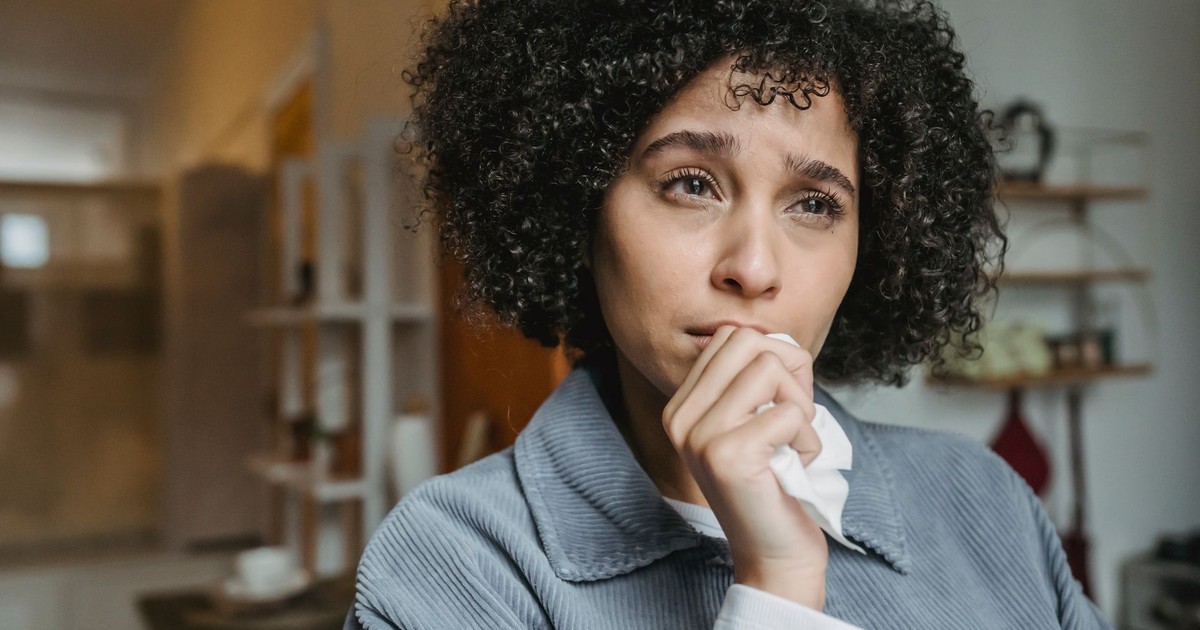
There is a term that has been circulating in recent years – “mankeeping” – and it describes something women have been navigating for decades without a name for it. The dynamic where a woman becomes her partner’s informal therapist, emotional manager, and social coordinator, absorbing labor that is invisible, largely unacknowledged, and almost never reciprocated in kind.
Younger women often tolerate this without fully recognizing it as a structural problem rather than a personal one. With age, the pattern becomes legible. A woman who has watched her own needs consistently orbit a partner’s emotional world, who has spent years translating her partner’s feelings back to him, who has organized every social interaction for two people, starts to recognize the cost clearly. The emotional labor imbalance is one of the leading reasons women exit the dating scene entirely – not because they don’t want connection, but because the version of connection on offer costs too much.
What this changes in dating priorities is simple: women start screening for partners who carry their own weight emotionally. Not men who are perfect, not men who never need support, but men who have a functional relationship with their own interior lives and who are capable of offering genuine reciprocity.
8. Family Clarity Gets Accelerated

In early dating, the question of children, step-families, and long-term family structure tends to hover in the background. Bringing it up too early feels like pressure. Leaving it too late costs real time and genuine heartbreak. Women who have navigated that particular collision – deep emotional investment meeting an unbridgeable difference about children or family structure – tend to move these conversations earlier in subsequent relationships.
This isn’t a sign of desperation or a ticking clock – it’s a sign of having already paid the price of avoiding the conversation. Knowing you want children, or knowing you absolutely don’t, or knowing you’re open to a blended family or certain you’re not, is information. Withholding it to avoid scaring someone off is the move that leads to a year invested in the wrong direction.
The clarity that comes with age on this particular front is actually a form of respect – for her own time, for a potential partner’s time, and for the reality that some incompatibilities can’t be resolved by love alone, no matter how genuine it is.
9. Physical Compatibility Gets Spoken Plainly

One of the stranger aspects of early-twenties dating is how much goes unsaid about physical compatibility. Women often defer to what they assume a partner wants, perform enthusiasm for things they don’t actually enjoy, and avoid direct conversations about what they need – because asking directly seems like too much, or too bold, or just uncomfortable.
With age, those conversations become less fraught. A woman in her forties has generally developed enough comfort with her own body and enough confidence in her right to enjoy what she enjoys that she can say what she means. Nearly 2 in 3 women – 64% – report getting clearer about what they want and need, and refusing to settle for less. That applies to physical compatibility as much as anything else.
This isn’t about a checklist. It’s about the move from hoping a partner figures out what she wants to being willing to say it. That move makes better relationships possible in ways that years of silent performance simply don’t.
10. The Friendship Foundation Gets Prioritized

Women who have watched long relationships decay often locate the moment things went wrong not in a single argument or betrayal but in a slower erasure – the point at which they stopped actually liking the person they were with. They were still in the relationship. They had just run out of things they genuinely enjoyed doing together.
The friendship question – do I actually like this person, independently of the attraction? – becomes more central with age. Would I want to have this person in my life if the romantic component weren’t there? Is there something between us that can survive a Tuesday, not just a date, not just a good week? Women who ask these questions early aren’t killing the romance. They’re checking whether there’s anything under it.
This priority reflects something that younger dating culture doesn’t always reward – the slow, unglamorous process of actually getting to know someone before deciding they’re the person you want to build a life with. Shared laughter, genuine curiosity about each other, the ability to be boring together without it feeling like failure. These are the materials.
11. Reciprocity Gets Required, Not Hoped For
There is a particular form of hope that a younger woman carries into relationships: the hope that a partner who doesn’t quite meet her halfway right now will grow into it, will see what she’s giving and eventually match it, will come around. This hope is not irrational. People do grow. Relationships do evolve. It’s just that by the time a woman has waited out several relationships on that basis, she has the pattern data.
What changes is not pessimism but a recalibration of where the evidence line sits. A woman in her forties wants to see reciprocity in action, not in potential. She watches for whether someone shows curiosity about her life or mostly discusses his own, whether the effort in the relationship runs in both directions, whether she feels genuinely known or just conveniently present. The women who said they preferred effort to income aren’t describing a lowered standard – they’re describing a more accurate one. Effort, in practice, is what reciprocity looks like every day.
12. Choosing Herself First Becomes the Filter, Not the Fallback
The underlying change that drives all of the others is this: with age, women stop treating a relationship as the destination and start treating it as a potential addition to a life they’re already living. Many women in their thirties and forties say they would like a partner but prioritize their careers, families, and personal interests – and the financial independence they’ve built substantially contributes to that capacity to choose.
This does not mean women become indifferent to love. It means that their baseline is no longer defined by its absence. A woman who is genuinely happy alone, who has friendships that sustain her and work that engages her and a home she’s made her own, approaches dating from a position of genuine choice rather than quiet urgency. That changes what she’s willing to accept, what she’s willing to hold out for, and how long she’s willing to wait for the right fit versus settling for an available one.
This is the priority that resolves the others. When a woman is choosing from a full life rather than a lonely one, the filter gets very accurate very fast. What she wants is not just someone to be with. It’s someone worth rearranging her already-good life for – and that is exactly the standard it should be.
What All of This Actually Points To
Women’s dating priorities don’t get harder to meet with age. They get more precise. The woman who screens for emotional availability isn’t being difficult – she’s identified what the absence of it costs. The one who ends an ambiguous situationship quickly isn’t afraid of commitment – she’s protecting time she doesn’t have infinite amounts of. The one who walks away from a relationship that looks fine on paper has learned to read the things paper doesn’t capture.
None of this is a smooth arc. Women carry contradictions into their forties and fifties the same way they did at twenty-five – wanting connection and independence in the same breath, grieving what didn’t work while relieved it ended, feeling entirely sure about what they need and still occasionally second-guessing themselves in the parking lot before a first date. The list evolves, but you don’t stop being human just because you’ve gotten better at it.
Some of these patterns go back further than the most recent relationship does. The woman who spent years tolerating emotional unavailability didn’t learn that tolerance in her last relationship – she brought it with her from somewhere earlier, and recognizing that is usually where the real accounting begins. Women’s dating priorities change with age not because experience makes them colder, but because it makes them honest. About what works, what costs too much, and what they actually want the rest of their life to look like.
Read More: ‘Hypergamy’ a New Dating Trend is Rising in Popularity as 40% of Americans Take Part
Disclaimer: This information is not intended to be a substitute for professional medical advice, diagnosis, or treatment and is for information only. Always seek the advice of your physician or another qualified health provider with any questions about your medical condition and/or current medication. Do not disregard professional medical advice or delay seeking advice or treatment because of something you have read here.
AI Disclaimer: This article was created with the assistance of AI tools and reviewed by a human editor.