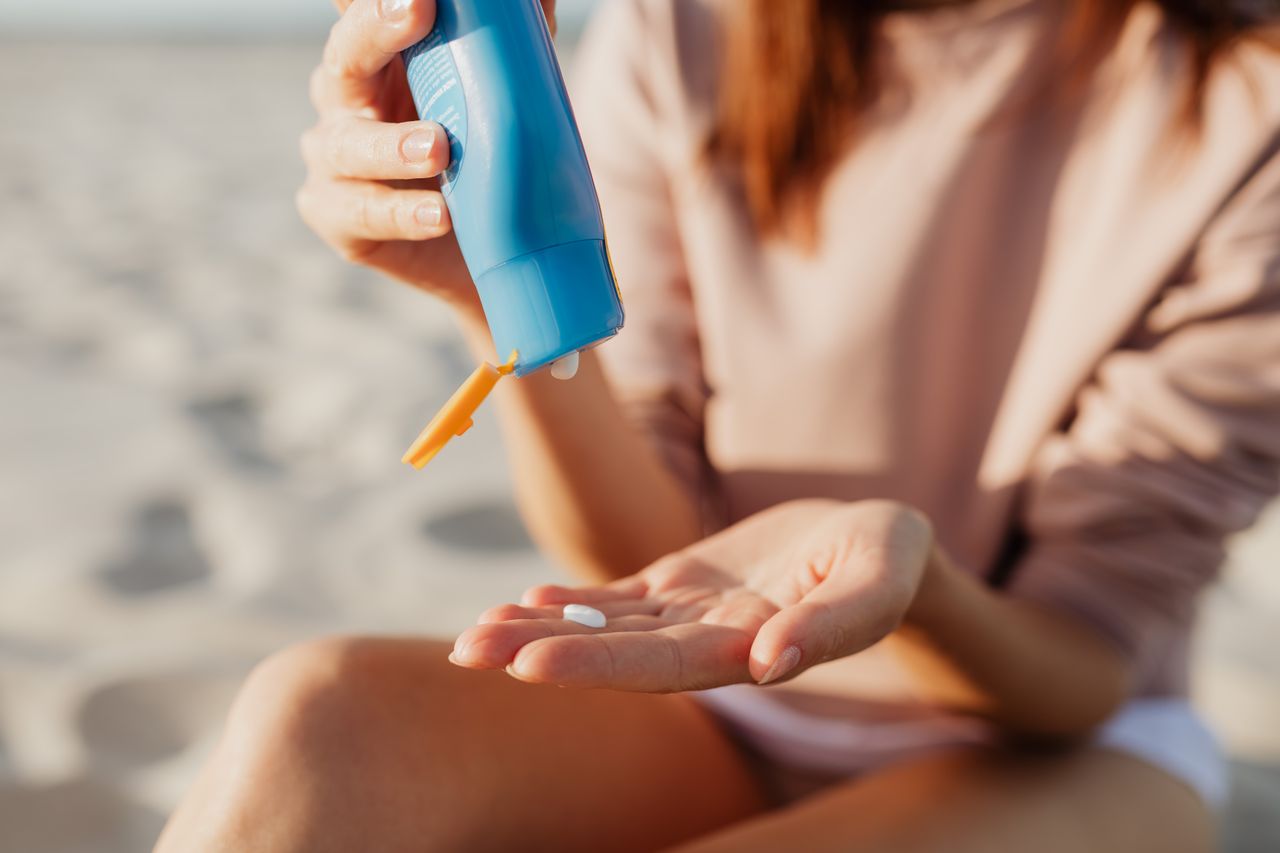

Somewhere between the TikTok video that made you question everything you knew about SPF and the shelf full of sunscreens at the drugstore where every bottle claims to be the best, a lot of genuinely dangerous misinformation has taken root. And not in a fringe, tinfoil-hat way – in a “my coworker told me, and it sounded plausible, and now I’ve been skipping sunscreen on cloudy days for three years” kind of way. The myths are convincing because they contain just enough truth to seem reasonable. That’s what makes them worth addressing seriously.
Skin cancer is the most commonly diagnosed cancer in the United States, and sun exposure is its leading cause. Dermatologists have been watching, with some frustration, as social media accelerates the spread of ideas that range from slightly misleading to genuinely harmful. False claims suggesting that sunscreen causes skin cancer spread widely on social media, leaving some people questioning whether sun protection is even necessary. The fact that this question is being asked in 2026 tells you something about the power of a confident voice in a thirty-second video.
What follows is a straightforward accounting of the most common myths – and what the evidence actually says. Not to lecture, but because getting this wrong has real consequences for your skin across the course of a lifetime.
1. Sunscreen Causes Skin Cancer

This is the big one, the myth that has probably done more damage than all the others combined. It started gaining traction after a 2021 product recall and has not let go since. Hundreds of creators posted videos arguing that harmful chemicals in sunscreens, not the sun itself, cause cancer – a narrative that took hold after Neutrogena spray sunscreens and one Aveeno product were recalled due to the presence of benzene, a known carcinogen. The recall was real. The conclusion drawn from it was not.
Johnson & Johnson confirmed that benzene is not a sunscreen ingredient – it was a contamination issue in specific aerosol products, not evidence that sunscreen chemistry causes cancer. There is no medical evidence that sunscreen causes cancer. The National Academies of Sciences, Engineering, and Medicine have concluded that “sunscreen use is not linked to higher rates of any type of cancer” – in fact, sunscreen helps protect against basal cell carcinoma, squamous cell carcinoma, and melanoma.
Elizabeth Buzney, M.D., outpatient clinical director at Brigham and Women’s Hospital and assistant professor at Harvard Medical School, has stated that there is no evidence wearing sunscreen causes skin cancer, and that what is known is that the sun causes most skin cancers. Studies have shown that consistent sunscreen use can reduce melanoma risk by 50 percent and squamous cell carcinoma risk by 40 percent. Those are significant numbers, and they come from decades of controlled research.
2. You Don’t Need Sunscreen on Cloudy Days
Clouds are reassuring. They feel like shade. They are not shade, at least not the kind your skin needs. Up to 80 percent of UV rays can penetrate clouds, so sun protection on cloudy days remains essential. Overcast skies create a false sense of security because the sun feels less intense – but UVA rays, which are responsible for premature aging and skin cancer, still penetrate cloud cover.
This is one of those myths that accumulates damage slowly. If you skip sunscreen every time the sky is grey, you are still receiving UV exposure on those days – just without realizing it. Sunburn and sun damage can occur in cold, cloudy conditions, not just hot, sunny weather. The UV index does not drop to zero when the sun goes behind a cloud. It drops somewhat, but not enough to make protection unnecessary.
3. SPF 100 Means Double the Protection of SPF 50
It sounds logical. Higher number, more protection. But SPF math does not work the way most people assume. No sunscreen blocks 100 percent of the sun. Sunscreen with an SPF of 100 blocks only 1 to 2 percent more of the sun’s rays than one with an SPF of 30, which already blocks 97 percent of rays. The gap between SPF 50 and SPF 100 in real-world protection is genuinely small – smaller than the gap between SPF 15 and SPF 30.
What matters far more than chasing a higher number is how often you apply and how much you use. Protection typically lasts two hours or less for all sunscreens, regardless of whether the bottle says 30, 50, or 100. If you apply SPF 100 at nine in the morning and assume you’re covered until sunset, you’re not. The number on the bottle is measured in controlled conditions. Real life involves sweating, touching your face, and toweling off after a swim.
4. Sunscreen Blocks Vitamin D Production
This myth has more scientific texture than most, because it starts from a real biological process: UVB rays do stimulate vitamin D synthesis in the skin, and sunscreen does reduce UVB exposure. The leap from there to “therefore, don’t wear sunscreen” is where things go wrong.
The actual research tells a more careful story. The Australian Sun-D Trial, the first field study assessing the impact of long-term daily application of higher SPF sunscreen on vitamin D levels, randomly assigned 639 participants to routine SPF 50+ application or discretionary sunscreen use. Vitamin D levels were lower in the group using sunscreen daily – a difference the researchers described as modest – and those participants showed a higher rate of vitamin D deficiency by the study’s end. The trial’s lead investigators were unambiguous: this does not mean people should stop using sunscreen. It does mean that regular high-SPF users may want to discuss vitamin D supplementation with their doctor.
For individuals with documented vitamin D deficiency, supplementation is a far safer solution than deliberate unprotected sun exposure. A vitamin D supplement carries no skin cancer risk. Intentional tanning does.
5. People with Darker Skin Don’t Need Sunscreen
Melanin does offer some natural protection – that much is accurate. The conclusion that darker-skinned people can therefore skip SPF entirely is not. While melanin provides some natural protection against sunburn and skin cancer, no skin type is immune to the harmful effects of UV radiation. The natural protection melanin provides is estimated to be the equivalent of roughly SPF 13, which falls well below the SPF 30 minimum recommended by dermatologists.
There are real consequences to this myth beyond skin cancer risk. UV exposure causes hyperpigmentation, photoaging, and uneven skin tone regardless of skin type, and darker skin tones are actually more prone to certain forms of post-inflammatory hyperpigmentation that sun damage worsens. The same sunscreen guidelines apply to everyone, regardless of skin tone. The myth has also caused harm within communities where vitamin D deficiency is already more common, discouraging people from protecting their skin under the belief that sunscreen will worsen an existing deficiency – which, as the research above shows, is a more complicated picture than the myth allows for, and not a reason to skip SPF.
6. Waterproof Sunscreen Means You’re Covered for the Whole Swim

The word “waterproof” has been quietly doing a lot of heavy lifting on sunscreen packaging. It implies a product that stays put through water, sweat, and whatever else a summer day throws at you. The FDA stepped in on this: “waterproof” labeling on sunscreen is prohibited because it is misleading, and manufacturers must now use “water-resistant” to more accurately reflect what the product actually does. There is no such thing as a waterproof sunscreen. There are water-resistant sunscreens, and they hold up for either 40 or 80 minutes in water, depending on the formula.
A sunscreen’s protective properties degrade after swimming, sweating, or towel drying – the question is only how quickly. The American Academy of Dermatology recommends reapplying sunscreen every two hours and even more frequently if you’re in water or sweating heavily. “Water-resistant for 80 minutes” means you should reapply after 80 minutes in the water – not that you’re good until you pack up and go home.
7. Applying Sunscreen Once in the Morning Is Enough

This one is very common, especially in the context of daily moisturizers and foundations with SPF built in. The morning application happens, it goes into the daily routine, and then it’s not thought about again until the next day. That’s not how SPF works. Even when using SPF 30 or more regularly, sunscreen needs to be reapplied. Sunscreen starts breaking down the second it hits sun exposure, and reapplication every two hours matters.
The SPF in your morning moisturizer is also doing less work than you think. To get the SPF protection listed on the label, you need to apply a meaningful amount of product – roughly one ounce to cover exposed areas of the body, or about a shot glass of product. For your face alone, most dermatologists suggest about a quarter teaspoon. Most people apply far less than that, which means the SPF they think they’re getting is actually lower than what’s on the label.
8. Sunscreen Is Only Necessary When You’re Spending Time Outdoors

The operating assumption here is that UV rays require direct, intentional sun exposure to do damage – that the sun only counts when you’re sitting on a beach or doing yard work. It does not. Incidental exposure during runs, bike rides, dog walks, or time spent near a window can accumulate steadily, and that buildup leads to sun damage, fine lines, and discoloration that compounds across years.
The window point deserves specific attention. UVA rays, the ones responsible for photoaging and long-term skin damage, penetrate glass. Sitting near a window in your office for eight hours adds up. Driving a car every day for years adds up – car side windows typically offer no meaningful UVA protection, unlike windshields. According to MDedge’s 2026 dermatology update, daily sunscreen application and reapplication are recommended to prevent all types of skin cancer, with sunscreens having been used safely for decades and no evidence of harm emerging. The dermatology community’s recommendation of daily SPF use – not just beach days – exists because the cumulative damage from all those incidental exposures is where a significant portion of skin cancer actually starts.
Read More: What “Dry Clean Only” Really Means (And When You Can Ignore It)
What the Noise Is Really About

The volume of misinformation around sunscreen is not random. It arrived during a period when trust in institutions dropped, social media rewarded confident contrarians, and a legitimate product recall gave bad-faith content creators a hook that looked like evidence. The result is that genuinely well-intentioned people are now second-guessing a tool that decades of research support.
None of this means sunscreen is above scrutiny. Ongoing research continues to examine whether certain chemical UV filters absorbed through the skin have long-term safety implications, and those findings are worth tracking. Concerns about specific ingredients are legitimate and should be discussed with a dermatologist. If a particular formula worries you, mineral sunscreens using zinc oxide or titanium dioxide are broadly considered the lowest-risk option by most dermatological authorities, and dermatologists at MD Anderson recommend physical blockers specifically for their broad UVA and UVB coverage.
What is not supported by any credible body of evidence is skipping SPF altogether. The myths addressed here range from understandable confusion to genuinely harmful misinformation, but they all lead to the same place: less protection, more cumulative UV damage, and higher long-term risk. You get to choose your sunscreen, your formula, your SPF level. But the evidence for using some form of broad-spectrum sun protection every day, reapplied correctly, is about as solid as dermatological science gets – and the sunscreen myths debunked by dermatologists year after year keep pointing in the same direction.
Disclaimer: This information is not intended to be a substitute for professional medical advice, diagnosis, or treatment and is for information only. Always seek the advice of your physician or another qualified health provider with any questions about your medical condition and/or current medication. Do not disregard professional medical advice or delay seeking advice or treatment because of something you have read here.
AI Disclaimer: This article was created with the assistance of AI tools and reviewed by a human editor.