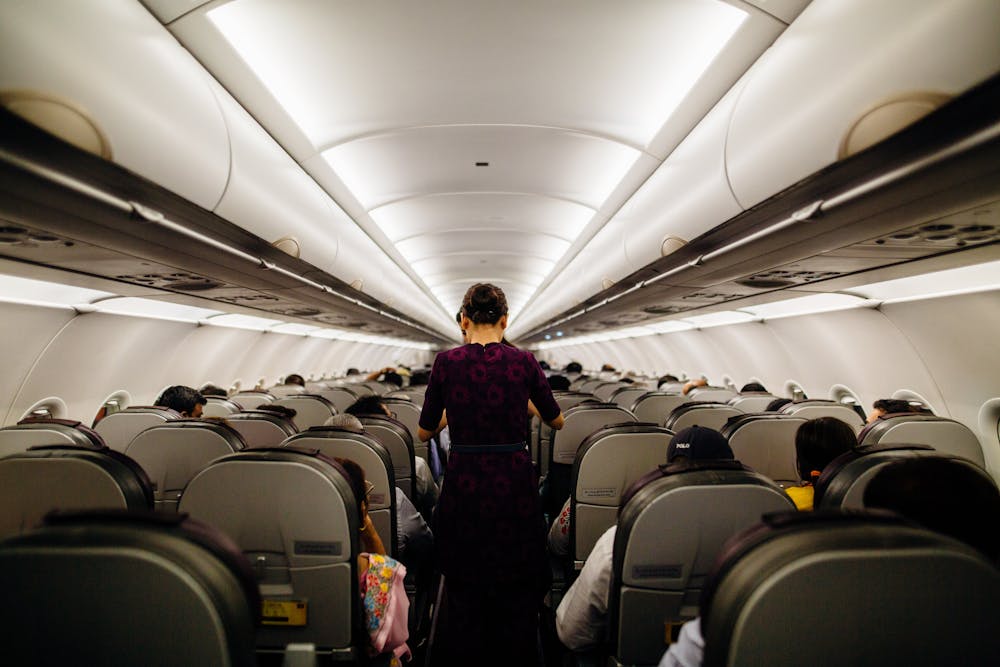

Air travel can be a stressful experience, but one thing that often makes it even more challenging is passenger behavior. While most travelers are simply trying to reach their destination comfortably, some engage in actions that can frustrate flight attendants and disrupt the cabin atmosphere. These behaviors can range from minor annoyances to significant disruptions, and they can often lead to awkward moments for everyone involved.
Take, for instance, the viral incident involving Lucie Fink that sparked heated discussions across social media. Her experience highlighted a broader issue: the impact of certain behaviors on cabin crew and fellow passengers alike. Flight attendants are trained to ensure a smooth journey, but they often find themselves dealing with rude interactions that can derail that mission.
This article aims to shed light on the types of behaviors that flight attendants find most irritating. By understanding these common pitfalls, you can help create a more pleasant flying experience for everyone on board. Whether you’re a frequent flyer or planning your first trip, knowing what to avoid can make all the difference in fostering a positive atmosphere at 30,000 feet.
Flying and All it Entails
You probably didn’t think twice the last time you reached out and tapped someone on the arm. It’s one of the most automatic social gestures there is, a quick, light touch that says “hey, I just need a second of your time.” On a plane, though, that same instinct can land you in the middle of a very public, very awkward moment. Just ask Lucie Fink, a person whose TikTok incident divided the entire internet in May 2025.
Fink wasn’t trying to cause a scene. She thought her row had been skipped during drinks service, so she did what a lot of people would do: she gently reached out. What happened next stopped the cabin. And the conversation it started is one worth having, especially if you fly with kids, travel for work, or just want to get through a flight without everyone turning to stare at you.
This isn’t about shaming passengers or defending a single interaction. It’s about understanding why flight attendants feel so strongly about this, what the numbers behind their frustration actually look like, and what you can do instead.
What Actually Happened
Fink’s clip, posted on May 15, has amassed over 12 million views. In the video, she details the moment she gently touched a flight attendant to ask for a drink after the drinks cart passed her row. “So I touched her arm gently and said, ‘Sorry, when you get a chance can I trouble you…'” she explains in text overlaid on the clip, “but she cut me off and said back to me loudly, ‘DO NOT touch the flight attendants.’ Everybody turned to look.”
Fink told Newsweek that the incident occurred on a flight from Miami to New York’s JFK Airport, and that she “immediately recognized that the flight attendant’s response, while jarring, was valid.” That nuance matters. Fink wasn’t playing the victim. She clarified that her post “was more so a comment on how I felt embarrassed by her public reaction to it”, not a suggestion the flight attendant did anything wrong. “I just felt momentarily embarrassed, like I had been scolded by a teacher in school,” she said, “but I definitely don’t fault her for it.”
Fink followed up by running an informal Instagram poll asking whether it was acceptable to tap someone on the arm. Out of more than 2,000 respondents, 75 percent said “Yes, it’s absolutely a normal part of society,” while 25 percent said: “Not at all. Do not ever do it.” So the world is genuinely split. And that split is exactly the problem.
Is It Okay to Touch Flight Attendants on a Plane?
Here’s where the debate gets more complicated than a simple yes or no. Most passengers who tap a flight attendant mean absolutely no harm. They’re trying to ask for a napkin, or flag a spill, or flag that their seatmate has gone gray and stopped breathing. The intent is almost always benign. The impact, though, is a different story.
Fink herself acknowledged, “I know I shouldn’t have tapped her. The flight was full, and I’m sure the flight attendant was getting annoyed by passengers requesting things of her, not following instructions, and potentially tapping her or touching her in unwanted ways.” That’s not a small thing. On a packed flight, a cabin crew member might be touched by dozens of passengers across a single shift, each of whom believes they’re the only one doing it.
Flight attendant Leanna Coy responded to the TikTok controversy with her own video, saying: “I think what many people don’t realize is how many people poke us.” One commenter who identified as a flight attendant put it plainly: the flight attendant who rebuked Fink may have reacted that way because Fink was “probably the last drop in a very overfilled glass.” By the time Fink reached out, that crew member had likely already been touched, prodded, and interrupted more times than she could count.
Association of Flight Attendants Statistics on Passenger Touching
Now for the part that reframes the whole conversation. Because this isn’t just about personal preference or workplace frustration. There’s a documented safety and wellbeing dimension to flight attendant touching that most passengers never think about.
The incident became the center of a broader conversation around personal boundaries and social norms, especially in confined spaces like planes. That conversation has context. A 2018 survey by the Association of Flight Attendants-CWA (AFA), covering more than 3,500 flight attendants from 29 U.S. airlines, found that 68 percent of flight attendants had experienced sexual harassment during their flying careers. Read that again. More than two-thirds of the people handing you your pretzels.
And it’s not just a career-level statistic. According to the Association of Flight Attendants-CWA (AFA), 18 percent of surveyed flight attendants reported experiencing physical sexual harassment from passengers in the previous year alone. That’s roughly 1 in 5 cabin crew members, within a single year. The same AFA report also found that 35 percent of surveyed flight attendants reported experiencing verbal sexual harassment from passengers in the previous year, with 68 percent of those facing it three or more times.
Those numbers are from 2018, but flight attendant unions have continued to report that the problem persists. A 2021 AFA national survey of nearly 5,000 flight attendants found that over 85 percent had dealt with unruly passengers during the first half of 2021, with more than half experiencing at least five such incidents. The same survey found that 17 percent of flight attendants reported experiencing a physical incident with an unruly passenger. And here’s what makes that especially grim: 71 percent of flight attendants who filed incident reports with airline management in 2021 received no follow-up from their employer.
So when a flight attendant reacts sharply to being touched, even to a well-intentioned tap, that reaction is often carrying the weight of an entire industry’s failure to protect its workers. The person reaching out is just asking for a Sprite. The person being touched may be on their fourth hour of a shift, their fifth unwanted physical contact of the day, and their second year of feeling like the airline won’t back them up when things get worse.
What Percentage of Cabin Crew Experience This Issue?
To answer directly: according to the Association of Flight Attendants-CWA, 18 percent of surveyed flight attendants reported physical harassment from passengers in the prior year. That’s the figure from the most recent comprehensive AFA survey available on this specific question. Given the broader data on unruly passenger incidents, there’s every reason to think the figure for any unwanted physical contact runs considerably higher.

This is why cabin crew safety advocates argue that “it’s just a tap” misses the point entirely. Each individual passenger who touches a flight attendant may genuinely believe they’re doing something unremarkable. But flight attendants don’t experience passengers one at a time. They experience them all at once, for hours, with no exit.
Is It Illegal to Touch a Flight Attendant Without Permission?
Short answer: it can be. Flight attendants are considered federal workers when operating on commercial flights in U.S. airspace, and touching or interfering with a crew member can carry serious legal consequences under federal aviation law. The FAA has long-standing authority over passenger conduct on aircraft, and physical interference with crew members, even without aggressive intent, has resulted in passengers being removed from flights and, in more serious cases, federal charges.
The Lucie Fink incident didn’t come close to that territory. A gentle tap to ask for a drink is not assault. But the legal framework exists precisely because the line between innocent contact and unwanted physical intrusion is one that flight attendants, not passengers, get to define. This is true for any worker in a service environment, but it carries extra weight at 35,000 feet where the crew’s ability to do their job can directly affect everyone’s safety.
If you’re traveling with kids who are used to reaching out for attention, this is genuinely worth talking through before you board. A child tapping a flight attendant is unlikely to cause a scene. But building the habit of using words first, and reading whether someone is mid-task before interrupting them, is good social practice at any altitude.
How to Get a Flight Attendant’s Attention the Right Way
So what do you actually do when you need something and the crew isn’t looking your way?
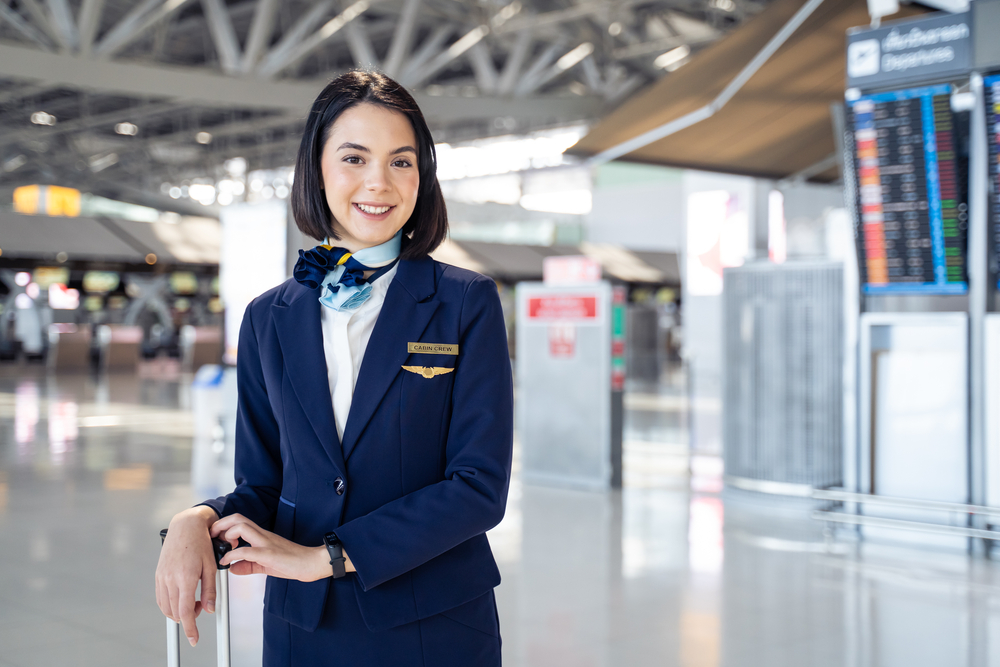
The call button above your seat is the cleanest option, and it’s what it’s there for. Many passengers avoid it out of a vague fear of seeming demanding, but flight attendants generally prefer it to being physically interrupted. The main caveat: don’t press it during takeoff, landing, or active food and drink service when crew are clearly mid-task. Those are the moments when they’re managing a dozen things at once, and a call button ping adds to the noise without being useful.
Flight attendant Sam Ward told HuffPost the best approach is to wait until he finishes his existing duties before asking for help, noting that flight attendants may have more important tasks at the moment than getting rid of your trash or giving you a drink. That’s not a brush-off. It’s a practical piece of information about how flights actually work. The crew is usually juggling safety checks, meal prep, passenger requests, and compliance issues simultaneously. Patience isn’t just polite. It gets you better results.
A raised hand or a clear “excuse me” as a crew member passes your row is also perfectly acceptable. It signals that you want attention without making physical contact, which keeps both parties comfortable. Some flight attendants are fine with being gently tapped on the shoulder specifically, but the key word is “some,” and there’s no reliable way to know in advance whether the person walking past you is in that group. Voice first is always the safer, more respectful call.
What You Should Do Next Time You Fly
This issue went viral partly because it was relatable, and partly because it exposed a gap between what many passengers consider normal and what cabin crew experience daily. Most people who watched that video recognized themselves in Fink. They would have done the same thing. That recognition is actually the most useful part of the whole episode.
Touching flight attendants on a plane doesn’t make you a bad person. But it does place an unnecessary burden on workers who are already absorbing a disproportionate amount of physical contact throughout every single shift. The data from the Association of Flight Attendants-CWA makes clear that unwanted touching is not an occasional complaint. For many cabin crew members, it’s a constant one. The next time you’re on a flight and you need something, raise your hand, say “excuse me,” or press the call button. Let the flight attendant finish what they’re doing first. It takes about thirty extra seconds, and it costs nothing.
Cabin crew safety is a serious issue that extends well beyond awkward social media moments. Being a thoughtful passenger is one of the simplest ways to make air travel better for everyone on board, including you.
Disclaimer: This article was created with AI assistance and edited by a human for accuracy and clarity.