

A cargo plane vanished over the Arabian Sea on the night of July 7, 2026, during what should have been a routine freight run from the United Arab Emirates to Pakistan. Five crew members were aboard. Three minutes after reporting a navigational problem, the aircraft dropped off radar and out of radio contact.
By the following morning, search teams operating in punishing sea conditions had recovered plane missing wreckage from the depths of the Arabian Sea. The five crew members who had flown that night were still unaccounted for. The aircraft’s final data points showed altitude changes so violent and so rapid that aviation experts used the word “catastrophic” before the day was out.
The pilot’s last transmission to air traffic control was brief and technical: “rolling or floating.” Those words, paired with a flight data trail that showed the plane descending thousands of feet, surging back upward, and then entering a near-vertical final dive, have opened one of the more urgent aviation investigations of 2026.
The Flight, the Aircraft, and the Crew
K2 Airways Flight KTA1732 was operating as a Boeing 737-400 freighter on a cargo run from Sharjah International Airport in the United Arab Emirates to Jinnah International Airport in Karachi, Pakistan. The aircraft was a 27-year-old Boeing 737-400 that had been converted to freighter duty, two generations older than the 737 MAX.
The aircraft, registered AP-BOI, entered service in 1999 and previously flew for Aeroflot, Garuda Indonesia, and ASL Airlines Belgium (formerly TNT Airways) before joining K2 Airways in October 2024. Its disappearance represented a major blow to the Karachi-based carrier, as AP-BOI was reportedly the airline’s only operational freighter aircraft.
K2 Airways released the names of the five crew members aboard Flight KTA1732 in a statement. The crew consisted of Captain Mohammad Rizwan Idrees, First Officer Faisal Mehmood, Load Master Muhammad Toufique Khan, and Engineers Arif Siddiqui and Mohammad Hamid.
The Final Transmission
The Pakistan Airports Authority stated: “A K2 Airways B737 Pakistan Cargo flight en route from Sharjah to Karachi reported a navigational system issue at 21:18 PST and was promptly guided by Karachi Area Control Center.” At 21:21 PST, the aircraft was observed on radar rapidly descending with a rapid heading change, and radar contact and communication were lost approximately 155 nautical miles west of Karachi.
The final transmission from the pilot stated that the plane had begun “rolling or floating.” Rolling refers to the banking motion of an aircraft around its longitudinal axis, while floating typically refers to the aircraft being unable to settle onto the runway because of excess airspeed or a cushion of air under its wings. Neither term, in isolation, points to a clearly defined emergency scenario. In the context of a cruising aircraft over open water, hundreds of miles from the nearest runway, the use of “floating” in particular is unusual enough to warrant close analysis.
Aviation journalist and FlightGlobal consulting editor David Learmount, speaking to Newsweek, noted that even if the pilots had lost all navigation aids due to an electrical failure, the aircraft was within radar range of the coast. “Even if the pilots had lost all their navigation aids because of an electrical failure, all they had to do to reach their destination was to follow the coast eastwards to Karachi,” he said.
What the Flight Data Showed
The flight tracking record that emerged from Flightradar24 is one of the most disturbing aspects of this incident. The final minutes of tracking data showed the aircraft experiencing a sudden drop in altitude followed by a sharp climb, before entering a catastrophic dive from around 36,550 feet. The last transmitted data point placed the aircraft at 1,100 feet above sea level, with a vertical rate of minus 22,400 feet per minute, approximately 400 kilometres per hour. That is an extremely steep and abnormal rate of descent.
Preliminary ADS-B data indicated a loss of altitude, followed by a climb, and then a second, sudden and dramatic loss of altitude. Shortly after takeoff, the aircraft, along with all others in the region, experienced GNSS interference, resulting in degraded data near Sharjah before Flightradar24 transitioned to MLAT tracking. Once the aircraft exited the interference zone, ADS-B data was again received normally, right up until the moment it wasn’t.
What the Altitude Changes Suggest
Former commercial pilot Captain Byron Bailey told Newsweek: “I have flown that route many times. To me it appears they had an emergency necessitating an emergency descent, possible depressurization or a fire. Certainly just an engine failure does not need a rapid descent.” The Pakistan Aerospace Council, which said it is not involved in the official investigation, urged caution over early theories and noted there is no official information regarding the cause of the incident at this stage.
Learmount stressed that it was far too early to draw conclusions but said investigators would examine a range of possibilities. “As regards loss of control or pilot disorientation, a fire on board springs to mind,” he said. “Freight often includes dangerous cargo, including lithium batteries that can spontaneously combust.” Learmount added that smoke in the cockpit could potentially contribute to disorientation, while a serious fire could affect aircraft systems, but emphasized that investigators would need evidence before drawing any conclusions.
The wild altitude swings are not consistent with a controlled emergency procedure. They suggest either a catastrophic loss of control or a severe structural or systems failure that rendered the aircraft unresponsive to crew inputs. Whether the crew was conscious and fighting to recover the aircraft, or whether control had already been lost entirely, is something only the black boxes can answer.
The Search and the Wreckage
Pakistani rescuers found the wreckage of the Boeing cargo plane in a deep sea search operation on Wednesday, 12 hours after it went missing off the coast of Karachi, with efforts underway to find the five crew members who were on board.
The wreckage of the K2 Airways cargo Boeing 737 was recovered 53 nautical miles south of Ormara port, according to the Pakistan Airports Authority. The Pakistan Navy and Pakistan Maritime Security Agency deployed various air and sea assets to locate the remains, with the search operation continuing in an effort to find the crew members.
Retired Rear Admiral Faisal Shah told the Associated Press that the main wreckage of the plane was still being searched for and could require specialised deep-sea equipment to locate. The surface debris recovered in the initial search confirmed the aircraft’s fate but raised immediate questions about what a full underwater investigation would require. Deep-sea recoveries in the Arabian Sea present formidable logistical challenges, and the priority of recovering the aircraft’s flight data recorder and cockpit voice recorder was immediately apparent to investigators.
If the aircraft is located, investigators will seek to recover the flight data recorder and cockpit voice recorder. Those devices can provide crucial information about the aircraft’s systems, crew actions, and final moments before contact was lost.
Pakistan’s Prime Minister Shehbaz Sharif released a statement confirming that the plane had crashed into the sea, expressing his “deep sorrow, grief, and regret over the tragic incident in which a private cargo aircraft flying from Sharjah to Karachi crashed into the Arabian Sea,” and extended his condolences to the crew’s families.
The Aircraft’s History and Regulatory Context
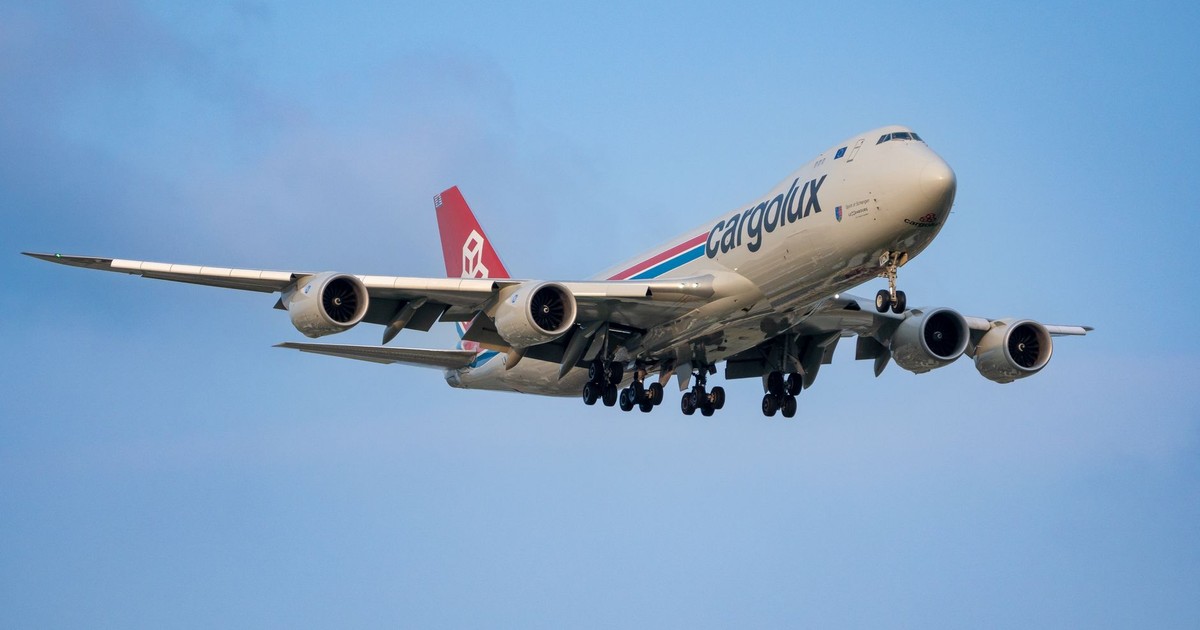
The 737-400 was first delivered as a passenger plane to Russia’s Aeroflot in 1999 and was converted to a freighter in 2012, according to Flightradar24. It was K2 Airways’ only aircraft and entered service with the carrier in 2024.
The missing aircraft was one of Boeing‘s decades-old 737-400s, two generations older than the 737 MAX that has been involved in a recent safety crisis. Age alone does not determine airworthiness, and well-maintained older aircraft operate safely across global freight networks every day. What investigators will examine is the aircraft’s maintenance record, its conversion history, and whether the navigational system issues reported by the crew had any prior documentation.
Pakistan has not had a fatal plane crash since 2020. In May of that year, a Pakistan International Airlines Airbus A320 crashed in Karachi, killing 97 of its 99 occupants and one person on the ground. A report determined almost four years later that human error and poor communication were the primary causes of that disaster.
The aviation safety record that Pakistan had rebuilt over the intervening six years now faces fresh examination. Investigators from the Pakistan Civil Aviation Authority will lead the formal inquiry, though international aviation safety bodies are likely to be involved given the international routing of the flight and the manufacturer’s nationality.
What Investigators Will Focus On

The sequence of events that CNN has reported gives investigators a narrow three-minute window of documented activity to account for: a navigation problem declared at 21:18, rapid descent observed at 21:21, communications lost at 155 nautical miles west of Karachi. What the crew was doing in the 90 minutes before that call, and whether any systems were already degraded, will be just as important to reconstruct as the final seconds themselves.
Navigation System Failure
A navigation failure in an aircraft within radar range of a coastline is manageable on its own. It does not explain the aerodynamic behavior that the flight tracking data recorded. Investigators will ask whether the navigation issue was a symptom of a larger systems failure, an electrical problem, for instance, that degraded multiple aircraft systems simultaneously, or whether it was an isolated malfunction that the crew was managing when a separate and unrelated event occurred.
Controlled Flight Into Unusual Attitude
The specific pattern of altitude changes is consistent with what aviation investigators call an “unusual attitude” event. This occurs when an aircraft enters an extreme pitch or bank angle that the crew then attempts to correct. If those corrections are themselves erroneous, a known phenomenon in spatial disorientation scenarios, particularly at night over water, the aircraft can enter a series of increasingly severe oscillations before control is lost entirely.
The plane may have crashed into the sea southwest of Karachi after a series of sharp altitude changes before a steep final descent, according to flight-tracking service Flightradar24. Night operations over featureless ocean water are among the most disorienting conditions a flight crew can face, with no visual horizon and no external reference points.
Cargo as a Variable
Cargo aircraft carry a category of risk that passenger jets do not. Freight often includes dangerous cargo, including lithium batteries that can spontaneously combust, a fact that Learmount raised as a possibility worth investigating. An onboard fire, particularly one involving cargo in the hold, can produce smoke that enters the cockpit through ventilation systems, compromising crew performance before any instruments show an obvious malfunction. This scenario would explain both the reported disorientation implied by the “rolling or floating” transmission and the subsequent loss of controlled flight.
Investigators will examine the cargo manifest for the Sharjah-to-Karachi flight in detail. What the aircraft was carrying, and whether any of those goods presented a fire or chemical hazard, is a foundational question in the inquiry.
What the Black Boxes Will Have to Answer

The discovery of plane missing wreckage on the floor of the Arabian Sea is the beginning of the investigation rather than its end. Wreckage tells you where. The flight data recorder and cockpit voice recorder tell you why.
Recovering those devices from deep water in the Arabian Sea is not guaranteed. The search operation is already contending with difficult sea conditions, and the primary wreckage has not yet been fully located. Retired Rear Admiral Faisal Shah noted that specialised deep-sea equipment may be required, the kind that is not always readily available in the region and that, in past investigations elsewhere in the world, has taken weeks or months to deploy and operate effectively.
Until the recorders are found, every theory about what brought down K2 Airways Flight KTA1732 remains exactly that: a theory. The navigation problem could have been the first sign of a cascading electrical failure. The “rolling or floating” transmission could reflect spatial disorientation induced by smoke, or it could describe the early stages of an upset the crew was actively trying to correct. The altitude swings could point to a structural failure, a fire, a sudden depressurization, or a loss of control from which recovery was never possible. Each possibility is consistent with some of what is known. None is confirmed by all of it.
What is not in doubt is that five crew members flew into the night over the Arabian Sea on July 7, 2026, and did not come back. Their families are waiting for answers that the sea has not yet given up. The investigation will be long, methodical, and, at its best, rigorous enough to prevent whatever happened from happening again.
AI Disclaimer: This article was created with the assistance of AI tools and reviewed by a human editor.