
The strange thing about older women misconceptions is that they often masquerade as concern or admiration. “You’re so active!” is not a compliment when the person saying it expected you to be sedentary. “You’re so sharp!” is not a compliment when the person saying it assumed you were losing your edge. The whole category of surprise-as-flattery tells you more about what people were expecting than about the woman standing in front of them. And what they were expecting, most of the time, is someone smaller, quieter, and considerably more finished than the actual person.
Below are 18 things men still routinely get wrong about older women, not because men are uniquely dim, but because culture has handed them a set of assumptions so embedded they pass for common sense. They aren’t.
1. That She’s Past Her Ambitions

The idea that a woman’s professional drive expires sometime around 50 has been thoroughly contradicted by reality, but it persists. Older women are not winding down. They are, in many cases, at the height of their expertise, their professional networks, and their ability to execute at a high level. What has expired, often, is the patience for office politics that have nothing to do with results.
A 2026 AARP survey found that one of the most common forms of age discrimination in the workplace is the assumption that older employees are resistant to change, a bias reported by 24 percent of workers, alongside the assumption that they are less tech-savvy, reported by 33 percent. These two assumptions have almost nothing to do with observed performance and everything to do with what people expected before the older worker walked in the door. An older woman’s ambitions didn’t disappear. The room just stopped making space for them.
2. That She’s Technologically Helpless

This one has outlasted every piece of evidence against it. The stereotype of the older woman staring blankly at a smartphone is so culturally ingrained that it gets treated as a harmless joke, which means it gets repeated constantly and without any self-reflection. Meanwhile, older women are using every major digital platform, running online businesses, and navigating the same software ecosystems as everyone else.
AARP’s age discrimination research noted that older adults frequently encounter assumptions that they are “technologically inept,” a perception that influences how colleagues, managers, and even healthcare providers interact with them, often to the older worker’s significant disadvantage. The assumption doesn’t just cause embarrassment. It costs people promotions, projects, and professional credibility. Condescension has real consequences.
3. That She Wants to Be Taken Care Of

Independence is not a phase women go through in their 30s and then outgrow. For a significant number of older women, financial and personal independence is something they have spent decades building and protecting, and they have no intention of handing it over to anyone. The fantasy of the older woman who wants someone to swoop in and manage her life says much more about the person holding the fantasy than about the woman.
According to AARP research on women’s trends, two-thirds of women 50-plus who are working or looking for work say that older workers face age discrimination in the workplace today, a statistic that underlines just how actively engaged older women are in their own economic lives. They are not waiting to be rescued. They are navigating a labor market that, by its own admission, is often working against them.
4. That She’s No Longer Interested in Romance or Relationships

The assumption that older women have simply stopped caring about love, partnership, or intimacy is one of the more quietly damaging ones, because it renders a whole dimension of someone’s life invisible without ever having asked her about it. Older women date. They fall in love. They have preferences, dealbreakers, and expectations, often considerably clearer ones than they had at 25, because they have the experience to know what they actually want.
Many older women have raised their standards, not abandoned the subject entirely. Older women often become more selective as they age, preferring a life of solitude over compromising to make a relationship work, but that is a choice made from clarity, not resignation. There’s a meaningful difference between not wanting something and not being offered something worth wanting.
5. That Her Desires Expired Along With Her Fertility
Few misconceptions are as persistent or as reductive as the idea that older women are, effectively, “intimately dormant”. This belief is so normalized that it barely reads as an assumption. It just feels like biology. It isn’t. Research published in the American Journal of Lifestyle Medicine in 2024 confirmed that although sexuality evolves beyond the reproductive years, it remains a meaningful part of life for many older adults, and numerous older adults continue to value and engage in fulfilling relationships.
Changes in desire do occur with age, and menopause brings its own set of physical adjustments. But wanting and functioning are not the same thing, and the clinical picture is considerably more varied than the cultural narrative suggests. Equating menopause with the end of a woman’s intimate life is a projection, not a medical fact.
6. That She’s a Pushover

The generation of women now in their 50s, 60s, and 70s grew up being told, in explicit and implicit ways, to be accommodating, to smooth things over, to not take up too much space. A significant number of them did the internal work of unlearning that, and the woman who emerges on the other side of that process is not, typically, easy to push around.
A 2024 PLOS ONE study of more than 3,000 middle-aged and older women in England found that those who reported experiencing gender discrimination were more likely to report declines in wellbeing assessed six years apart, meaning older women are not only aware of the discrimination directed at them, they carry its long-term weight in measurable ways. The ones who have processed that experience and come out the other side are not soft targets. Confusing politeness for pliability is a reliable way to be caught off guard.
7. That She Doesn’t Know Anything About Pop Culture

There’s a specific kind of condescension where younger people explain cultural references to older women, bands, shows, trends, memes, assuming the older woman has been living in an informational vacuum since roughly 2003. This is both incorrect and a little embarrassing for the person doing the explaining. Older women consume media. They have opinions. They have probably already seen it.
The assumption that cultural fluency belongs exclusively to the young is itself a cultural artifact, one that media has reinforced by wildly underrepresenting older women as audiences worth speaking to. A 2024 report from the Center for the Study of Women in Television and Film found that the percentage of female characters plummeted from 35 percent in their 30s to 16 percent in their 40s, and that more than twice as many male characters as female characters were 50 and older in top-grossing U.S. films. Both patterns reflect and reinforce the idea that older women are peripheral figures in the culture, rather than active participants in it. They are watching. They just stopped expecting to see themselves onscreen.
8. That She’s Invisible to the World of Fashion and Beauty
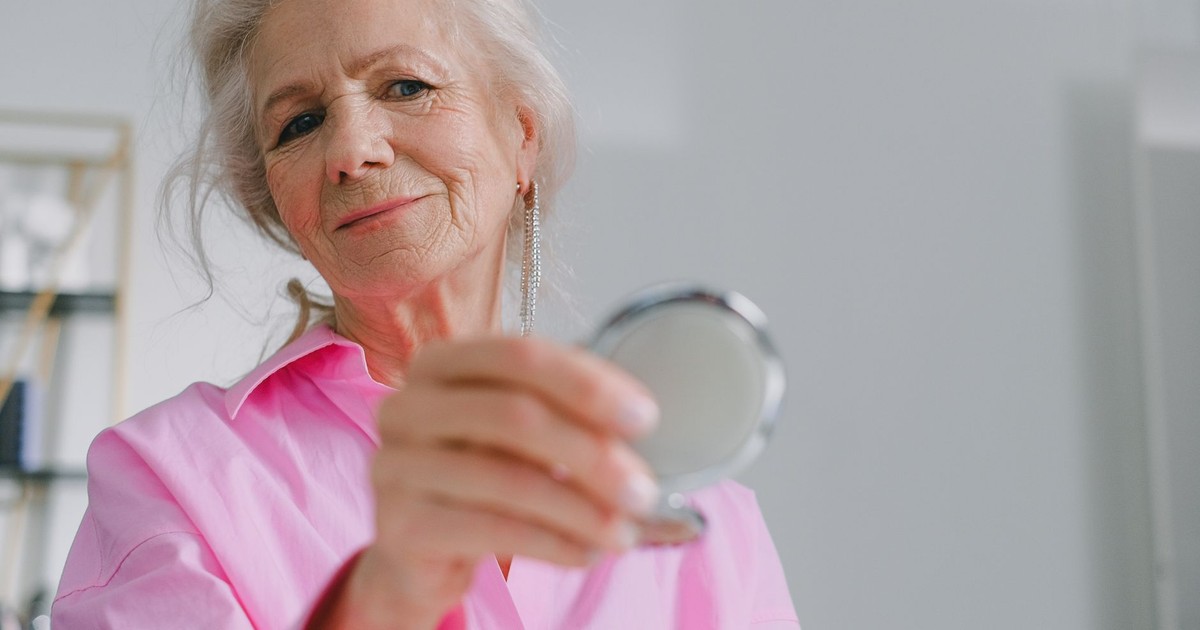
Older women are not wandering through department stores looking confused. They know what they like. They have the budget to buy it. And they are increasingly a market that the fashion industry is, slowly and belatedly, beginning to acknowledge. The idea that a woman stops caring about how she looks or presents herself after a certain age is not an observation. It’s a fantasy that lets the industry off the hook for decades of ignoring her.
Women over 50 control a substantial portion of consumer spending, and the brands that figured this out first are doing considerably better than the ones still designing for a 24-year-old who doesn’t exist in the numbers they think she does. Older women’s fashion sensibility didn’t disappear. The mirrors just started pretending it had.
9. That She’s Bitter About Being Older
Here is what often reads as bitterness from the outside: directness. Here is what looks like resignation: an honest relationship with time. Older women are not, as a group, sitting around mourning their youth. Many of them are genuinely enjoying the freedom that comes from caring less about things that used to consume enormous energy: other people’s opinions, the approval of rooms that were never going to give it.
A study of perceived old age onset found that individuals report a perceived individual onset of old age that is on average more than eight years later than their perceived societal onset of old age, meaning most people — including older women — do not consider themselves old on the same timeline that culture assigns them. The relationship they have with their own age is often far more relaxed than outside observers expect. The bitterness they occasionally express is usually about something specific and justified, not about the mere fact of having lived long enough to be interesting.
10. That She Needs to Be Spoken to More Slowly
This particular pattern appears in doctors’ offices, in customer service interactions, and in conversations between older women and the men who believe they are being helpful. Speaking slowly, loudly, or with excessive simplicity to an older woman who has given you no reason to do so is not kindness. It is condescension dressed up as consideration, and most older women recognize it immediately, even if they are too polite to say so in the moment.
AARP research on women’s trends found that women 18-plus are significantly more likely than men to report that their concerns were minimized, ignored, or dismissed when receiving medical care: 32 percent of women compared to 19 percent of men. The healthcare setting is where this particular misconception does the most damage, because being talked down to by the people responsible for your health has consequences that go well beyond bruised feelings.
11. That She’s Stuck in the Past
“Oh, she still does things the old way” is shorthand for assuming she hasn’t kept up, hasn’t adapted, hasn’t changed her mind about anything since approximately 1987. The reality is that the women who have lived through the most social change are often among the most adaptable people in any room, because they have had to be. They didn’t get to sit still while the world changed around them.
Older women have navigated seismic changes in technology, workplace culture, family structures, and social norms during their lives, and many of them did that navigation while also managing households, careers, and the wellbeing of other people. The person who assumes she is stuck is often the person who has never had to adapt to anything genuinely difficult.
12. That She’s Not a Financial Decision-Maker
The assumption that older women defer to husbands, sons, or financial advisors on major money decisions is not only condescending, it’s operationally false for a large portion of this demographic. Many older women are managing their own finances, making their own investment decisions, and doing it without consulting anyone who isn’t a credentialed professional they chose and can fire.
More than two-thirds of women 30-plus, 68 percent, report worrying about having enough money in retirement, which means they are thinking about their financial futures seriously, not delegating the concern to someone else. Women who are actively worried about something are paying attention to it. The financial services industry has been slow to absorb this, which is one reason so many older women have switched advisors.
13. That She’s Past the Age of Learning New Things
Neurologically, this one has never held up, and the research has been saying so for decades. Older brains are different from younger ones. They process some things more slowly, they excel in others, including pattern recognition, emotional regulation, and the ability to synthesize complex information accumulated across years of experience. The idea that learning itself becomes inaccessible with age is a cultural story, not a biological fact.
Older women learn languages, instruments, software, skills, and entire new careers. They go back to school. They take up ceramics and coding and physical disciplines they’ve never tried before. The barrier to learning in later life is not capacity. It is usually access, finances, or the exhausting experience of being treated as though learning is remarkable at their age, which makes the whole enterprise slightly more annoying than it needs to be.
14. That Caregiving Is Her Whole Identity
Older women do an enormous amount of caregiving for aging parents, for grandchildren, for spouses, for communities. This is documented, consistent, and significant. Women are more likely than men to have a primary role in family caregiving, and three in five family caregivers are women, 61 percent, according to 2025 AARP research. But the mistake isn’t acknowledging that caregiving role. The mistake is assuming it constitutes the whole of who she is, that she has no interior life, no personal ambitions, no desires that exist outside of her usefulness to other people.
Caregiving is something older women often do. It is not what they are. The woman who spends every Tuesday with her grandchildren is also the woman who has opinions about her city council, a friendship she’s maintained for forty years, and a few things she hasn’t told anyone. Reducing her to the caregiver role is an efficient way to miss the actual person.
15. That She Can’t Handle a Direct Conversation
Older women are, generally speaking, excellent at direct conversations. They have had enough difficult ones to know they survive them. What they are sometimes less interested in is the particular kind of circular non-conversation where everything is softened to the point of meaninglessness and nothing is actually said. If she seems to be tolerating small talk less graciously than she used to, it’s not fragility. It’s a reasonable adjustment of priorities.
The assumption that older women need to be handled carefully, that hard truths have to be delivered in six layers of cushioning, is often a projection. She has buried people she loved. She has had conversations that genuinely mattered. What looks like fragility is usually just the absence of patience for things that don’t.
16. That She Peaked Socially a Long Time Ago
The friendships of older women are, by most accounts, among the strongest social bonds in any demographic. They are built on shared history, tested by difficulty, and maintained by active choice rather than proximity or convenience. The social lives of older women are not winding down. They are, in many cases, more intentional and more satisfying than the social lives they had when they were younger and more scattered.
The decision to be selective about who gets their time and energy is often read as social withdrawal. It is the opposite. Removing the relationships that weren’t working is not the same thing as giving up on connection. It is the kind of curatorial intelligence that requires confidence, the confidence that comes from knowing, at this point, what actually matters.
17. That She Doesn’t Face Real Discrimination Anymore

It would be convenient if this were true. It is not. A 2024 study of more than 3,000 middle-aged and older women in England, published in PLOS ONE, found that those who believed they had experienced gender discrimination were more likely to report declines in wellbeing, and the findings indicate an enduring impact of gender-based discrimination on mental health measured six years later. The discrimination older women face is often double-layered: age and gender compounding each other in ways that neither category alone fully captures.
About two-thirds of workers 50-plus have seen or experienced age discrimination in the workplace, according to a 2024 AARP survey, with rates even higher for Black workers and women over 50. The fact that this discrimination is often subtle, a missed promotion, a skipped introduction, an assumption baked into a job listing, doesn’t make it less real. It makes it harder to contest.
18. That She Has Run Out of Time for Anything New

This is the one that does the most damage, and it doesn’t always come from outside. Sometimes older women absorb it themselves, the cultural message that the window for new experiences, new chapters, new versions of a life has closed. It hasn’t. The average life expectancy for women in the United States means that a woman at 60 may well have 25 or more years ahead of her. Those are not epilogue years. They are years.
Older women start businesses. They move to new cities. They end relationships that stopped working and begin ones that do. They take up art, travel to countries they’ve always meant to see, discover enthusiasms they had no time for earlier in life. The version of older women that culture keeps serving up, finished, faded, on the margins, has nothing to do with the actual population of women who are living, right now, with full and complicated and unfinished lives.
Read More: A Study Suggests Women Who Date Younger Men Are Happier in Their Relationships
What Runs Under All of This
Most of these misconceptions share a single root: the idea that a woman’s value depreciates with time, that she is most relevant when she is young and becomes progressively more negligible as she ages. This is not a minor cultural quirk. It shapes hiring decisions and medical treatment and media representation and the small daily interactions that add up into something much larger.
Older women’s identities are frequently distorted by misconceptions, and the negative social images that accompany aging render this generation invisible and insignificant, or try to. The older women misconceptions catalogued here are not new, but their persistence is worth examining, because they survive not by being obviously wrong but by feeling like common sense. The most durable errors usually do.
What older women are actually doing, in the main, is living fully in a culture that keeps writing them off. That gap between the assumed version and the real one is where most of the damage happens. Naming it doesn’t fix it. But it’s a start.
AI Disclaimer: This article was created with the assistance of AI tools and reviewed by a human editor.