

Every parent who has watched their child crumble over a bad grade or a fight with a friend feels the urgency to fix it immediately, completely, before the tears are even dry. It is one of the most instinctive things a parent does, and according to a growing body of psychiatric and developmental research, it is also one of the most quietly damaging patterns a parent can fall into.
Dr. Daniel Amen, a double board-certified psychiatrist and founder of Amen Clinics – whose brain-health-based approach to parenting has reached audiences through PBS specials, bestselling books, and more than four million Instagram followers – has made this point plainly and without softening it: the more problems you solve for your children, the less competent they become. If you want to raise mentally strong kids, you cannot do too much for them. It is a sentence that sits uncomfortably with parents who have built their identity around being available, around being the person who makes things better.
And it is not a fringe opinion anymore. Dr. Owen Muir, a double board-certified child psychiatrist, has made the same argument from a different angle: “Being mentally strong is about facing what comes, not about avoiding things that make you anxious.” Both psychiatrists are saying essentially the same thing in different registers. Mental strength is not the absence of hard things. It is what happens in a child after the hard things arrive and nobody swoops in to remove them.
Why Anxiety in Kids Is Not Going Away on Its Own
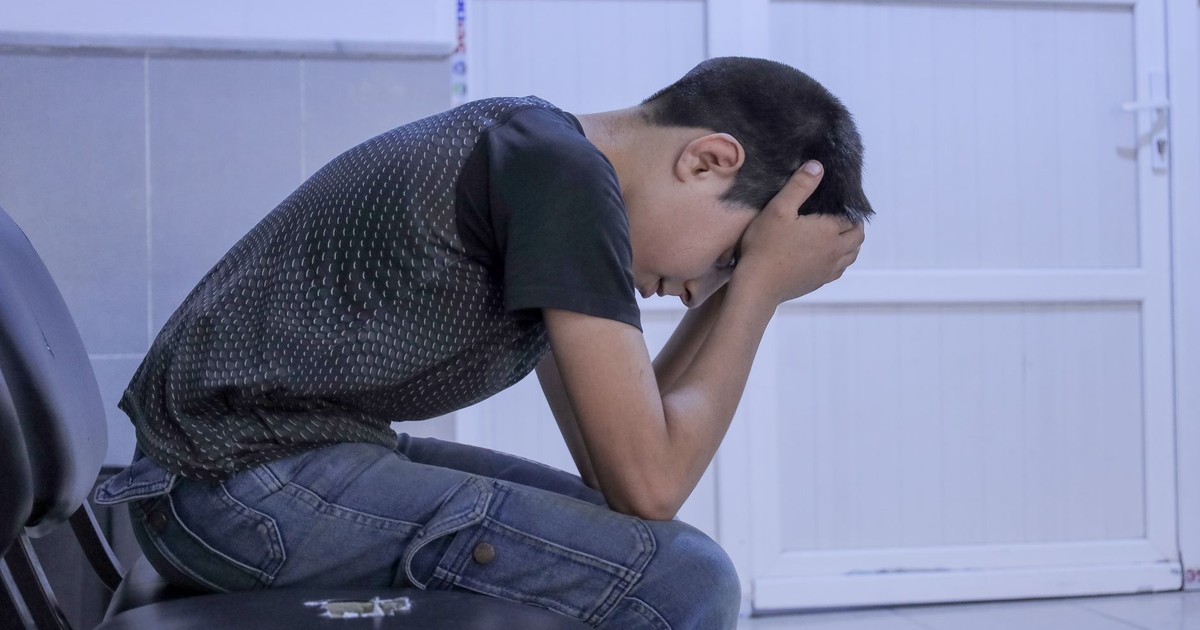
The backdrop here matters. According to 2022-2023 data from the CDC, 11 percent of children ages 3 to 17 currently have a diagnosed anxiety disorder. That is not children who feel nervous before a test or shy at a party. That is a clinical diagnosis. And as any parent of an anxious child knows, the temptation when anxiety is present is to reduce the child’s exposure to whatever triggers it – to manage the environment, to run interference, to quietly do the hard parts before the child has to face them.
The problem is that this protective instinct, repeated over years, does not actually make the anxiety smaller. It confirms the underlying message that the world is dangerous and that the child cannot handle it without help. The child learns not that hard things are survivable, but that a parent will appear before they have to find out.
Dr. Amen frames this in terms of competence. Every time a parent solves a problem that a child could have solved – even awkwardly, even imperfectly – that child loses a small opportunity to build the internal evidence that they are capable. Enough of those missed opportunities and the deficit becomes visible: a teenager who doesn’t know how to advocate for herself with a teacher, a young adult who calls her parents for every minor conflict, a grown child who has never developed the basic belief that she can manage what comes at her.
The Two Sentences at the Center of Mentally Strong Kids Parenting
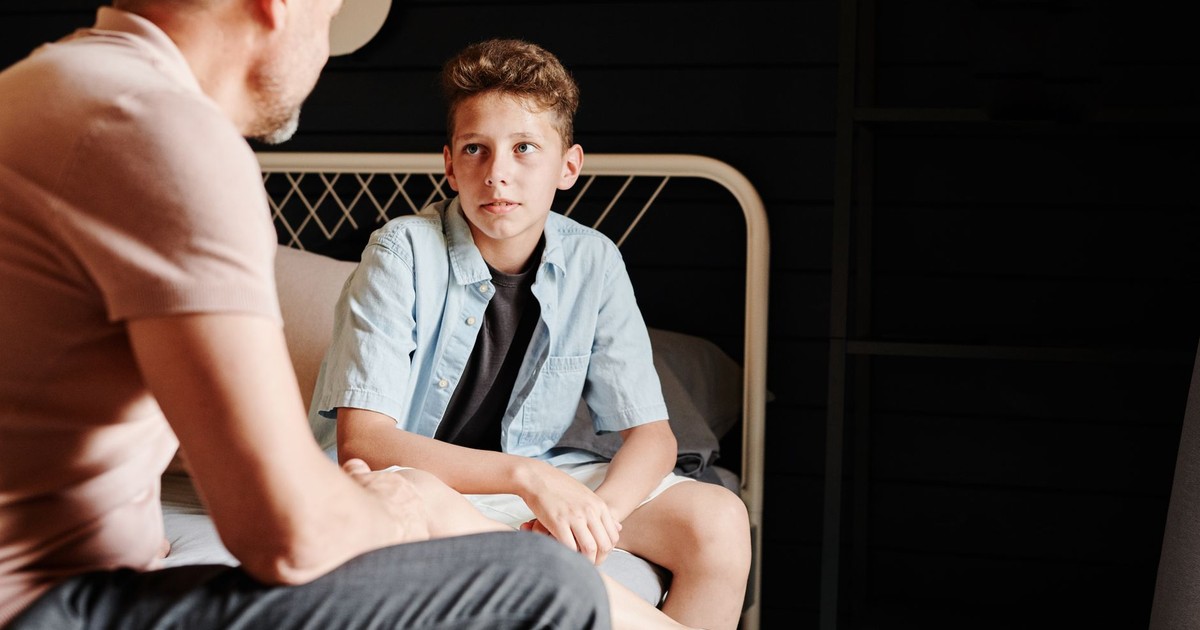
Dr. Amen’s message to parents essentially comes down to two sentences that redirect the entire parenting reflex. The first: “The more problems you solve for them, the less competent they become.” The second, drawn from Dr. Muir’s framing: “Natural consequences are the best consequences.”
These two sentences work as a pair. The first is a diagnosis – it identifies what well-meaning, capable, loving parents are accidentally doing wrong. The second is the prescription – not a complicated intervention, not a new parenting technique that requires a workbook. Just the willingness to let consequences do the teaching.
In Dr. Amen’s book Raising Mentally Strong Kids, written with child psychologist Dr. Charles Fay and drawing on over 80 combined years of practice with tens of thousands of parents and children, the central argument is that effective parenting requires addressing both the brain and the mind of the child. The authors call this practical neuropsychology, and the idea is that mental strength is not just an emotional disposition – it is partly a function of how a child’s brain learns to respond to difficulty.
This distinction is important for parents who have tried to talk their children through fear and frustration and found it did not take. A child cannot be reasoned out of a felt sense of incompetence. She has to build the evidence herself, one experience at a time, which means she has to have experiences – including uncomfortable, frustrating, even briefly painful ones – without someone removing them.
What “Natural Consequences” Actually Means in Practice

Natural consequences is a phrase that sounds clinical until you see what it looks like in an ordinary Tuesday afternoon. It means that when your eight-year-old forgets his lunch, he gets hungry, and next Tuesday he probably remembers his lunch. It means that when your twelve-year-old leaves her homework until Sunday night and does a mediocre job, she gets a mediocre grade, and the feeling of that mediocre grade belongs to her, not to a rushed evening you spent helping her fix it.
It does not mean abandonment. It does not mean watching your child fall apart without offering warmth or connection. The warmth is essential – what changes is the problem-solving. You can sit with a child who is upset without solving the thing that upset them. You can acknowledge that something is hard without making it easy. Those are two different moves and parents often conflate them, believing that empathy requires intervention when in fact the most powerful kind of empathy sometimes just holds the situation without changing it.
Dr. Muir’s version of this, offered from the dual perspective of a child psychiatrist who is also raising children of his own, is that mental strength is fundamentally about facing what comes. Not about having fewer things to face, not about having a parent who ran ahead and cleared the path, but about accumulating the experience of facing things and surviving them. That is the archive a child is building. The question is what gets added to it.
The Research Behind Letting Go
Overparenting behaviors – anticipatory problem-solving, excessive risk aversion, and providing unnecessary assistance – limit children’s autonomy and hinder the development of self-efficacy and independent problem-solving skills, according to a 2025 meta-analysis published in Frontiers in Psychology. Self-efficacy, in the simplest terms, is a child’s belief that she can handle what’s in front of her. It is not the same as confidence in the cheerful, affirmational sense. It is something more durable: a working trust in her own capabilities, built from actual evidence.
One study on overprotective parenting found that 61.9 percent of respondents indicated that overprotective parenting had diminished their confidence when facing challenges, with children raised by overprotective parents more likely to develop social anxiety and fear of failure due to a lack of exposure to challenges.
The pattern is circular in a way that makes it hard to interrupt. A parent sees a child struggle and moves in to help, which reduces the struggle in the short term. The child is relieved, the parent is relieved, and everyone has learned the wrong lesson: that the child needed help and got it, rather than that the child could have gotten through. The next time difficulty arrives, the child is slightly less equipped to handle it and slightly more likely to wait for rescue. The parent, having been the rescue before, moves in a little faster.
Research from Brigham Young University tracking family dynamics in more than 1,200 families nationwide found that as anxiety and depression among young people reach record highs, the quality of relationships between parents and children emerges as the most consistent predictor of resilience – not the absence of difficulty, but the quality of the connection within which difficulty is experienced.
Consider what that finding actually says. The research is not arguing that parental warmth is irrelevant – it is saying the opposite: connection matters enormously. The point is that connection and problem-solving are not the same thing. You can be deeply, demonstrably connected to your child and still let her fail her spelling test, miss the party because she forgot to RSVP, or spend an afternoon figuring out a conflict with a friend without you in the middle of it.
The Brain’s Role in Building Mental Strength

Dr. Amen draws heavily on brain health in his approach to parenting, emphasizing the importance of creating a supportive environment that fosters positive brain development and recognizing the unique wiring of each child’s brain – an understanding that helps parents tailor their approach to better meet their children’s individual needs.
This is one of the places where mentally strong kids parenting differs from older, more punitive versions of “toughen them up.” The goal is not to harden children or dismiss their emotional experiences. The goal is to build the neural architecture of capability – the practiced pattern in the brain that says “I have been here before and I got through.” Every time a child works through a problem independently, that pathway gets reinforced. Every time the problem is removed before she gets there, it doesn’t.
Dr. Amen also argues for addressing what’s happening inside the child’s brain as a parallel track. A child who is genuinely struggling with anxiety, attention, or mood regulation is not simply being dramatic, and the answer is not simply to stop helping. Understanding the brain means knowing the difference between the challenge that builds competence and the moment that genuinely requires support. Most parents are not bad at drawing that line because they don’t care. They’re bad at it because they care enormously, and caring enormously is the entire problem.
What to Say Instead of Solving It

The practical shift Dr. Amen and his peers describe is less about what parents stop doing and more about what they say instead. When a child comes with a problem, the instinct is to answer it. The alternative is to reflect it back: “What do you think you should do?” “What have you already tried?” “That sounds hard – how are you going to handle it?”
These are not rhetorical questions. They are genuine inquiries, delivered without the implied answer already waiting in the parent’s mouth. They communicate something important: I believe you can figure this out. That belief, communicated consistently over years, is one of the most powerful things a parent can give a child. Not the solution to each individual problem, but the consistent signal that solutions are within reach.
This is different from withholding warmth or being strategically cold. It is a specific, deliberate recalibration of where the parent’s energy goes. Less into the solving, more into the relationship. Less into the outcome of this particular homework assignment, more into the long arc of a child who knows she can do hard things because she has done hard things.
Where This Gets Complicated

None of this is as clean as it reads. Children are not case studies. A twelve-year-old who is genuinely being bullied needs a different response than one who is having a rough week with her friend group. A child with a diagnosed learning difference needs different accommodations than one who simply finds math frustrating. The line between appropriate support and counterproductive rescue is not always obvious from the outside, and it is almost never obvious in the moment.
What Dr. Amen and his colleagues are arguing against is not support. It is reflexive rescue – the move that happens before the child has had a chance to try, the intervention that arrives before the consequence has had a chance to teach. The question a parent can start asking is not “how do I fix this for my child?” but “has my child actually had a chance to fix this herself yet?” Often the answer is no, because the parent got there first.
Parenting behaviors are among the most robust predictors of youth resilience to adversity, according to a 2024 study published in the journal Behavior Genetics. The direction of that prediction runs both ways. The behaviors that predict resilience are not the behaviors of parents who solved every problem. They are the behaviors of parents who created the conditions in which children solved problems themselves and felt the satisfaction of having done it.
Read More: Mentally Strong Kids Have Parents That Do These 10 Things
What This Comes Down To

Two sentences from two psychiatrists, and the entire weight of the evidence points the same direction: children need the experience of difficulty more than they need the absence of it. That is not a comfortable truth. It runs directly against every instinct that competent, caring parents have developed over years of being the person who makes things better.
But there is something underneath those sentences worth naming directly. When you rescue a child from every hard thing, you are not just limiting her competence. You are quietly communicating that you don’t trust her to handle her own life. She picks that up. Children are exquisitely sensitive to what parents actually believe about them, underneath the encouraging words and the reassurance. When you step back and let her struggle, and then watch her come through – even partially, even messily – you are communicating something else entirely. That you believed she could. That you were right.
That is not a small thing to give a child. It might be the thing she carries forward the longest.
AI Disclaimer: This article was created with the assistance of AI tools and reviewed by a human editor.