

The argument that happens most reliably in long-term relationships isn’t about money or the in-laws. It’s about the pile of dishes someone didn’t notice, and the feeling underneath that, the one that says I’m invisible here. That feeling doesn’t come from one bad evening. It builds, slowly, from the small things that stopped happening.
Distance in a relationship grows through tiny daily gaps. It can also close through tiny daily habits. Not grand gestures. Not a weekend away or a session with a couples therapist, though those have their place. The habits that actually keep long-term couples close tend to be small enough to overlook.
Relationship science has gotten better at identifying which of these small habits actually move the needle. The answer, consistently, is less about communication strategies and more about a handful of ordinary, repeatable behaviors that signal: I still see you. I’m still choosing this. Here are eight of them.
1. They Actually Say Goodbye in the Morning

The moments of arrival and departure are disproportionately powerful. Research from the Gottman Institute shows that couples who have intentional greeting and parting rituals report significantly higher relationship satisfaction.
The shouted “bye” from another room, phone already in hand, mind already at work, costs nothing in effort and nothing in time. But it sends a signal. Not a devastating one, just a small, cumulative one. Over months and years, it starts to feel like passing a stranger in a corridor. When your partner walks in the door, couples who make it work stop what they’re doing, make eye contact, and offer physical affection. Thirty seconds, tops.
Dr. John Gottman suggests couples share a six-second kiss each day, which he calls a “kiss with potential.” Six seconds. The couples who do this aren’t doing it because it feels romantic every single morning. They do it because it holds something in place that is hard to rebuild once it slips.
2. They Keep Asking Questions

Image Credit: Pexels
Most couples stop asking questions around year three. Not intentionally. It’s just that you already know the answers. You know their childhood, their complicated relationship with their father, their worst boss, their dream vacation. The file is full.
People keep changing. Gottman’s research found that couples with detailed Love Maps, a term for thorough knowledge of your partner’s inner world, are better equipped to handle stress and conflict. They know who their partner is, not who they were five years ago. The question isn’t whether you knew the answer once. It’s whether you know it now.
This doesn’t require a formal check-in or a couples journal. It’s the difference between “how was your day” as punctuation and “how was your day” as a genuine ask. Specifically: what was the hardest part? What’s still on your mind? What are you looking forward to this week? The couples who stay curious about each other tend to stay connected to each other.
3. They Ratio Their Positive Interactions
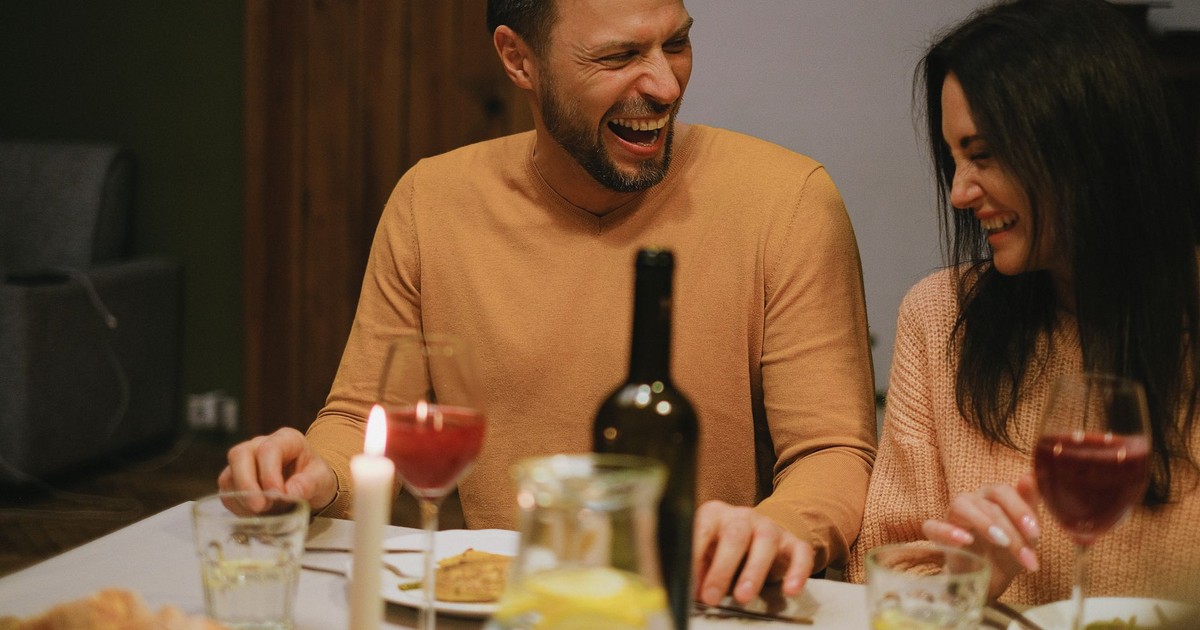
Gottman’s research points to what he calls a magic ratio: 5:1. Healthy, stable relationships maintain at least five positive interactions for every negative one. These positive moments don’t need to be grand gestures. A laugh at something stupid on television counts. A compliment about dinner counts. A hand on the shoulder when the other person looks tired counts. These are all deposits.
The problem isn’t that long-term couples fight. It’s that, over time, the ratio drifts. The irritations stay consistent while the small affirmations drop off. You still snap when someone leaves the cabinet open. You just stop saying how much you like the way they handled that thing at work. The relationship starts to feel net-negative even when nothing dramatic has happened.
Tracking this is less useful than simply restoring the habit of noticing your partner in a positive way at least a few times a day. Not performing appreciation. Actually having it and saying so.
4. They Savor Good Moments Together, Deliberately

Image Credit: Pexels
Couples who intentionally pause to appreciate the enjoyable experiences they share tend to be more satisfied in their relationships, argue less, and feel more confident that their partnership will endure, according to researchers at the University of Illinois Urbana-Champaign. The key word is intentionally. The experience itself isn’t enough. Savoring is the active decision to slow down inside a moment you’re already in, to say “this is good” out loud, or to bring up a memory from six months ago and let yourselves enjoy it again.
It might be as small as pausing during a walk to acknowledge that it was a good evening, or texting your partner a photo from last summer with nothing more than “remember this.” Long-term couples habits that stick tend to look like this: low-effort, high-signal. The signal is that you’re paying attention to the life you’re building together, not just getting through it.
5. They Respond to Small Bids for Attention

Image Credit: Pexels
One of the Gottmans’ most powerful concepts is “bids for connection.” A bid can be as simple as asking, “Did you see that funny video?” or sharing a moment from your day. It’s a reach. A small, easy-to-miss reach for contact.
Happy couples turn toward each other about 86% of the time. This means they respond to bids with interest and affection, which builds trust and emotional intimacy over time. Couples who are drifting tend to turn away, not with hostility, usually, but with half-attention. One eye on the phone, a distracted “mmm,” an “I’ll look in a second” that never comes. The bid gets made. Nobody picks it up. Over hundreds of small interactions, that pattern builds into something that feels like loneliness inside a relationship.
Responding to bids doesn’t require enthusiasm every time. It just requires presence. Putting the phone down. Looking up. Saying “yeah, tell me.” The cost is ten seconds. What it preserves is the sense that you are still someone your partner wants to reach toward.
6. They Keep Their Own Lives

Image Credit: Pexels
This is the habit that looks like the opposite of closeness but actually sustains it. The couple where each person still has a thing, a hobby, a friendship, an ambition that is entirely their own. They come back to each other with something to bring. There’s still curiosity, because there’s still something to be curious about.
Partners who feel their individual pursuits are supported by the other person tend to report higher satisfaction than those who feel they’ve dissolved into a “we” at the expense of the “I.” This holds across career ambitions, private creative pursuits, and personal growth. Both things need to survive.
7. They Make Physical Contact a Daily Habit

The research on non-sexual affectionate touch is consistent: couples who maintain regular physical contact outside of intimate contexts report higher relationship satisfaction, lower cortisol levels, and greater felt security.
A 2025 study published in Personal Relationships examined how comfort with physical affection relates to overall relationship wellbeing across two samples totaling nearly 2,000 individuals. The clearest finding was that higher average comfort with physical affection was strongly associated with better relationship wellbeing. This includes the everyday, non-dramatic stuff: a hand on the back while passing in the kitchen, sitting close enough on the couch that your shoulders touch, a longer-than-usual hug at the end of a rough day.
What makes this a habit rather than just a feeling is consistency. The couples who do this well don’t wait until they feel particularly warm or connected. They do it as a practice, and the warmth tends to follow. The contact comes first. The sense of safety comes after.
8. They Express Gratitude in Ways Their Partner Actually Registers

A 2024 study in Frontiers in Psychology involving couples aged 29 to 90 found that gratitude acts as the essential bridge between shared coping and long-term satisfaction. When couples go through a crisis together, it doesn’t automatically bring them closer. It only strengthens the bond if it generates gratitude. Without that signal, the shared struggle loses its protective effect.
The more surprising finding from the same research: your own feelings of gratitude might matter less than your partner’s perception of your gratitude. You can feel appreciative and entirely fail to communicate it in a form the other person registers. Some people need to hear it said plainly. Others notice when you remember the small thing they mentioned three weeks ago. Others feel it through acts of service, a coffee made without being asked, a task handled before it was brought up. The expression matters. And the expression that counts is the one that lands, not the one that feels most natural to give.
The couples reporting the highest satisfaction have built a climate of appreciation where, even on days when little is said, both people feel valued. That climate is constructed over time, through repetition. It is also lost the same way.
Read More: Married Couple Went to Therapy to End Things. That’s When a 30-year Secret Changed Everything.
The Part That Doesn’t Make It Into the Lists

Every one of these habits has something in common: they’re easy to do and easy not to do. On any given day, skipping the six-second kiss, scrolling past your partner’s bid for attention, or stopping yourself before saying thank you costs you nothing noticeable. The relationship doesn’t visibly change. Life continues.
The compounding happens slowly, in both directions. The couples who stay close over years and decades aren’t usually doing anything dramatic. They’re doing these small things with enough regularity that the relationship stays inhabited, full of evidence that both people are still paying attention. That’s what closeness actually feels like from the inside. Not fireworks. Just the persistent, low-key proof that you are still seen.
None of this means the hard seasons won’t come, or that habits alone can carry a relationship through every kind of difficulty. Some problems run deeper than any daily ritual can reach. But much of what people experience as distance, the creeping feeling that two people are living parallel lives rather than a shared one, starts with exactly the small habits described here. Which means it can also start to change there.
Disclaimer: This information is not intended to be a substitute for professional medical advice, diagnosis, or treatment and is for information only. Always seek the advice of your physician or another qualified health provider with any questions about your medical condition and/or current medication. Do not disregard professional medical advice or delay seeking advice or treatment because of something you have read here.
AI Disclaimer: This article was created with the assistance of AI tools and reviewed by a human editor.