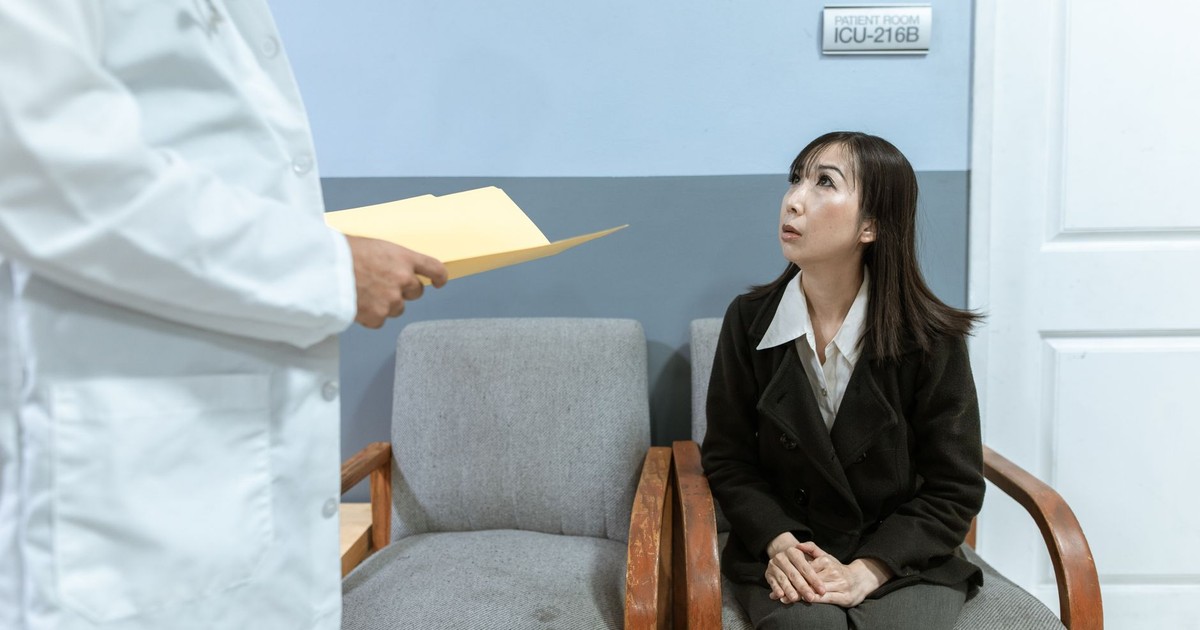

The day a woman’s husband ends up in the hospital is supposed to be one kind of terrible. It is not supposed to be the day her marriage comes apart entirely. It is not supposed to be the day she finds out the man she built a life with was running a parallel version of that life. It was a life she had no idea existed, behind a locked door she didn’t even know was there.
That is the situation one woman described in a post on r/GirlDinnerDiaries, recapped by Yahoo on June 14, 2026. Her husband had been hospitalized with liver failure. And while he was lying in a hospital bed, the shape of everything she thought she knew collapsed around her. What she alleges she discovered in the days surrounding his hospitalization was not one secret. It was three, stacked on top of each other, each one large enough to have broken the relationship on its own.
She wrote that she hadn’t realized how bad his drinking was, because, as she put it, “he was good at hiding it.” She says she also learned, around the same time, that he had been running a sports gambling addiction she knew nothing about. And then came the third thing. According to her post, “he’s been cheating on me almost the entire time we’ve been together.” The final line of her post read: “I don’t know if I’ll ever trust anyone again.”
“He Was Good at Hiding It”

The phrase she used about her husband’s drinking has probably lodged in the minds of a lot of readers, because it names something genuinely common. Genuinely difficult to explain to people who haven’t lived it. Addiction research consistently documents that people with alcohol use disorder can conceal the extent of their drinking from close family members for years. That partners are among the last to have an accurate picture of the problem.
According to the NIAAA, the 2024 National Survey on Drug Use. Health found that about 27.9 million people ages 12 and older, roughly 1 in 10, had alcohol use disorder in the past year. That is a number large enough to suggest that an enormous number of partners, parents, siblings. Adult children are, right now, living alongside someone whose relationship with alcohol is far more serious than it appears on the surface. Many of them don’t know. And the reason they don’t know is not carelessness. It is concealment, and concealment is something people with alcohol use disorder can become extraordinarily skilled at.
Hidden drinking can include concealing alcohol around the home in unusual places, drinking secretly before social events to avoid judgment. Consuming large amounts without appearing overtly drunk. Which causes partners to consistently underestimate the actual severity of the problem. That last detail is the most consequential one. High tolerance is not a sign that someone is “handling it.” It is a sign that the body has adapted to a level of consumption that would floor someone who doesn’t drink that way.
The person beside them at dinner watches them drink two glasses of wine and thinks: fine. Meanwhile, the full picture is happening elsewhere, in the car before they came in. In the office bathroom, or in the back of the closet where the bottles are.
Denial and minimization make it especially difficult for a spouse to recognize a husband’s alcohol addiction, especially when he is skilled at concealment. A partner may go to great lengths to hide the addiction out of fear of judgment. That secrecy can prevent the people closest to him from recognizing the signs at all.
The woman in this story describes exactly this dynamic. She was not oblivious. She was deceived, by someone who had made deceiving her into a practice.
When One Secret Is Actually Several

What makes her story especially hard is not only the drinking. It is the number of parallel realities she says she discovered at once. The hospitalization didn’t uncover one thing. It uncovered the shape of a life her husband had been maintaining alongside their shared one.
The alleged sports gambling addiction is a detail that may seem secondary to the liver failure. But it is worth understanding how those two things can be related. A 2024 study published in JAMA Network Open found that sports bettors were much more likely to report binge drinking than non-sports gamblers or non-gamblers, with the risk rising sharply as betting frequency increased. And that alcohol consumption is generally higher among sports gamblers, with many using substances while gambling. These two things can feed each other in a way that makes both harder to see from the outside.
The drinking doesn’t look like a problem if it is happening in the same spaces as watching sports, which is normalized. The gambling doesn’t register as a problem if it is framed as a hobby. Both can gradually consume more of a person’s life while remaining invisible to the people closest to them.
A 2025 study from UC San Diego found that the expansion of legal sports betting has driven record increases in gambling addiction across the United States, with sportsbooks now operating in 38 states. Hundreds of billions of dollars in wagers placed, mostly online, coinciding with a 23% cumulative rise in internet searches for gambling addiction help nationally. Online betting in particular accelerates this dynamic, because it removes every external check. There is no drive to a casino. There is no cash changing hands in a physical space. There is a phone, and a habit. A person who has become very good at hiding what they do on it.
What she says she found out about the cheating is in a different category from the other two. Addiction involves a loss of control in a way that cheating, as a sustained pattern across nearly an entire relationship, does not. Those are two different things. Collapsing them into one story of “a man with problems” does her a disservice.
For her, though, they arrived simultaneously. The hospitalization that was supposed to be a crisis of health became, instead, the moment the whole structure became visible. The financial deception that often runs alongside hidden gambling, secret accounts, unexplained debts, missing money, adds a fourth layer for many people in similar situations, one that tends to emerge only after someone has already absorbed the other blows.
What It Does to the Person Who Finds Out

The focus in a situation like this tends to default, almost reflexively, to the sick person. The hospital. The diagnosis. The prognosis. What happens next medically. And there is a real person in a hospital bed. His condition is serious, and that is true. But there is also a woman who walked into this week expecting to manage a health crisis. Came out the other side having learned that the person she was managing it for had been deceiving her for years, possibly from the very beginning.
Living with a spouse who has alcohol use disorder produces its own distinct kind of damage: chronic anxiety. Hypervigilance, persistent self-blame, shame about home life, withdrawal from outside relationships and support systems. A grief that grows in particular from mourning the relationship you believed you were in. That last one is especially acute here. The woman in this post is not grieving one revelation. She is grieving a marriage that, in retrospect, may have been something other than what she believed it was for most of its duration.
The line she ended her post with, “I don’t know if I’ll ever trust anyone again“, is not dramatic. It is an accurate description of what happens when betrayal is not a single event but a structure. When you discover that the problem wasn’t this year. The last two years, but possibly the whole thing. That recalibration doesn’t happen quickly. It doesn’t happen cleanly. The person who comes out the other side of that revelation has to rebuild not only trust in another person. But trust in her own perception of what she was living through. That is a substantial undertaking.
The Harder Question She’s Already Asking
She says she doesn’t know if she’ll trust anyone again. That question is probably standing in for a more specific. More frightening one: whether she can trust her own read of a situation. Whether the signals she missed were truly invisible or whether they were there and she explained them away. Whether being deceived this thoroughly says something about him, or about her, or about both.
The answer, to the degree that there is one, is that it says almost everything about him and almost nothing about her. People hiding an addiction become skilled at deflection, reacting strongly to questions in order to protect the secret. The behavioral patterns of concealment are not manipulation in the conventional sense but survival strategies that develop. Deepen as the addiction grows. The person doing the hiding gets sharper at it as the addiction deepens. The person living with them gets better at accepting the explanations. The other option is hard to hold: that the person they love is living a life they know nothing about. Most people will not hold that thought for long without hard evidence.
She had no hard evidence until she was standing in a hospital hallway. That is not a failure of observation. That is what a well-maintained deception looks like from the outside.
What she does with the information now is entirely hers to figure out. There is no clean answer to what you owe someone who is both critically ill. Responsible for a sustained betrayal. Those two things don’t cancel each other out in either direction. The illness doesn’t erase the deception, and the deception doesn’t mean she owes him nothing. Both things are real, and she gets to decide what to do with them on her own timeline.
Read More: Why Married Men Cheat Without Ending Their Marriage
What She Ends Up Knowing That She Didn’t Before
The end of her post is the most honest thing about it. Not “I’m leaving him,” not “we’ll work through it,” not any of the tidy resolutions that this kind of story is supposed to deliver. Just: I don’t know if I’ll ever trust anyone again.
That is a reasonable place to be. There is a specific grief in discovering that you didn’t know the person you thought you knew. The marriage you were in was something other than what you believed. That grief does not resolve on a timeline anyone else gets to set. Some of these patterns go back further than the discovery does. Naming that is not a solution. It is usually just the beginning of the real accounting.
She posted what happened to her in a subreddit called r/GirlDinnerDiaries, which is not a space built for crisis. Then Yahoo recapped it, and now a lot of strangers know about the worst week of her life. If she is reading any of this, only one thing is worth saying. The last line of her post is the most understandable sentence anyone who has been through something like this has ever written. Not knowing if you can trust again is not weakness. It is a correct response to the information she was given. What she builds from here is a different question, and it is entirely hers.
Disclaimer: This information is not intended to be a substitute for professional medical advice, diagnosis, or treatment and is for information only. Always seek the advice of your physician or another qualified health provider with any questions about your medical condition and/or current medication. Do not disregard professional medical advice or delay seeking advice or treatment because of something you have read here.
AI Disclaimer: This article was created with the assistance of AI tools and reviewed by a human editor.