

When someone survives 14 hours in an operating room, the way their partner acts in the ICU, and in the weeks that follow, can reveal a lot. Ann M. learned what her husband’s behavior looked like at the hardest moment of her life.
Ann M., who posts on TikTok as @lazyfacedmom, shared her story in a July 31, 2026, video about the red flags she says she missed during her former marriage, Scoop Upworthy reported. Viewers had asked whether there were warning signs before her divorce, and this was her answer. The account is hers alone and has not been independently verified. Her ex-husband is not named in any coverage of the story.
The video has been viewed more than 600,000 times. Ann had just had a 14-hour surgery to remove a golf-ball-sized tumor from her brainstem. She was wheeled into the neurological ICU expecting her husband to be at her bedside. Instead, according to Ann, nurses found him in the hospital hallway flirting with another woman, and staff had to prod him to come into her room.
How Big Was Ann’s Surgery?
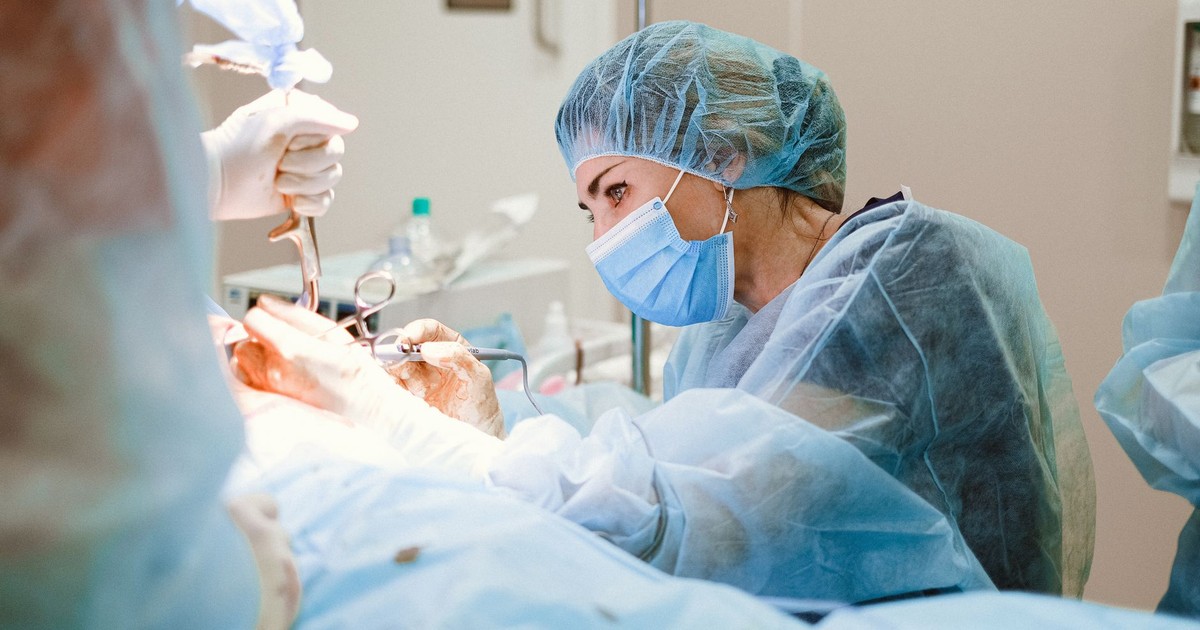
Before there is any story about a husband, there is a story about Ann. Removing a tumor from the brainstem, the part of the brain that controls breathing, heart rate, and swallowing, is one of the most serious surgeries a person can have. She was also a new mom. Her baby was about five weeks old when she came home from the hospital.
Her recovery left her with real physical limits. She came home with a shaved head and a facial droop, and she needed a walker to get around. What Ann wanted in those first hours in the neuro ICU was not much. She wanted to see her husband when she opened her eyes. Instead, hospital staff had to go find him.
What Happened at the 50-Person Party?

A week after Ann left the hospital, her husband threw a house party for about 50 guests, she says. She was recovering from brain surgery and caring for their 5-week-old baby. She was using a walker. She said she felt “propped up like Weekend at Bernie’s for all to see,” while guests praised him for “taking care of this family.”
The party was not for Ann. According to Ann, he threw it not to welcome her home but to gather praise for taking care of his sick wife. The guests told him what a devoted husband he was, holding the family together through all of this. Ann sat there, still healing, while her husband collected compliments for care she says she was not getting.
Read More: Dealing With a Narcissistic Partner? Here’s What Actually Helps
Dr. Ingela Thuné-Boyle, a health psychologist who writes about narcissistic relationships, says narcissistic partners may exploit a sick person’s situation for their own gain. “They may present themselves as the long-suffering caregiver to others, gaining sympathy while continuing to mistreat their partner behind closed doors,” she writes. Ann’s account of that party sounds a lot like this: a show of devotion in front of a room full of people who were praising the wrong person.
Ann says she always knew her husband had a drinking problem, but that night it got worse than she ever expected. She says he got so drunk that he refused to help with their newborn. When she asked him to bring the baby’s bottle so she could feed him, she says he got angry and kicked her aside. Ann says she slid off the couch and crawled across the living room floor to reach her baby’s Moses basket. Then she used her walker to pull herself up and make a bottle. “I get up, make the bottle… feed him on the floor, crying because this is my life,” she recalled.
Why Was the Party the Biggest Red Flag?
The hallway flirting is shocking, but it could be explained away as nerves, bad judgment, or one terrible moment in a terrible week. The party is harder to excuse, because it took planning and invitations. It also treated a wife’s brain surgery and her visible recovery as a way to win praise.
Couples therapist Daniel Dashnaw calls illness “a stress test narcissism rarely passes,” because it shifts attention in ways that cannot be negotiated or reframed. “Care without applause feels intolerable,” he writes. Seen that way, a party where caregiving finally earns applause makes a grim kind of sense.
Simply Psychology notes that a narcissistic spouse needs constant admiration and validation, and may look for attention from people outside the marriage, which can lead to infidelity. That kind of attention-seeking does not always look the way you would expect. Sometimes it looks like a house party where you are, in theory, the guest of honor.
The Red Flags She Says She Missed

Ann framed her video as a look back at the warning signs. She was answering viewers who wanted to know if there were red flags before her divorce. She was not presenting herself as naive. She was doing what many women do after a marriage ends: putting the picture back together with the pieces she has now.
The drinking was one of the first signs. Ann says she always knew about it, but she did not expect it to reach the point where he would forget about their baby. When heavy drinking and self-centered behavior show up together in a marriage, each one can make the other harder to live with.
Behavior like this can be hard to spot from inside a relationship, because it rarely shows up all at once. It comes in small moments that each seem to have a good reason: a bad week, a lot of stress, he is just not good in hospitals. The drinking is already there. The flirting gets explained away. The party is seen as his way of coping. Each moment sits in its own box, and only when you line them up does the pattern become clear.
A 2026 study from Michigan State University, published in the Journal of Personality, tracked more than 5,000 couples for up to six years. It found that narcissistic rivalry, the kind that involves putting others down to feel superior, was linked to lower relationship satisfaction for both partners. Narcissistic admiration, the kind that involves trying to impress others, had no meaningful effect on either partner’s satisfaction. No one can diagnose a person from a TikTok video, but the research shows that not everyone with narcissistic traits behaves the same way.
What Happened After?
Ann later divorced her husband, who has since died. She is now a single mom. She has kept posting on TikTok about what she calls his “double life,” including things she says she learned about him after the marriage ended.
Commenters were stunned. “I’m just as mad at everyone who went to that party and saw you and knew the situation and stayed,” one wrote. Another said, “Just when I thought my narcissistic, cheating, lying, stealing, hateful ex-husband was the worst, I learn about someone worse.” Many women said they had been in some version of that hospital hallway, waiting for someone who was busy somewhere else.
Ann’s story also echoes research on illness and marriage. A study of 515 patients, including people with malignant brain tumors, found that the separation or divorce rate was 20.8% when the wife was the patient, compared with 2.9% when the husband was, ScienceDaily reported. “Female gender was the strongest predictor of separation or divorce in each of the patient groups we studied,” said Dr. Marc Chamberlain, a co-author of the study.
What Ann’s Story Is Really About
Ann’s video is about more than a bad husband. It is about how long it can take to see the whole picture when you are inside it. She described the drinking, the hallway, and the party. She was a brand-new mom recovering from brainstem surgery, and the man who was supposed to be her partner was collecting compliments from 50 guests about what a good job he was doing.
She named the red flags and looked back at all of them. Then she made a video so other women could spot them sooner, before the surgery, before the party, and before the moment when the pattern is impossible to ignore.
A marriage does not come with warning labels. It is hard to search for red flags while you are living through them, especially while you are healing and trying to hold everything together at once. Often the pattern only becomes clear from the other side. Ann is on the other side now, and she is focused on her recovery and her son. Not all of the 600,000 people who watched her video are there yet.
Some are still in the hallway, wondering why their partner is not by their side.
AI Disclaimer: This article was created with the assistance of AI tools and reviewed by a human editor.