
Every culture with enough history and enough sulfur has decided, at some point, that the earth beneath their feet is trying to tell them something. The ground rumbles. The water runs scalding hot. Animals die without explanation at the edge of certain caves, and the air above certain valleys smells of something no living thing should be breathing. Before science gave us plate tectonics and volcanic gas emissions, the explanation was obvious: this is where it opens up. This is the seam between the living world and what lies below.
The idea of entrances to hell is as old as recorded religion. Ancient Greeks mapped the underworld onto real geography, assigning specific caves and rivers to the journey of the dead. Buddhist cosmology found its proof in the volcanic wastelands of northern Japan, where the landscape already looked like someone’s illustration of damnation. Medieval Europeans pointed at Iceland’s most violent volcano and said, yes, that’s where the damned go. The need to locate the afterlife in a physical place is not a quirk of primitive thinking. It’s a deeply human reflex – the same one that sends people driving out to Hellam Township in rural Pennsylvania at midnight to find a gate in the woods that may or may not exist, depending on who’s telling the story.
What follows are eight of the most compelling places on earth that have, across wildly different cultures and centuries, earned the reputation of being an entrance to hell. Some have a geological case for the title. Some have archaeological proof. And at least one is powered entirely by the enduring human capacity to tell a good story.
1. The Darvaza Gas Crater, Turkmenistan
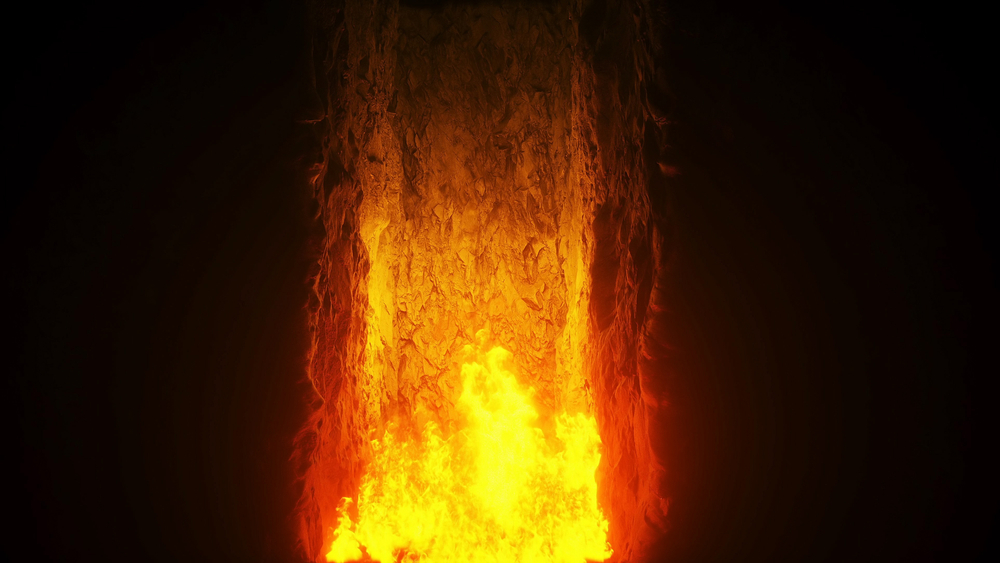
The Darvaza gas crater, officially named the Shining of Karakum, is a burning natural gas field that collapsed into a cavern near Darvaza, in Turkmenistan’s Karakum Desert. It sits roughly 260 kilometers north of the capital, Ashgabat, which means getting there requires hours of driving across a desert that makes the word “remote” feel inadequate. There are no road signs pointing toward it. The driver simply knows where to turn off the asphalt and into the sand.
The crater formed in 1971 when Soviet geologists accidentally collapsed a natural gas chamber while drilling. Fearing the release of poisonous gas, they set it alight, expecting it to burn out quickly. More than fifty years later, it is still burning. The crater measures approximately 70 meters across and 30 meters deep, and at night, the glow is visible from miles away – an orange halo floating above a flat, dark desert. The name “Darvaza” itself derives from a Turkmen word meaning “gate,” which, given the circumstances, feels less like coincidence and more like prophecy.
In 2013, Canadian explorer George Kourounis became the first person to enter the crater, wearing a full heat-reflective Kevlar and Nomex suit with a firefighter’s self-contained breathing apparatus. He descended to the crater floor, which sat at around 400 degrees Celsius, and retrieved soil samples. Scientists later found extremophile bacteria living in those scorched samples. Life, apparently, does not get the memo. As of mid-2025, reports from Turkmengaz indicate the fires have reduced significantly in intensity – nearly threefold – partly due to new wells drilled nearby to siphon off gas pressure. The Door to Hell may, for the first time, actually be closing.
2. Pluto’s Gate, Hierapolis, Turkey
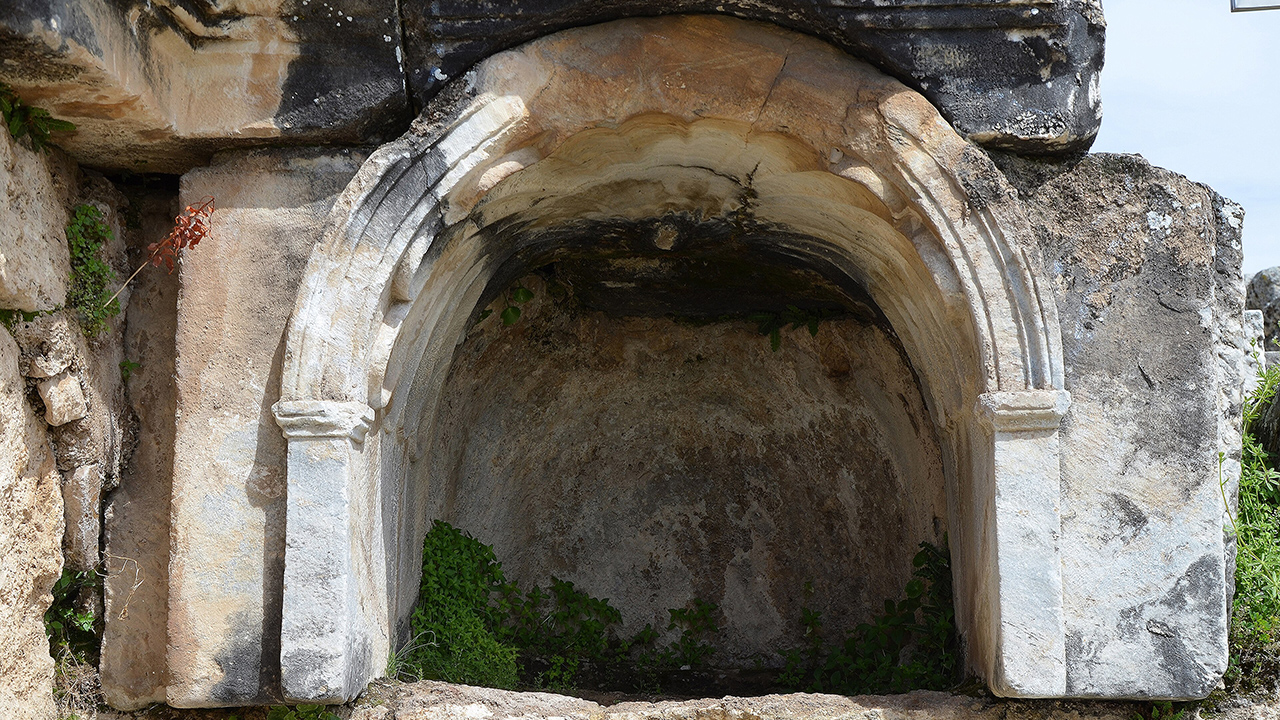
Known as Pluto’s Gate – Ploutonion in Greek, Plutonium in Latin – this cave in southwestern Turkey was celebrated as the portal to the underworld in Greco-Roman mythology. It sat in the ancient Phrygian city of Hierapolis, which now lies adjacent to the tourist-friendly hot springs of Pamukkale – a slightly surreal combination of “welcome to paradise” and “this is where the ancients believed hell began.” Archaeologists discovered the stone archway in 2013 during excavations of the ancient Hellenistic city’s ruins.
Historic sources described the opening as filled with lethal mephitic vapors. They were not exaggerating. A study published in Archaeological and Anthropological Sciences found CO2 concentrations in the grotto below the temple of Pluto at up to 91 percent – which is, to be clear, not an atmosphere in which a person or animal survives for long. The lethal gas formed a dense layer coating the bottom of the cave, creating a deadly trap particularly for animals, which breathed with their noses closer to the ground.
The ancient priests knew what they were doing. Pilgrims took the waters in the pool near the temple, slept not far from the cave, and received visions and prophecies – the fumes from Hierapolis’s phreatic groundwater produced hallucinations. According to the Greek Reporter, archaeologists noted that the fumes emitted from the cavern still maintain their deadly properties, as researchers recorded passing birds suffocating after breathing the toxic air. UNESCO designated the ruins of Hierapolis, including Pluto’s Gate, as a World Heritage Site. Two millennia later, it is still doing exactly what it always did.
3. Mount Osore, Japan
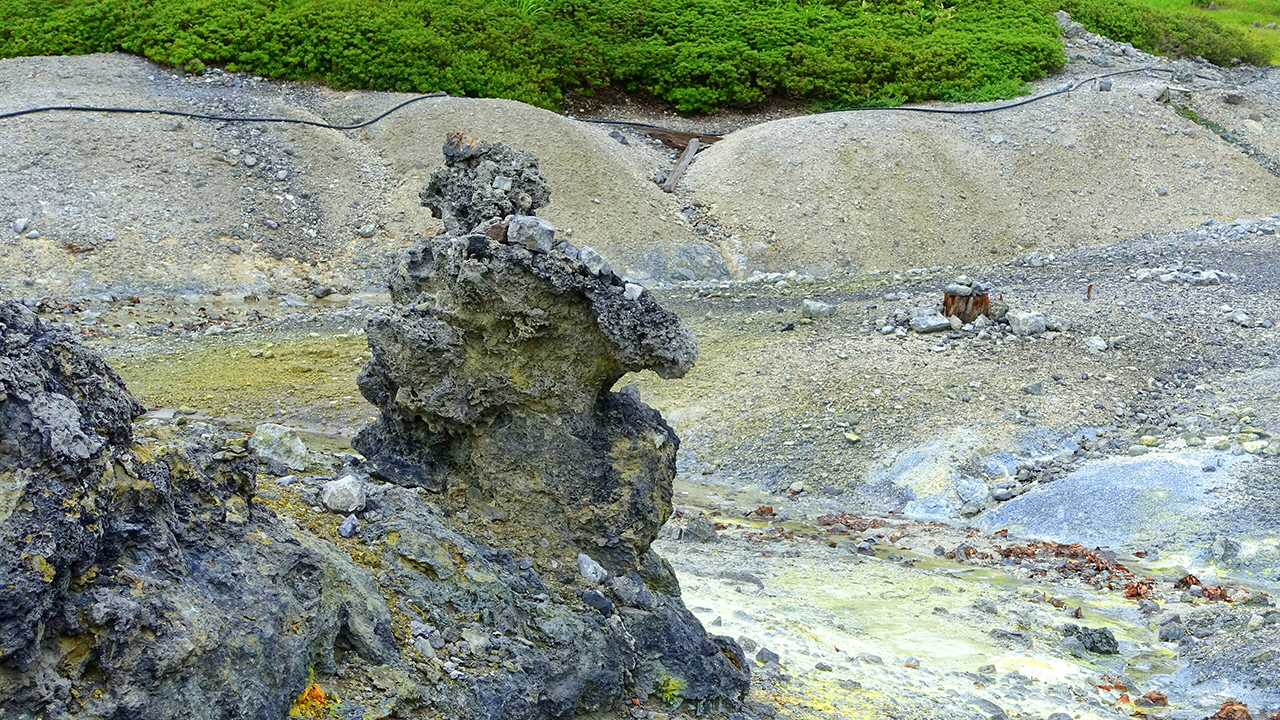
Perched at the end of the remote Shimokita Peninsula in Aomori Prefecture, Mount Osore – also called “Fear Mountain” or “Dread Mountain” – is a spiritual maelstrom where Buddhist cosmology, volcanic desolation, and profound bereavement converge. It is sanctified as one of three most sacred sites in Japan, alongside Mount Koya and Mount Hiei, and the landscape mirrors Buddhist conceptions of the afterlife. The connection is not metaphorical. The place genuinely looks like an illustrated vision of the underworld: barren carbonized rock, sulfur vents hissing toxic steam, and a lake so acidic almost nothing survives in it.
The site was founded by the monk Ennin in 862 AD. While studying in China, Ennin had been presented with a vision that commanded him to go east in Japan. After traveling for thirty days, he arrived at a volcanic wasteland that recalled Buddhist accounts of the underworld, with sulfur venting hot, toxic gases across a ghostly barren moonscape. A small brook runs from the volcano to neighboring Lake Usori, and this acts as a “Sanzu River” – in Japanese Buddhist belief, the River of Three Crossings that souls of the deceased must cross to enter the afterlife.
At the heart of the site’s haunting fame are the itako – blind female shamans trained in brutal ascetic disciplines to converse with the dead. Twice annually, in July and October, they hold kuchiyose séances, summoning spirits. Fewer than two dozen itako remain today. These séances draw thousands of pilgrims who come to speak with relatives they have lost. It is grief made ritual, and the geology has been doing its part for centuries.
4. Fengdu Ghost City, China
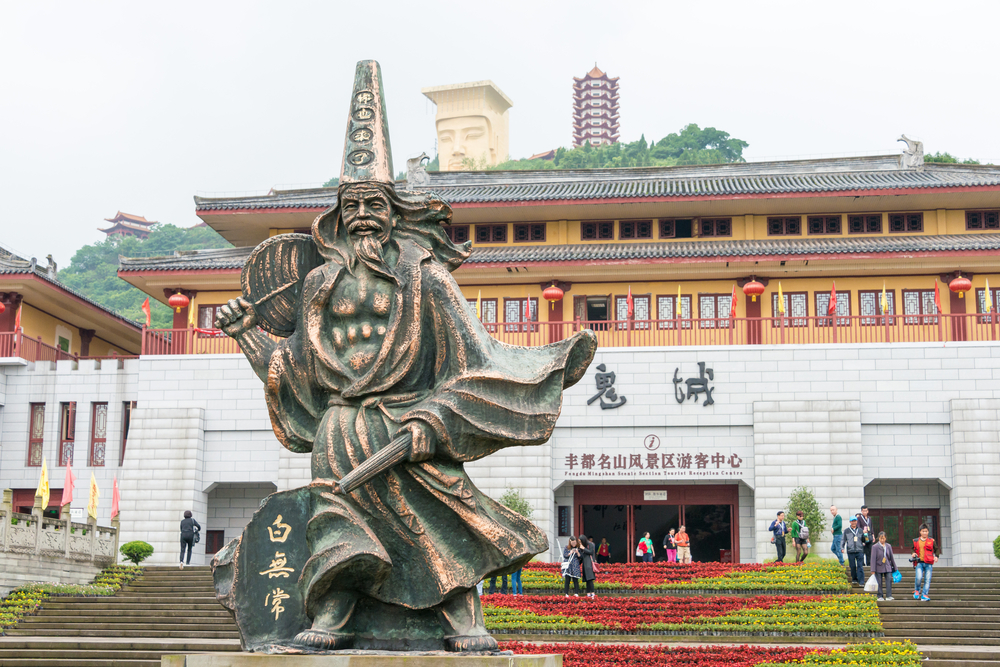
Located on Ming Mountain in Chongqing Municipality, this collection of monasteries, shrines, and temples dates back nearly 2,000 years and arose from the intersection of Buddhism, Taoism, and Confucianism. According to the site’s founding legend, two Han Dynasty officials named Yin Changsheng and Wang Fangping came to the area to practice Taoism and subsequently became immortal. Their combined names translated into “King of Hell,” and thus the area became known as a crossroads for spirits transitioning into the afterlife.
In Buddhist mythology, the newly dead must pass three tests, and the temples in the Ghost City represent these three tests. The spirits here, it is believed, judge and torment the deceased and ultimately determine where they will proceed next in their afterlife. The architecture does not soften this premise. Fengdu’s gate to hell has a suitably ominous appearance: black and red with peaked roofs and flanked by eighteen sculptures of demons enacting gruesome punishments. One of those punishments, for the record, involves being boiled forever in a wok.
The Ghost City sits on a hill above the Yangtze River and survived the construction of the Three Gorges Dam, which submerged the older sections of the surrounding town while leaving the hilltop temples intact. The site features many representations of the Chinese belief that the dead must pass three tests before entering the afterlife, and today there are even actors on-site playing the role of the legendary demons who guard the bridge. Grief tourism has a very long history in China, and Fengdu is its most theatrical expression.
5. The Seven Gates of Hell, Hellam Township, Pennsylvania
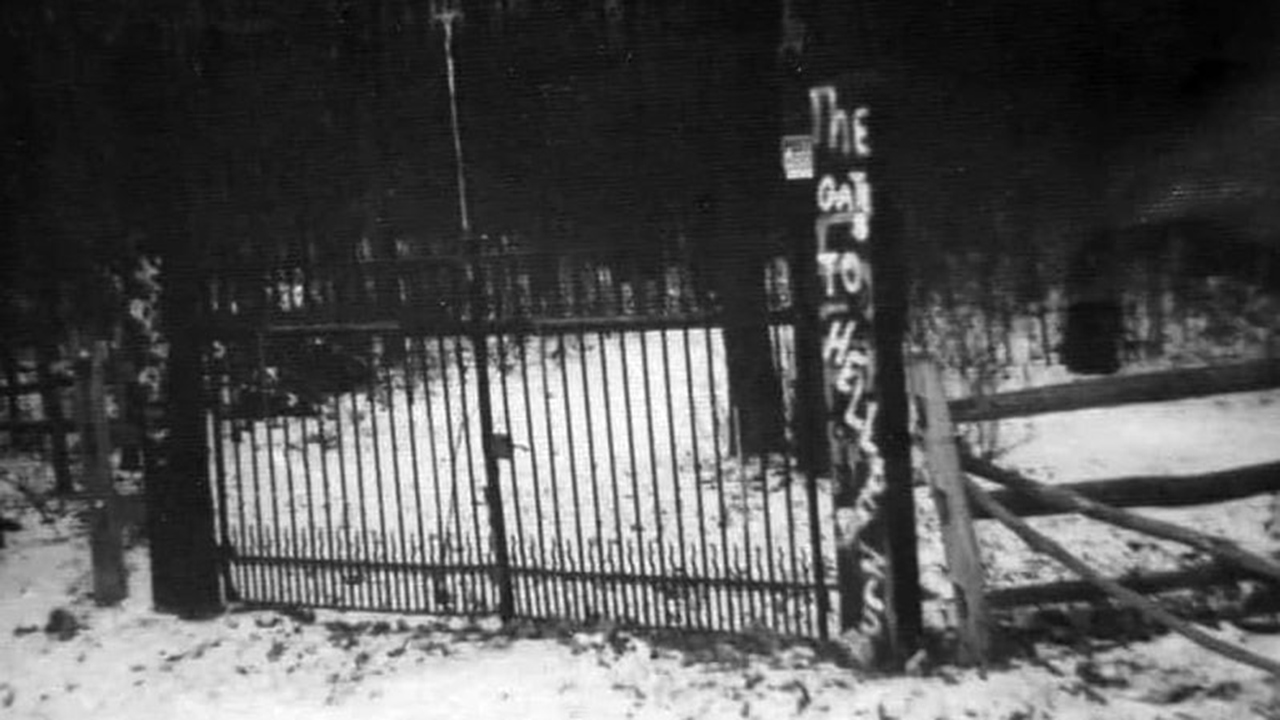
Hellam Township near York, Pennsylvania is the subject of a modern urban legend claiming that it contains the Seven Gates of Hell. The story, as these stories tend to go, has accumulated several origin myths. One version holds that a doctor who ran a mental asylum on the property perished in a fire and, unable to save his patients, built seven gates so they could escape – and the souls of those who died never left. Another version, more structurally convenient, traces back simply to the township’s name. Hellam Township was not, in fact, named after hell, and there was never an asylum or a fire here.
According to local folklore, there is a road in the woodland surrounding Hellam which features seven gates, and entering all of them will lead straight to hell. Only some of these gates can be seen in daylight, but when night falls, they all appear. Whatever horrors await have reportedly stopped every explorer from progressing further than the fifth gate. The road in question, Toad Road, is now private property, which has not stopped generations of teenagers from attempting the pilgrimage anyway.
There is something worth sitting still with here: the Seven Gates legend is young by the standards of this list, probably no older than the mid-twentieth century, and it has no volcanic geology, no ancient priesthood, and no dead birds to back it up. What it has is the universal pull of the forbidden threshold, dressed in the specific vocabulary of rural Pennsylvania. The fact that it keeps drawing people is its own kind of evidence – not of hell, but of how badly we want to believe the door exists somewhere.
6. Cape Matapan Caves, Greece
When Orpheus and Hercules made their mythological journeys into Hades’ underworld, they supposedly entered through Cape Matapan Caves. These caverns open into a cliff face at sea level and lead to a deep network of tunnels that have yet to be fully explored. Cape Matapan – also known as Cape Tenaron – sits at the southernmost tip of the Peloponnese, where the Mani Peninsula drops into the Mediterranean. It is a landscape that earns its mythology: sharp limestone cliffs, dark sea, and the kind of silence that only exists at the very edge of a landmass.
Orpheus traveled to the Greek underworld in search of Eurydice by entering a cave at Taenarum, or Cape Tenaron, on the southern tip of the Peloponnese. The myth of Orpheus descending to bargain for his dead wife is one of the oldest and most persistent stories about what lies below – partly because it acknowledges what everyone already suspects, which is that the dead do not come back, no matter how beautifully you play the lyre. To find the entry point to the Cape Matapan Caves, you seek out the ruins of a Spartan temple above the Greek gates to hell. The ruins are still there.
The site is also connected to the legend of Heracles dragging Cerberus, the three-headed dog who guards the underworld, back into the living world. The cave is real, the tunnels go deeper than anyone has mapped, and the Spartan temple crumbles above it all. The Greeks were doing something very specific when they built a temple at the mouth of a cave they believed led to the land of the dead: they were putting a structure between themselves and what they feared, which is, all things considered, a very human strategy.
7. Lake Avernus, Italy
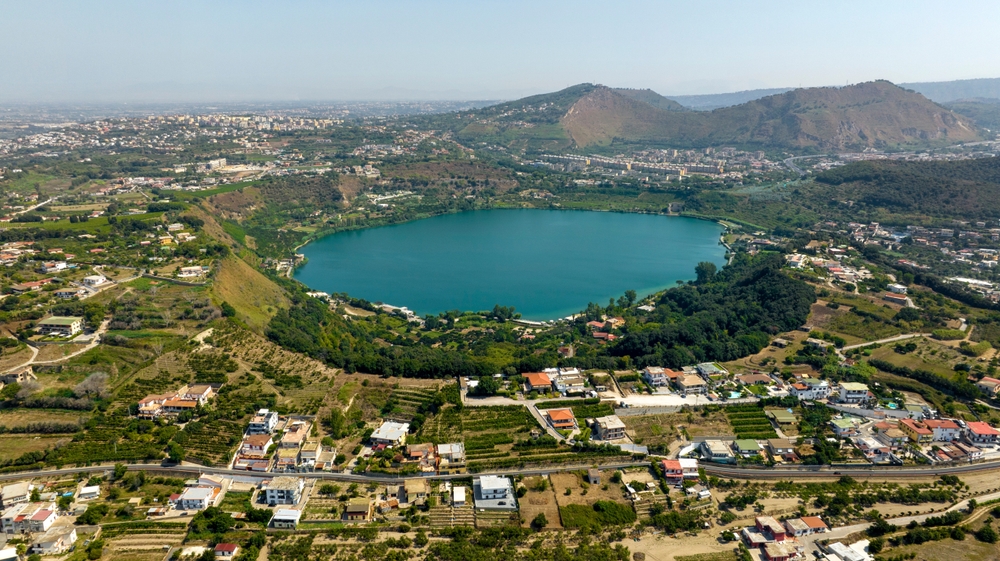
The Trojan hero Aeneas entered the underworld through a cave at Lake Avernus, a volcanic crater lake in Campania, Italy. Virgil placed this descent in the Aeneid, one of the foundational texts of Western literature, which gave the lake a literary prestige that its geology had already earned on its own terms. Lake Avernus sits in the Phlegraean Fields – a vast volcanic caldera area near Naples where the ground is thin, the hot springs are everywhere, and sulfurous steam rises from cracks in the earth with an enthusiasm that makes the whole region feel perpetually unsettled.
The lake’s name itself comes from the Greek “aornos,” meaning “without birds,” because the volcanic gases rising from the water were historically lethal enough to kill birds flying over it. Ancient writers took this as confirmation of what they already believed: that the breath of Hades was escaping through the lake’s surface. A barren volcanic wasteland of howling winds and bubbling caldrons, the Phlegraean Fields are similar to Japan’s Mount Osore – a hellscape in an active volcanic caldera stinking of sulfurous steam with fumaroles and mud pots, small cones and multiple craters.
The Roman poet Virgil reportedly lived near the lake, which is either a remarkable coincidence or a writer doing exactly what writers do, which is finding the most dramatic possible backdrop for the story he wanted to tell. In the mythological tradition, Odysseus too visited the underworld, entering through the river Acheron in northwest Greece – but Lake Avernus held a particular grip on the Roman imagination, perhaps because the Phlegraean Fields look, even now, like a place where the earth is actively trying to exhale something it has been holding for a very long time.
8. Mount Hekla, Iceland
Into the Middle Ages, Mount Etna in Sicily was considered an entryway to hell, but Iceland’s Mount Hekla gave it serious competition for the title. Medieval European monks and scholars identified Hekla as the prison of Judas Iscariot and a gateway through which the damned descended. In 1120, a monk referred to Hekla as the prison of Judas, and in the fourteenth century, locals claimed they saw souls flying in the mountain’s fire during an eruption. The fact that those were almost certainly birds did not significantly diminish the story’s circulation.
Hekla is one of Iceland’s most active volcanoes and has erupted more than twenty times since Iceland was settled in the ninth century. Its Icelandic name translates roughly to “short hooded cloak,” a reference to the cloud that almost perpetually obscures its summit. For medieval Europeans, Iceland itself was already the outer edge of the known world – a place of ice, fire, and incomprehensible darkness in winter – and Hekla, erupting with reliable fury, fit neatly into an existing framework of divine punishment and infernal geography. An English manuscript from the twelfth century describes flocks of souls being seen flying into the volcano during eruptions, a vision so potent it circulated across European theological writing for centuries.
The association never fully faded. Hekla remained on European maps marked as a gateway to hell well into the seventeenth century, long after explorers had charted the coastlines and confirmed Iceland’s general non-supernatural status. Some ideas, it turns out, are more durable than the evidence.
Read More: 12 Things Christians Should Know Before Choosing Cremation
What Keeps the Door Open
The eight places on this list span thousands of years and half a dozen distinct religious traditions, and they arrived at more or less the same conclusion: the underworld is down there, and certain spots on earth are thinner than others. Volcanic gases that killed birds and hallucinated pilgrims. A burning crater that Soviet engineers could not put out. A cave at the edge of a peninsula where the world simply stops. A ghost city built specifically to replicate the trials of the dead. Every single one of these places earned its reputation through some combination of geology, mythology, and the deep human refusal to believe that the dead just disappear.
What that tells you is not that hell is real. It tells you something more interesting, which is that the need to locate the beyond – to give it an address, a latitude and longitude, a road that is technically private property but look, the gate is right there – is among the most persistent things about being human. We build temples at the mouths of caves. We descend into burning craters in fireproof suits. We drive out to Toad Road at midnight. The archive of places we have designated as entrances to hell keeps growing, not because more hellmouths are opening, but because the question underneath all of them never goes away. That question is not really about geography. It never was.
Disclaimer: This article was created with AI assistance and edited by a human for accuracy and clarity.