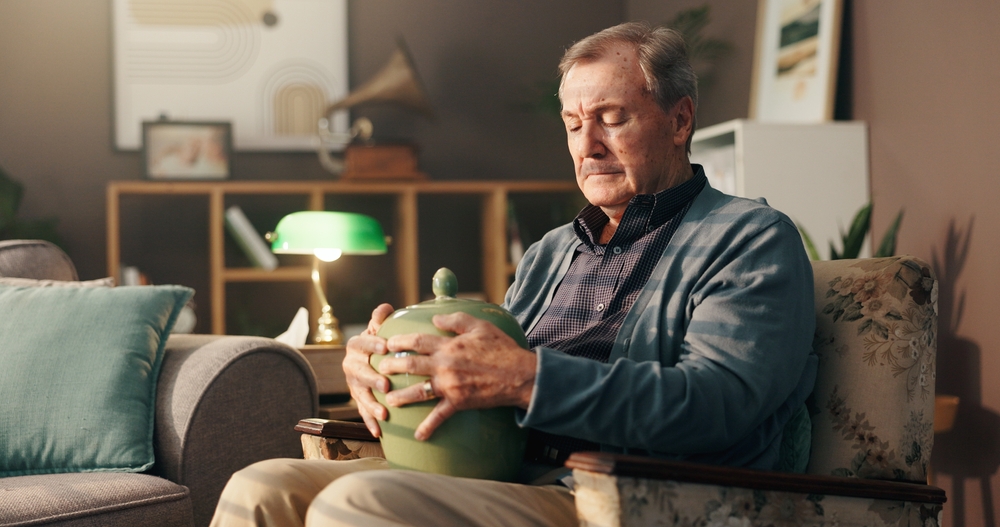

Death has a way of arriving with a to-do list attached. Before most families have had time to cry, someone is already asking about arrangements. And if the person who died was a Christian, or if the people doing the planning are, another question often surfaces alongside the practical ones: does it matter, spiritually, what happens to the body? Specifically, is cremation okay?
It’s not a question that pastors used to get much. But it’s one they get constantly now, and for good reason. The landscape has shifted dramatically in a single generation, and many Christian families find themselves standing at a decision they were never taught to think through. The options feel both practical and loaded at the same time, which is a particularly exhausting combination when you’re already grieving.
What follows isn’t a prescription for what to decide. It won’t tell you cremation is wrong, and it won’t tell you it’s obviously fine. What it will do is walk you through the things that genuinely matter, theologically and practically, so that if you face this decision, you’re facing it with clear eyes.
1. The Bible Never Directly Addresses Cremation
This is the starting point, and it matters more than most people realize. Nowhere in Scripture is cremation condemned, and nowhere is it endorsed. The Bible is, on this specific question, silent.
That silence gets filled in quickly by tradition, denominational teaching, cultural habit, and the occasional well-meaning person who is very certain they know what God thinks. But the silence itself is significant. The Bible does not have any commands or laws against cremation.
There are actually instances in the Old Testament where cremation or burning of bodies occurs without divine condemnation. In 1 Samuel 31:11-13, the men of Jabesh-gilead burned the bodies of Saul and his sons and buried their bones, and the act is presented with honor in the text. The point isn’t that the Bible endorses cremation. It’s that the theological argument against it rests on interpretation and tradition, not on a direct command from God. That’s a meaningful distinction when you’re trying to make a decision in good conscience.
2. Burial Was Clearly the Historical Norm
Acknowledging that the Bible doesn’t forbid cremation is not the same as saying the choice carries no historical weight. Among the ancient Israelites and the early church, burial was overwhelmingly the standard practice, and that history is part of the conversation.
Bible-era practices followed burial as the norm. The Hebrews did not normally cremate, except in the most unusual cases of emergency. Burial was the practice Jesus’ own body received after the crucifixion, a fact that has shaped Christian funeral tradition ever since. The connection between burial and resurrection hope, the idea that the body is laid to rest like a seed waiting to be raised, runs deep in Christian liturgy and imagination.
Both Old and New Testament passages refer to burial as the standard practice for the Israelites and the early Christians. Cremation, rather than being a norm, was often associated with punishment or with surrounding pagan cultures. That history doesn’t make cremation a sin, but it does explain why some Christians feel the pull of burial as an act of faith, not just tradition.
3. Cremation Rates Have Risen Sharply, Including Among Christians
This is simply the reality on the ground, and ignoring it doesn’t make it less true. According to the National Funeral Directors Association’s 2025 Cremation and Burial Report, the 2025 cremation rate is projected to be 63.4 percent and the burial rate is projected to be 31.6 percent. Cremation is now more than twice as common as burial nationwide.
By 2045, the cremation rate is expected to reach 82.3 percent. That trajectory suggests this is not a passing trend. Among the reasons the NFDA identifies for the shift: cost, changing consumer preferences, and weakening religious prohibitions across many denominations.
The relevance for Christian families is this: many people making this decision have already watched someone they love choose cremation, or have grown up in a church community where it was entirely unremarkable. The decision doesn’t feel radical to most families today. But that cultural normalization is exactly why it’s worth pausing to think theologically, on your own terms, rather than just going along with the default.
4. Your Denomination’s Position May Already Be Clear
Christianity is not a monolith, and on this question the differences between traditions are real and significant. If you are part of a specific church community, the first thing worth knowing is what your own tradition actually teaches.
In 1963, the Catholic Church officially lifted the absolute ban on cremation. A 2016 instruction from the Congregation for the Doctrine of the Faith makes clear that cremation itself doesn’t contradict Catholic belief, as long as it isn’t chosen out of a denial of faith. However, full-body burial remains the recommended and preferred practice, because it most clearly expresses the Christian hope of resurrection and the dignity of the human body.
Most Protestant denominations take a more permissive view, treating the choice as a matter of personal conscience. The American Episcopal Church has accepted cremation so broadly that many parishes have built columbaria into their churches and gardens. Pentecostal Christians do not forbid cremation, though traditional burial is preferred. And as we’ll cover shortly, the Eastern Orthodox tradition stands as a significant exception, holding a strict prohibition that remains in place today.
5. Cremation Does Not Prevent Resurrection
This is the theological question that underlies everything else for most Christians: if the body is cremated, can God still raise it? The answer, across virtually all mainstream Christian theology, is an unambiguous yes.
This is one of the most common concerns Christians raise about cremation, and the answer from most mainstream Christian theologians is clear: cremation does not prevent resurrection. The resurrection described in Christian theology is not a reassembly of physical molecules. 1 Corinthians 15 explicitly states that the resurrection body is a “spiritual body,” different in kind from the earthly body. Paul writes that the earthly body is like a seed that dies before something new grows, the implication being that God’s power to raise the dead is not limited by what happens to physical remains.
As theologians have long noted, just as in cases of martyrdom or amputation, God can raise a body from the ashes. The saints burned at the stake, the sailors lost at sea, the countless martyrs whose bodies were destroyed entirely, Christian tradition has never held that their fates disqualified them from resurrection. The same logic applies here. The resurrection promise doesn’t rest on the physical state of our earthly remains, but on God’s power and faithfulness.
6. The Body Is Considered Sacred in Christian Theology
Settled on resurrection, some Christians still feel genuine unease about cremation for a different reason: the Christian view of the body itself. This isn’t squeamishness. It’s a serious theological conviction worth understanding on its own terms.
Christians believe that bodies matter. God didn’t simply leave us as disembodied souls. He gave us bodies and called them good. Something about our bodies reflects God’s image. As Christians, the body is described in Scripture as a temple of the Holy Spirit, with believers called to glorify God in their bodies. That’s not a minor aside. It shapes how many believers feel about what happens after death.
Some Christians are concerned that cremation devalues the body. The counterpoint is that burial in a casket doesn’t delay the body’s inevitable disintegration. Whether through traditional burial or cremation, we will all return to dust eventually. Both views are internally coherent. Neither dismisses what the body means in Christian understanding. The honest position is that this is one of the places where sincere Christians, reading the same Scripture, land in different places.
7. The Catholic Church Permits It, With Specific Rules
Catholics now have clear guidance, and it’s worth understanding in some detail, because the rules are more specific than a simple yes or no.
Since 1963, Catholics have been allowed to choose cremation, provided it is not done for reasons that oppose Christian doctrine, such as denying the resurrection of the body. But the church’s guidelines about what happens after cremation are firm. If cremation is chosen, the ashes must be placed in a worthy vessel and treated with the same respect as a body. The ashes must be laid to rest in a sacred and permanent place, typically a consecrated cemetery, mausoleum, or columbarium.
The prohibition on scattering ashes, dividing them, or turning them into keepsakes or jewelry remains in force under Catholic teaching. For many Catholic families who imagine scattering a loved one’s ashes in a meaningful place, or dividing them among family members, this is where the church’s guidelines and personal instincts can come into tension. In December 2023, the Vatican’s Dicastery for the Doctrine of the Faith issued an updated note with a small but significant clarification: family may now be evaluated for requests to keep a minimal part of the ashes in a place of meaning for the deceased, provided that any pantheistic, naturalistic, or nihilistic misunderstanding is ruled out. If you’re Catholic and considering cremation, this is a conversation worth having with your priest before making arrangements.
8. Eastern Orthodox Christianity Forbids It
This is the sharpest line in the Christian tradition, and it’s one that Eastern Orthodox families need to understand clearly, because the consequences of choosing cremation are not merely a matter of preference within their tradition.
Unlike most other Christian confessions, the Orthodox Church categorically rejects cremation. Orthodox Christians can still exercise their free will and choose to be cremated; however, the Church’s official position on the matter is firm. The theological grounding is rooted in the Orthodox view of the body: the Orthodox Church believes that the body is a temple of the Holy Spirit and is therefore holy. Bodies are gifts from God that must always be treated with dignity, reverence, and care.
The consequences within Orthodox tradition are serious. Should an Orthodox Christian willingly choose cremation, that person would not receive an Orthodox funeral service. In some cases, the Church may even permanently exclude them from liturgical prayers for the departed. This is not a soft discouragement. For Orthodox families, burial is not a preference. It is a requirement of faith.
9. Cost Is a Real Factor, and It’s Okay to Acknowledge That
This one tends to get downplayed in spiritual conversations, as if acknowledging the price tag is somehow crass. It isn’t. Financial reality is part of how real families make real decisions, and pretending otherwise helps no one.
The current median cost of a cremation service with viewing is $6,280. If you opt for a basic direct cremation, the average price drops to around $2,202. In contrast, the average cost of a traditional funeral and burial service with a viewing is approximately $8,300, or $9,995 if a vault is added. That gap represents thousands of dollars at a moment when families are already under enormous pressure.
Direct cremation is significantly less expensive largely because families are not paying for burial plots, embalming, caskets, headstones, refrigeration, or other basic service fees. For a family without resources, or without pre-planned arrangements, that difference can be the deciding factor entirely removed from theology. The church has historically recognized this. Sanitation concerns in some areas, waning grave plots at cemeteries, and the higher costs of traditional burials were among the reasons the Catholic Church relaxed its discipline in 1963. Cost is not a spiritually neutral consideration, but neither is it a disqualifying one.

10. Cremation Offers More Flexibility for Memorial Services
One practical dimension of the decision that often gets overlooked in the theology conversation: cremation changes the logistics of remembrance in meaningful ways.
Families who choose cremation can scatter remains, divide them among relatives, or keep them at home. Memorials can happen at any time, even months later. For families spread across the country, or whose circumstances make immediate gathering impossible, that flexibility is not trivial. It means extended family can participate in farewell without the pressure of a four-day window.
A growing number of families choose to hold a memorial service or life celebration ceremony days, weeks, or even months after cremation, giving loved ones time to travel, allowing the family to grieve before planning, and enabling a truly personalized gathering. These services can be held anywhere: a family home, a park, a favorite restaurant, a beach, a community center, or a house of worship. This is worth weighing on its own merits, alongside the theological considerations. A meaningful memorial, attended by everyone who loved the person and held at a time when the family can breathe, is not nothing.
For a deeper look at how families are walking through grief and loss, this piece on what watching a parent die teaches us is worth reading.
11. Family Grief, Tradition, and Expectations Are All Part of the Equation
The decision is rarely made by one person in a vacuum. There are usually other people involved, and those people bring their own grief, their own history with the person who died, and their own expectations about what a proper goodbye looks like.
Families can fracture around this decision in the immediate aftermath of a death, when everyone’s emotions are running at maximum and there is precious little time to process anything. One sibling wants to honor the wishes of the deceased. Another thinks cremation is wrong. A parent’s faith tradition says one thing; the adult children’s churches say another. These conflicts are real, and they are painful, and they are happening more often as cremation has become common in some branches of a family while remaining foreign in others.
There is no clean resolution to offer here, except this: the funeral and its arrangements exist to help the living grieve, not just to honor theological correctness. How someone is remembered, who is present, and whether the people who loved them had a chance to say goodbye in a way that felt meaningful, these things matter too. Funerals are meant for the living, as a chance to celebrate the life of those who have passed. Holding that alongside the theological and denominational considerations is not a compromise of faith. It is pastoral wisdom.
12. Personal Conscience and Conviction Matter
For Christians whose denomination doesn’t forbid cremation and who find themselves genuinely uncertain, there is a principle from Scripture that speaks directly to this kind of decision: the guidance around what the Apostle Paul calls “disputable matters.”
A pastoral principle drawn from Romans 14 applies directly here: if you feel that you’re dishonoring the body by cremation, don’t do it, because “whatever does not proceed from faith is sin” (Rom. 14:23). But if you believe that you’re simply burying the body in the form of ashes, then you have the Christian freedom to make that choice.
We’re not saved by the method we use in burial, but by the promise that God gives in the gospel: all who trust in Jesus Christ, though they died, will be raised and live forever. That is not a dismissal of the question. It’s a reframing of what the question actually is. The method of burial is not the hinge of salvation. The relationship with Christ is. That doesn’t make the decision trivial, but it does mean the stakes are not what some voices in this conversation imply them to be.
What to Hold When You Have to Decide
Grief doesn’t allow much time for theological research. The phone calls start, the decisions pile up, and suddenly you’re being asked to choose something you never thought about before, in the worst week of your life. That’s the reality for most families navigating this.
The most useful thing to carry into that moment is not a firm position on cremation, but a clear sense of what your own tradition teaches, and some working understanding of why Christians disagree on this without any of them reading a different Bible. If you are Catholic or Orthodox, your church’s guidance is specific and worth knowing in advance, ideally before the need is immediate. If you are Protestant, the space for conscience is generally wide, and the weight of the decision can rest on practical and familial considerations alongside the theological ones.
There’s something else worth naming, though. Whatever tradition you belong to and whatever choice gets made, the decision about what happens to a body is not the same as the decision about how a person will be remembered. The body that lies in state or sits in an urn was the body through which someone loved and was loved, worked and prayed, held children and was held. The method of its final disposition is a decision. It is not the measure of a life, or of a faith. Both of those things get to remain intact no matter what the funeral home paperwork says.
AI Disclaimer: This article was created with the assistance of AI tools and reviewed by a human editor.