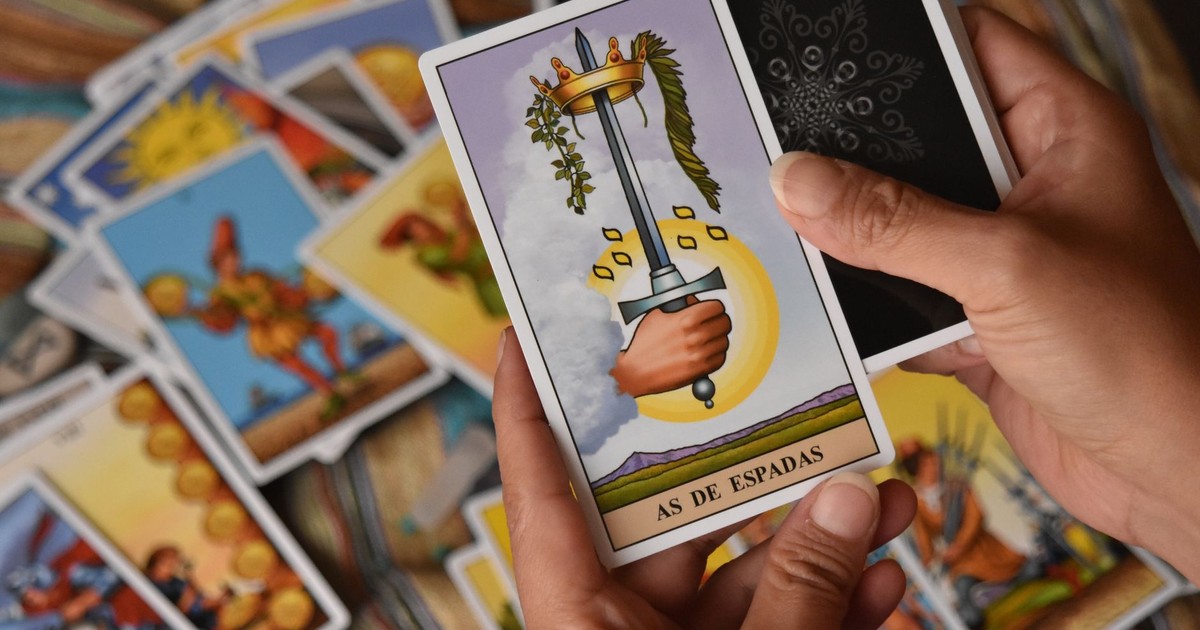

Somewhere in the last week, you probably knocked on wood. Maybe you said something like “no one in our house has gotten sick this winter” and immediately rapped your knuckles on the nearest desk, not even pausing mid-conversation to do it. You didn’t think about it. You just did it, the way millions of people across dozens of countries do every single day, in different forms, in different languages, for reasons none of them could fully explain if pressed.
Cultural superstitions survive modernity, education, rationalism, and Wikipedia. They live between what we know intellectually and what our hands do anyway, between the person we think we are and the person who still holds their breath past a cemetery. They are, almost universally, about one thing: the very human terror of tempting fate.
What follows are ten of the most widely observed cultural superstitions still practiced today. Airports redesign their floor plans around them and major corporations adjust their product numbering to avoid them.
1. Knocking on Wood
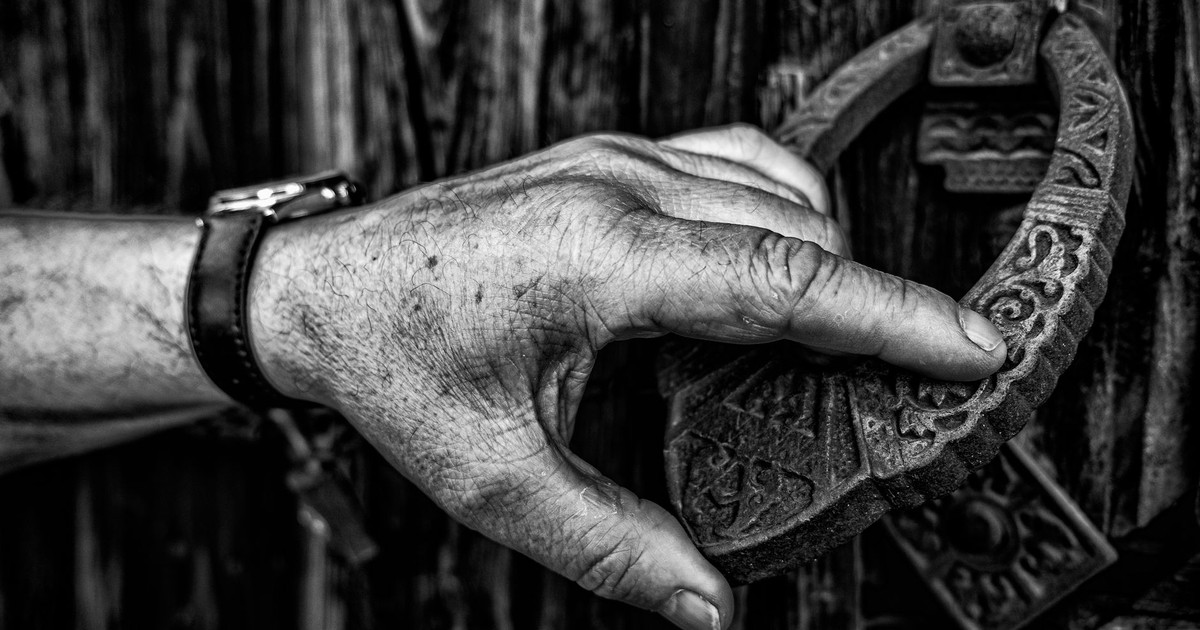
If you’ve ever said something like “the car has been working perfectly all year” and then rapped your knuckles on the nearest wooden surface, you’re in good company. Across much of the English-speaking world, this gesture is a charm against misfortune, a way to avoid tempting fate. Americans say “knock on wood.” The British prefer “touch wood.” The impulse is identical in both cases.
Most commonly, the practice is believed to originate in pagan Europe, where people thought it called upon tree-dwelling spirits to ward off bad luck or express gratitude for good fortune. The problem, as folklorists have noted, is the evidence trail goes cold for about a thousand years between early pagan Europe and the first written references to touching wood.
British folklorist Steve Roud, in his book The Lore of the Playground, traces the practice to a 19th-century children’s game called “Tiggy Touchwood,” a type of tag in which players were immune from being caught whenever they touched a piece of wood such as a door or a tree. “Given that the game was concerned with ‘protection,’ and was well known to adults as well as children, it is almost certainly the origin of our modern superstitious practice,” he argues. While the true origins may never be settled, the superstition remains popular around the globe, with History.com noting that Turkish people often pull on one earlobe and knock on wood twice to ward off a jinx.
2. Black Cats

Few animals have attracted as much symbolic weight as the black cat, and the range of beliefs attached to them is remarkable, not just in intensity, but in their complete contradiction from one culture to the next.
The idea that black cats are bad luck may have resulted from claims made by the early Christian church linking black cats to the occult. Well before the witch hunts of the 16th through 18th centuries, Pope Gregory IX issued an official church document called “Vox in Rama” in 1233, which linked black cats to Satanic ritual and played a key role in reshaping how European society viewed them. This widespread fear contributed to their neglect and mistreatment across much of medieval Europe.
The American fear of black cats crossing your path traces directly back to this European import. European colonists brought their superstitions to America, where Puritan communities viewed black cats with extreme suspicion, and the Salem Witch Trials of 1692 featured several accusations involving black cats as evidence of supernatural activity.
But step outside those Western traditions and the story flips. In Japan, black cats symbolize good luck and prosperity, with the “maneki-neko” (beckoning cat) often appearing in black to attract good fortune. In Scotland, a strange black cat arriving at your home signals prosperity ahead, and the tradition considers black cats particularly lucky for single women. In England, sailors’ wives kept black cats to ensure their husbands’ safe return from sea voyages. As the Carnegie Museum of Natural History observes, superstitions are present in cultures across the globe and they have a real impact on the way people experience the world.
3. Friday the 13th

In Spain and Greece, Tuesday the 13th is considered unlucky, whereas in Italy, Friday the 17th is feared. But in most Western cultures, particularly the United States and the United Kingdom, Friday the 13th holds a uniquely dread-soaked status, one with a surprisingly layered backstory.
The number 13 alone carries centuries of bad reputation. In Norse mythology, the number 13 is considered unlucky due to the story of Loki crashing a banquet in Valhalla as the 13th guest, leading to the death of Balder, the god of light and goodness. In Christianity, Friday is considered unlucky because Jesus was crucified on a Friday, and the number 13 is seen as unlucky because there were 13 people at the Last Supper, with Judas being the 13th guest. Stack those two associations and you have a date people have been quietly dreading for centuries.
Evidence of Friday the 13th being considered unlucky in America dates back to the late 19th century, when William Fowler founded the Thirteen Club, an exclusive society that sought to break superstitious taboos about luck. The society consisted of 13 members who gathered for a 13-course meal on the 13th day of each month in room 13 of the Knickerbocker Cottage in New York City, with the inaugural meeting held at 8:13 pm on Friday, January 13, 1882. The club’s defiant spirit aside, the superstition only deepened. In 2026, the calendar features three Friday the 13ths in February, March, and November, the maximum number possible in a single year, a pattern that results from February’s shorter length creating the precise day-of-week alignment needed for that third occurrence to fall in November.
4. Breaking a Mirror

The specific number attached to this one is part of what makes it stick. Seven years is long enough to feel like a real sentence. If the penalty were “a week of bad luck,” nobody would bother being careful around mirrors. Seven years makes it personal.
Ancient Romans believed mirrors contained a piece of the soul, so breaking one damaged the soul. The seven-year timeline has its own internal logic in that tradition: Romans believed the body renewed itself completely every seven years, meaning a broken soul would be restored after one full cycle. The mirror itself wasn’t incidental. Reflective surfaces were expensive, rare, and associated with self-knowledge and divine judgment across multiple ancient cultures, giving them an outsized symbolic status long before anyone could mass-produce glass.
The superstition spread across Europe and arrived in the Americas fully intact. The fear attached not just to deliberate breaking, but to any accidental crack or shattering, as if the mirror’s judgment were indifferent to your intentions. Even today, the involuntary wince that comes from hearing glass break in another room carries something older than rational thought. The number seven, in many traditions, already held sacred significance: seven days of the week, seven heavens, seven deadly sins, which probably didn’t hurt the superstition’s ability to spread and stick.
5. Spilling Salt

Salt was, for most of human history, worth its weight in something close to gold. Roman soldiers were sometimes paid in it. Trading routes were built around it. Preserving food depended on it. Salt was very valuable in ancient times and often used as currency, so spilling it was thought to invite bad luck and possibly betrayal.
The association with betrayal is the part that gives this superstition its particular edge. The image of Judas knocking over salt at the Last Supper, depicted famously in Leonardo da Vinci’s painting, reinforced the idea that spilled salt was not just an accident but a sign. Accidentally spilling salt has been seen as bad luck for centuries, and to counteract it, the tradition calls for throwing a pinch over your left shoulder to ward off evil. The left shoulder is specific: in many folk traditions, evil lurks on the left side, and the thrown salt was aimed directly at the devil waiting there.
The counter-ritual is arguably as interesting as the superstition itself. Most cultural superstitions that involve bad omens also come with their own built-in escape hatch, a corrective gesture, a precise action you can take to undo what just happened. Throwing salt over your left shoulder is one of the more elegant examples of this pattern, found across dozens of unrelated traditions worldwide.
6. Walking Under a Ladder

Like spilling salt, the superstition against walking under ladders may be partly practical. If you see a ladder, there’s a good chance someone is standing on it, and it would be dangerous for both parties if the ladder were bumped or fell. But most explanations add a religious dimension.
A triangle is formed when a ladder leans against a wall, and this shape was considered sacred in ancient Egypt, symbolizing the trinity of the gods. Walking under it, or “through” it, was seen as breaking that holy shape and bringing bad luck. The triangle’s sacred status carried forward into Christian Europe too, where the Holy Trinity gave the shape a second layer of religious meaning, reinforcing why disturbing it was considered more than just careless.
Most people who avoid walking under ladders today aren’t thinking about Egyptian theology or the Holy Trinity. They’re thinking about paint cans and dropped tools. The physical common sense and the ancient superstition fused so completely that the belief became self-sustaining without either rationale needing to hold. The ladder superstition is among the most globally enduring, surviving centuries of cultural change without losing its grip.
7. Horseshoes

The horseshoe over the doorway belongs to a whole category of folk belief: domestic objects invested with protective power, hung in exactly the right position to either keep luck in or keep evil out, depending entirely on which direction the opening faces.
The iron used in horseshoes was thought to have protective properties against malevolent forces. Iron’s reputation for repelling evil runs through European and Middle Eastern folklore for centuries. Fairies, demons, and witches were believed to be harmed or blocked by it, which made iron objects, horseshoes in particular, natural candidates for doorway protection. Blacksmiths, who worked with iron and fire, were also considered to have unusual powers in many folk traditions, which gave their products an extra layer of symbolic weight.
The debate about which direction to hang the horseshoe is, remarkably, still ongoing. Open end up means luck is caught and held inside; the horseshoe acts as a cup. Open end down means luck pours out onto all who pass beneath it. Both arguments have devoted adherents, and neither camp shows any sign of conceding. The horseshoe itself has endured as a symbol of good luck far beyond its equestrian origins, appearing in wedding traditions, jewelry, and New Year’s customs across Europe and the Americas. If you’re rethinking your home’s good-luck decor, it pairs interestingly with plants believed to bring bad luck, a whole separate category of domestic superstition worth knowing about.
8. The Number 4 in East Asia

If you’ve ever noticed that some buildings in East Asia seem to skip the fourth floor entirely, going from 3 directly to 5 on the elevator panel, you’ve encountered one of the most practically consequential cultural superstitions in the world.
In Japan and China, the number four is unlucky because, when spoken, it sounds like the words for “death” in Japanese and Chinese. This phenomenon, called tetraphobia, is widespread enough to affect architecture, hospital room numbering, product marketing, and even phone numbers. According to Science Insights, in Cantonese the numbers 4, 14, and 24 sound like phrases meaning “death,” “must die,” and “easy to die” respectively, which is why the fear is especially pronounced in Hong Kong and southern China.
The real-world effects are not minor. Hospitals in some regions of China and Japan skip room 4, floor 4, and anything numbered with multiple fours. Some airlines have removed row 4 from their seating configurations for flights serving East Asian routes. Real estate developers in cities with large Chinese-diaspora populations, including Vancouver, San Francisco, and Sydney, have documented measurable price differences between properties on the fourth floor versus the third or fifth. The superstition travels with the community.
9. Opening an Umbrella Indoors

This one is often dismissed as purely practical, the umbrella’s spokes could poke someone’s eye out, the argument goes, but the origins are older and stranger than that.
The Thirteen Club, founded in the late 19th century to challenge superstitions, included opening umbrellas indoors among the taboo acts its members deliberately performed to break superstitious beliefs about luck. That the club felt the need to specifically include it suggests the belief was already well established by the 1880s. Some historians trace it to ancient Egypt, where parasols were associated with the pharaoh and the sun god; opening one in a shadowed indoor space was considered an offense against the solar deity.
The British version of this superstition is particularly robust. Opening an umbrella indoors is, in many households, treated with the same involuntary alarm as breaking a mirror, a quick “close that!” that comes out before the person has time to think about why. The superstition also intersects with a broader folk anxiety about bringing outdoor objects inside, a category that includes shoes on tables, hats on beds, and various other items that are thought to muddy the boundary between the protected domestic space and the unpredictable world outside it.
10. The Evil Eye
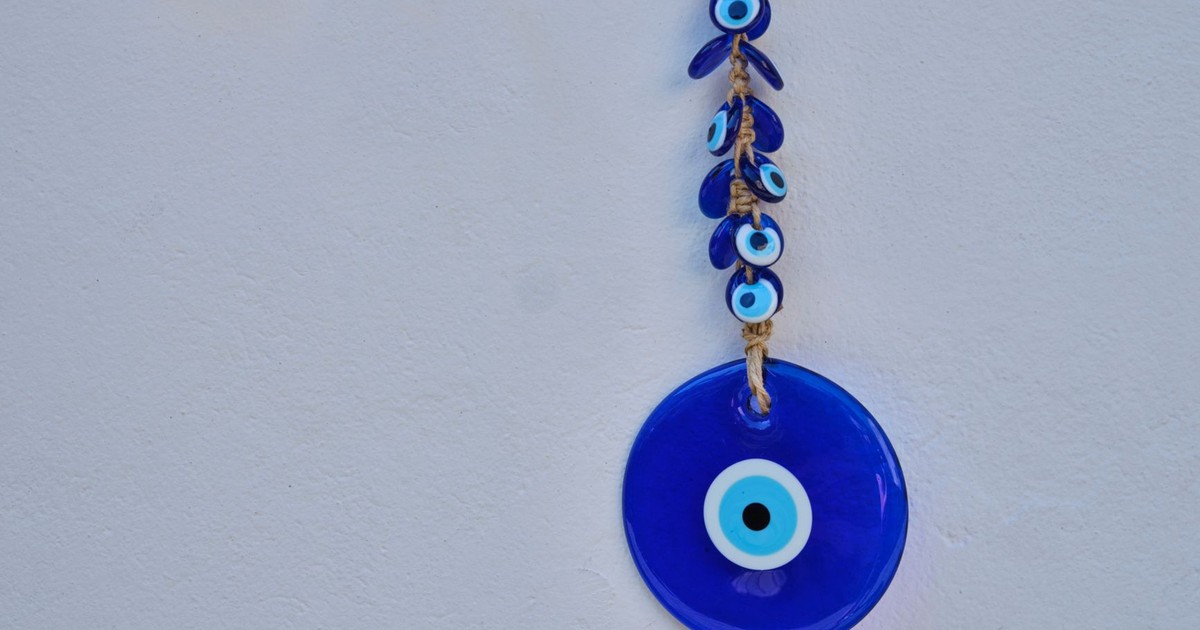
Of all the cultural superstitions on this list, the evil eye may be the most geographically widespread and the most continuously active. It appears in ancient Mesopotamian texts, in Greek and Roman literature, in the Hebrew Bible, in Islamic tradition, and in the folk practices of cultures from West Africa to South Asia to Latin America. It has not faded. If anything, the blue glass nazar amulet, the eye-shaped charm used to deflect it, has become one of the more recognizable symbols in contemporary design.
The core belief is consistent across its many forms: that a malevolent glare, whether intentional or not, can transmit harm to the person, animal, or object it falls upon. Envy is usually the cause. Someone looks at your new baby, your healthy crops, or your good fortune with covetous eyes, and the look itself carries damage. In many Mediterranean and Middle Eastern traditions, complimenting a child without immediately adding a protective phrase or touching the child can be seen as dangerously reckless, regardless of the complimenter’s intentions.
The protective responses are as varied as the cultures that carry the belief. Turkish families hang the nazar boncuğu (the blue eye bead) in homes and cars. Greek Orthodox tradition uses a specific prayer called the xematiasma to diagnose and reverse the evil eye’s effects. In Mexico and other Latin American countries, a healer called a curandera may perform a ritual called limpias to cleanse it. In India, particularly in South Asian households, mothers routinely make a small black mark on a baby’s forehead to deflect envious eyes. The belief is, in each case, doing the same work: acknowledging that good fortune is visible, and visibility is its own kind of vulnerability.
The Archive Never Gets Smaller

What all ten of these superstitions have in common is not irrationality. It’s something more specific: a recognition that human beings have always found the randomness of life genuinely hard to bear. Bad things happen to careful people. Good things happen to careless ones. The universe offers no satisfying explanation. Cultural superstitions are, at their core, an attempt to insert meaning into that gap, to create a system where actions have consequences and consequences can be managed. Knock on wood. Throw the salt. Don’t open the umbrella indoors.
None of these beliefs will protect you from actual misfortune, and at some level, most people who observe them know that. But knowing something intellectually has never stopped anyone from knocking on the nearest desk after saying something a little too optimistic. The gap between what we understand and what we do is exactly where superstitions live, and it turns out that gap is very, very old, and very, very full.
Disclaimer: This information is not intended to be a substitute for professional medical advice, diagnosis, or treatment and is for information only. Always seek the advice of your physician or another qualified health provider with any questions about your medical condition and/or current medication. Do not disregard professional medical advice or delay seeking advice or treatment because of something you have read here.
AI Disclaimer: This article was created with the assistance of AI tools and reviewed by a human editor.