
Chipotle has always carried a certain mystique in the fast-casual food world – a place that positioned itself somewhere between fast food and a real meal, where the promise was simple: big portions, fresh ingredients, reasonable prices. For a long time, that promise held. Then something started to feel off.
Customers noticed their bowls looking lighter. The chicken scoops seemed skimpier. Social media lit up. And instead of the problem quietly going away, it compounded – through viral videos, Wall Street analysis, and now a second consecutive CEO telling customers the solution is to just speak up and ask for more food.
That response landed with all the grace you’d expect. The internet did not take it well.
The CEO’s Message and Why It’s Causing a Stir
In early May 2026, Chipotle CEO Scott Boatwright sat down with Yahoo Finance’s Power Players podcast host Brian Sozzi for a wide-ranging conversation about the brand’s direction. Portion sizes came up – because of course they did. Boatwright made clear he believes customers have every right to ask for more on items like salsas, cheese, sour cream, and both rice and beans, telling Sozzi: “You should ask for a little more.”
When asked directly whether Chipotle is reducing portions, Boatwright responded flatly, “We are not,” adding: “I tell my team all the time, put as much food in that bowl or burrito as you possibly can.” He framed it as a brand identity issue: “Abundance has always been our brand ethos, and it is still to this day: We serve big, beautiful bowls and burritos – full stop, no questions asked.”
The problem is that this same message has been delivered before, almost word for word, by a different Chipotle CEO. And customers remember.
A Company with a Portion Problem on Record
Former CEO Brian Niccol – who has since become CEO of Starbucks – addressed the same issue back in July 2024, stating there was never “a directive to provide less to our customers.” That denial, too, went viral. And it was followed by something more damaging than viral criticism: an admission.
Chipotle initially insisted “there have been no changes in our portion sizes,” but Niccol later acknowledged during an earnings call that more than 10 percent of the company’s restaurants had been under-serving customers and needed to be “retrained” and “re-coached” to meet the chain’s own standards for “generous portion sizes.” That concession matters. The company went from denial to acknowledging a systemwide problem – across more than one in ten of its locations – in the space of a few months.
The controversy has continued to simmer online, with TikTok users repeatedly posting bowls they claim look smaller than expected. The serving size debate ignited in 2024 through viral videos sparking backlash over what customers described as inconsistent portions. Chipotle has consistently denied making any official portion cuts while acknowledging that some stores needed retraining to ensure consistency.
What the Data Actually Shows
When executives push back on claims with corporate talking points, numbers tend to tell a different story. In this case, a Wall Street analyst literally did the homework.
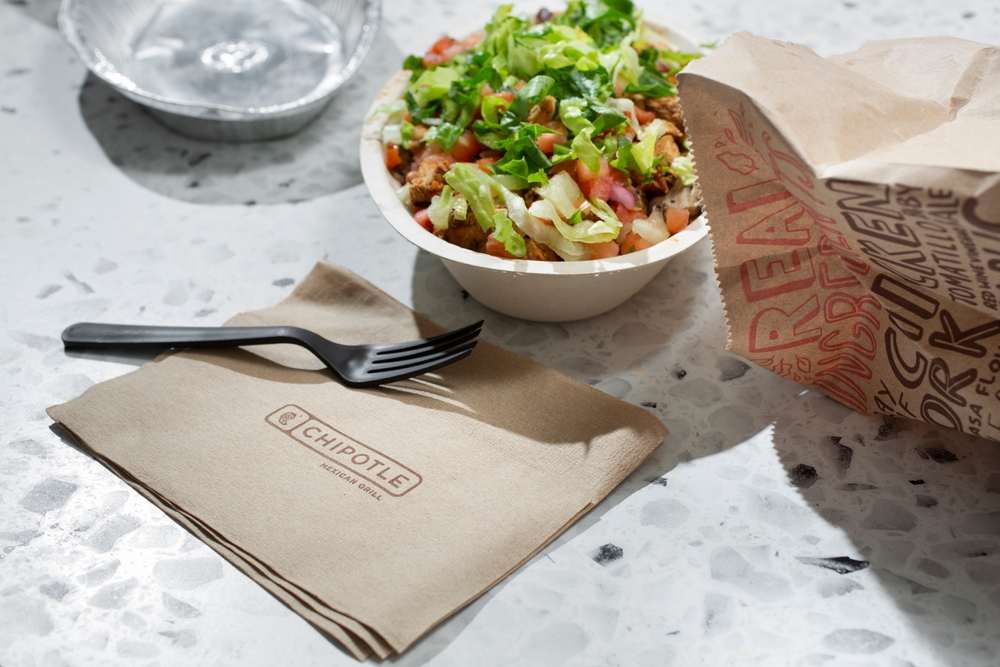
To “put the ‘weight debate’ to rest,” Wells Fargo analyst Zachary Fadem and his team bought and weighed 75 burrito bowls, ordering from eight different Chipotle locations in New York City, with half placed digitally and half in person. Each bowl contained the same ingredients: white rice, black beans, chicken, pico de gallo, cheese, and lettuce.
The median weight came in at around 21.5 ounces. But the range was the real story: the smallest bowl weighed just 13.8 ounces, while the largest came in at 26.8 ounces – a nearly 13-ounce difference between the two extremes. To put that in perspective, at 13.8 ounces, the smallest burrito bowl weighed just a little more than the average can of soda.
As Fadem reported, “Consistency varied widely, with some locations serving bowls that weigh about 33% more than other locations (on equivalent orders); and the heaviest digital/in-store bowls weighing 87%/47% more vs. the lightest.” The study’s conclusion, per Fox Business: the biggest varying factor in each order was the location.
This is not a story about a brand systematically cutting portions. It’s a story about a brand with deeply inconsistent execution – and a corporate communications strategy that keeps running into the same wall.
The “Just Ask” Problem in Practice
Boatwright’s advice sounds simple enough. But when a Yahoo Finance journalist visited three California Chipotle locations to test whether the CEO’s promise held up, the picture turned out to be more complicated.
Employees at one location were candid about how much discretion individual stores and managers have. One worker explained that staff are trained during onboarding to start with a standard serving size and provide more non-premium ingredients if customers ask. Both employees said how strictly the policy is enforced often depends on management – and if ingredients were running low, grill cooks or managers may tell workers to “watch your portions.”
Employees also said the ongoing online discourse around Chipotle portions has made their jobs harder. “That’s just how it goes here,” one worker said after describing how upset customers have become.
The divide between corporate messaging and store-level reality appears to be what’s driving much of the frustration. Some customers have floated the theory that the portion issue is a localized management problem rather than a top-down policy, with one Reddit user noting: “I live close to Chipotle HQ. I have never been skimped… so I honestly wonder if it’s more of a localized management problem in other parts of the US.” Fadem’s own data supports that theory. The location was the single biggest variable in his study.
The Business Reality Behind the PR Fight
None of this portion noise would carry as much weight if Chipotle were riding a wave of strong sales. It isn’t. Fourth quarter 2025 saw net sales rise 4.9 percent to $2.98 billion, but same-store sales – a key measure of how existing restaurants are performing – fell 2.5 percent, making it the third quarter of the year with same-store sales declines.
Chipotle ended a rough 2025 with a full-year same-store sales decline of 1.7 percent, marking the brand’s first annual decline of that kind since 2016. That year, it’s worth noting, the company was navigating a food-safety crisis. Restaurant traffic fell by 3.2 percent in the fourth quarter.
Social media users have made the connection between the portions controversy and the company’s financial slide explicit. One user called Boatwright “clueless” and said the company is “getting eaten alive by their competitors,” pointing to Q4 2025 same-store sales that declined 2.5 percent year over year while fast-casual competitors like CAVA picked up more market share.
The competitive threat is real: Chipotle is losing market share to emerging fast-casual brands like CAVA Group, with growing consumer concerns over food quality and inconsistent portion sizes potentially accelerating customer attrition and damaging brand reputation.
On social media, criticism has been pointed. “CEO is one of the most out of touch people I’ve seen,” wrote one X user. “Sad because they could be blowing past everyone at this point. At one point, it was a cult following.”
The Fix Chipotle Is Banking On
To be fair to Boatwright, his team knows the inconsistency problem is real and they’re attempting to address it through technology rather than words. Chipotle is deploying a new high-efficiency equipment package – including a dual-sided plancha, three-pan rice cooker, and high-capacity fryer – currently installed in over 600 restaurants, with plans to reach about 2,000 locations by the end of the year.
In restaurants where the equipment has been installed, the company is already seeing meaningful improvements in comparable sales. The chain is also rolling out new digital makeline displays that use visual cues rather than text to improve order accuracy. That system is currently running in 100 restaurants, with a target of all locations by end of year, and early data shows improvement in on-time performance, digital order accuracy, and customer satisfaction.
Chipotle’s April 2026 earnings call gave some early optimism to investors: the company said the first quarter of 2026 represented a return to positive transaction growth after four consecutive quarters of declines in 2025. Executives repeatedly connected that recovery to “generous portions” and pricing that has stayed below inflation.
CEO Boatwright has also revealed that 60 percent of Chipotle’s core users earn over $100,000 per year in household income, with plans to target that higher-income segment more aggressively going forward. It’s a strategy that carries its own risks – in a value-conscious economic climate, narrowing your audience to the affluent isn’t without exposure.
What Customers Are Actually Getting When They “Just Ask”
So does asking for more actually work? Based on on-the-ground testing and employee accounts, the answer is: often, yes – but with conditions.
At one tested location, a customer ahead in line asked for extra cheese with no pushback. Another customer got more rice on her tacos without any questions. Non-premium toppings – salsas, fajita vegetables, rice, beans, lettuce – generally come free with a polite request. Premium proteins are a different story.
When a server reiterated the policy, the rule was clear: extra portions of non-premium ingredients were fine, the rest came with a charge. So if your bowl looks light on chicken, steak, or guacamole, “just ask” may come with a bill.
The scale of the online frustration has been significant: the hashtag “Chipotle small portion size” has amassed over 58 million videos on TikTok alone. That is not a number that comes from a fringe complaint. That is a customer base communicating, loudly, that the experience isn’t meeting expectations.
The practice eventually became widely known as shrinkflation – when portions decrease while prices stay flat or rise – and Chipotle became one of the more prominent examples of an industry-wide trend. Complaints exploded across TikTok and other platforms in 2024, with patrons accusing the chain of serving smaller burritos and bowls while prices kept climbing.
What This Means for You
If you’re a regular Chipotle customer, the practical upshot is pretty straightforward. Ask for more on non-premium items – rice, beans, fajita vegetables, salsas – and you’ll almost certainly get it. No confrontation required, no tricks needed. The policy is official. The CEO has said it on camera. Screenshot it if you want.
For proteins like chicken, steak, or brisket, a second scoop typically costs extra. That’s a menu pricing decision, not a customer service issue. Knowing the distinction before you get to the register means no surprises.
The bigger picture, though, is what this controversy says about the value equation in fast-casual dining right now. According to a 2024 survey by LendingTree, 78 percent of Americans now consider fast food a luxury – which means every dollar spent at a chain like Chipotle is being scrutinized far more than it was three years ago. When prices go up and portions feel inconsistent, brand trust erodes quickly.
Saying “just ask” does not rebuild that trust. Consistent execution does. Chipotle’s own first quarter 2026 data suggests the recipe may be working – positive traffic growth returned following menu innovation and its high-protein push – but the chain still has real ground to recover before its portion reputation catches up with its ambitions. The technology rollout is the most credible signal that leadership understands the gap between what headquarters promises and what actually lands in the bowl. Whether 2,000 upgraded kitchens can do what two CEOs and several earnings calls couldn’t is the question the company still needs to answer.
For now, the best advice is the simplest: order in person when you can, politely ask for more on the free stuff, and know what the upgrades actually cost. You already paid for a full bowl. There’s no reason to leave the counter with a half one.
AI Disclaimer: This article was created with the assistance of AI tools and reviewed by a human editor.