

Graham Hearsey had been carrying the question for most of his life before he finally did something about it. He had grown up hearing rumors that his childhood best friend’s father was his biological father, too. His mother had written a letter asserting that her husband was the real dad, had pointed to ginger relatives on both branches of the family tree, had done everything a person does when they have decided a secret will stay buried. And it had stayed buried, more or less, for sixty years. Then Hearsey found himself in a hospital bed in April 2026, ordered a DNA kit, and sent a message to someone he used to know.
The someone was David Joyce, his childhood best friend, whom he tracked down on Indeed. Three weeks after they both sent in their samples, David called. “Hello, brother,” he said. Sixty years of not knowing, dissolved by a return envelope and a phone call.
The story went viral in June 2026, and it deserved to. There is something about its specific geometry – the shared cot, the letter, the professional networking site reunion, the gap of four decades – that makes it feel less like a news story and more like a proof. A proof that the secrets families work hardest to keep are increasingly the ones a $99 kit can undo.
A Hospital Bed, a Long-Held Suspicion, and a DNA Kit
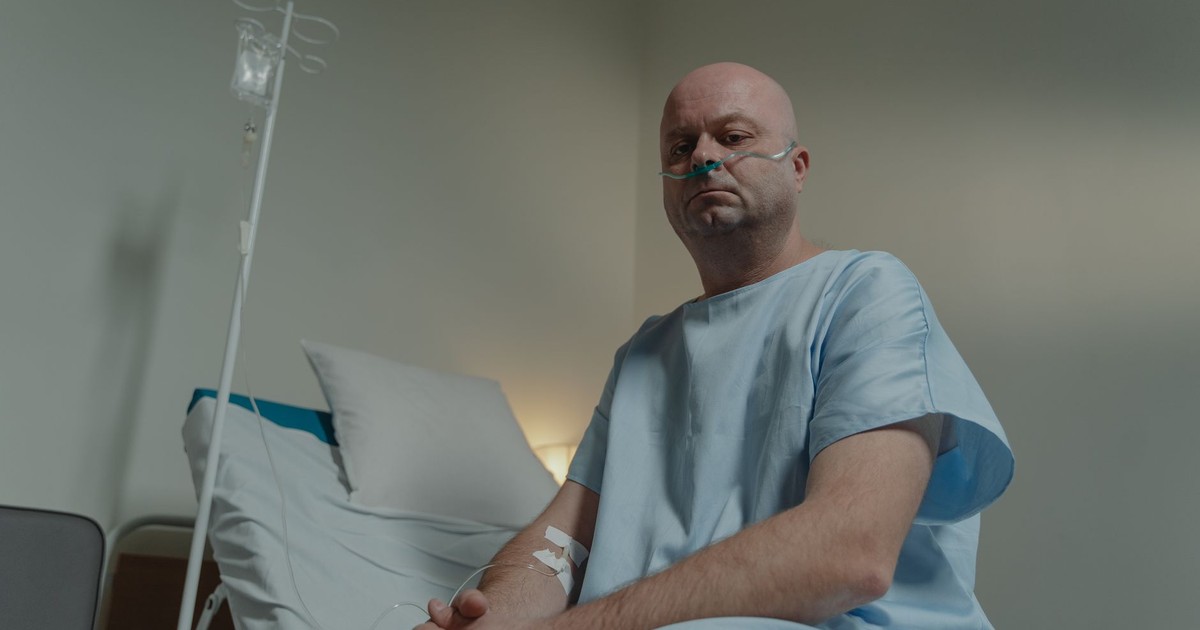
Graham Hearsey found himself in hospital in April 2026, and after years of questioning whether the dad he knew was his biological father, decided to order a DNA test. The timing was not accidental. A period of physical vulnerability has a way of bringing long-suppressed questions to the surface, and Hearsey had been carrying this one for most of his life.
Throughout his childhood, the 60-year-old had heard rumors that his childhood best friend’s father was his “real” dad. Those kinds of rumors, whispered at family gatherings and half-denied by the adults in the room, tend to calcify into either certainty or willful disbelief. For Hearsey, they appear to have lodged somewhere in between – never quite dismissed, never quite confirmed.
There was always a slight suspicion, he said, but his mother had reassured his father that Hearsey was his. When he was born, he had ginger hair, and his mother told the family there was a ginger child in every family. His mother pointed to ginger relatives on both sides, and apparently wrote a letter asserting that her husband was the biological father. Whether that letter was ever meant to settle the question or simply to bury it, no one can now say.
After growing apart following their years in school, Hearsey found his childhood friend, David Joyce, 59, on Indeed, and dropped him a message asking if he wanted to order a test kit too. It is one of the more quietly remarkable details in the story – that a professional networking platform became the reunion point, a reminder that the internet has a way of collapsing the distance between lives that once seemed to have permanently diverged.
After three tense weeks of waiting, David called him saying, “hello, brother.”
He and David were born just three months apart, admitting that the two even “shared a cot.” They had been raised in adjacent orbits, the sons of the same man, without either of them ever knowing it. The duo couldn’t believe that 40 years on from their childhood friendship, they had been reunited as brothers.
Hearsey’s reaction to the confirmation was characteristically dry. “I need to chase him up for backdated Christmas and birthday presents,” he joked. Sixty years of presents is a significant bill. The humor, though, does not obscure the weight of what actually happened: a man in his sixties learned that the foundation story of his own life – who his father was, what his family was – had been quietly incorrect for every one of those years.
Not an Isolated Case: When Best Friends Are Brothers
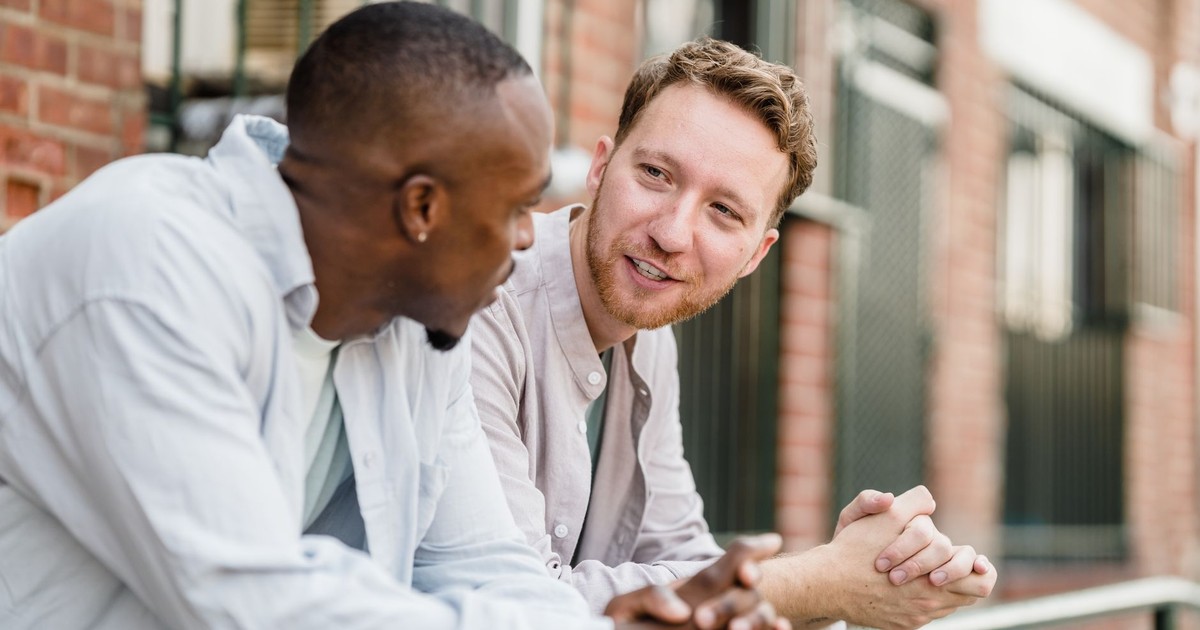
The Hearsey-Joyce story is remarkable. It is not, however, unprecedented. The same basic sequence – lifelong closeness, an unexpected DNA test, a revelation that the bond was biological all along – has played out before in ways that drew global attention.
In Honolulu, two men who grew up as best friends recently learned that they’re actually brothers. Alan Robinson and Walter Macfarlane had been friends for 60 years, were born 15 months apart, met in the sixth grade, and played football together at a Honolulu prep school. Their story emerged in late 2017 and spread widely, for the same reason Hearsey’s story has spread now: it captures something people find genuinely difficult to process – the idea that the most significant relationship in a person’s life could be simultaneously more and other than they believed it to be.
Macfarlane never knew his father, and Robinson was adopted. Separately, they sought answers about their ancestry. Someone had identical X chromosomes with Macfarlane on the DNA-matching platform, a user named Robi737. Macfarlane’s daughter Cindy said there were “over a thousand DNA matches” and when she sought out the highest match, it listed Robi737 as “close family or sibling.”
Many people had asked the two men over the years if they were brothers or related in some way, but they never took it seriously. “I always thought we looked alike because we are both part Hawaiian,” Robinson said. It turned out the pair did in fact share the same birth mother.
Robinson described the discovery as “an overwhelming experience – it’s still overwhelming. I don’t know how long it’s going to take for me to get over this feeling.” He called it “the best Christmas present I could ever imagine having.”
Both cases share the same structural logic: two people drawn together by something they could not name, separated by circumstance, and then reunited by science with an explanation for a closeness that had always resisted easy description. Whether that explanation changes the relationship in any practical sense is a separate question from what it does to the story each man tells himself about his own life – and those are not the same question.
The Scale of DNA’s Family Revelations
Stories like Hearsey’s and Robinson’s are viral precisely because they feel extraordinary. The data suggests they are, in fact, part of a much larger wave.
Approximately 41 million direct-to-consumer (DTC) genetic tests have been performed by companies such as 23andMe, AncestryDNA, and MyHeritage. That is 41 million opportunities for a result that rewrites a family’s history, and a significant number of those opportunities have been taken. A survey of 23,196 people who used the DTC service FamilyTreeDNA found that 3 percent discovered an unexpected biological parent. At that rate, applied across the full pool of tests taken, the number of people who have received what researchers now call a “Not Parent Expected” – or NPE – result runs into the hundreds of thousands.
As direct-to-consumer genetic testing grows in popularity, the unanticipated NPE result has become more prevalent. An NPE result is the discovery that one parent, often the father, is not a biological parent. The acronym has a clinical neutrality to it that papers over what is, for the person receiving the result, one of the more destabilizing experiences a human being can have in a doctor’s office – or, increasingly, at a kitchen table.
The psychological consequences are well-documented in the emerging research literature. NPE discovery has an impact on participants’ personal identity, and researchers have found that people frequently report having experienced grief and loss among other emotions, whether the discovery confirmed a prior suspicion or came completely out of nowhere. That last detail matters: the grief is not simply a function of surprise. It arrives whether or not the person already half-knew. The test makes real what was previously deniable – sometimes that is new information, and sometimes it is the end of the ability to keep pretending it isn’t.
Strained parent-child relationships prior to the NPE discovery and further negative impact on the relationship after testing were common themes in the research. Connection to newly identified biological parents and family was a common goal reported by many participants, with mixed outcomes. “Mixed outcomes” is the careful academic phrase for what is, in practice, a spectrum running from the kind of joyful reunion Hearsey and Joyce experienced, to relationships that collapse entirely under the weight of what the test reveals.
The Identity Questions That Follow
NPE experiences may have occurred from an extramarital affair, parallel dating, or other sexual encounters that went undisclosed until genetic discovery. In Hearsey’s case, the available facts suggest an affair – his mother’s letter to his presumed father, her elaborate explanation of the ginger hair, the apparent confirmation of what those childhood rumors had always gestured toward. The secret was not impulsive; it was maintained, deliberately, over the course of a lifetime.
Advocates argue that understanding genetic origins should be considered a fundamental right. Accurate medical history is crucial for personal health management and that of one’s children. Deliberate identity withholding can lead to psychological damage and strained interpersonal relationships. For Hearsey, one practical dimension of the question may well have been medical: one of the known drivers behind adult DNA testing is the desire to complete a family health history. The same questions that send people to testing services – what runs in the family, what to watch for – end up unlocking answers nobody asked for.
The Hearsey story also reveals something about the persistence of childhood bonds. He sought David Joyce out on a professional networking platform specifically; the reconnection preceded the test entirely. A man who simply wanted answers about his parentage could have ordered the kit without making contact first. He didn’t. He found his childhood best friend brother first, and then they took the test together – which suggests the friendship had retained its own gravity across four decades of distance. Whether that was instinct, nostalgia, or something the body registers before the science catches up, is not a question any DNA test can answer.
How the Technology Works – and Why It Keeps Finding Secrets
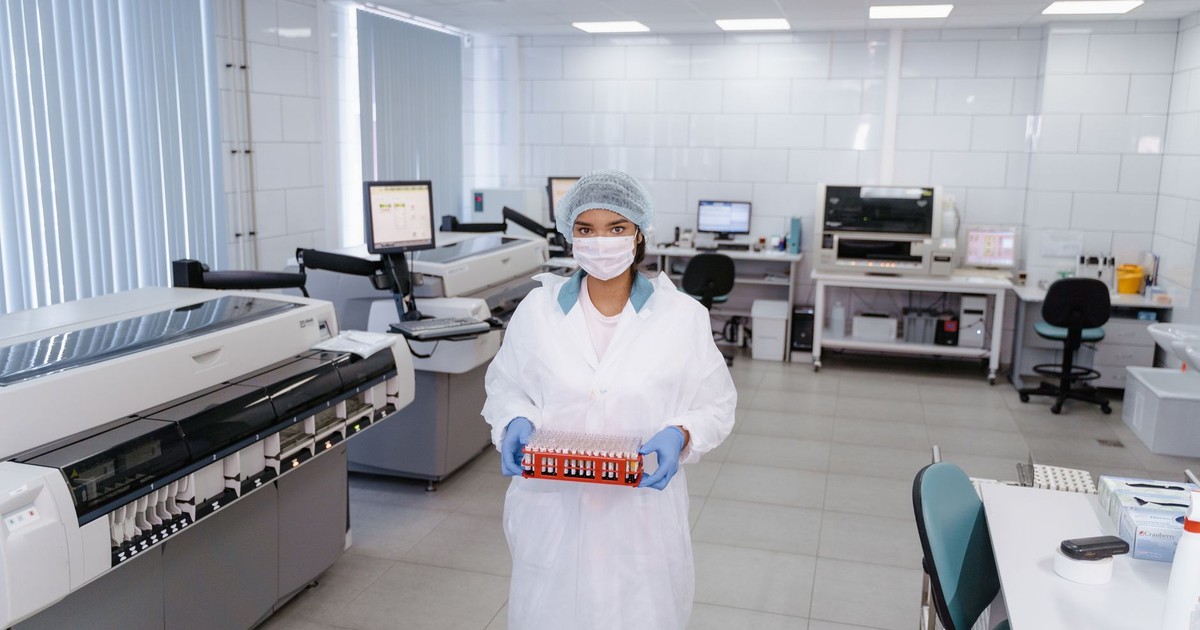
The consumer DNA testing market operates on a straightforward biological principle. When you submit a saliva sample, the laboratory analyzes hundreds of thousands of locations across your genome and compares them against everyone else in the database who has done the same. The system then calculates the statistical probability of different relationship types – sibling, half-sibling, parent, first cousin – based on the proportion of DNA shared.
In the Macfarlane-Robinson case, researchers found that the two men had several identical matches and that their X chromosomes matched, too. Following many phone calls and further research, the two came to the understanding that they were indeed brothers from the same mother. The X chromosome match was particularly telling: full brothers share one X chromosome inherited from their mother, and a match there narrows the relationship category significantly.
The databases have grown large enough that the matches are now, for many people, impossible to dismiss. Over a thousand DNA matches appeared in Macfarlane’s results alone, and the algorithms that rank those matches by closeness are designed precisely to surface the relationships that matter most. The result is a system that is extraordinarily effective at finding exactly the kind of truth that families have historically worked hard to conceal.
Hearsey’s story, which broke in June 2026, is the latest data point in a trend that shows no sign of reversing. The databases are larger every year. The tests are cheaper and easier to order. And the secrets that survived a generation of paper records, closed adoptions, and unspoken agreements are increasingly vulnerable to a service that costs less than a restaurant dinner and arrives in the post. There is something almost impersonal about it – the intimacy of a lifelong secret dissolved by a barcode and a return envelope.
The human reality, of course, is anything but impersonal. A DNA test result can land in the middle of a family’s understanding of itself and leave everything slightly rearranged. It can also – as it did for Graham Hearsey and David Joyce, and for Walter Macfarlane and Alan Robinson – give two people the language for a closeness they always felt but could never quite explain.
What the Test Can’t Tell You
The story of Graham Hearsey and his childhood best friend brother David Joyce is not really about a DNA test. The test is just the process – the delivery method for an answer that had been sitting in the biology all along. The story is about the difference between the family you are told you belong to and the family you actually come from, and the particular strangeness of learning, at sixty years old, that those two things were never the same.
What makes it resonant beyond the obvious novelty is the texture of the specific detail: a cot shared by two babies who were brothers and didn’t know it, a letter a mother wrote to preserve a lie, a message sent through a professional networking site decades later by a man who simply wanted to find someone he used to know. The science gave Hearsey and Joyce a result. The 60 years they shared before the result gave that result its weight.
For the hundreds of thousands of people who have already received an NPE result, or who will receive one as the testing databases grow larger, the Hearsey story offers one version of how these revelations can land: as a kind of completion rather than a rupture. Research consistently finds that 3 percent of DTC DNA test users learn that a person they believed to be their biological parent is not – consistent with broader population estimates of misattributed paternity currently believed to be around 2 percent in Western populations. Those numbers mean that the Hearsey story is, statistically, playing out in some form in thousands of households right now. Most of them will not go viral. All of them will change someone’s understanding of their own life.
The secrets that have traveled across generations intact – kept by letters, by reassurances, by careful management of physical resemblance – are meeting a technology that was not built to keep them. What people do with the answers, once they have them, is the part no algorithm addresses.
AI Disclaimer: This article was created with the assistance of AI tools and reviewed by a human editor.