

Most Christians will tell you they have no problem with atheists. They just quietly assume they’re missing something. That’s the part worth examining.
It’s a posture that runs so deep most believers don’t even notice it: the assumption that a life structured around faith is, by its nature, richer in wisdom, more grounded in meaning, and further along on the road to moral clarity. The atheist, in this framework, is someone who opted out. Someone still wandering. Someone to pray for, maybe, or to debate at Thanksgiving with a mixture of patience and mild pity.
The data tells a more complicated story. Atheists have developed a set of skills and habits that any thoughtful person would benefit from examining – not because God is or isn’t real, and not to score a point in any direction, but because intellectual honesty requires following the evidence where it goes. And the evidence says: there are strengths on that side of the aisle worth paying attention to. All 12 of them.
1. Deep Religious Knowledge – Including Yours
Atheists may not believe religious teachings, but they are quite informed about religion. In a 2019 religious knowledge survey, atheists were among the best-performing groups, answering about 18 out of 32 fact-based questions correctly, while U.S. adults overall got roughly 14 right.
Atheists were twice as likely as Americans overall to know that the U.S. Constitution says no religious test is necessary to hold public office, and they were at least as knowledgeable as Christians on Christianity-related questions – with roughly eight-in-ten in both groups knowing that Easter commemorates the resurrection of Jesus.
Minority groups living inside a majority culture learn the dominant culture’s rules and stories the way immigrants learn the local language – out of practical necessity, and often more thoroughly than native speakers bother to. A Christian in the American South who has never had to explain the Trinity to a skeptic, never had to justify the Resurrection to a curious friend, has rarely been put in the position of truly understanding what they believe and why. The atheist almost always has.
2. Intellectual Humility as a Daily Practice

Intellectual humility – the recognition that your knowledge has limits and your current beliefs might be wrong – sounds like something everyone agrees they have and almost no one actually demonstrates. It involves being willing to revise your views when evidence changes, separating personal identity from personal beliefs, and staying genuinely curious about perspectives that challenge your own. None of those things come naturally. All of them can be practiced.
A study published in the Journal of Positive Psychology found that people who score higher in intellectual humility tend to show less political and religious polarization, regardless of whether they are Republican, Democrat, Christian, or atheist. Arriving at disbelief typically requires working through doubt, sitting with uncertainty, and eventually landing somewhere the surrounding culture doesn’t validate. That process builds a muscle. Certainty handed down from a pulpit builds a different one.
This isn’t a critique of faith. Plenty of deeply faithful people are genuinely intellectually humble. But the path through doubt is a reliable teacher of the skill, and atheists, by definition, walked it.
3. Comfort With Unanswered Questions
There is a specific discomfort that accompanies “I don’t know” – the feeling that not having an answer is a kind of failure, that uncertainty means something has gone wrong. Many religious traditions have built-in answers for the biggest questions: Why are we here? What happens when we die? Why does suffering exist? The answers may be beautiful and may be true, but they also relieve the pressure of sitting in genuine not-knowing.
Atheists, by contrast, tend to have made a kind of peace with open questions. They have accepted that some things simply don’t have settled answers and that life proceeds anyway. This is not nihilism. It’s closer to what psychologists call tolerance of ambiguity – the ability to sit with unresolved questions without needing to close them prematurely – and it has real practical value. People who can hold uncertainty without panic tend to make more careful decisions, listen more generously, and avoid the premature conclusions that lead to getting things badly wrong.
The ability to say “I don’t know yet” – and mean it, and be comfortable enough to keep living anyway – is rarer than it looks. Most people hate the gap. Atheists have learned to live in it.
4. Separating Personal Identity From Personal Beliefs
One of the more demanding intellectual tasks is the ability to hold your beliefs without becoming your beliefs – to examine an idea critically without feeling like the examination is an attack on who you are. This is where intellectual humility gets its real workout.
Research published in PLOS ONE found that intellectual humility – understood as the awareness of one’s own intellectual fallibility – plays an important role in promoting constructive responses and decreasing destructive responses to conflict across different contexts. For someone whose identity is deeply bound up in a faith tradition, a challenge to that tradition can feel like a challenge to the self – and the response tends to be defensive rather than curious. Atheists, having already been through the experience of updating their worldview at a fairly fundamental level, often find it easier to revisit a position without feeling like the ground is disappearing beneath them.
This doesn’t mean atheists are never defensive or closed-minded. Of course they are. But the experience of having revised a core belief once makes revision feel less catastrophic the next time.
5. Evidence-Based Decision Making

The decision to live without religious belief is, for most people who make it, the result of following evidence and reason into uncomfortable territory. That process leaves a residue: a habit of asking, before accepting something as true, what the evidence actually supports.
This applies well beyond theology. Evidence-based thinking means being willing to discover that the supplement your friend swore by doesn’t do what she said it does, that the parenting approach you were certain about has a more complicated track record than you thought, that the political position you were raised with has some real holes in it. It means treating the map as useful but always willing to be corrected by the terrain. Most people learn this habit the hard way, after making decisions based on faith in the wrong person or idea. Atheists tend to get there through a more systematic route.
6. Empathy-Grounded Ethics

When you remove divine command from the moral equation – “this is wrong because God says so” – you have to build ethics from different materials. The most common foundation turns out to be empathy: this is wrong because it causes real harm to real people. This is the difference between a rules-based morality and a consequences-based one, and while both have their strengths, the empathy-grounded version has a specific advantage.
It scales to situations the rulebook doesn’t cover. A consequences-based ethics asks, at every point, “Who is actually affected here, and how?” rather than “Which category does this fall into?” This produces more careful reasoning about genuinely new situations – and the 21st century keeps producing those. It also tends to produce greater sensitivity to people whose suffering isn’t covered by the traditional rules, which is why secular moral philosophy has often been ahead of religious institutions on specific justice questions, even when individual believers were doing exactly the right thing.
7. A Practiced Sense of Wonder
The data on this one tends to stop people. According to the Pew Research Center’s 2024 facts report, 79% of American atheists say they feel a deep sense of wonder about the universe at least several times a year, and 36% feel a deep sense of spiritual peace and well-being at least that often.
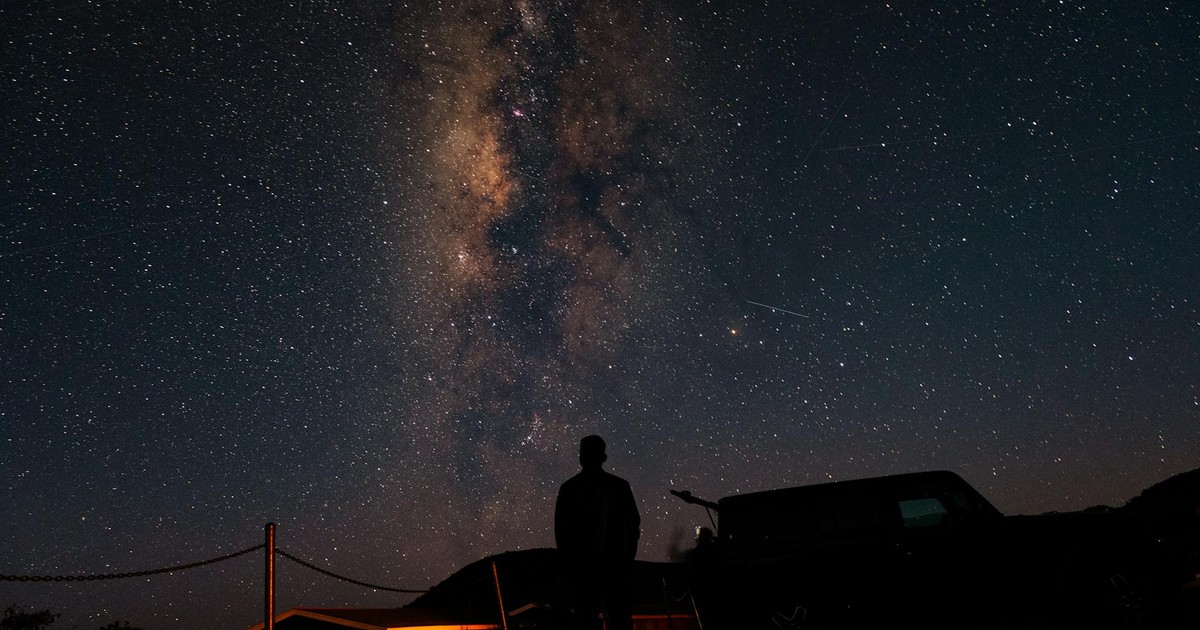
When you have removed the ready-made framework of divine creation from your experience of a mountain or a night sky, what’s left is the thing itself – the mountain, the sky, the sheer improbability of a cosmos that produced consciousness and pine trees and music and grief. For many atheists, the absence of a supernatural explanation doesn’t diminish the experience of reality; it intensifies it. Research published in Frontiers in Psychology found that the experience of awe challenges how people think about themselves and the world around them, and that a disposition toward awe is related to greater moral concern across a wide range of groups – including people outside one’s own community, animals, and the broader environment.
A sense of wonder, it turns out, is not a byproduct of faith. It is a capacity that can be cultivated independently of it – and then put to very good use.
8. The Ability to Hold a Belief Under Scrutiny

Most people believe what they believe because the people around them believe it. This is how culture works, and how trust is transmitted across generations. But it does mean that many beliefs have never been pressure-tested – never held up to the light and turned around to see whether they hold from every angle.
Atheists typically arrived at their position after doing exactly that with a belief system that was, in most cases, the one they were raised in. Having dismantled something large and examined its components, they tend to be more alert to the difference between something that holds up under scrutiny and something that just feels true because everyone in the room agrees. That discernment is genuinely useful in a world full of things that feel true because everyone in the room agrees – which is most of the world, most of the time.
9. Finding Meaning Without a Prescribed Framework
Like most Americans, atheists mention family as a primary source of meaning, but atheists were far more likely than Christians to describe their hobbies as meaningful or satisfying – 26% compared to 10% among Christians – and were also more likely to describe creative pursuits, travel, and leisure activities as meaningful.
Read what that number is actually saying. When you don’t have a pre-built narrative telling you your life has meaning because of its relationship to the divine, you have to build the narrative yourself. You have to figure out, from first principles, what actually matters to you – not what you’ve been told should matter, not what the tradition requires, but what you genuinely find worth the one life you can confirm you have. That is hard. It is also clarifying. People who have constructed their own meaning from scratch tend to live it more deliberately than people who inherited someone else’s answer.
10. Resilience Built From the Inside Out

Religious communities offer extraordinary external support systems: a congregation, a shared practice, a framework of comfort when things go wrong. The trade-off is that the resilience can become externally located. When the community fractures, or the faith wavers, or the pastor turns out to be a disappointment, the structural support can go with it.
Atheists, who generally can’t draw on “God has a plan for this,” have had to develop resilience that doesn’t depend on that external scaffolding. This doesn’t make their pain any smaller when things fall apart – it just means the coping infrastructure is usually located inside. They have built, by necessity, a set of internal tools: the ability to look at a bad situation clearly, grieve it honestly, and find a forward path without a theological framework to do the emotional heavy lifting. An internal resource assembled under pressure is portable in a way that borrowed comfort is not – it goes wherever you go, survives whatever the external situation loses.
11. Honest Reckoning With Doubt
The difference between someone who has doubted their beliefs and returned to them and someone who has never doubted them at all is enormous, and not always in the direction you’d expect. Doubt, sat with long enough, produces either genuine re-commitment or a change of direction. Either result is more honest than certainty that has never been tested.
Across belief domains and across identities including Republicans, Democrats, atheists, and Christians, intellectual humility was consistently related to less emotional polarization – and these relations tended to remain significant even when controlling for belief strength. The most theologically sophisticated Christian thinkers have always known this. The willingness to honestly say “I wrestled with this and it cost me something” produces a depth of conviction – or of disbelief – that comfortable certainty never touches. Atheists who have gone through that reckoning have something worth respecting, regardless of where it landed them.
12. Living by Borrowed Time, Intentionally

Without an afterlife in the picture, this life is the whole story. Every moment is finite in a way that no consolation softens. That is, by most accounts, terrifying. It is also, for many atheists, exactly what makes the present feel so urgent and so worth attending to.
This awareness of mortality without the cushion of eternal continuation tends to produce a specific quality of attention. The conversation matters now. The relationship needs tending now. The question of how to live cannot be deferred to a day of reckoning that may not come. Research has found that nonreligious people with a clearly defined belief system – such as humanism or atheism – do not differ significantly in physical or psychological well-being from religious people, particularly when they are reasonably engaged in their communities. The mortality is not the problem. The attention it demands turns out, in many cases, to be the point.
Read More: 12 Behaviors People Notice and Judge in Church
What Any of This Is Really About

None of this is an argument that atheists have it figured out, or that religious belief is a weakness, or that Christianity in particular has nothing to teach. Those would all be simpler, and sillier, claims than the one that’s actually being made here.
What the research keeps returning to is that certain habits of mind – intellectual honesty, comfort with uncertainty, deliberate construction of meaning, resilience that doesn’t depend on external scaffolding – tend to be highly developed in people who have had to build their worldview without a pre-existing architecture to stand on. Some Christians develop exactly these habits. Some atheists are every bit as rigid and unreflective as the worst stereotypes suggest. The point isn’t the label. The point is the practice.
The strengths on this list are not owned by atheism. They are available to anyone willing to ask harder questions of themselves than the surrounding culture requires. The atheist who sat with the dark for long enough to find a way through it knows something about that process. What they did with it afterward – what anyone does with hard-won clarity once they’ve actually earned it – is a different question entirely, and the more interesting one.
AI Disclaimer: This article was created with the assistance of AI tools and reviewed by a human editor.