

The United States has more square footage per person, more streaming services, more restaurants, more self-help books than almost any country on earth. The data on how Americans actually feel has been moving in one direction for more than a decade: straight down.
The 2025 World Happiness Report ranked the U.S. 24th, its lowest-ever position. In 2011, the country placed 11th; by 2016, it had dropped to 13th. That is not a blip. That is a pattern.
The economy has grown. Social support scores remain relatively high. People have more ways to connect than ever before, and more ways to distract themselves from the fact that they aren’t. The answers, when you look at the actual research, are messier and more specific than “modern life is stressful.” Here are the 12 most well-documented reasons why so many Americans feel more unhappy than ever.
1. Optimism About the Future Has Collapsed
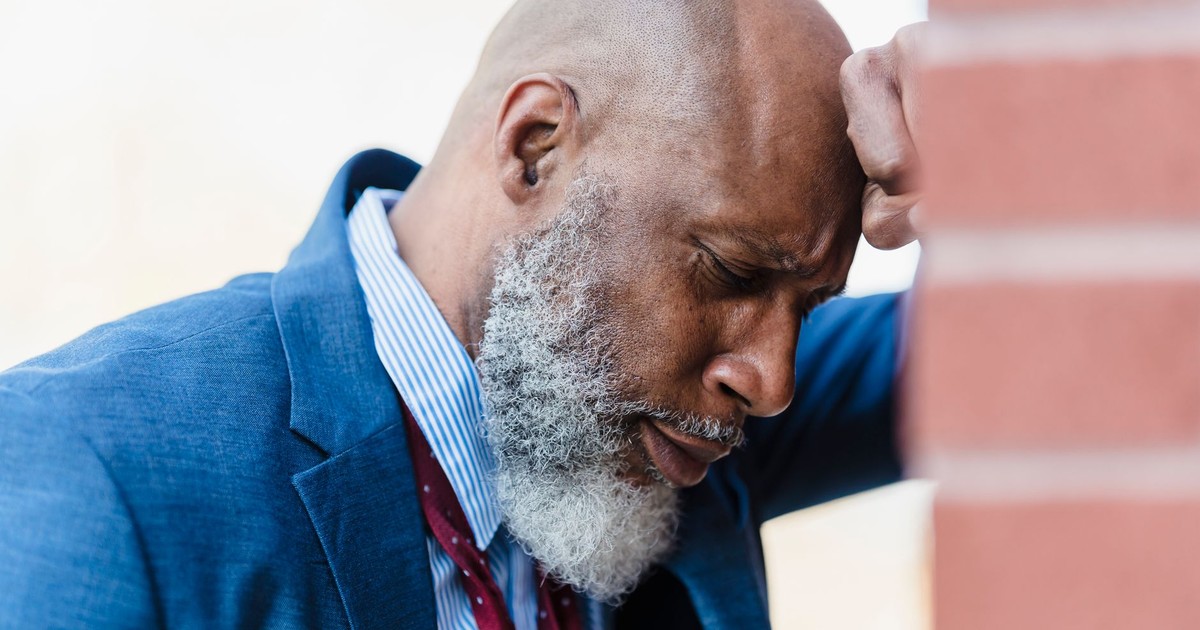
When people stop believing things will get better, they stop investing in the changes that would make things get better. According to a 2026 Gallup report, the percentage of U.S. adults who anticipate high-quality lives in five years declined to 59.2% in 2025, the lowest level since measurement began nearly two decades ago. Since 2020, future life ratings have fallen a total of 9.1 percentage points, projecting to an estimated 24.5 million fewer people who are optimistic about the future compared to 2020.
That is tens of millions of people who have, somewhere between the pandemic and now, quietly concluded that the arc of their personal life is not bending upward. Most of that decline occurred between 2021 and 2023, but ratings dropped another 3.5 points between 2024 and 2025, suggesting the slide is still very much in progress. When people stop picturing a better version of their future, contentment in the present becomes harder to maintain.
2. Financial Stress Has Become the Default Setting

Money anxiety is not reserved for people in genuine financial crisis. It has become so normalized that it functions for many Americans as a permanent backdrop to daily life. According to a 2025 LifeStance Health survey, 83% of Americans report financial stress driven by inflation, mass layoffs, rising living costs, and recession concerns.
60% of respondents have avoided seeking mental health care due to financial constraints, an increase from 58% in 2024. The stress is making people sick, and the cost of addressing that sickness is one of the stressors. It loops back on itself in a way that is genuinely difficult to exit. The anxiety follows people well into the middle class, where the gap between what life is supposed to look like and what it actually costs has never been wider.
3. Loneliness Has Reached a Genuine Crisis Point

In 2023, the U.S. Surgeon General issued an advisory identifying loneliness as a serious public health concern. Two years later, the numbers have not meaningfully improved. An estimated 52 million U.S. adults still struggle with loneliness. Young adults are among the loneliest demographic in the country. Workers in open offices report it. Parents in the carpool line feel it.
Around 25% of Americans reported eating all their meals alone the previous day in 2023, a 53% increase since 2003. Every meal, alone, every day, more than half again as often as two decades ago. The World Happiness Report specifically named dining alone as one of the contributors to declining American wellbeing.
4. The Age Gap in Happiness Is Historic

In most wealthy countries, young people report similar or higher happiness than older adults. The U.S. has flipped that pattern entirely. For Americans over 60, the U.S. ranked in the top 10 globally for happiness, but for those under 30, it sits in 62nd place. The same country, producing radically different experiences depending on which decade of life you happen to be in.
The divergence started to grow after 2010 and has accelerated since the pandemic, suggesting it is not simply a matter of inexperience or youthful impatience. Something structural has shifted in what young Americans can expect from their lives in terms of housing, community, purpose, and economic security, and the happiness data is reflecting that shift in real time.
5. Americans Feel Profoundly Unsupported
Stress is not just about what happens to you. It is about the gap between what happens to you and the support available to absorb it. Right now, that gap is very large. The APA’s 2025 Stress in America survey found that nearly seven in 10 Americans (69%) said they needed more emotional support in the past year than they actually received, an increase from 65% in 2024.
That number is moving in the wrong direction, which means whatever is causing the support deficit is getting worse, not stabilizing. The connections people rely on (family, friendship, community, even professional relationships) are under more strain than they were a year ago. When people cannot get the support they need from the people around them, the emotional cost accumulates in ways that are difficult to measure and almost impossible to ignore.
6. Freedom to Make Life Choices Is Shrinking
One of the six factors the World Happiness Report uses to measure national wellbeing is the perceived freedom to make life choices, to live as you want, choose your path, and feel like your decisions are your own. That score has dropped to 71.7% in the U.S., down from a peak above 85%.
Housing costs eliminate geographic flexibility. Student debt forecloses career choices. Health care costs tie people to jobs they’d otherwise leave. Childcare costs reshape what both parents can and cannot do. The result is a population that is technically free in the constitutional sense and practically constrained in almost every other. The number of young people who said they believe they have the freedom to choose what to do with their lives fell 10 points between 2020 and 2024.
7. Trust in Institutions Has Eroded
Societies where people trust their institutions (government, media, business, the legal system) tend to be happier societies. Not because institutions are inherently trustworthy, but because the absence of trust creates a kind of chronic background vigilance that is exhausting. In the U.S., 66.8% of people express a lack of confidence in government and business integrity.
Financial crises where consequences fell unevenly, a pandemic whose management exposed deep institutional failures, political polarization that has made every institution feel like a partisan instrument. The World Happiness Report noted that “the decline in happiness and social trust explains a large share of the rise in political polarisation and votes against ‘the system,'” meaning distrust and unhappiness are not just correlated, they are feeding each other.
8. Young People Have Lost Faith in the American Dream
The drop in young Americans’ belief in their freedom and future paints a “bleak picture” of the viability of the American dream, according to Gallup Managing Editor Julie Ray. The American dream was never a guarantee, but it functioned as a credible promise: effort would be rewarded, access would be available, the next generation would do better than the last. That promise has become hard to keep.
Young people report feeling less supported by friends and family, less free to make life choices, and less optimistic about their living standards, which is a combination that makes the future feel like a closed door rather than an open one. When the generational compact that told you hard work leads somewhere good starts to look unreliable, the psychological toll is the specific, daily weight of going through the motions of a life you’re not sure will add up to anything.
9. Generosity and Community Engagement Have Declined

Happiness research consistently finds that people who give (time, money, energy, attention) to other people and to their communities report higher wellbeing than those who don’t. The relationship runs in both directions: happy people give more, but giving also produces happiness. When generosity declines, both sides of that equation weaken. In the U.S., generosity (which includes helping strangers or donating to charity) has fallen to 56.3%, a measurable drop from previous years.
People who are financially stressed, time-starved, and emotionally depleted naturally pull inward. The retreat from community engagement is a symptom as much as a cause. But the effect is cumulative: neighborhoods where people don’t know each other, towns where civic life has hollowed out, and daily routines that involve almost no voluntary contact with people outside your immediate circle.
10. Physical Health Is Getting Worse
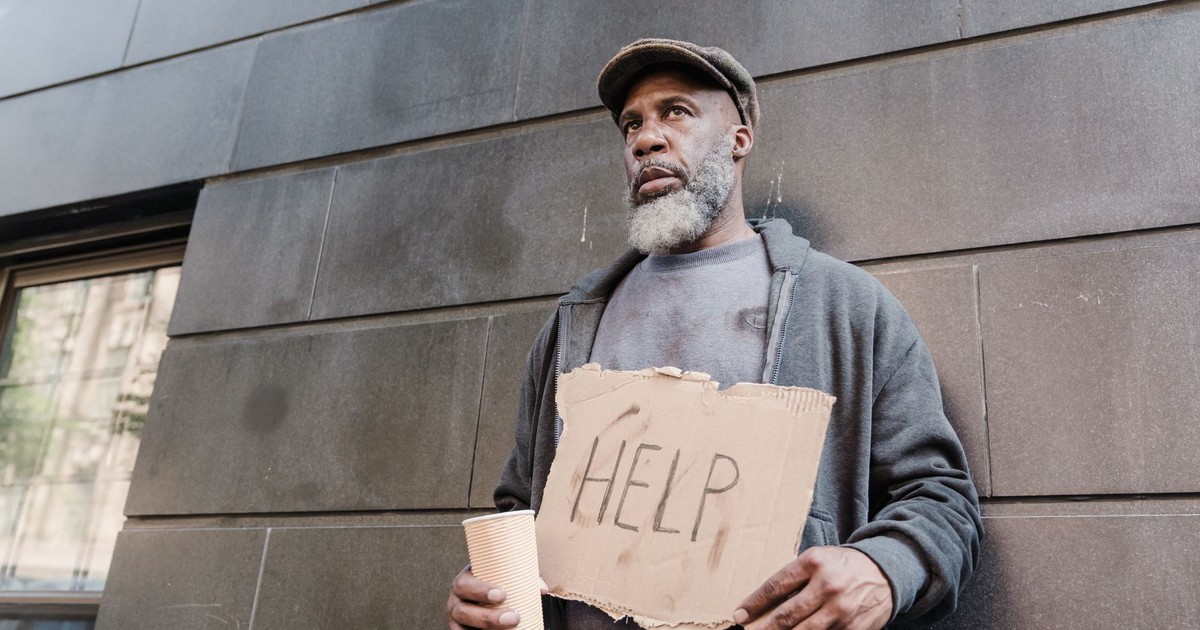
The mind-body connection in happiness is one of the most robustly documented relationships in public health research. American physical health is going the wrong way. Healthy life expectancy in the U.S. is now at 63.9 years, a figure that puts the country well behind most comparable wealthy nations. That means the average American can expect to spend a significant portion of their later years managing chronic illness, pain, or disability, and the costs and limitations that come with it.
Feeling unwell is not conducive to feeling happy. Chronic pain, untreated conditions, inadequate sleep, and sedentary daily routines create a physical baseline that makes good days harder to sustain. The American healthcare system, for all its technological capability, is expensive enough that many people delay or avoid care entirely.
11. Social Media Has Replaced Social Connection

Social media is not the same as social connection. Connection involves reciprocity, genuine attention, and the actual experience of being known by another person. Social media often involves a performance of connection that leaves the underlying need unmet while consuming the time and attention that might otherwise go toward the real thing. This is one of the most well-documented drivers of unhappiness among younger Americans in particular.
Seeing a constant feed of other people’s highlight reels (the vacation, the promotion, the renovated kitchen) creates a chronic sense of falling short that genuine friendship rarely produces, because genuine friendship involves knowing that everyone’s life has a B-side. When the connection is digital and curated, you only ever see the A-side, and your own ordinary Tuesday starts to look like failure.
12. The Economy Feels Rigged Even When It’s Growing
GDP growth and personal financial security are not the same thing, and for a large portion of the American population, they have not moved together for years. The American Psychological Association’s 2024 Stress in America survey found that 73% of respondents rated the economy as a significant source of stress, making it the second most common stressor in the country, even during a period of relatively strong economic indicators.
Housing costs are the most vivid example. Wages have grown, but house prices and rent have grown faster in most American cities, meaning that the basic aspiration of stability (a home, a community, a place to raise a family) has moved further out of reach for people doing everything they were told to do. For many Americans in their twenties, thirties, and forties, it is simply what the numbers show.
What the Numbers Actually Mean
What the data documents is not a permanent feature of American life but a set of specific, compounding pressures that have been allowed to accumulate without adequate response. Loneliness, financial anxiety, eroded trust, declining health, the collapse of community life are not the price of modernity. They are the price of specific choices, made at the level of policy and culture, over several decades. The fact that the American happiness decline has been so consistent, and so steep, is actually the most important finding in all of this: it rules out coincidence.
Knowing the reasons doesn’t immediately make the weight of any of them lighter. If you recognize yourself in several of these (the financial dread that lives in the background, the meals eaten alone more often than you’d like, the sense that the future you were promised has been quietly renegotiated), you are not imagining things, and you are not alone in it. Some of these patterns were set in motion long before the last few difficult years. No single election, no single event, and no single policy shift created them, which means no single reversal will fix them either. But naming what is actually happening, with real specificity, is at least a more honest place to start than pretending the data says something other than what it does.
Disclaimer: This information is not intended to be a substitute for professional medical advice, diagnosis, or treatment and is for information only. Always seek the advice of your physician or another qualified health provider with any questions about your medical condition and/or current medication. Do not disregard professional medical advice or delay seeking advice or treatment because of something you have read here.
AI Disclaimer: This article was created with the assistance of AI tools and reviewed by a human editor.