

Some American traditions are so old that questioning them feels vaguely unpatriotic. You blow out the candles, you drag yourself to the mall at 4 a.m., you watch a groundhog get yanked into a winter sky and then trust it with your seasonal plans – and you do all of this because that’s what people do. The tradition exists because the tradition exists, and for a long time that was enough.
It isn’t anymore. A handful of these customs have been eroding for years, and the data, the science, and the collective exhaustion of a country that has been through a lot lately are all pointing in the same direction. Some of these need to go entirely. Others just need someone to finally say out loud what most people have been thinking at a birthday party for years.
Here are 13 American traditions that have earned their retirement – not because they’re offensive, but because they’re outdated, impractical, or simply stopped making any kind of sense a long time ago.
1. Black Friday In-Store Stampedes

The mythology of Black Friday goes like this: America’s greatest shopping bonanza, the one day a year you can get a television for almost nothing, where the deals are too good to pass up and the crowds prove the whole country shares your enthusiasm for savings. The reality, in 2026, is that the crowds have already left. For six straight years, online sales have outpaced in-store shopping on Black Friday. In-store traffic on Black Friday 2025 was down 3.6% compared to 2024, following a 3.2% drop the year before.
According to Adobe Analytics, U.S. consumers spent a record $11.8 billion online on Black Friday 2025, a 9.1% jump from the prior year. The deals are the same. The parking lot is not involved. The tradition of physically stampeding a big-box store in the dark was always more ritual than rational. It is now neither.
2. Blowing Out Birthday Candles
Nobody wants to be the person who ruins the birthday party by pointing this out, and yet. A study published in the Journal of Food Research by researchers at Clemson University found that blowing out candles over a frosted surface resulted in 1,400 percent more bacteria compared to icing that was not blown on. One participant didn’t just transfer bacteria – at least one blower increased bacteria levels by 120,000 percent.
The study’s lead author noted that under normal circumstances the bacteria involved are mostly harmless, and that doing this 100,000 times would probably not make you sick. The caveat everybody skips past is that this assumes the person blowing out the candles isn’t sick. You know who often doesn’t know they’re sick? Children at birthday parties. Individual cupcakes with individual candles exist. Battery-operated candles exist. The tradition of one person exhaling directly onto food everyone is about to eat is the one thing in this scenario that doesn’t have to.
3. Groundhog Day Weather Forecasting

Every February 2, a man in a top hat hauls a groundhog out of a staged burrow in Pennsylvania, and approximately 40,000 people gather to watch the animal’s shadow – or lack thereof – determine the next six weeks of American weather. The country then spends the next few days discussing it sincerely. Punxsutawney Phil has predicted 109 longer winters and just 21 early springs, and his all-time accuracy rate sits at 39 percent.
That is worse than a coin flip. Meteorologist Tim Roche has put it plainly: “If Punxsutawney Phil is right 39% of the time, that’s much, much worse than a climatological prediction. Even if you flip a coin, you’ll still be right close to half of the time.” A 2021 study by Lakehead University climatologists compared 530 predictions by 33 weather-predicting groundhogs to actual spring weather indicators and concluded that groundhog predictions are pure chance. None of this needs to stop anyone from enjoying the spectacle. It just needs to stop being reported as news.
4. Daylight Saving Time

Every spring, the United States loses an hour of sleep, every public clock becomes temporarily wrong, and a meaningful portion of the population spends a week being slightly off, slightly irritable, and slightly late. Every fall, the process reverses. This has been happening twice a year since 1918, originally as a wartime energy-conservation measure, and the evidence that it still serves that purpose is thin.
A meta-analysis of 7 studies found that the risk of acute myocardial infarction increased by 5% in the week after the spring clock change, and a study using 20 years of U.S. registry data identified a 6% rise in fatal traffic accidents in the same period. Changing clocks twice a year disrupts circadian rhythms, increasing health risks and vehicle accidents. Several countries have moved to end the practice entirely, and the debate in the U.S. Congress has been loud enough that both political parties have taken a position on it – which, by contemporary standards, practically counts as a national consensus.
5. The Two-Month Salary Engagement Ring Rule
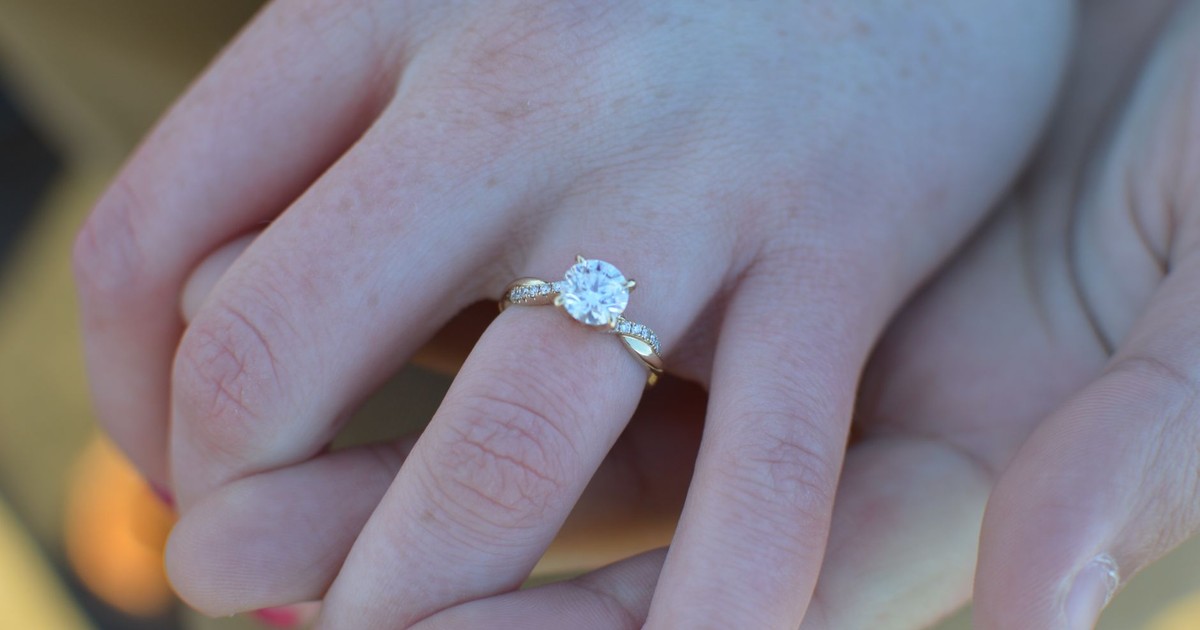
Somewhere in the mid-twentieth century, a diamond company’s marketing department decided that the appropriate amount of money a man should spend on an engagement ring was one month’s salary. Then, apparently deciding that wasn’t enough, they revised it to two months. This is not a tradition in any organic sense. It is an advertising campaign that became a social norm, and it is still running.
According to The Knot’s 2024 Jewelry & Engagement Study, the average cost of an engagement ring in the United States is $5,200 – a number driven significantly by the cultural pressure that this marketing created. The tradition also carries an embedded assumption that has aged poorly: that the ring is a measure of commitment, and that larger diamonds signal deeper love. Couples who direct that same money toward a down payment, travel, student debt, or simply keeping it in their bank account are not less committed. They have just noticed that they were sold something.
6. Hustle Culture as a Virtue

The idea that productivity is its own reward, that rest is laziness, and that grinding through exhaustion is a sign of character has been a persistent feature of American professional culture for decades. Motivational posters about early mornings. The phrase “I’ll sleep when I’m dead.” Treating busyness as a proxy for success so completely that people begin to feel embarrassed about not being busy enough.
This one is eroding on its own, largely because the generation that was supposed to inherit it looked at the deal being offered – work constantly, sacrifice your relationships, your health, and your sleep, and perhaps someday it will pay off – and started asking questions. Burnout is now recognized by the World Health Organization as an occupational phenomenon, characterized by chronic workplace stress that hasn’t been managed. The cultural conversation has shifted enough that “hustle culture” is now frequently used as a term of critique rather than admiration, particularly among younger workers who watched the previous generation work themselves into the ground and ended up with less economic security anyway.
7. Tipping Culture (In Its Current Form)

This one requires a distinction. Tipping as a way of supplementing the income of servers, bartenders, and other service workers is a genuine social good, because the minimum wage structures in most American states have made it structurally necessary. The issue is the expansion of the tip prompt into every transaction that involves a point-of-sale screen – which by now includes coffee shops, fast food counters, bottle shops, and self-checkout kiosks where the only labor involved was yours.
A 2023 Pew Research survey found that 72% of Americans say tipping is expected in more situations now than five years ago, and that many feel the practice has gotten out of control. What began as a way to compensate workers for inadequate base wages has expanded into a system that places the burden of that compensation entirely on customers, absolves employers of responsibility for fair pay, and then generates a moment of mild social shame every time you order a drip coffee. The structural problem is real. The solution isn’t more tip prompts.
8. HOA Rules as Gospel

Homeowners’ Associations began as a genuinely useful invention: shared governance for shared spaces, ensuring that common areas stayed functional and neighbors couldn’t do things that dramatically harmed everyone else’s property values. That original logic has, in many communities, expanded into something that controls the color you can paint your own front door, the species of tree you’re permitted to plant, the exact dimensions of a basketball hoop, and what kind of mailbox you’re allowed to own.
HOA enforcement actions have generated a relentless stream of news stories in recent years involving fines for residents who planted vegetable gardens, installed solar panels, or flew flags – including, in some cases, the American flag itself. The American HOA system now governs approximately 75 million residents, according to the Community Associations Institute, and the rules enforced by these bodies vary wildly between neighborhoods. Treating the HOA rulebook as sacred text, issued by an authority that answers to no one in particular, has outlived whatever civic logic it started with.
9. The Gendered Baby Shower

The baby shower is not inherently a problem. Gathering people together to celebrate an upcoming birth, share food, and give useful gifts to new parents is lovely. The tradition of doing this exclusively for women, excluding partners and fathers entirely, and centering the event on a single gender is the part that no longer reflects how most families actually work.
The model in which the mother’s friends throw a party, buy everything off a registry, and then the father appears in time to hold the gifts and say thank you doesn’t match the reality of dual-income households, single fathers, same-sex couples, or any number of other family configurations that are now entirely common. The party doesn’t need to go. The gendered guest list does.
10. Asking People About Their Relationship Plans at Every Family Event

This tradition has no official name because it has always just been treated as normal conversation. Thanksgiving, Christmas, Easter, graduation dinners, retirement parties – any gathering of family members creates an occasion for adults to ask younger relatives or recently married couples when they’re getting engaged, when they’re getting married, when they’re having children, when they’re having a second child, and occasionally why they haven’t moved closer to home.
The questions are almost always meant kindly. They are also, in aggregate, a form of ambient pressure that assumes everyone is on the same timeline, that the milestones listed above are universally desired, and that asking about them repeatedly is a form of affection rather than intrusion. About one in five American adults will experience infertility, according to the CDC. The question “So when are you two having kids?” hits very differently at a table where someone has been trying for two years without success. You don’t know who that person is until after you’ve asked.
11. Pomp and Circumstance as a Three-Hour Ordeal

Graduation ceremonies celebrate a real achievement, and nobody is arguing otherwise. The tradition worth questioning is the version that requires 600 students to sit in regalia in an un-air-conditioned gymnasium in June while their names are read individually over a microphone system that can’t handle the acoustics. Every family member present holds a phone at arm’s length for four hours waiting for the one minute that involves their person.
The graduation cap toss at the end carries its own complications. The U.S. Naval Academy stopped the traditional hat toss because the metal hardware on the caps posed a genuine injury risk to the crowd. Multiple schools have issued warnings about the same concern over the years. The hat toss, the length of the ceremony, the requirement that everyone sit through every name that isn’t theirs – none of this is sacred. Shorter ceremonies, smaller gatherings, and letting the people being celebrated actually celebrate would all be improvements.
12. The Annual Performance Review

Once a year, an employee sits across a desk from a manager, receives a numerical rating of their professional worth, and then receives either a modest raise or an explanation of why they are not receiving one. This ritual exists in virtually every corporate environment in America, survives largely because changing it requires effort, and is critiqued by nearly every management researcher who has studied it.
The performance review as typically practiced conflates the evaluation of compensation with the coaching of performance, doing neither particularly well. Companies that have experimented with alternatives – more frequent short check-ins, ongoing feedback, separating compensation conversations from development conversations – consistently report higher employee engagement and better performance outcomes. The tradition persists not because it works, but because it is familiar. The American workplace’s attachment to this particular ceremony is the corporate equivalent of blowing out the candles: slightly gross, slightly pointless, and propped up entirely by the fact that it’s what everyone does.
13. Treating Thanksgiving as a Single Menu

Thanksgiving has a prescribed menu: turkey, stuffing, cranberry sauce, mashed potatoes, and a pie that at least half the table doesn’t actually want. The expectation that every American family, regardless of cultural background, regional tradition, or personal preference, should reproduce this exact meal every November is one of the more peculiar forms of culinary conformity in modern life.
Americans consume approximately 46 million turkeys on Thanksgiving annually, and a significant number of households report serving it primarily out of obligation. The number of families who have substituted lasagna, tamales, or any other food they actually enjoy has been growing for years, as has the number who center the sides and treat the protein as optional. The holiday is about gratitude and gathering. The turkey was marketing, too.
The Point Isn’t to Cancel Everything

This American traditions critique is not a case for nihilism. The argument is not that rituals are bad, that holidays are meaningless, or that you should feel guilty for loving Black Friday sales from your couch. Most of these traditions can be modified, adapted, or dropped without any loss to the underlying thing they were celebrating.
The birthday cake still exists without the candle-blowing. Thanksgiving is still Thanksgiving if you serve something you actually want to eat. Graduations can still honor achievement in less than three hours. The engagement is still the engagement regardless of how much the ring cost. The intention beneath the tradition – the connection, the celebration, the pause to acknowledge something real – is worth keeping. The part that stopped serving that intention, the part that only survives because everyone forgot to question it, is not.
Some of these patterns go back much further than any individual choice to participate in them. Changing them isn’t a personal moral failing for everyone who has observed them until now. Most people were already having this conversation in private – at the Thanksgiving table, after the candles, or somewhere in the middle of a very long graduation ceremony.
AI Disclaimer: This article was created with the assistance of AI tools and reviewed by a human editor.