

Nobody sits across from a first date thinking, “I wonder what combination of behaviors will make this person impossible to see again.” It doesn’t work like that. The habits that quietly close doors in dating rarely announce themselves. They accumulate, one evening at a time, in the gap between who someone is when they’re trying and who they are when they’ve stopped thinking about it.
The undateable social habits that end things earliest are almost never the dramatic ones. It’s rarely the outburst at a waiter or the mention of an ex’s name in the first ten minutes, though those certainly contribute. More often it’s the texture of a person in social situations: the way they hold a phone during dinner, the way they can’t let a conversation be about anyone else for longer than ninety seconds, the way they seem to treat plans as suggestions and apologies as optional. A date ends and the other person doesn’t quite know what put them off, only that something did.
Relationships don’t just fail because of big incompatibilities. They fail because of hundreds of small signals that add up to a feeling: this person doesn’t really see me, or this person is exhausting, or this person thinks the world orbits them at a frequency that is charming in theory and relentless in practice. These are the undateable social habits researchers, therapists, and honestly just a lot of very tired single people keep coming back to.
1. Phone-Snubbing During Conversation

Phubbing – the act of pulling your phone out while someone is mid-sentence – has moved from rude to epidemic. A 2025 meta-analysis synthesizing data from 52 studies and nearly 20,000 participants found that partner phone-snubbing has become widespread, with measurable detrimental effects on relationship quality and emotional well-being. The person on the receiving end doesn’t experience it as minor distraction. They experience it as: you are here, but you would rather be somewhere else.
What makes this habit especially corrosive in early dating is the stakes of those first conversations. You’re not yet sure whether this person is interested, whether they respect you, whether you matter to them. A phone on the table, face up, checked twice during appetizers, answers all three questions in the same direction. A 2025 University of Southampton study found that people with anxious attachment styles were especially vulnerable, reporting more depression, resentment, and lower self-esteem following phubbing incidents.
This isn’t only about romantic settings. The habit of treating your phone as a more compelling option than whoever is physically present tends to follow someone everywhere, and dates notice quickly whether they’re a priority or a runner-up to a notification.
2. Ghosting as a Default Exit Strategy
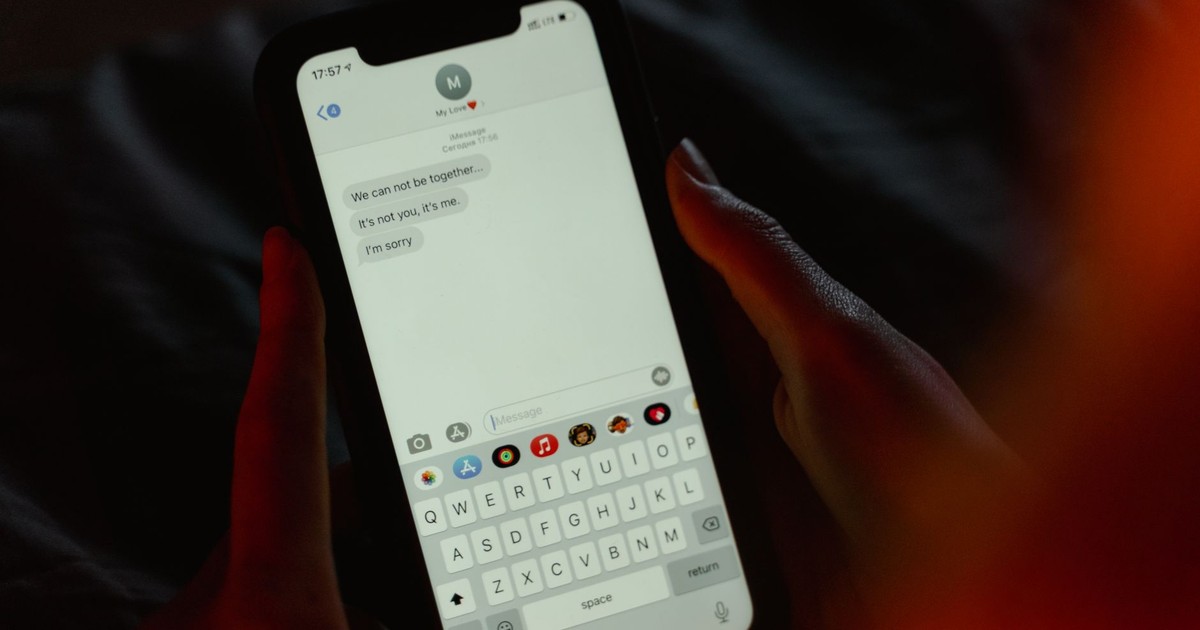
Ghosting – disappearing from contact without explanation instead of offering any form of closure – has become so common it barely registers as remarkable anymore. A 2023 survey cited in Time found that 84 percent of dating app users had been ghosted and that 66 percent had admitted to ghosting others. The behavior has achieved a kind of cultural normalcy that does not make it any less damaging to the person on the receiving end.
The problem with ghosting as a habit isn’t just that it’s unkind. It’s that it signals a broader social pattern: this is a person who disappears when things get uncomfortable rather than managing them. Early-stage dating is essentially an extended audition in how someone handles difficulty. Ghosting tells the other person everything they need to know about what happens when things get hard inside a relationship.
People who ghost routinely often tell themselves it’s kinder than a rejection. It isn’t. It leaves the other person without the information they need to move on, running through scenarios, wondering what they did. The avoidance that drives ghosting doesn’t stay contained to early dating – it tends to be a pattern that runs through every close relationship a person has.
3. Monopolizing Every Conversation

There’s a specific kind of date that exhausts you by its end even though absolutely nothing went wrong. You had a nice time, the person was funny, they told great stories. You get in your car and realize you haven’t said anything meaningful about yourself in two hours. You were an audience, not a participant.
Conversational monopolizing – consistently steering every topic back to yourself, not asking follow-up questions, filling silences before the other person has finished processing – reads as disinterest dressed up as personality. The date across the table starts calculating how this dynamic will scale up over six months, and the calculation doesn’t come out well. Good conversation is structurally a back-and-forth, and people can feel the imbalance even when they can’t name it.
The specific tell is not asking questions. Someone who is genuinely interested in another person asks questions, and then follows up on the answers. Someone who treats conversation as a monologue opportunity is looking for an audience, not a partner.
4. Chronic Lateness Without Acknowledgment

Being occasionally late is human. Being consistently late and treating it as an unremarkable fact about yourself is a different thing entirely. Chronic lateness tells a date, before a word has been exchanged, that their time does not register as something worth protecting.
What compounds this into undateable territory is the absence of acknowledgment. Arriving twenty minutes late and immediately launching into your evening without a word about it sends a very clear message about how the power dynamic in this relationship would be distributed. It communicates that your time is the variable, and theirs is the fixed point that waits.
Partners tend to forgive lateness when it’s accompanied by genuine awareness of the imposition. They don’t forgive the habitual lateness of someone who has already decided their schedule is the organizing principle.
5. Treating Service Staff Poorly

Watch how someone treats a waiter, a bartender, a barista, a rideshare driver. Not when they’re trying to make a good impression, but in the moments between – when the order comes out wrong, when the wait is longer than expected, when they think no one who matters is watching. That behavior is a preview.
The way a person treats people who are paid to be polite and cannot easily walk away reveals what they believe about hierarchy, respect, and who deserves courtesy. A date who talks over a server, snaps when something is wrong, or doesn’t make eye contact when ordering is giving you a clear window into who they are when they’re not performing. Most people notice this even when they don’t say so.
This one has a particular quality among undateable social habits because it’s almost always a fixed trait. People who treat service staff badly have developed a relationship to entitlement that tends not to shift based on who they’re trying to impress.
6. Oversharing Trauma on the First Few Dates

Genuine openness deepens connection. Extensive trauma disclosure on a third date – a detailed catalogue of every wrong done by every ex, or working through active mental health crises out loud – drops the other person into the role of therapist before the entrées arrive, and that’s a different thing entirely.
This isn’t about pretending to be fine. It’s about the pace at which emotional intimacy is built. Dumping significant personal pain onto someone you barely know doesn’t build connection – it creates a dynamic where one person is suddenly responsible for the other’s wellbeing without having agreed to that job. The person on the receiving end often leaves not because they don’t care, but because they can see clearly where this is heading.
The emotional labor this creates – being asked to become an informal therapist before the relationship has even been defined – is one of the most cited reasons women in particular step back from otherwise promising early connections.
7. Constant Negativity and Complaining

A first date with someone who finds fault with the restaurant, the parking, the weather, the menu, the service, the music, and incidentally their coworkers, their landlord, and their family – all within an hour and a half – is a specific and memorable kind of exhausting. Chronic negativity is not just unpleasant company. It’s a preview of what it would feel like to live in proximity to that person.
Occasional venting is expected and fine. The pattern that becomes a social liability is the person who can’t locate much that’s worth noticing unless it’s wrong. After a certain point, being around them starts to feel like being in a room where the windows have all been painted shut. Other people can feel this very quickly, even if they can’t quite articulate it as a pattern.
The relationship between consistent negativity and romantic repulsion is not subtle. People are attracted to energy that opens things up, and they pull back from energy that closes things down.
8. Social Media Performance Disorder

There’s the person who pauses a moment to live it, and there’s the person who pauses a moment to photograph, caption, post, and check the engagement numbers before the moment has technically finished happening. On a date, the latter is a clear signal that the evening is partly content.
Constant social media documentation during shared time communicates something specific: this person’s public image matters more to them than the actual experience of being here with you. That’s hard to take personally without being reasonable. And the follow-up – the checking of likes, the monitoring of stories, the phone consulted every few minutes to see who has responded – makes the other person feel like a prop in someone else’s narrative rather than the point of the evening.
Research has also shown that social media can fuel relationship conflict directly, with 33 percent of surveyed adults in relationships identifying it as a source of arguments – including disagreements over what gets posted and what stays private.
9. Being Unable to Make a Decision

There is something specifically draining about dating someone who cannot make any decision under any circumstances. Where do you want to eat? “I don’t know, whatever you want.” What movie? “You pick.” What do you want to do this weekend? “I’m flexible.” It sounds like easygoing agreeableness. After four dates it reads as an absence of self.
This habit places the entire cognitive and emotional load of the relationship onto one person before the relationship has even formed. The person doing all the choosing eventually gets tired of carrying the full weight of even small decisions, and they start to wonder whether their partner is actually flexible or is just deeply averse to being held accountable for an opinion.
There is a difference between genuine flexibility and performative passivity. The latter, when discovered, tends to kill attraction faster than almost anything else.
10. Name-Dropping and Status Performance

The person who works every professional achievement, every notable connection, every impressive life detail into the first two conversations is usually doing one of two things: compensating for something, or genuinely convinced that their résumé is the most interesting thing about them. Neither is especially compelling to someone who came on a date to meet a human being.
Constant status performance – the casual drops of expensive restaurants, notable friends, professional titles – creates a specific distance. The other person starts to feel that they’re being told why they should be impressed rather than given anything to actually connect with. Attraction doesn’t run on credentials. It runs on something being real in the room, and nothing about status performance feels real.
The quieter cousin of this habit is competitive storytelling: every story you tell gets capped by a bigger one. You mention a trip; they top it. You mention a challenge; theirs was worse. You mention an accomplishment; theirs was more impressive. A level of self-awareness that, respectfully, has not yet arrived.
11. Refusing to Acknowledge Political or Values Incompatibilities

A 2024 survey of over 3,000 American adults found that 46 percent of singles would avoid dating someone with opposing political views, with 82 percent of Democrats considering political compatibility essential to their relationships. What makes this a social habit rather than just a personal preference is how some people handle the discovery of a mismatch: not by having the conversation, but by dismissing the other person’s concern entirely.
“I don’t talk about politics” sounds measured and mature. In practice, it often means: your dealbreakers aren’t worth acknowledging. When someone treats values incompatibility as something to bulldoze past rather than honestly address, it doesn’t actually eliminate the incompatibility. It just ensures it will surface later, with more consequence.
The habit that creates real problems isn’t holding political views. It’s treating the other person’s concerns about fundamental incompatibility as unreasonable or dramatic.
12. Using Humor as a Deflection Shield

Humor is one of the most attractive things a person can offer a date. The ability to be funny in the same paragraph as being vulnerable, to hold lightness and weight simultaneously, is genuinely rare and genuinely appealing. But humor used exclusively as a way to avoid any real conversation is something else.
The person who deflects every sincere question with a joke, who makes the other person feel slightly embarrassing for asking something personal, who treats earnestness as a character flaw – that person is announcing, in the nicest possible way, that they are not available for an actual relationship. You can date the performance. You cannot date the person underneath it, because the performance never stops.
This is different from someone who is naturally funny. Naturally funny people can also be direct and sincere. The deflection habit is about using wit as insulation, and it’s one of the harder undateable social habits to name because it often reads as charm right up until it doesn’t.
13. Keeping Score in Arguments

Early-stage dating involves small conflicts: one person ran late, someone made a plan the other didn’t love, there was a miscommunication about who was supposed to confirm. How someone handles these small misses says more than how they handle the good times.
The score-keeper brings receipts to disputes. Everything becomes evidence in a case being built: “you did that thing two weeks ago, you also said that thing last month.” What they’re communicating is that no repair is ever complete, that the ledger stays open, and that every future conflict will include a reference file from every previous one. A date who has dealt with this dynamic before recognizes it on contact.
Managing small friction by remembering it forever rather than releasing it signals that the relationship will be conducted under a form of surveillance where nothing is truly forgiven, only filed.
14. Talking About Exes Constantly

Bringing up a former partner once or twice across early dates is normal. Having a twenty-minute meditation on your ex’s failings, their emotional unavailability, what they did wrong, what you understand about yourself now that you understand what they did to you – that’s a different thing, and the person across the table is aware they are being given a role in someone else’s story.
Constant ex-mentions signal two things equally: this person isn’t over it, and this person isn’t quite sure who they are when they’re not defining themselves in relation to a past relationship. Neither is particularly inviting. The present conversation, the actual living person in front of them, is competing with a ghost, and the ghost keeps winning.
15. Canceling Plans Repeatedly

One cancellation – real, apologized for, rescheduled meaningfully – is forgiven without much effort. A pattern of cancellations, however graciously delivered, tells the other person exactly where they rank. Not as a malicious statement, but as an accurate one: this person will choose something else when something else feels easier or more appealing.
The habit that makes this truly undateable is the casual cancellation – the text sent an hour beforehand with no real reason, or the full-day silence followed by a “something came up.” Those aren’t emergencies. They’re choices. And they train the other person to stop expecting anything, which is the beginning of them stopping expecting the relationship altogether.
16. Chronic Interrupting

Interrupting once in an excited conversation is the mark of enthusiasm. Interrupting as a structural habit – never letting the other person finish a sentence, cutting across mid-thought, redirecting conversations before points have been made – communicates something close to contempt, even when it’s entirely unconscious.
The person being interrupted starts to feel that their thoughts aren’t quite real until confirmed by the other person’s reaction, and that the other person’s reaction tends to arrive before the thought has finished. It creates a specific kind of friction that is impossible to fully name but impossible to fully ignore.
Chronic interrupting also tends to get worse as a relationship deepens. In early dating it might be chalked up to nerves. After three months, it’s just the relationship – one where one person’s voice consistently finishes before one person’s thoughts do.
17. Financial Inconsistency and Games Around Money

This one covers more than just who picks up the check. It covers the person who suggests expensive plans and then acts surprised when the bill arrives, the person who has no settled sense of how they feel about money and invites their date to figure it out through detective work, and the person who uses financial dynamics – especially in early dating – as a test or a power play.
Men setting “gold digger tests” – deliberately engineered situations designed to gauge a date’s financial motivations – have become a documented pattern in modern dating, and many women find them manipulative and disrespectful. But the broader issue is financial inconsistency in any direction: treating money as a source of anxiety, as leverage, or as a game.
Finances are one of the primary drivers of relationship conflict. Someone who can’t have a clear adult conversation about splitting a dinner tab is telling you something about how they’ll handle every financial conversation that comes after it.
18. Compulsive Advice-Giving

The person who cannot let someone else describe a problem without immediately offering a solution has, underneath that reflex, a low tolerance for sitting with another person’s experience without doing something about it. In social settings this reads as helpfulness. In sustained close relationships, it reads as an inability to simply be present.
The specific frustration for the person on the receiving end is this: they didn’t ask to be fixed. They wanted to be heard. A date who meets every personal disclosure with a five-step improvement plan is communicating that the other person’s feelings are primarily a problem to be solved rather than a reality to be acknowledged. Warmth is not the same as a diagnostic protocol.
19. Weaponized Flakiness

Flakiness here isn’t the same as the occasional forgotten plan or the genuine scheduling chaos of a busy life. Weaponized flakiness is the pattern of keeping options open by staying vague, never quite committing, always leaving a small exit in every arrangement. “I’ll try to make it.” “Let me see how I’m feeling.” “We’ll figure it out closer to the time.”
This behavior often gets dressed up as spontaneity or keeping things light. What it actually communicates is that this person is hedging. They’re staying available for something better without closing the door on this option either. The other person ends up planning their week around a “maybe,” which erodes trust faster than an outright “no” would have.
20. Emotional Unavailability Disguised as Independence

The last of these undateable social habits is the most common and the hardest to name early on, because it looks, for a while, like a good thing. Someone who has their own life, doesn’t need to be in constant contact, keeps things from getting heavy too quickly – all of that sounds healthy. And in moderate amounts it is.
The disguised version is the person who cannot acknowledge their own emotions, deflects vulnerability every time it surfaces in the other person, keeps intimacy at an administrative distance, and frames all of this as maturity or self-sufficiency. Research has found that dating environments actively pull different attachment styles into destabilizing loops, with anxiously attached individuals experiencing heightened preoccupation when emotional unavailability keeps appearing in their partners. The person trying to connect eventually understands that they are not going to get past the surface. They can keep trying, or they can find someone who is actually available. Many of them eventually choose the latter.
Read More: ‘Throning’ Is the New Dating Trend—And It’s Totally Confusing Us
What Actually Makes Someone Undateable

None of the items on this list exist in isolation. The person with six of these habits isn’t a bad person. They’re often a person who hasn’t been given good reason to look at themselves clearly, or who has been let off the hook so many times that the hooks have been removed entirely.
The more uncomfortable observation is this: most people carry at least a few of these, in some form. The difference between someone who is dateable and someone who isn’t usually isn’t the absence of any difficult behavior. It’s the presence of enough self-awareness to notice when something isn’t working, and enough willingness to do something with that information. The habits that truly close doors aren’t the ones that make someone imperfect. They’re the ones that make someone unreachable – consistently, across every relationship they enter, regardless of who the other person is.
That last part is the thing worth sitting with, stated plainly: when the same dynamic keeps reappearing across different partners, different situations, different years, the common thread isn’t bad luck. Some of these patterns were formed long before the current relationship did. Naming that isn’t a solution. But it’s usually where anything honest starts.
AI Disclaimer: This article was created with the assistance of AI tools and reviewed by a human editor.