

Women who carry unprocessed trauma don’t always look like they’re struggling. They often look capable, composed, and relentlessly accommodating. For many women, trauma doesn’t arrive loudly. It settles into daily habits, relationships, sleep patterns, and physical health. What started as a survival response can begin to look like personality traits, chronic stress, or burnout. The language gets absorbed into who she is, and she stops noticing she’s using it.
Research into language and mental health has established that a person’s spontaneous word choices reflect their emotional and psychological state – both in content and in style, including lexical, syntactic, and discourse-level choices. Language production carries information about individual traits, mental states, and psychopathology. When that research meets what we know about trauma responses, certain phrases start to read differently. Not as character, but as record.
1. “I’m Sorry, I Just – “

The apology that arrives before the sentence does. Before she’s asked for anything, before she’s inconvenienced anyone, before there’s been any offense whatsoever – she’s already sorry. This one is so common in women with trauma histories that it almost disappears into background noise.
Trauma and self-blame are often tied together. Taking responsibility and blaming ourselves for our trauma can sometimes be seen as a way to regain control. This dynamic frequently leads to people-pleasing behavior in order to feel safe – known as the “fawn response,” which pushes us to appease, soothe, and avoid conflict at all costs. In these situations, apologies become the currency that keeps us safe.
The reflexive “sorry” isn’t about the present moment. It’s a nervous system response that was learned somewhere specific, in a home or a relationship where taking up space had consequences. Women with complex trauma often provide detailed explanations for routine decisions or apologize for things that don’t warrant an apology. This stems from environments where they needed to justify every action to avoid punishment or abandonment. The pattern of over-explaining continues long after the original threat is gone.
2. “I Don’t Want to Be a Burden”

This phrase tends to come out at the exact moment someone needs something the most. A request for help, an expression of pain, a disclosure – and before the other person can even respond, she’s already trying to give them an exit. She’d rather disappear into the wallpaper than risk becoming too much.
The exhaustion of constantly putting others’ needs first, smoothing over conflict, or apologizing for things that aren’t your fault is a sign a nervous system is stuck in the fawn response – a hidden trauma survival strategy. The fawn response is not just people-pleasing; it’s a complex neurobiological pattern where the body stays alert to threat while shutting down authentic feelings and needs.
The belief that needing things makes you burdensome doesn’t come from nowhere. It usually traces back to an early environment where needs were met with irritation, withdrawal, or punishment. She learned that the safest version of herself was the one who didn’t ask. That lesson doesn’t disappear just because the environment does.
3. “I’m Fine”

Short. Delivered with a smile or a wave of the hand. And usually, profoundly untrue. “I’m fine” is not always dishonesty – sometimes it’s the only language available when emotional vocabulary has been worn down to nothing.
Individuals’ spontaneous word choices reflect aspects of mental wellbeing. The linguistic features of trauma survivors’ accounts of their experience can offer more direct feedback about how they are processing and integrating traumatic memories than self-assessment measures alone. “I’m fine” is a linguistic shortcut for a nervous system that has learned that expressing the opposite is not safe, not welcome, or simply not possible. It’s a closed door dressed up as an open one.
“I’m fine” lands hardest when it comes after something that clearly wasn’t fine – a harsh exchange, a visible upset, a conversation that visibly landed hard. The speed of the recovery isn’t resilience. It’s a practiced response.
4. “I Don’t Know Why I React That Way”
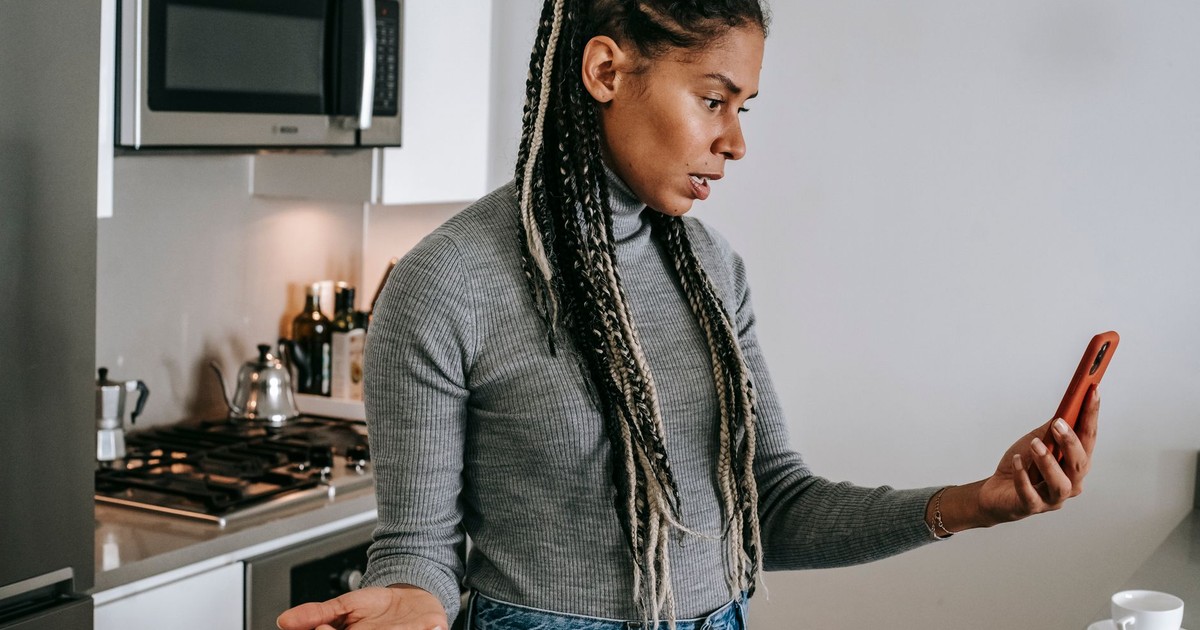
She snapped at someone she loves, cried at something that seemed small, froze up in a meeting she’d prepared for – and now she’s standing in the middle of the aftermath saying she has no idea what happened.
In people with PTSD, research from Frontiers in Psychiatry (2024) found that traumatic experiences become associated with previously neutral stimuli that have since acquired threatening meaning – and individuals with PTSD tend to over-generalize fearful stimuli and cannot easily extinguish conditioned fear responses. The brain is reacting to something in the present as though it signals a past threat, and it does that without asking permission. The woman experiencing it doesn’t choose the reaction. That’s what makes it so disorienting.
When a woman says she doesn’t understand her own reactions, she’s often telling the truth, not deflecting. The body is holding a logic that her conscious mind hasn’t fully decoded yet.
5. “I Just Don’t Want Any Drama”

This one sounds like a reasonable preference – and often it is. But when it becomes a reflexive response to any situation involving conflict, even healthy disagreement, it tends to mean something different. What it usually means is: conflict was dangerous where I came from, and I am still treating it that way.
When someone learned early in life that their safety, love, or belonging depended on managing someone else’s emotional state, the nervous system adapted. It built a rapid-response system that scans for emotional cues in others – tension in a jaw, a shift in tone, a slight withdrawal of warmth – and immediately mobilizes a response to smooth it over.
The avoidance of “drama” can become its own kind of trap, because not all conflict is drama. Sometimes a difficult conversation is just a difficult conversation. But for someone whose nervous system equates conflict with danger, the distinction gets hard to make.
6. “I Should Have Known Better”

This is self-blame wearing the mask of wisdom. “I should have seen that coming” or “I only have myself to blame” – phrases that sound like personal accountability but often function as a way of converting pain into something she can control, which is her own perceived failure.
Trauma and self-blame are tightly connected. Taking responsibility for trauma can sometimes be seen as a way to regain a sense of control, even though it often leads to more emotional pain. If the bad thing happened because of something she did or didn’t do, then theoretically she could prevent the next bad thing. The logic is self-protective, even if it’s also self-destructive.
The women who say this most often are not the ones who exercised poor judgment. They’re frequently the ones who were in impossible situations and are now retroactively trying to find the exit they missed.
7. “I Don’t Want to Make Things Worse”

She’s already considering the downstream consequences of speaking up before she’s even decided whether to speak. She’s modeled every possible outcome and decided that her voice is the most likely variable to cause damage. So she stays quiet, defers, steps back.
The drive to keep others happy at the expense of one’s own needs is a hallmark of complex trauma responses. Women with these trauma histories become experts at reading others’ emotions and adjusting their behavior accordingly – a survival strategy that once kept them safe.
The phrase also tends to emerge in long-standing relationships where a woman has been conditioned, explicitly or not, to treat her own preferences as potential liabilities. She’s not indecisive. She’s running a risk calculation she was trained to run.
8. “I’m Just Being Sensitive”

She will often say this right after she’s had a reaction that was, in fact, completely proportionate to what happened. The self-correction arrives fast, and it almost always diminishes her own experience before anyone else gets the chance to.
For women with complex trauma, symptoms are frequently misinterpreted – both by others and by themselves. Hypervigilance might be read as “intuition,” people-pleasing as “nurturing,” and emotional responses as “being dramatic” or “too sensitive.” When a woman has been told enough times that her feelings are excessive, she starts delivering the verdict herself as a preemptive strike.
The phrase is also a tell for internalized messaging about what women are allowed to feel. Women are often encouraged to remain nurturing and composed, which makes it harder to express anger, grief, or fear openly. As a result, trauma can manifest as self-criticism rather than outward distress.
9. “I Just Need Everyone to Be Okay”

This one sounds generous. It sounds like care. And some of it is. But underneath the warmth, there is often a watchfulness that never fully rests – a vigilance about the emotional temperature in every room she enters, because once upon a time, the emotional temperature in a room could turn dangerous without warning.
The American Psychological Association (2024) reports that women experience PTSD at two to three times the rate that men do, with a lifetime prevalence of 10 to 12 percent for women compared to 5 to 6 percent for men. Part of why that gap exists is that women are more often socialized to monitor, manage, and absorb the emotional states of others – a role that compounds the impact of traumatic experience. The need for everyone to be okay is, at its core, a need to feel safe.
The exhausting part is that this kind of vigilance doesn’t clock out. She’s reading the room at dinner, at work, in bed, in the car on the way home. Not because she wants to. Because her nervous system has decided it’s required.
10. “I Don’t Trust Easily”

Said plainly, sometimes almost as a warning, often on the early edges of a new relationship or friendship. She’s not trying to be cold. She’s being honest – and honest in a way that reveals she has had her trust broken in ways that left a mark.
More than one in four women in the world experience physical violence in their lifetime, most often as teenagers and young adults. These traumatic experiences leave memories in the brain that are difficult if not impossible to forget, and researchers have found that women with such histories experience stronger memories of their most stressful life events and greater ruminative thoughts as a result. A nervous system shaped by that kind of history doesn’t simply reset because the relationship in front of her is a safe one.
The calculation she’s running isn’t paranoia – it’s pattern recognition built from a data set she didn’t choose. The difficulty is that the data set doesn’t always update, even when the circumstances genuinely change.
11. “I Always Assume the Worst”
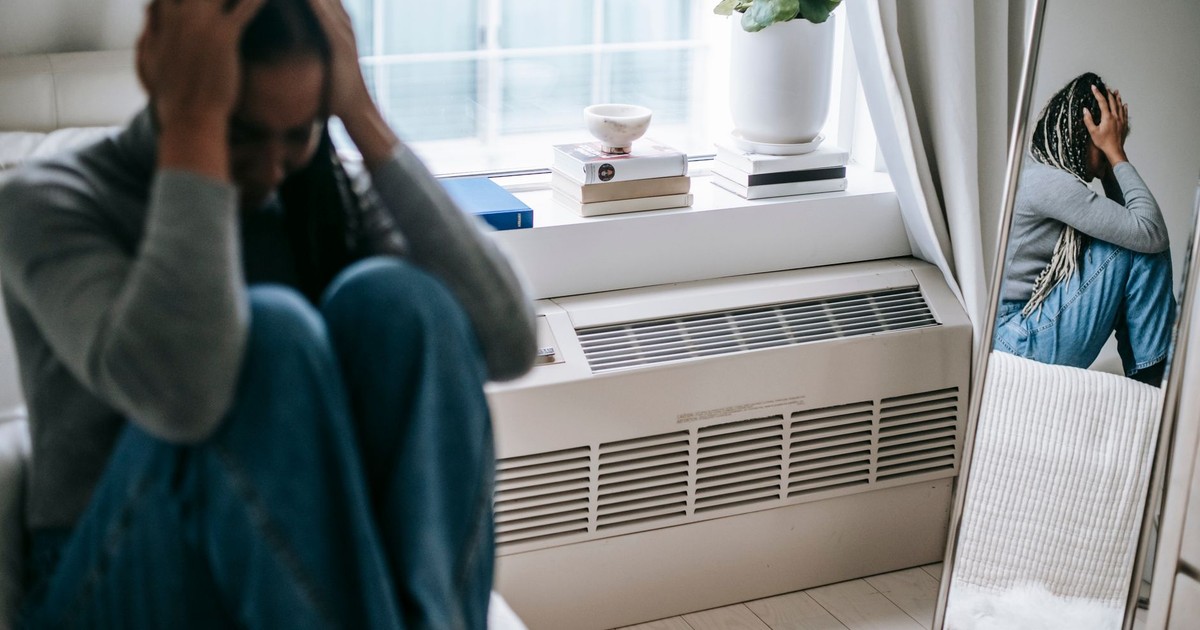
She’s thought through the scenario where you don’t text back because you’re annoyed with her. She’s already drafted the apology. She knows she’s catastrophizing, and she’ll tell you so – which is a kind of self-awareness that coexists, somewhat uncomfortably, with an inability to stop doing it.
When the nervous system has learned to scan for emotional cues and threats, it builds a rapid-response system that immediately mobilizes action at the first sign of possible danger – a shift in tone, a moment of silence, a subtle change in warmth. Assuming the worst isn’t pessimism in the conventional sense. It’s a nervous system that has concluded that being prepared for bad outcomes is safer than being caught off guard by them.
The flip side is a remarkable ability to anticipate problems, read people accurately, and plan for contingencies. Women who grew up in unpredictable environments developed those skills because they needed them. That alertness served a real function once – and part of what makes it so hard to let go of is that it still occasionally does.
12. “I Don’t Know What I Want”

She’s capable, articulate, and probably very clear about what everyone else in her life needs. Ask what she wants from a restaurant and she’ll defer to the group. Ask what she wants from a relationship and she’ll go quiet. The disconnection between her and her own desires isn’t laziness or indecision. It’s a long-term consequence of having had to prioritize survival over preference.
The fawn response is a trauma-driven survival strategy in which a person automatically abandons their own needs, feelings, and preferences in order to appease or manage the emotional state of someone else. When that strategy runs long enough, the connection to one’s own wants and needs doesn’t just go quiet – it can become genuinely difficult to access, even in safe circumstances where there’s no one left to appease.
One of the more difficult parts of recovery is discovering that healing is not only about understanding what happened, but about gradually learning who you are when you no longer have to earn safety through perfection, compliance, or people-pleasing. That learning can take a long time.
13. “I Just Don’t Like Conflict”

A cousin to “I don’t want any drama,” but more personal. This one is usually delivered with a small laugh and a slight brace – because she’s about to be pushed into conflict whether she likes it or not, and she’s pre-apologizing for how she’ll handle it.
For many people, especially those who experienced chronic stress or emotional neglect in childhood, the fawn response becomes second nature. It’s a way of staying safe by prioritizing the needs, moods, and comfort of others, often at the cost of one’s own voice. Fawning is often misunderstood because it can look like emotional maturity or empathy – but it’s a nervous system adaptation rooted in fear rather than a genuine act of generosity. Fawning isn’t about connection. It’s about survival.
When conflict avoidance becomes a governing principle, the woman often loses access to her own disagreements. She becomes skilled at consensus-building and terrible at advocating for herself in one-on-one situations where the stakes feel personal.
14. “I Just Feel Like I’m Too Much”
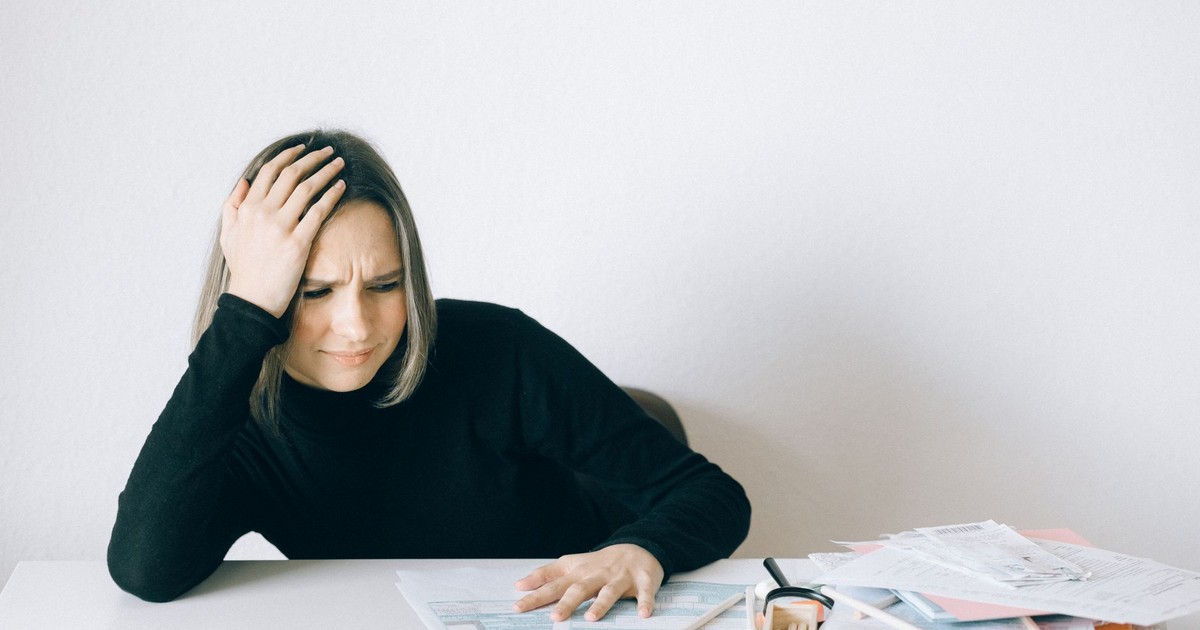
This one carries the most weight. It doesn’t come out often – usually late at night or after something goes wrong in a relationship – and it tends to land with a thud because it’s clearly been thought before it’s been said out loud.
By narrating their traumatic experiences, individuals can free themselves of automatic and unwanted thoughts, begin to make meaning of their adverse experiences, and enhance their emotion regulation, with consequent gains in resilience and wellbeing. The phrase “I’m too much” is often the inverse of that process: it’s the meaning that was made for her, by someone with less information and less care than she deserved, installed early and running on repeat.
The belief that she is too much – too emotional, too needy, too loud, too complicated – is rarely self-generated. It was taught. Usually by someone who found it convenient that she believed it.
What the Language Is Really Doing

The phrases in this list are not weaknesses. They are, or were, solutions. Each one of them served a purpose at some point: keeping a relationship intact, avoiding punishment, making an unpredictable situation feel slightly more controllable. That system kept her safe once. In childhood, it may have been genuinely adaptive. But it doesn’t turn off when the original threat is gone. It keeps running – in boardrooms and bedrooms and at family dinners – long after she’s grown up and built an entire capable life for herself.
Recognizing these patterns in yourself, or in someone you love, is not a call to action. It’s not an invitation to fix something or announce what you’ve noticed. It’s simply a different way of listening. When someone says “I don’t want to be a burden” before telling you something hard, she’s not being self-deprecating. She’s showing you, in four words, what she learned to believe about herself. Some of these patterns go back further than any single relationship does – further, sometimes, than memory can follow. Naming that isn’t a solution, but it is usually where the real conversation starts.
Disclaimer: This information is not intended to be a substitute for professional medical advice, diagnosis, or treatment and is for information only. Always seek the advice of your physician or another qualified health provider with any questions about your medical condition and/or current medication. Do not disregard professional medical advice or delay seeking advice or treatment because of something you have read here.
AI Disclaimer: This article was created with the assistance of AI tools and reviewed by a human editor.