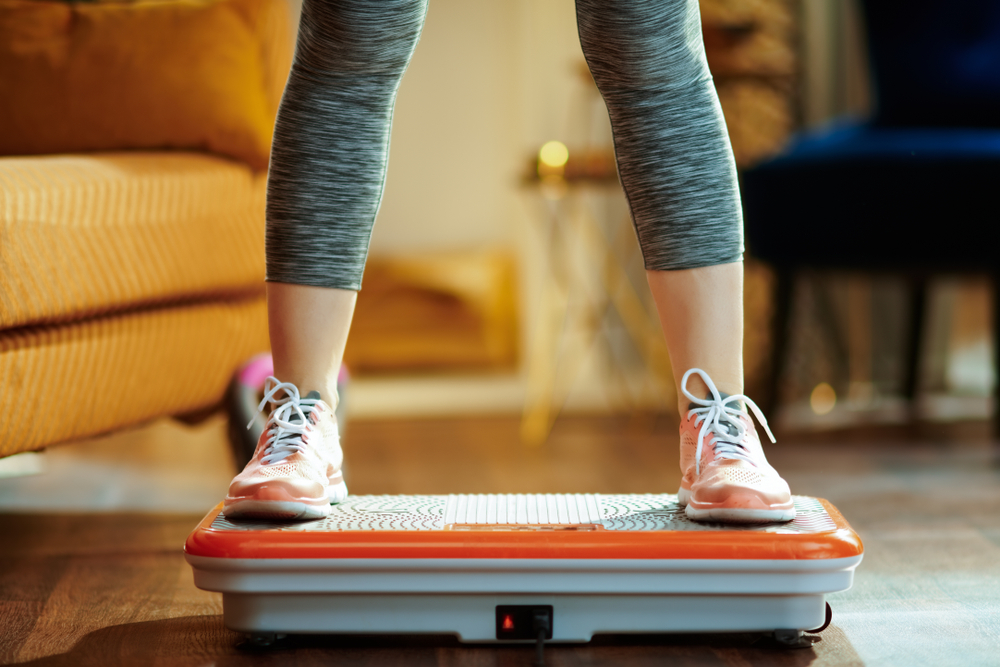

Somewhere in the last two years, vibration plates went from “that odd machine gathering dust in the corner of the gym” to a genuine social media phenomenon. They’re in home gyms, in physical therapy clinics, in the Instagram reels of fitness influencers who swear by ten minutes of standing on one while barely breaking a sweat. The machines hum, the body shakes, and somewhere in the gap between the promise and the physics, a real question gets lost: does any of this actually do anything?
The appeal is not hard to understand. Vibration plates offer the fantasy of effort without the effort part – passive exercise, the category that fitness culture has spent decades trying to invent. Standing on a platform that vibrates dozens of times per second sounds like it should not count as exercise, and for years, that was the reasonable verdict. But the science has gotten more interesting in the last few years, particularly around three specific areas: fat loss, post-workout recovery, and bone density. Each of those areas tells a different story, and none of them are as simple as the marketing suggests.
Before getting into what the research actually shows, it helps to understand what these machines are doing. Vibration plates generate rapid, oscillating movement – typically between 25 and 50 times per second – that travels up through the body from the feet. The body responds by continuously contracting and relaxing muscles to maintain stability, which is the core mechanism behind every benefit claim attached to these devices. That involuntary muscular recruitment is real. The question is how much it matters for any given goal.
Vibration Plates Fat Loss: What the Research Actually Shows
The vibration plates fat loss question is where the hype is loudest and the evidence is most carefully hedged. There is something real here, but it requires significant context to be useful.
Research does suggest some promise for weight-related outcomes. A 2019 review in the Journal of Musculoskeletal and Neuronal Interactions looked at seven trials with 280 people and found that vibrating plates appeared to lead to a meaningful amount of fat loss – though the data was less clear when it came to changes in overall body fat percentage.
One study within that body of work found that while participants didn’t lose much body fat percentage-wise, their fat-free mass increased by 2.2% after 24 weeks. Another found that vibration plates outperformed a traditional aerobic and resistance training program specifically in reducing visceral fat – that is, the fat that sits deep in the abdomen around the organs, the kind associated with higher cardiovascular and metabolic risk.
That visceral fat finding is probably the most compelling piece of evidence for vibration plates as a fat loss tool, and it keeps appearing across multiple reviews. Research presented at the European Congress on Obesity found that when paired with calorie control, whole-body vibration can contribute to long-term weight loss in the 5 to 10 percent range. The crucial phrase there is “paired with calorie control.” Vibration plates do not appear to create fat loss on their own – the evidence consistently points to them working best as an add-on to a diet or movement plan rather than a replacement for one.
Proponents claim vibration plates may help people burn more fat and build more muscle, but researchers note there is limited evidence directly comparing the benefits of exercising on a vibration plate versus exercising on a flat, stationary surface. That comparison gap matters more than it might seem. A lot of the studies showing fat loss show it because participants were doing exercises – squats, lunges, planks – and doing them on a vibration plate. Whether the vibration itself contributed meaningfully beyond the exercise, or whether people would have gotten similar results just doing those movements on solid ground, is a question the literature has not cleanly answered.
The Bone Density Case Is More Compelling
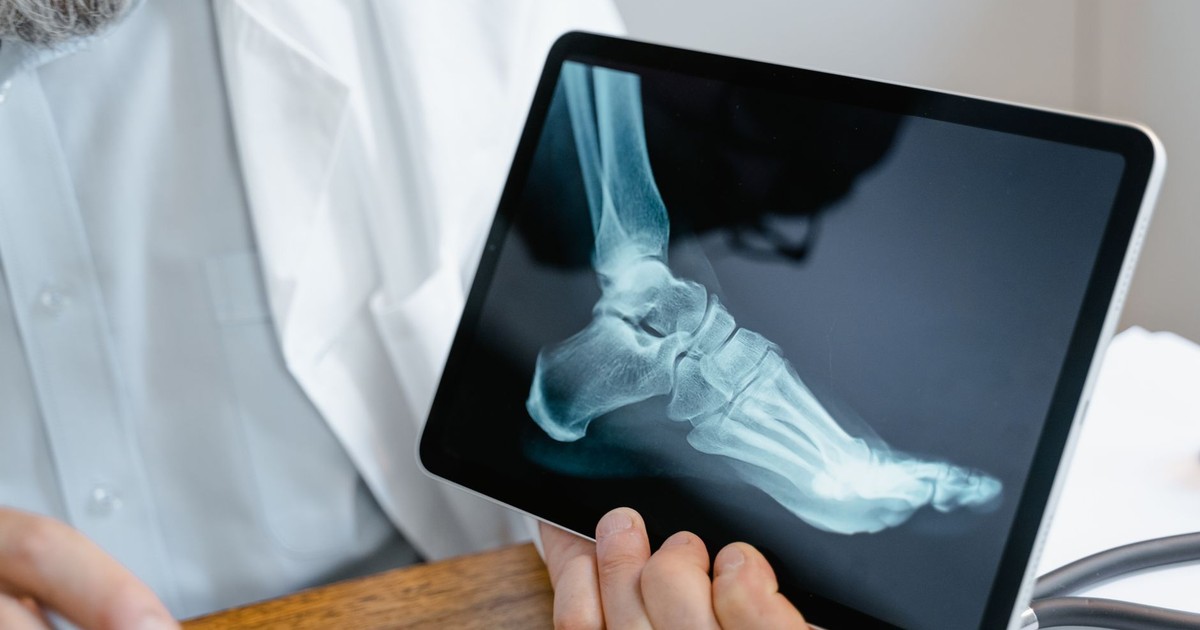
If vibration plates have a strongest argument, it is probably not fat loss. It is bones.
A 2026 systematic review and meta-analysis from researchers at Shanghai University of Sport and Shinhan University, which searched databases up to April 2025 and analyzed randomized controlled trials comparing whole-body vibration training to conventional exercise in elderly individuals, found meaningful effects on bone mineral density at multiple skeletal sites.
Fourteen studies involving 1,447 participants were included, and the methodological quality was rated as good – a meaningful bar to clear in exercise science research. The findings showed that whole-body vibration training significantly increased bone mineral density in the Ward’s triangle region of the femur, an area particularly vulnerable to osteoporotic fracture in older women.
Bone responds to physical stress by growing denser – this is why weight-bearing exercise protects against osteoporosis. Vibration delivers that load-bearing stimulus repeatedly, essentially telling the bone to adapt. Space agencies have used vibration therapy on astronauts returning from long-duration space missions to help them regain lost bone and muscle mass, precisely because the oscillating movement places good stress on the bone, forcing it to respond and grow.
Research specifically examining postmenopausal women – the population most at risk of osteoporosis-related fracture – has aimed to evaluate both the efficacy and safety of whole-body vibration in improving bone mineral density in this group. A 2024 overview of systematic reviews published in BMC Women’s Health drew together findings from multiple databases to assess the current state of that evidence. The results showed genuine promise, particularly for the lumbar spine and femoral neck, though researchers flagged ongoing inconsistencies in study protocols and vibration parameters that make it difficult to issue a universal recommendation.
This is where the science is probably ahead of the product marketing rather than behind it. Vibration plates are being sold primarily as weight loss tools, when the population with perhaps the most to gain from consistent use may be women over fifty worrying about bone health – not the demographic TikTok is targeting.
Recovery: A Quieter Benefit That Holds Up
The recovery argument for vibration therapy – specifically for delayed-onset muscle soreness, or DOMS, that deep ache that arrives one to two days after a hard workout – is supported by some of the more recently published research.
A 2025 randomized controlled trial in Frontiers in Physiology compared the effectiveness of five different post-exercise recovery interventions – vibration therapy, functional electrical stimulation, static stretching, massage therapy, and cold-water immersion – specifically for alleviating delayed-onset muscle soreness. The results showed that vibration therapy was the most effective of the five interventions for improving muscle reaction latency and reducing one specific measure of muscle tone recovery.
That is a specific, bounded finding – not a claim that vibration plates cure soreness, but evidence that vibration as a recovery tool performs comparably to or better than other commonly used approaches in at least some measurable respects. If you are already using a foam roller, a cold bath, or a massage gun after hard sessions, vibration is in that same conversation.
A separate 2025 randomized controlled trial found that vibration training significantly reduced the inflammatory markers IL-6 and creatine kinase – both indicators of muscle damage and soreness – in the immediate period and at 24 to 48 hours after exercise. IL-6 in this context functions roughly like the body’s internal alarm system for muscle damage; bringing it down faster means the recovery window shortens.
None of this means you need a vibration plate to recover from a hard run. It means that if you already have access to one, the evidence for using it after exercise may actually be stronger than the evidence for using it as a primary fat loss tool.
What the Research Can’t Tell You Yet

The honest version of any vibration plate conversation has to include the limitations, and there are several worth naming.
Study sizes remain relatively small across most of the vibration training literature. Many trials run for 12 to 24 weeks, which is useful but doesn’t tell you what happens after two years of consistent use. The vibration parameters – frequency, amplitude, session length, whether the person is standing still or doing exercises on the plate – vary enough between studies that comparing results is genuinely difficult. A plate set to 30 Hz for 10 minutes is not the same stimulus as one set to 50 Hz for 30 minutes, and the research doesn’t yet give clear guidance on what the optimal protocol looks like for each specific goal.
There are also populations for whom vibration plates are not appropriate. People with implanted medical devices like pacemakers, those with certain joint conditions, pregnant women, and anyone with a recent injury or surgery should check with a doctor before using one. The machines are not dangerous for healthy adults in general, but they are also not universally suitable.
The consumer market has not helped the science communicate clearly. A $200 home plate and a clinical-grade device used in rehabilitation settings are very different pieces of equipment, and studies tend to use the latter. Buying the former and expecting the research findings to transfer automatically is probably optimistic.
Read More: Retatrutide Trial Results: Most People Lost an Average of 85 Lbs
Who Actually Has the Most to Gain
The honest answer to “do vibration plates work” is that it depends entirely on what you are asking them to do.
For fat loss specifically – the claim driving most of the current social media attention – the evidence suggests vibration plates can contribute to fat reduction, particularly visceral fat, particularly when paired with calorie awareness. They are not a replacement for movement or dietary change. They are more accurately described as a useful addition to a plan that already includes those things, with the strongest signal coming from longer-duration programs rather than a ten-minute TikTok routine.
For bone health, the case is genuinely solid and probably underreported in popular coverage. Women in perimenopause or postmenopause, people managing early osteopenia (lower-than-normal bone density, but not yet osteoporosis), and older adults trying to preserve mobility all have credible scientific reasons to consider consistent whole-body vibration training as part of a broader strategy. The research in this area is more consistent and the effect sizes more convincing than in the fat loss literature.
For recovery, vibration therapy earns its place alongside other post-exercise interventions. If you are someone who does intense training and needs to turn around quickly, it is a legitimate tool, not a gimmick.
The machines are not magic, but they aren’t a scam either. The gap between those two things is where most fitness trends live, and vibration plates have more company than they deserve in the “dismissed too early” category. The evidence is genuinely promising in specific contexts, and the research is still maturing. That is not a sales pitch – it is just where the science is.
Disclaimer: This information is not intended to be a substitute for professional medical advice, diagnosis, or treatment and is for information only. Always seek the advice of your physician or another qualified health provider with any questions about your medical condition and/or current medication. Do not disregard professional medical advice or delay seeking advice or treatment because of something you have read here.
AI Disclaimer: This article was created with the assistance of AI tools and reviewed by a human editor.