

Date night is supposed to be a reset. You book the reservation, find a sitter, change out of whatever you’ve been wearing since Tuesday, and spend two hours remembering that you are a person with a personality, not just someone who operates a laundry machine. The point is to come home lighter than you left. The reality, for a lot of parents, is that you walk back through the door, kick off your shoes, and immediately notice the things you didn’t get to before you left: the fridge that still needs wiping down, the toys scattered across the living room floor, the silverware drawer that has been bothering you since March. The break was real, but the mess waited for you.
Katrina Ivan, an eighth-grade science teacher and small business owner from Kansas City, Missouri, decided she was done making that trade-off. When she and her husband Alex planned a night out in early 2024, she did something that was either obviously brilliant or mildly unhinged, depending on who you ask. She wrote her babysitter a note, left it on the counter, and offered the teenager a menu of optional household chores to complete while she was out, each one with a dollar amount attached. The babysitter was welcome to watch TV all night. She was also welcome to earn extra cash if she felt like it.
The note went viral on TikTok. Then the conversation it started went somewhere more interesting than anyone expected.
The Note That Started Everything
Katrina Ivan, an eighth-grade science teacher and small business owner from Kansas City, posted the babysitter extra chores note on TikTok to show her way of offering her son’s sitter a few extra dollars. The setup was disarmingly simple. Ivan wrote to her sitter: “You are more than welcome to hang out and watch TV all night, but if you want to make some extra $, these jobs are up for grabs.”
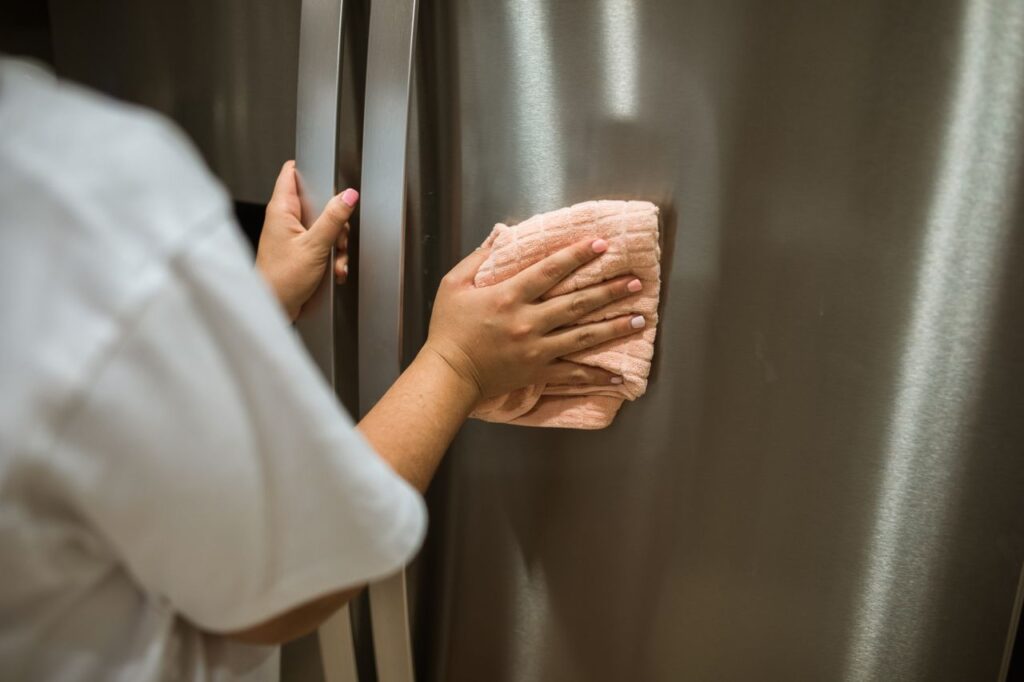
The list was tiered by task and price. For $10 each, the babysitter could organize the island, organize toys, clean glass mirrors and windows, scrub and reorganize the silverware drawer, or sweep and mop the kitchen floor. For $15, she could scrub and clean the fridge. Vacuuming the couch would earn her $3. Ivan left all the cleaning supplies out in advance so the sitter wouldn’t have to hunt through unfamiliar cabinets. The note ran on an honor system: “Just let me know if you decided to do any of these and the grand total I owe you on top of the babysitting money,” Ivan wrote.
TODAY.com and Fox News Digital both covered the story after Ivan posted the list on TikTok and the video received over 1.5 million views. The comment section, as comment sections do, immediately split into camps.
The Babysitter Said Yes Before They Even Left the Driveway
The sitter in question was Emma Rice, a high school senior whom the Ivan family had known for years. Ivan told Fox News Digital: “I was like, ‘here’s what I need done,’ and I just assigned money values to each chore. And she was all over it.”
“All over it” turned out to be an understatement. Just ten minutes after the couple left, Ivan could already see her babysitter cleaning via her Ring doorbell camera. By the time Ivan and her husband returned, the babysitter had cleaned the mirrors and windows, organized the toys, vacuumed the couch, and scrubbed and organized the silverware drawer.
Ivan later told TODAY.com: “She was like, ‘Heck ya!’ and got to work right away. I left all the supplies out for her so she didn’t have to feel weird hunting around for things.” According to Ivan, the rates she offered her babysitter are standard for where they live in rural Missouri.
The babysitter – who, by all accounts, also earns perfect grades, participates in a range of extracurriculars, and is taking Fire/EMS classes to start a career the moment she graduates – was delighted. Ivan noted she paid the sitter $75 for the night just to watch her 3-year-old son, who was asleep most of the time. All in all, the sitter made $28.75 an hour, tax-free.
That math, it turns out, is the part that settled the debate for most people who read it.
The Internet Weighed In (It Usually Does)
The TikTok comments divided fairly quickly into three groups. The first group thought Ivan was a genius and wanted to replicate the system immediately. The second thought the per-task rates were a little thin for the actual work involved. The third group, a smaller faction, seemed personally offended by the whole premise, though the precise source of that offense was hard to pin down.
On the “too cheap” side, one commenter wrote: “I think $10 is too cheap for some of these tasks considering the amount of work/size of the mess.” Ivan took that feedback seriously. In a follow-up video, Ivan broke down the money she paid the babysitter that night and agreed the prices could go up a bit. “I’ll definitely be restructuring the prices to make this more fair in the future,” she wrote.
On the enthusiastic side, babysitters and former nannies flooded the comments to say they’d have loved this arrangement growing up. “As a babysitter I always would clean random things but wasn’t sure if they wanted me to, so having a list with $ is so smart!” one commenter wrote. The opt-in design was a big part of what won people over. The babysitter wasn’t being handed a chore list on top of her base rate – she was being handed a menu of opportunities, with the explicit message that doing nothing at all was completely fine too.
The note wasn’t “please also do these things.” It was “here are some things you could choose to do if you want to make more money tonight.” The agency sat with the sitter, not with Ivan. That separation is what made the whole thing work, and it’s the part the critics who called it exploitative missed entirely.
Why This Hit a Nerve Beyond the Clean Fridge
If this had just been a clever productivity hack, it would have gotten 40,000 views and died. The reason it reached 1.5 million is that it touched something real about the way working parents – and especially working mothers – are stretched right now.
A 2025 study published in the Journal of Pediatric Health Care00188-3/fulltext) found that 65 percent of working parents reported burnout. That’s not a dramatic outlier. It lines up with what most working moms will tell you if you catch them at the end of a Wednesday. The to-do list doesn’t shrink when you leave for dinner. It waits by the door.
A February 2025 survey from KPMG found that working mothers report feeling less satisfied with their personal well-being and time spent with family compared to working fathers – 81 and 78 percent satisfaction versus 92 and 84 percent, respectively. The gap isn’t enormous in absolute numbers, but it maps onto something most mothers already know in their bones: even on a night off, some part of the mental load is still running in the background, cataloguing what still needs doing.
Ivan put that gap to work. She didn’t outsource the entire house. She didn’t hire a cleaning service. She looked at a resource she already had – a trusted teenager who would otherwise be sitting on the couch for four hours – and created a completely optional side arrangement that benefited everyone involved. The babysitter got more money. The family came home to a cleaner house. The 3-year-old slept through all of it.
Ivan said she hopes the idea of normalizing asking for help while still providing an incentive will encourage other parents to do the same. “It just kind of shows that parents are all struggling right now,” she told Fox News Digital.
The Honor System, and Why It Works
One of the quieter details in Ivan’s setup – one that got less attention than the dollar amounts – is the honor system structure. Ivan didn’t leave a checklist with boxes to tick or a form to sign. She wrote a note, left the supplies, and told her sitter to just let her know what she’d done and what she was owed when they got home. No verification required.
That trust piece is the thing that separates Ivan’s approach from something that could read as exploitative if you squinted at it wrong. She already knew this babysitter well – Emma Rice had been watching her son since he was an infant. Asking a stranger to reorganize your silverware drawer while you’re at dinner would have a very different energy. The system worked because the relationship already had roots.
Ivan’s conclusion, stated simply: “Outsourcing is the answer.” She noted that the next time the sitter came over, she did everything on the list. And on Super Bowl weekend, she was going to help bag up Ivan’s son’s old clothes for donation. What started as one experimental note became a standing arrangement, with prices that Ivan has since agreed to revise upward.
Read More: This 34-Year-Old Mom Quit Her Job to Work on Her Side Hustle Full-Time and Made $300,000 in One Year
The Real Thing Underneath the Viral Moment
Here’s what the clean mirrors and organized toy bin are actually about: the mental load is constant, the hours are finite, and there are very few moments in a parent’s week where you can genuinely solve two problems at once. Ivan found one of those moments and used it. That’s not a productivity hack. That’s someone who has been in the weeds long enough to recognize when a window opens.
The debate about whether $10 is enough to clean a fridge will continue – and honestly, if you’re reading this and you have a babysitter you trust, you might want to set that rate a little higher. The conversation about whether it’s appropriate to ask a babysitter to do extra work has largely resolved itself in Ivan’s favor, mostly because the key word in her note was “if.” The whole arrangement turns on that one word. Remove it and the dynamic changes entirely. Leave it in, and you have something that’s actually fair.
None of this fixes parental burnout, which is a structural problem that one organized silverware drawer is not going to solve. But on the specific night when Katrina and Alex Ivan came home to clean mirrors and a tidy toy corner, those things were done, and they hadn’t done them. The reset was real. The house was better than they’d left it. And somewhere in rural Missouri, a high school senior went home with extra cash and a pretty good story to tell – which sounds, to any reasonable person, like a decent outcome for a Tuesday night.
The Move Worth Stealing
The reason Ivan’s system keeps coming up in conversations long after the TikTok stopped trending is that it solves something most productivity advice doesn’t touch: the mismatch between the hours available in a day and the number of things that need doing inside a house where people actually live. Most solutions require either money you don’t have or time you can’t carve out. Ivan’s approach required neither. It required a trusted relationship, a piece of paper, and the willingness to ask without demanding.
That last part is the one worth sitting with, actually – scratch that. That last part is the one worth returning to. The note worked because it communicated respect. The sitter wasn’t a maid who happened to be there. She was a person being offered a choice, clearly stated, with a dollar amount attached to each option, and the explicit assurance that no was a perfectly fine answer. That combination, respect plus incentive plus genuine opt-in, is rarer than it should be, and it’s why the comment section filled up with people saying they wished someone had offered them the same thing when they were seventeen.
You don’t have to have a TikTok following to do this. You just have to know your sitter well enough to trust her with the note.
AI Disclaimer: This article was created with the assistance of AI tools and reviewed by a human editor.