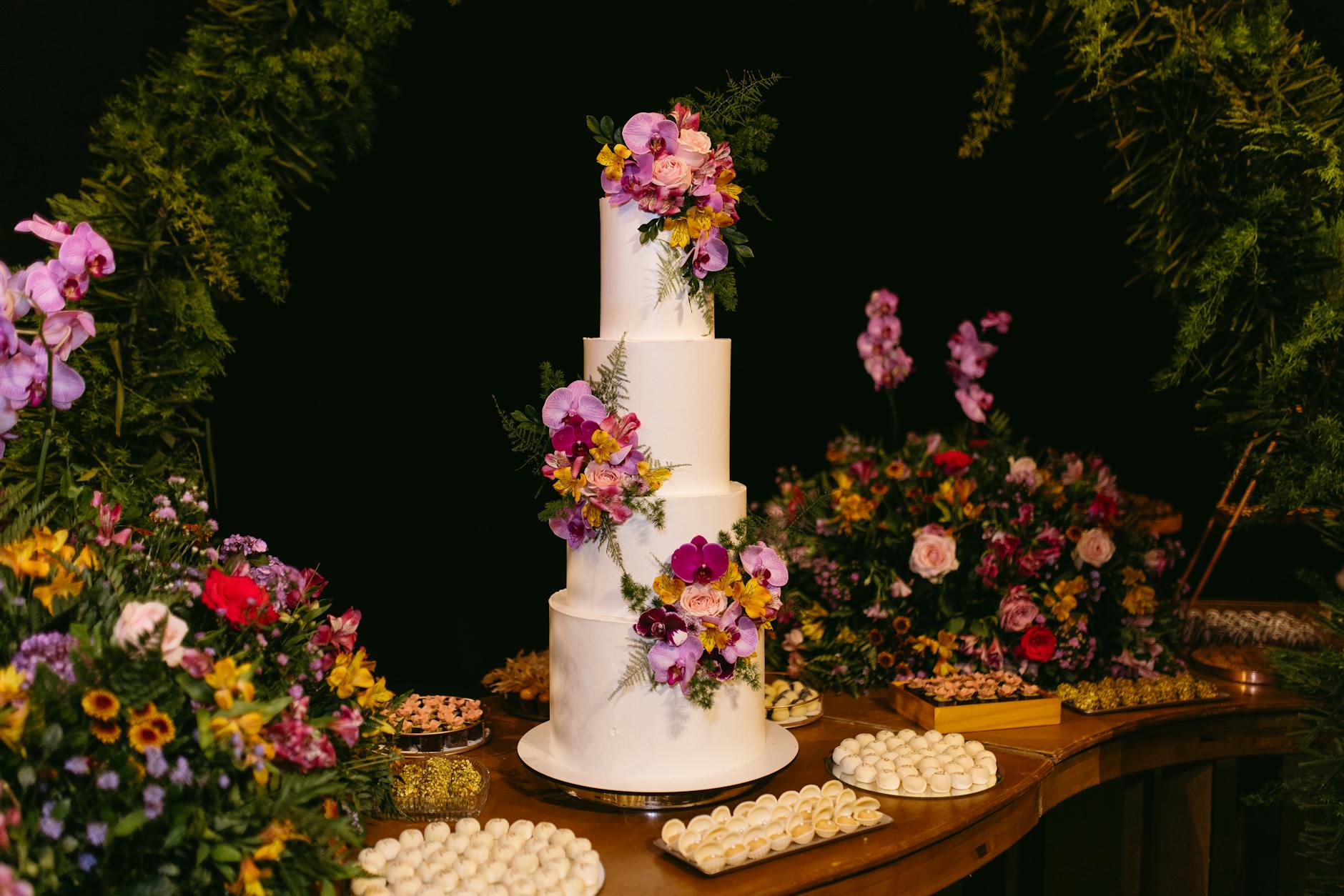

Wedding cake obsession is one of those internet rabbit holes that starts with a single Reddit post and ends with thousands of strangers deeply, personally invested in the frosting choices of people they will never meet. The AITA and wedding-adjacent corners of Reddit have delivered a lot of drama over the years, but this particular saga earned its viral moment not through a single explosive incident but through sheer, grinding escalation. A bakery employee got caught in the middle of something that had nothing to do with cake and everything to do with one woman’s refusal to let her son’s wedding belong to anyone other than herself. The groom’s mother was the culprit. Naturally.
What made this story travel as far as it did wasn’t the ending. It was the chapter-by-chapter unfolding of a woman who had decided, somewhere deep in her convictions, that a wedding cake was the hill she would die on. The bakery employee who watched it happen from behind the counter posted updates that read less like cake consultations and more like dispatches from a small, frosted war zone. And the internet, recognizing exactly what it was looking at, pulled up a chair.
The Wedding Cake Obsession Begins
The basic facts, as shared by the bakery employee on Reddit and subsequently spread across the internet: a couple came in to order their wedding cake. Standard appointment. Normal people, normal requests. Then the groom’s mother started calling. And calling. And walking through the front door unannounced. Insisting on flavor changes the couple hadn’t asked for. Demanding design consultations the couple hadn’t scheduled. Questioning the baker’s professional judgment with a confidence that, respectfully, she had not yet earned.
One couple didn’t even get to enjoy the typical cake-tasting experience because the groom’s mother insisted on being way too involved, and a frustrated bakery employee shared the full saga on Reddit. The post spread quickly, partly because the writing was sharp and partly because the situation was so precisely recognizable – not just for brides, but for anyone who has ever watched someone else’s mother attempt to quietly absorb a major life event as her own.
The mother in this case wasn’t rude, exactly. That would have been easier. She was relentlessly helpful. She framed every intrusion as assistance. She called vendors “on behalf of” the couple without the couple’s knowledge. She had opinions about tiered cake versus single-tier, about fondant versus buttercream, about whether fresh flowers were sanitary (they are, handled correctly). She had, by all accounts, done quite a bit of research. What she had not done was ask anyone whether her research was wanted.
Why the Internet Went Completely Sideways Over This
There is something about wedding cake, specifically, that makes people lose their minds in ways no other element of the wedding planning process quite replicates. It is not the most expensive line item. It is not the most logistically complicated. And yet it carries an emotional charge that makes it feel like the whole marriage is being symbolized in sugar and flour – which, when someone else starts rearranging the symbols without permission, registers as a much larger violation than it would seem from the outside.
According to Newsweek’s 2025 reporting, the average cost of a wedding cake in the U.S. runs between $600 and $900, with large and elaborate designs reaching well over $1,000. That’s a meaningful financial investment. But the internet’s outrage in this story wasn’t really about money. It was about the thing the cake represents: a couple’s right to make their own choices about their own day, without a third party rewriting the brief from the sidelines.
The comments on the original Reddit thread were, predictably, a mix of sympathy, outrage, and dry humor. People who had been on the receiving end of this exact dynamic – the uninvited co-planner, the mother who calls the caterer “just to confirm a few things” – recognized something very specific in the description. The bakery employee became, for a brief moment, everyone’s favorite narrator, because they had no stake in the outcome and therefore told the truth plainly.
What the Post Said
The Redditor posted her story and said: “I work part time in a bakery. We have three employers who specialize in wedding cake design. Part of my job is to meet with the customers, show them our list of flavors and photos of previously made wedding cakes, and get a feel for which designer would best fit their needs.”
“There was a couple scheduled to be seen at 9:30 this morning. Imagine my surprise when they show up at 8:15 with an older woman in tow. It’s a little annoying because we were slammed with a morning rush, but my boss told me to take care of them instead.”
“So I go over, introduce myself to the couple, give congratulations, do my normal song and dance. We have x flavors, these are our most popular choices, these are some of the cakes we have done, etc. The DIL takes the book and holds it in her lap so only she and her FH can see it. The older woman sighs and goes outside to smoke. The couple is lovely and have flagged four designs they liked within fifteen minutes. Older woman comes back in and asks what she missed. FH shows her the designs they like and she automatically starts to complain.”
“No, that’s too detailed. That’s too plain. That’s not big enough. That’s too big. It was like listening to an old cranky version of Goldilocks. I side-eye the older woman and ask the DIL how many guests they are having. She answers and the older woman intervenes again and gives a number that is twice what the DIL said.”
“DIL reiterates the original number and tells the MIL that they are having a small wedding. MIL whines and says she’s already invited people and can’t uninvite them because it would be rude. DIL shrugs. MIL turns to me and tells me the larger number again. I tell them the bride has final say.”
Then the Real Problem Revealed Itself

“MIL: Well, why did I even bother coming if no one will listen? DIL: I don’t know why you insisted on coming. MIL: My son is getting married! It’s my right to be here! DIL: He’s marrying me. You can come along for planning but I don’t need your input. If I want it, I will ask.”
“MIL huffs and goes outside. I am staring at the DIL in wonder because she has such a boldness about her. DIL turns to the spineless wonder that is her future husband – who has been silently staring at the floor like he wants to become one with it – and glares at him.”
“DIL: I told you this was going to happen. FH (future husband): What am I supposed to do? DIL: Control. Your. Mother. Or I will. FH sighs and goes after his mother. He looks like he’s heading to a firing squad. DIL turns to me, apologizes for the scene, and asks about setting up a tasting and meeting with the designer. I schedule the appointments and let her know we can set a password so no unauthorized changes can be made to the dates or cake. She takes me up on the offer, tells me to make a note to not share the password with her future husband, and leaves.”
“I am torn between awe at her spine and sympathy that she felt the need to use the password and hide it from her FH.”
The Pattern Everyone Recognized
This story did not surprise anyone who has spent any time in the orbit of an overbearing mother-in-law. The pattern is consistent and almost formulaic: it begins with offers of help, progresses to unsolicited advice, advances to quiet unilateral action, and eventually arrives at the place where the couple realizes that the vendor they hired is now fielding calls from a woman who is not paying for anything but seems to believe she is running the project.
What makes this pattern so difficult to address is that none of it, taken individually, is outrageous. One phone call to confirm the appointment is fine. One question about flavor options is fine. One suggestion about the design is fine. It is the accumulation that becomes something else entirely. The bakery employee in this story wasn’t describing a single dramatic incident. They were describing a process, a slow-motion takeover executed through persistence rather than confrontation, and the internet recognized it immediately because many of them had lived it.
The groom’s apparent position in all of this – somewhere between passive and actively enabling – is its own conversation, and one the thread did not shy away from. The consensus among commenters was that the cake was never really about the cake. It was a test of whose vision of the marriage would take precedence: the couple’s or the mother’s. And the bakery, in this scenario, had become the unwitting venue for that negotiation.
When the “Help” Is Not Help
There is a version of excessive involvement that comes from genuine love and a complete lack of awareness about where one person’s life ends and another’s begins. In another widely discussed case, a mother-in-law decided in July 2025 that she didn’t approve of a couple’s modern $3,000 wedding cake and secretly swapped it for her own homemade fruitcake, causing chaos in the middle of the wedding reception. The cake was eventually recovered – it had been hidden behind trays of salad and a cheese display by venue staff who had been told, falsely, that it was “not needed” – but the damage to the day, and arguably to the relationship, was not as easily retrieved.
That story and this one share a structural similarity: a woman who decided that her preferences about the couple’s celebration outweighed the couple’s own. The difference is in delivery. One acted covertly. One acted through relentless persistence. The internet tends to be angrier about the covert version, but those who have experienced the persistence version will tell you that the slow accumulation of small overreaches produces its own particular kind of exhaustion – the kind that is difficult to describe to anyone who hasn’t lived it, because no single incident sounds like enough to be upset about.
The bakery employee who posted the thread understood this instinctively. They weren’t recounting one terrible interaction. They were counting the times. The number of calls. The number of appointments where the mother appeared without the couple. The number of design changes requested that the couple then had to un-request. The count was the point.
What the Bakery Employee Got Right
There is a specific grace in the way the original poster told this story, and it explains a good portion of why it traveled as far as it did. They did not editorialize much. They described what happened, in order, with enough detail that the picture assembled itself. They did not call the mother names. They did not speculate about her psychology. They just kept saying what occurred, and the cumulative weight of that record was the entire argument.
This is, for what it’s worth, how most of these stories work at their best. The ones that go viral aren’t always the most dramatic. They’re the ones where someone with a clear eye sat down and wrote down the facts in sequence, and the sequence itself is the indictment. The bakery employee was not a therapist, not a family mediator, not a wedding planner. They were a person who worked at a bakery and watched a wedding cake become the battleground for something much larger, and they wrote it down.
The response from the internet was immediate and overwhelming, as it tends to be when a story touches something this universally recognizable. Fellow bakers weighed in. Brides shared their own versions. Mothers-in-law, to their credit, occasionally appeared in the comments to acknowledge, in varying degrees of self-awareness, that they recognized the behavior. The thread became its own small ecosystem of recognition.
The Groom’s Mother, Explained (Sort Of)
It would be easy, and satisfying, to simply conclude that the groom’s mother in this story is a difficult person who should have been told no much earlier. That may be true. It is also true that what drives this kind of behavior is almost never simple.
The mother of a son watching him marry has, for better or worse, spent years in a particular role in his life. The transition from that role to a different one – further back, less central, present when invited and absent when not – is a real loss, even when it is a healthy and appropriate one. That does not excuse calling the bakery without the couple’s knowledge. It does not justify designing a wedding that belongs to someone else. But it does explain why the fixation so often attaches to something concrete and manageable like a cake when the actual grief is about something much less fixable.
The cake can be changed. The relationship cannot be unchanged. The wedding cake obsession, in this light, is not really about the cake at all. It is about a woman trying to hold on to a role in her son’s life by inserting herself into the details of his future, and the cake just happened to be the detail that came up first.
What This Is Really About
The bakery employee is back at work. The cake – whatever version of it ultimately got made – was presumably eaten at the reception, and no one outside the immediate family will remember what flavor it was. The Reddit thread will eventually be archived. The mother, in all likelihood, is already somewhere in the process of planning her next point of entry into her son’s life, because this is not the pattern that ends with one bakery drama.
What stays, for the people who read the thread, is not the resolution. Most of these stories don’t have clean resolutions. What stays is the recognition: the specific feeling of watching someone reframe your choices as their decisions, your celebration as their occasion, your life as the context for their feelings. It is a particular kind of invisible pressure, and it is genuinely difficult to name out loud without sounding like you’re complaining about someone who was just “trying to help.”
You can hold both things at once. The mother probably did want to help, in her way. And the couple’s wedding was still, in some measurable way, intruded upon. Neither of those things cancels the other out. The bakery employee understood that. The internet understood it. And if you read that thread and felt something specific move in your chest, you probably understand it too. The cake is long gone. Whatever it tasted like, whatever it looked like, none of that is the point anymore. What lingers is the question underneath it all: whose day was it, really? And for the couple at the center of this story, the fact that the question existed at all is the whole problem.
AI Disclaimer: This article was created with the assistance of AI tools and reviewed by a human editor.