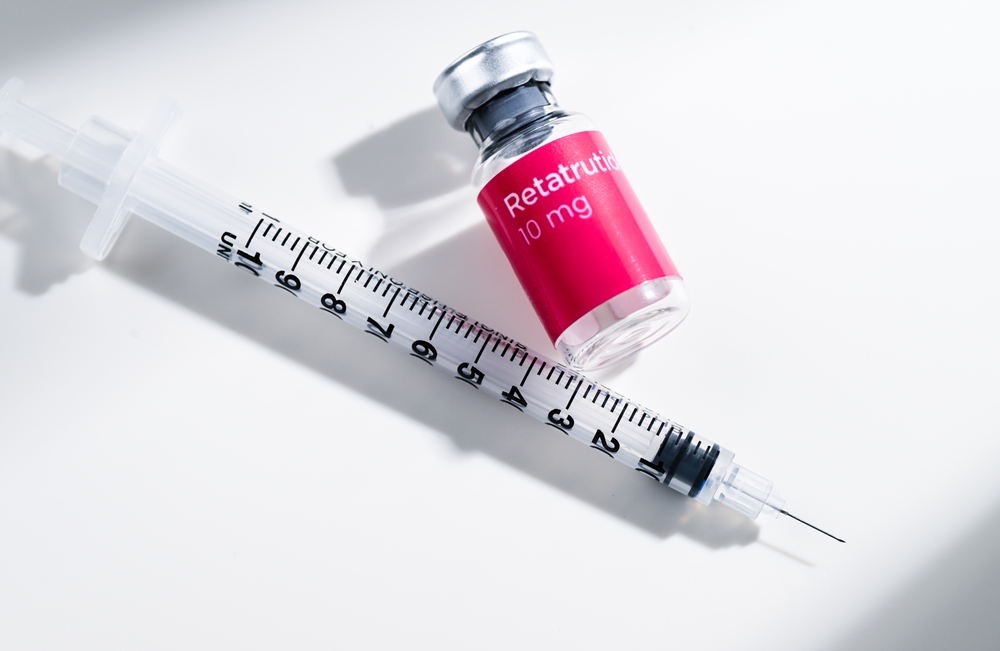

The weight loss drug conversation has been accelerating for years – from the early Ozempic headlines through the Wegovy wave and into the tirzepatide era – but something different happened on May 21, 2026. Eli Lilly released topline results from a major Phase 3 clinical trial for its next-generation drug retatrutide, and the numbers landed in a register that researchers, physicians, and patients had not seen before from any medication. These were not incremental gains over existing treatments. They were figures that had previously been associated almost exclusively with bariatric surgery.
The drug in question targets three hormone pathways simultaneously rather than one or two, as current medications do. That structural difference appears to translate directly into clinical outcomes that have prompted physicians and market analysts to revisit what pharmacological weight loss can realistically achieve. Dr. Carolynn Francavilla, vice president of the Obesity Medicine Association, described the average weight loss as “truly game-changing,” adding that the results were “essentially bariatric surgery but in a weekly injection.”
The trial data is early in one important sense: Eli Lilly has not yet submitted the drug for FDA approval, the full results have not been published in a peer-reviewed journal as of this writing, and several additional Phase 3 studies across different patient populations are still underway. But what has been released from the TRIUMPH-1 master trial is detailed enough to examine closely – and the numbers reward that attention.
What Retatrutide Is, and How It Differs From Wegovy and Zepbound
Retatrutide is an investigational, first-in-class triple hormone receptor agonist evaluated in the Phase 3 TRIUMPH-1 clinical trial. It targets three metabolic pathways by activating receptors for glucose-dependent insulinotropic polypeptide (GIP), glucagon-like peptide-1 (GLP-1), and glucagon.
A useful point of comparison: Wegovy targets GLP-1 alone, Zepbound targets GLP-1 and GIP, and retatrutide adds glucagon as a third receptor. That third pathway is the key mechanical differentiator. Glucagon raises the body’s resting energy use and helps it draw on stored fat for fuel, which is precisely why retatrutide’s trial weight-loss numbers are higher than those of single- or dual-action medications.
The term “GLP-3” is a scientifically inaccurate label used informally in some media coverage to describe triple hormone receptor agonists like retatrutide. This nickname emerged because the medication simultaneously targets three receptors rather than representing an actual scientific classification, and Eli Lilly itself says the more accurate descriptor is simply “triple agonist.”
The TRIUMPH-1 Trial: Design and Scope
TRIUMPH-1 enrolled 2,339 adults with obesity or overweight who had at least one weight-related comorbidity – including hypertension, dyslipidemia, sleep apnea, or osteoarthritis – but no diabetes. Participants were randomized to retatrutide at 4 mg, 9 mg, or 12 mg, or to a placebo, all delivered as a once-weekly subcutaneous injection. The primary endpoint was percent change in body weight at 80 weeks.
Average baseline characteristics put participants at a weight of approximately 248.5 pounds and a BMI of 40.0. Dose escalation was stepwise every four weeks, starting at 2 mg and climbing in increments to the target dose. This graduated escalation protocol is consistent with other GLP-1-class drugs and is designed to reduce gastrointestinal side effects during the adjustment period.
In the randomized, double-blind, placebo-controlled trial, all studied doses – 4 mg, 9 mg, and 12 mg – met the primary and key secondary endpoints, demonstrating significant, clinically meaningful weight reduction alongside improvements in cardiometabolic risk factors.
The Results: Weight Loss Data at Every Dose
Mean reductions at 80 weeks were approximately 47.2 pounds (19.0 percent) with retatrutide 4 mg, 64.4 pounds (25.9 percent) with 9 mg, and 70.3 pounds (28.3 percent) with 12 mg. Every dose arm outperformed what current approved medications have demonstrated in their own pivotal trials.
High-dose outcomes approached bariatric surgery thresholds, with 45.3 percent of participants achieving at least 30 percent weight loss and 65.3 percent attaining a BMI below 30 at week 80 on the 12 mg dose. Falling below a BMI of 30 is significant clinically: that threshold is generally the boundary between being classified as obese and merely overweight under standard medical definitions.
The 104-week extension data, drawn from participants with a baseline BMI of 35 or higher who remained on the 12 mg dose, pushed the numbers further still. Participants on the 12 mg dose lost an average of 28.3 percent of their body weight at 80 weeks. Those with a starting BMI of 35 or higher who continued on the drug lost up to 30.3 percent – an average of 85 pounds – at 104 weeks.
The TRIUMPH-1 12 mg result is the largest weight loss ever published in a Phase 3 obesity trial, beating tirzepatide’s SURMOUNT-1 by roughly 5.8 percentage points and semaglutide’s STEP-1 by 13.4. The 30.3 percent figure at the 104-week extension is larger than anything seen outside bariatric surgery.
How Retatrutide Compares to Wegovy, Zepbound, and Bariatric Surgery
The comparison to existing medications is where the trial data becomes most clinically meaningful.
In the SURMOUNT-5 head-to-head trial, Zepbound produced significantly more weight loss than Wegovy – negative 20.2 percent versus negative 13.7 percent at 72 weeks. Retatrutide’s 28.3 percent average at the highest dose in TRIUMPH-1 exceeds both figures by a substantial margin. Even at the 4 mg dose – retatrutide’s lowest – the drug produced 19 percent weight loss, roughly matching what tirzepatide achieves at its highest approved dose.
The comparison to bariatric surgery carries particular weight given that surgery has long been considered the most effective intervention for severe obesity. Studies demonstrate an average total weight loss of 25 to 32 percent depending on the type of bariatric surgery performed, and five years post-surgery that weight loss is maintained around 23 percent. Retatrutide’s 30.3 percent average in the extended cohort places it firmly within – and at the upper end of – that surgical range.
The key distinction, of course, is durability. Surgery produces anatomical changes that persist indefinitely. Medication results, as a pattern across the entire GLP-1 class, have been shown to depend on continued use. People who stop taking GLP-1 drugs such as Ozempic and Wegovy for weight loss are projected to regain their shed pounds within about one and a half years, and research has found that former users regain weight four times faster than those using only diet and exercise. Whether retatrutide will show a different pattern after discontinuation remains an open question, one that long-term follow-up data will need to answer.
The Secondary Findings: Beyond the Scale
Weight loss was the primary endpoint of TRIUMPH-1, but the secondary data adds important clinical context.
Cardiometabolic improvements documented in the trial included significant reductions in waist circumference, non-HDL cholesterol, triglycerides, systolic blood pressure, and high-sensitivity C-reactive protein – a marker of systemic inflammation.
The TRIUMPH-4 trial, the program’s first Phase 3 readout from December 2025, enrolled participants with obesity and knee osteoarthritis and added further evidence of retatrutide’s reach beyond body weight. In TRIUMPH-4, participants with obesity and knee osteoarthritis taking retatrutide 12 mg lost an average of 28.7 percent of their body weight at 68 weeks. Retatrutide also reduced WOMAC pain scores by up to an average of 4.5 points – a 75.8 percent reduction – and significantly improved measures of physical function, with more than one in eight retatrutide-treated patients completely free from knee pain at the end of the trial.
These secondary findings are not peripheral. For the millions of people living with obesity alongside cardiovascular risk factors or musculoskeletal conditions, a drug that addresses multiple disease processes simultaneously represents a qualitatively different treatment proposition than one that changes only body weight.
Safety Profile: What the Trial Reported
The most common adverse effects reported across the 4 mg, 9 mg, and 12 mg retatrutide groups, compared with placebo, were: nausea, reported by 28.6 percent, 38.4 percent, and 42.4 percent of retatrutide participants respectively, compared with 14.8 percent for placebo; diarrhea, reported by 25.2 percent, 34.1 percent, and 32 percent compared with 13.5 percent for placebo; constipation, reported by 23.8 percent, 25.9 percent, and 26.1 percent compared with 10.9 percent for placebo; and vomiting, reported by 10.6 percent, 22.8 percent, and 25.3 percent compared with 4.8 percent for placebo.
Additional observed adverse events included upper respiratory tract infections, urinary tract infections, and mild to moderate dysesthesia – though the majority of the urinary and neurological cases resolved during active treatment.
Dysesthesia – abnormal skin sensations described as tingling, burning, or prickling – is the side effect that most distinguishes retatrutide from existing drugs in the class and has drawn the most scrutiny from analysts and clinicians. Lilly reported dysesthesia in 8.8 percent and 20.9 percent of patients on the 9 mg and 12 mg doses respectively; in the placebo arm, just 0.7 percent of patients reported the side effect. The condition appears to be unique to triple agonists due to glucagon receptor activation and is usually temporary, with peak incidence in weeks four through eight and resolution by around week 24 for most patients.
The most common adverse events were generally mild to moderate in severity, and discontinuation rates due to adverse events were 4.1 percent, 6.9 percent, and 11.3 percent with retatrutide 4 mg, 9 mg, and 12 mg respectively, compared with 4.9 percent with placebo. The dose-dependent discontinuation rate at 12 mg is higher than what has been seen in some competing trials, and it is one of the tolerability considerations clinicians will weigh when the drug eventually enters prescribing practice.
Dr. Francavilla noted that retatrutide may actually be too powerful for some patients, adding that having options across the spectrum of weight-loss medications is critically important.
The Broader TRIUMPH Program and What Comes Next
TRIUMPH-1 is one of nine Phase 3 trials within Eli Lilly’s clinical program. Lilly plans to present detailed data from the TRIUMPH-1 master trial at the 86th annual American Diabetes Association Scientific Sessions, scheduled for June 5-8, 2026 in New Orleans. Additional Phase 3 results from the broader clinical program, including the TRIUMPH-2 trial in patients with type 2 diabetes and the TRIUMPH-3 trial in patients with established cardiovascular disease, are expected later in 2026.
Eli Lilly is currently studying retatrutide in Phase 3 clinical trials for obesity, type 2 diabetes, knee osteoarthritis pain, moderate-to-severe obstructive sleep apnea, chronic low back pain, cardiovascular and renal outcomes, and metabolic dysfunction-associated steatotic liver disease. This breadth of investigation reflects both the potential systemic reach of the drug and the regulatory requirement to demonstrate safety and efficacy across distinct patient populations before a broad indication can be sought.
Retatrutide is not yet approved by the Food and Drug Administration, and Eli Lilly has said it is planning to submit the drug for approval by the end of 2026 – after which FDA review would add additional time before any decision. GlobalData projects a 2027 approval for retatrutide, with a 2031 sales forecast of $15.6 billion based on patient demand modeling.
One important caution worth noting explicitly: as of this writing, Eli Lilly has not published the TRIUMPH-1 results in a peer-reviewed journal. The announced figures are topline results from the company’s own press release. Peer review will subject the full dataset – including subgroup analyses, statistical methods, and handling of missing data – to independent scientific scrutiny. The overall effect sizes are large enough that analysts widely expect the findings to hold under that examination, but the peer-reviewed publication remains a meaningful pending step.
The Access and Cost Question
Even if approval follows the anticipated timeline, the history of GLP-1 medications makes clear that regulatory approval and practical patient access are two different things.
NPR’s pharmaceuticals correspondent noted that access is a major issue: the obesity drugs already on the market are expensive, and many insurance plans do not cover them even though obesity is classified as a chronic medical condition. Retatrutide, given its superior efficacy profile, is widely expected to carry a premium price. Pricing projections suggest a range of $1,200 to $1,500 per month given the drug’s superior efficacy, though competitive pressure and insurance dynamics may push pricing toward the lower end of that range.
There is also a parallel concern that has emerged even before the drug has been approved. Counterfeit versions of retatrutide are already being advertised and sold online, with fitness forums and social media platforms promoting powders and injectables – sometimes marketed as “reta” or “ret” – often with instructions on how to self-mix or inject. Any products purporting to be retatrutide are not legitimate and are illegal and unsafe; under federal law, retatrutide cannot be used in compounded medicines.
What to Watch For
The TRIUMPH-1 results represent the most significant weight-loss data ever produced by a pharmacological intervention in a Phase 3 setting. That is not a marketing claim – it is a straightforward reading of the trial record. At 28.3 percent average weight loss at 80 weeks and 30.3 percent at 104 weeks among higher-BMI participants, retatrutide has crossed into territory that, until very recently, was considered the exclusive domain of surgery. The 65.3 percent of participants at the highest dose who achieved a BMI below 30 after 80 weeks represents a scale of metabolic normalization that the GLP-1 class has been building toward, step by step, since semaglutide was first approved for obesity.
What remains genuinely open includes questions that carry real weight in clinical practice. Will the 11.3 percent discontinuation rate at the highest dose due to adverse events – primarily gastrointestinal and including the novel dysesthesia signal – mean that real-world patients achieve lower average weight loss than the trial’s tightly monitored participants? How durable are the results over years of treatment? Will cardiovascular outcomes data, which semaglutide already has and tirzepatide is still generating, confirm the expected benefit from such substantial weight reduction? And perhaps most urgently for the patients who will need this drug: when will it be priced and covered in a way that makes it accessible beyond those who can pay out of pocket?
The regulatory and clinical path from here runs through FDA review, peer-reviewed publication, and the completion of additional TRIUMPH trials. None of those steps are formalities. But what the data released on May 21, 2026 has done is reset the expectation of what a weight-loss medication can plausibly achieve – and that reset will shape every conversation in obesity medicine for years to come. For patients and clinicians alike, the most honest position right now is cautious attention: this is a drug worth watching closely, and the next twelve months of data will tell us whether the promise of the Phase 3 topline holds up to the full scrutiny it deserves.
AI Disclaimer: This article was created with the assistance of AI tools and reviewed by a human editor.