

You’ve probably looked at your child’s face and played the guessing game. The nose is yours. The ears are definitely his. The stubborn habit of refusing to ask for directions is, honestly, anybody’s guess. We tend to think of genetic inheritance as a 50/50 split, a tidy deal struck at conception where each parent chips in equally and the child turns out somewhere in the middle. The reality is considerably stranger and, depending on your mood, either deeply humbling or quietly thrilling.
Some traits don’t blend. They arrive straight from one parent, unchanged, carrying zero input from the other. The machinery behind this is both elegantly logical and, when you first understand it, a little wild. Your child’s cells are running on instructions that came from you alone, in ways that have nothing to do with whose chin they’ve got or whose laugh fills the room. There are entire systems in the human body, whole categories of health and biology, that trace back to one parent’s contribution with no negotiation whatsoever.
Understanding which traits follow that one-parent-only path isn’t just interesting in a dinner party trivia sort of way. It has real implications for health, for understanding why certain conditions run in families the way they do, and for making sense of the odd moments when your kid is unmistakably, completely, somehow you.
The Power Plant You Pass On: Mitochondrial DNA
Every cell in your body contains structures called mitochondria. Think of them as tiny power generators: their job is to convert food and oxygen into the energy your cells need to do everything from beating your heart to forming a memory. What makes them unusual is that they carry their own separate DNA, completely distinct from the genetic material stored in the cell’s nucleus.
Scientists have long known that animals get the DNA inside their mitochondria only from their mothers, and that it is typically passed down exclusively through the maternal line. This isn’t a small footnote in biology. According to a 2024 University of Colorado Boulder study, most animals, including humans, inherit mitochondrial DNA from their mothers alone, with all traces of the father’s mitochondrial genome destroyed the moment sperm joins egg, and when this process fails, it can lead to lasting neurological, behavioral, and reproductive problems.
Why does this happen? One theory is that sperm use a massive amount of mitochondrial energy in their race to fertilize an egg, which means they accumulate mutations along the way. Eggs, by contrast, draw their energy primarily from surrounding cells rather than their own mitochondria, and so they maintain far cleaner mitochondrial DNA. The body appears to have figured out, over millions of years of evolution, that protecting the mitochondrial line through the maternal side was the safer bet.
The practical consequence is significant. According to the NIH’s National Institute of General Medical Sciences, mitochondria are the only structure in our cells with their own unique DNA, which, with rare exceptions, is inherited only from mothers. Conditions caused by mutations in mitochondrial DNA, including certain forms of muscle disease, neurological disorders, and metabolic conditions, pass exclusively down the maternal line. If your mother carries a mitochondrial mutation, it came from her mother, and her mother before that, in an unbroken chain that goes back through every woman in your maternal ancestry. Your father’s mitochondrial history, whatever it was, stopped with him.
There’s also an aging angle worth knowing. Your mother’s mitochondria influence how quickly you age, which is a strange thing to sit with: the idea that the rate at which your cells accumulate wear and tear is something your mother set in motion before you were born.
Intelligence and the X Factor
Here’s the one that tends to get people’s attention at family gatherings, particularly if Mom in question has a PhD she feels has been insufficiently acknowledged. According to many researchers in the field of genetics, a child inherits intelligence primarily through the X chromosome, and because women have two X chromosomes, some scientists theorize that mothers are twice as likely to pass down intelligence-related traits.
The mechanism makes a certain geometric sense. Boys inherit one X chromosome, and it comes entirely from their mother. Girls inherit two X chromosomes, one from each parent, making the picture slightly more complex, but the maternal contribution is still substantial. Research has suggested that intelligence genes are located on the X chromosome and are transmitted from the mother to both sons and daughters.
One often-cited study followed participants from ages 14 to 22, tracking their IQ alongside their parents’. Researchers found that the best predictor of a young person’s intelligence was their mother’s IQ, and that participant IQs varied on average only 15 points from their mother’s. That’s a notably tight cluster. It doesn’t mean fathers contribute nothing to cognitive development; environment, education, and a whole web of non-genetic factors matter enormously. But when it comes to which parent’s genes are doing more of the heavy lifting in the intelligence department, the evidence points toward Mom.
Mood, Emotional Regulation, and What Daughters Inherit
The structure of the corticolimbic system, which regulates emotions and plays a role in mood disorders such as depression, is more likely to be passed down from mothers to daughters than from mothers to sons, or from fathers to children of either gender. This could indicate that daughters, in part, inherit their mothers’ moods.
If you’ve ever thought “I sound exactly like my mother when I’m anxious” and felt both validated and slightly horrified by that, there is a biological basis for the observation. The corticolimbic system, the brain region involved in processing emotions, stress responses, and vulnerability to depression, shows a maternal inheritance pattern that is specific to daughters, not sons. The father’s genetic contribution to this system appears to flow more evenly between children of both sexes.
This also connects to the broader picture of why maternal grandmothers play such a distinct role in children’s development. The emotional architecture runs matrilineally in ways that are still being mapped, but the thread is real.
Sleep Patterns: Night Owls and Insomnia
Whether you’re a light sleeper who wakes at 3 a.m. cataloguing everything you’ve ever done wrong, or someone who could fall asleep in a moderately loud restaurant, your sleep tendencies have a genetic component. And the maternal link here is stronger than most people realize.
Genetic inheritance is more complicated than mixing 50 percent of each parent’s genes, and most traits are polygenic, meaning they’re shaped by several genes from both parents. But sleep, both the architecture of it and the vulnerabilities within it, leans maternal. Insomnia in particular shows a strong hereditary component, and the genes involved travel through the X chromosome in ways that echo the intelligence and mood patterns above. If your mother was a terrible sleeper, you may have been running that particular program since birth without knowing it. So were her nights spent wide awake reviewing her choices? You may have inherited the franchise.
What Comes From Dad, and Only Dad
Fathers get their moment too, and it’s both simpler and more absolute. According to MedlinePlus Genetics, the Y chromosome is passed exclusively from father to son, on the patrilineal line. There is no maternal input, no mixing, no negotiation. Every Y chromosome a son carries is a direct copy of his father’s, which is itself a copy of his grandfather’s, stretching back in an unbroken paternal chain.
Because only males have the Y chromosome, the genes on it tend to be involved in male sex determination and development, with the SRY gene responsible for the development of a fetus into a male. But the Y carries more than just the instruction to be male. A mutation on the Y chromosome can only be passed from father to son, and there is no second chromosome from the mother to alter or mitigate the effects. In addition to sperm development, hormone levels, and distinctly male physical characteristics, this includes non-gendered Y-linked traits like hypertrichosis, which is excessive hair growth on the outer ear.
The Y chromosome is also the reason a father’s family history is worth knowing. Certain disease susceptibilities travel along that patrilineal chain in ways that are distinct from what comes through the mother’s side. And while it’s a small chromosome by comparison, much smaller than the X, what it carries, it carries without interference.
The Biological Wildcard
One of the more interesting genetic facts, and one that history has managed to get spectacularly wrong for centuries, is that a child’s biological sex is determined entirely by the father. If the sperm cell that fertilizes the egg carries an X chromosome, the resulting child will be female; if it carries a Y chromosome, the child will be male. Mothers can only pass on the X chromosome, whereas fathers can pass on either an X or a Y.
The mother has no genetic say in the matter. None. Which makes the centuries of women blamed, divorced, and humiliated for failing to produce male heirs particularly rich, given that the men doing the blaming were the only variable in the equation.
The Traits That Belong to Both (and Why That Makes Things Interesting)
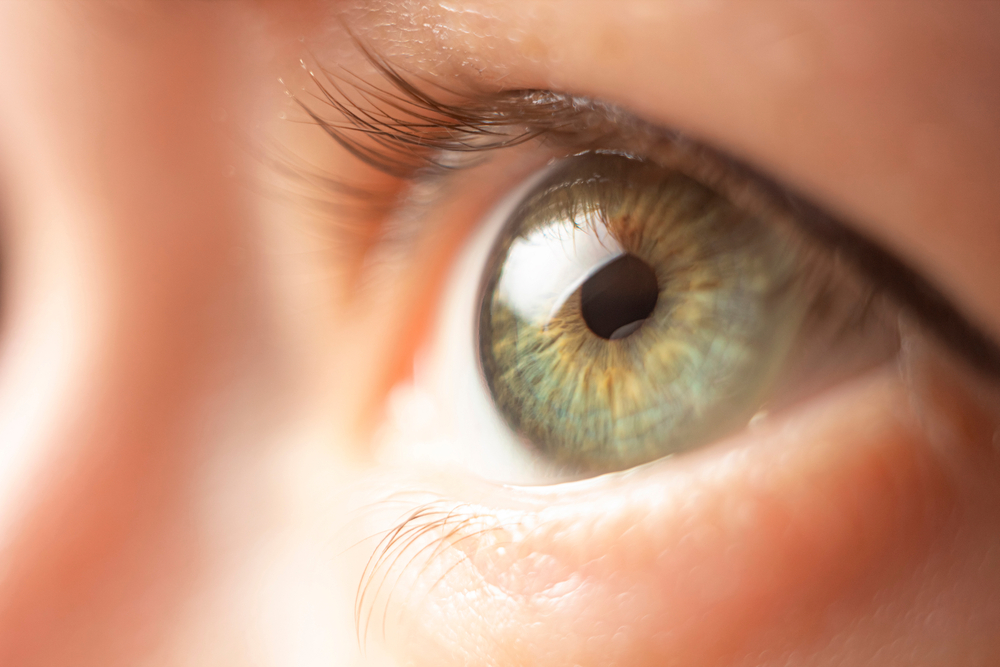
Most of what we look like and how we’re built doesn’t follow a single-parent rule. Height, eye color, skin tone, hair texture, and the hundreds of smaller physical features most people actually notice come from both parents, with dominance and recessiveness playing out differently in each child from the same two people, which is how two parents with no red hair can produce a redhead, and why siblings from the same family can look strikingly different from each other.
The effect of a gene can vary greatly, and sometimes be the complete opposite, depending on whether it is inherited from the mother or the father. Some genetic variants can increase a person’s risk of developing type 2 diabetes when inherited from the father, but actually lower it when inherited from the mother. That kind of parent-of-origin effect is an area researchers are actively untangling, and it points to how much more there is to learn about how the same genetic material can behave differently depending on whose side it came from.
What This Means for You
Genetics is not destiny. That point is worth holding onto, because the list of things that travel through the maternal or paternal line can start to feel like a verdict. Your mother’s mitochondria, her X chromosomes, her corticolimbic structure, her insomnia: these are all real and they are in you. But they exist alongside decades of choices, experiences, environments, and random chance that shape how any gene actually plays out in a living person.
The more useful frame might be curiosity rather than fatalism. Understanding which conditions or tendencies have a single-parent inheritance pattern can be genuinely valuable medical information. Mitochondrial disorders in particular are worth tracking carefully if they appear in your maternal line. And knowing that certain vulnerabilities travel through the X chromosome can help explain patterns in a family that might otherwise look random.
What it doesn’t do is tell you who you are or what you’ll pass on. Your children will carry your mitochondria, your X, your sleep patterns, and possibly your particular 3 a.m. thought spirals. They’ll also carry things that are entirely theirs, things neither of you could have predicted or planned. The archive never gets smaller, only larger. But it was never just a collection of inherited problems. It’s also every person who learned to sit with those problems, and every child who will get the chance to do the same.
AI Disclaimer: This article was created with the assistance of AI tools and reviewed by a human editor.