
Somewhere in America right now, a pregnant woman is staring at a baby name app at 2 a.m. and scrolling past names that sound like software products and minor characters from dystopian fiction, thinking: there has to be something better than this. She’s not wrong. The names that ruled the 1940s – the ones that belonged to women who wore red lipstick to do wartime factory work and thought nothing of it – are climbing back up the charts, and they deserve every bit of the attention they’re getting.
Baby naming has always been a strange combination of personal expression and cultural inheritance. You’re trying to give someone a word they’ll carry for eighty years, that will appear on résumés and wedding invitations and eventually, probably, a gravestone. The pressure to be original without being cruel, to be classic without being stodgy, to avoid any name that sounds too much like an ex or a villain from a show everyone binged in 2019 – it’s a lot. So maybe it makes sense that parents are looking backward. Not to 2003, when every baby girl was named Madison or Addison or Mackenzie, but further. Much further.
The 1940s, specifically, are having a moment. The Social Security Administration has been compiling a list of popular baby names since 1997, with records dating back to 1880, and it releases a list of the most popular names each year, including the names that rose the fastest. Tucked into those rising names lately are a handful of names your grandmother might have shared with her best friend from the factory floor. Names that got shelved somewhere around 1978 and are only now being dusted off. Names that, it turns out, were never as finished as we assumed.
Why the 1940s, Specifically
Part of it is math. Names move in generational cycles, roughly 70 to 100 years, long enough for a name to get thoroughly associated with one generation and then forgotten, and then long enough after that for it to feel fresh again rather than just old. The 1920s names – Eleanor, Evelyn, Charlotte – already made their comeback and are now comfortably mainstream. A few 1940s names have already followed, including Eleanor, Evelyn, and Charlotte, which have re-entered the top girl names list. What’s moving now are the names that were slightly further down the 1940s rankings: the second tier, the names that belonged to the friend group rather than the movie star, and that are somehow more interesting for it.
Part of it is also the broader appetite for things that feel real and made and weathered, rather than invented or optimized. Vintage baby names are one of the biggest baby-naming trends right now, with parents increasingly turning to names from the late 1800s through early 1900s for inspiration. A name with eighty years of actual use behind it carries a different kind of weight than one that was coined by combining two other names and running them together until something new fell out. The 1940s names feel like something that belongs to a person. That, apparently, is the appeal.
Marjorie
Marjorie jumped 429 spots on the official popularity list, from No. 1,251 in 2023 to No. 822 in 2024, making it the name with the third-biggest increase on the entire girls’ list. According to SSA data, it was in the top 100 names from 1904 to 1945 before falling out of the top 1,000 entirely in the 1990s – but it just made it back into the top 1,000 this year, after being in and out for the past couple of decades.
The Taylor Swift factor is not a small thing here. According to a 2025 HuffPost report, “Marjorie was the third-fastest-rising girl name within the Top 1,000 between 2023 and 2024, which coincides with Swift’s Eras Tour,” with experts noting that some parents were likely influenced secondhand – hearing the name in the cultural moment and choosing it without necessarily making an overt reference to Swift. Whether you love or loathe the Swiftie pipeline as a naming force, the result is the same: a genuinely lovely name, with an -ie ending that feels both old-fashioned and current, is back.
Dorothy
Dorothy is the name that technically never left – it was just in the witness protection program for a while. Dorothy is having a meteoric rise: since 2011, it’s climbed nearly 500 places in rank, which isn’t bad for a name that didn’t make the SSA list at all between 2007 and 2010. It also offers the bonus of nicknames like Dot or Dottie. The Wizard of Oz association, which felt like a burden for decades, now reads as a point of distinction – the name comes pre-loaded with an entire cultural mythology, which is more than most names can claim.
It also fits squarely into the wider trend of -ie ending nicknames that parents are currently obsessed with. Names ending in -ie are climbing broadly: Marjorie and Bonnie are joined by Scottie, Elodie, and Lettie on the list of SSA fast risers. Dottie, by extension, sounds both retro and completely plausible on a kid at a playground in 2026. That’s the whole game, really.
Deborah
Deborah is the quiet one in this group, the name that crept rather than surged, and yet. In the 1940s, Deborah sat at rank 68. It spent years hovering at the very bottom of the SSA’s top 1,000 names, sitting at No. 900 or lower since 2020 – and then last year it suddenly jumped more than 100 places to reach No. 852. Whether that’s a fluke or the beginning of a proper climb is genuinely unclear. But Deborah has one thing going for it that a lot of the other names on this list don’t: it sounds like it belongs to a woman who has strong opinions and acts on them. That energy, in a name, is underrated.
The meaning doesn’t hurt, either. The name means “bee” in Hebrew – small, industrious, capable of inflicting real damage when provoked. For parents who want a name that carries some of that, Deborah is right there, waiting.
Marilyn
Marilyn ranked as high as No. 56 nationally, which occurred in 1947, making the mid-1940s its peak moment. The Monroe association is so embedded in the name that it’s almost impossible to say Marilyn without the whole mythology following it in – the platinum hair, the breathless voice, the complicated reality of who she actually was behind all of it. For some parents, that’s too much to carry. For others, it’s exactly the point.
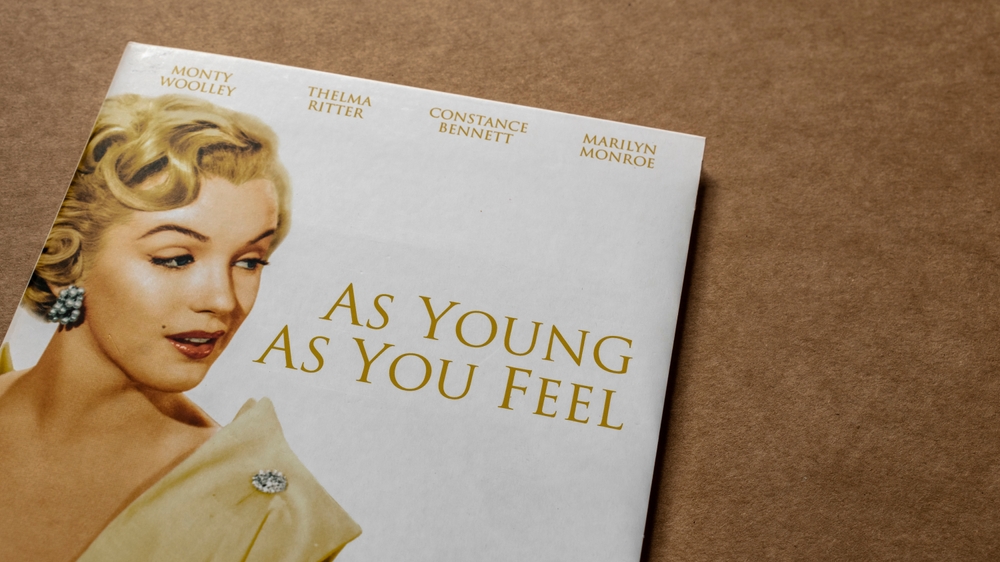
In the 1940s, Marilyn sat at rank 29 on the SSA list. Today it sits at 666, which is a long way down from its peak, but the name has been climbing back quietly as the cultural conversation around Monroe has shifted – less about the iconography, more about the actual person. A name that once felt heavy with someone else’s story is starting to feel available again.
Sylvia
Sylvia is the nature name hiding in plain sight. Sylvia means “of the forest,” and it began a slow, steady climb starting around 2019 – which aligns with the broader trend of nature-related baby names taking off. The name hit its peak in 1937, just before the 1940s, which means it was already slightly past its heyday when it was most popular in that era – but it never fell off the SSA list entirely, which is itself a kind of staying power most names can’t claim.
Sylvia has the benefit of feeling literary without being precious. Sylvia Plath is the obvious reference, but the name belongs to the woods long before it belonged to any one person. It sounds like something that was carved rather than invented, and for a certain kind of parent, that distinction matters enormously.
Bonnie
Bonnie didn’t even make the SSA list at all between 2003 and 2014. Since it re-entered, it’s been on its way up, reaching No. 441 in the most recent ranking. The name means “beautiful” in Scottish, and it has a particular quality that a lot of the names on this list share: it’s cheerful without being cloying, simple without being flat. It sounds like a person who would show up on time and tell you exactly what she thinks, in the best possible way.
The -ie ending is doing real work here. Bonnie slots in with Marjorie, Dottie, and the general current vibe of names that feel energetic and approachable rather than formal and weighty. If you want a name that will age well through a childhood of playground nicknames and still sound completely right on a professional email thirty years later, Bonnie earns serious consideration.
Frances
Frances is making its move for a different reason than most of the others. In the 1940s, Frances sat at SSA rank 35. Nameberry notes that Frances and Francis were used interchangeably for both sexes until the 17th century – and today, Frances could also be shortened to Frankie, slotting it right into the trend of giving girls “nickname” names like Charlie, Billie, or Stevie.
That flexibility is the name’s superpower. Frances on a birth certificate and Frankie in daily life gives a kid the best of both: a formal name with actual history behind it, and a nickname that feels completely current. The name has been climbing since 2022, and its rise may partly reflect parents looking toward unisex and gender-neutral options. Whether for that reason or simply because it’s a genuinely good name, Frances is one to watch.
Eileen
Eileen is the slow-and-steady member of this cohort. It doesn’t have a viral moment or a Taylor Swift song attached to it. What it has is an Irish origin meaning “bright” or “shining light,” and a sound that manages to feel both classic and slightly unexpected in 2026 – not so retro that it reads as a joke, not so common that it disappears into the crowd.
Whether Eileen can continue its slow climb to overtake more of-the-moment, similar-sounding names like Isla remains to be seen. But Isla has been in the top 100 for years now, and parents who want something with that same soft, melodic quality without handing their kid the most popular name in their preschool class are increasingly landing on Eileen. That’s not nothing.
Read More: Nurse’s Mind Blown as Mum Tells Her She’s Been Pronouncing the Name Liam Wrong
What This Is Really About
The case for any of these names isn’t really about the names themselves. It’s about the thing underneath the trend, the idea that a name can arrive with substance already in it. Marjorie’s rise is a reminder that most names never truly disappear – they just wait for the right moment, or the right cultural spark, to shine again. That’s true of all eight of the names here. None of them were ever bad names. They were just resting.
The other thing worth saying is that none of these names will stay under the radar for much longer. The same data that confirms they’re climbing also means they’ll keep climbing, and a name that felt distinctive in 2024 can easily feel like the new Olivia by 2029. If something on this list is calling to you, that’s probably useful information about your own timeline. Names, like most things worth having, are better before everyone else figures out they want them too.
AI Disclaimer: This article was created with the assistance of AI tools and reviewed by a human editor.