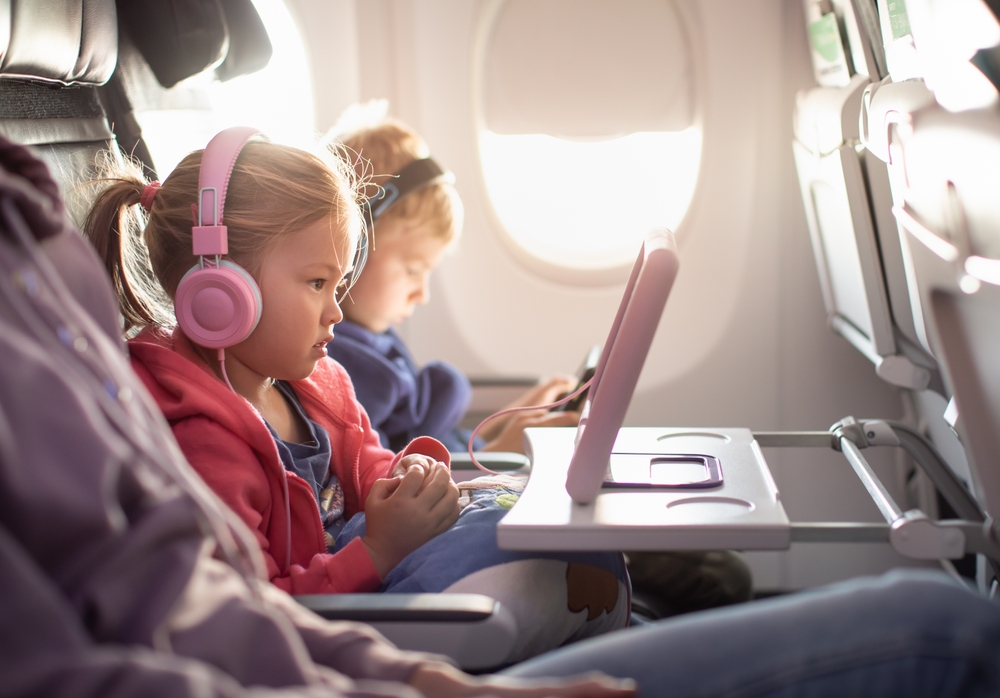

Flying with kids is already its own Olympic sport. You’ve got the snacks, the backup snacks, the tablet charger, the noise-canceling headphones you bought specifically for this trip, and somehow you’re still the one holding the boarding passes while also carrying a car seat. The last thing you want is a surprise at 30,000 feet, especially one involving an empty drink cart rolling right past your row.
Delta Air Lines is making some changes to what you can expect on board, and if your family flies short routes, it’s worth knowing before you get on the plane. The updates take effect mid-May 2026, they apply to specific passengers on specific flights, and the cutoff is more precise than you might expect. Whether it affects your next trip comes down to one number: 350 miles.
And if your usual routes fall under that threshold, you’re going to want to sit down for this one.
Which Delta Flights Are Losing Free Snacks and Drinks
Simple Flying (2026) reports that Delta Air Lines is cutting in-flight service on routes under 349 miles, with flights like Los Angeles to San Francisco set to lose all onboard refreshments entirely. Think of it like this: if you can theoretically drive the route in a day without it feeling heroic, there’s a good chance it’s under that threshold.
The change takes effect May 19, 2026, and applies to Main Cabin and Delta Comfort+ passengers. First Class service remains unchanged. The policy draws a clear line at 350 miles, passengers on flights covering that distance or more will still receive full beverage and snack service, while those on shorter routes receive nothing, regardless of ticket price or loyalty status, according to WCNC (NBC Charlotte) (2026).
On flights under 350 miles, flight attendants frequently have no more than 15 minutes to complete a full beverage service between the point when the fasten-seatbelt sign turns off and the moment descent preparation must begin. Picture a flight attendant trying to push a cart through a full narrow-body cabin, in 15 minutes, while also managing safety checks, and you start to understand why this has been an operational headache for years. That compressed window forces crews to rush through the cabin while simultaneously managing safety and other responsibilities, creating stress for staff and an inconsistent experience for passengers. The new threshold is designed to give flight attendants a realistic service window rather than an incomplete rush through the aircraft, the same WCNC report notes.
How Delta Got Here
Historically, Delta has not offered food or beverage service on flights under 250 miles since 2015, and the change from full to express service was introduced in 2017 for flights under 349 miles. So the airline has been walking this back in stages for a decade. This latest move isn’t some sudden cost-cutting shock, it’s the next step in a long retreat from service on the shortest routes.
The airline has framed the change in operational terms rather than purely financial ones. On flights under 350 miles, flight attendants frequently have no more than 15 minutes to complete a full beverage service between the point when the fasten-seatbelt sign turns off and the moment descent preparation must begin. Delta’s own statement described the overhaul as a move toward a “more consistent experience across our network”, which is a very corporate way of saying: we’d rather do nothing than do it badly on the short ones.
The overhaul, set to take effect May 19, 2026, will affect thousands of short-haul travelers daily, officially establishing a “zero service” reality on some of the carrier’s most popular domestic corridors. The International Business Times UK (2026) notes that aviation insider JonNYC first posted internal Delta service documents showing the changes on April 30, 2026, indicating the policy reflects operational challenges faced by flight attendants on short flights.
The Routes That Will Feel It Most
If you’re booking a quick connection or a short regional hop, these are the routes now sitting in the no-service zone. Los Angeles to San Francisco, New York to Boston, and Atlanta to Charlotte travelers will board after May 19 without any in-flight beverage or snack offering. Those are three of the busiest air corridors in the country. If you’re connecting through a Delta hub and your leg is under 350 miles, check the mileage. Passengers connecting through Delta hubs in Atlanta, New York, Los Angeles, and Minneapolis should check the mileage of their specific itinerary before assuming a drink or snack will be available.
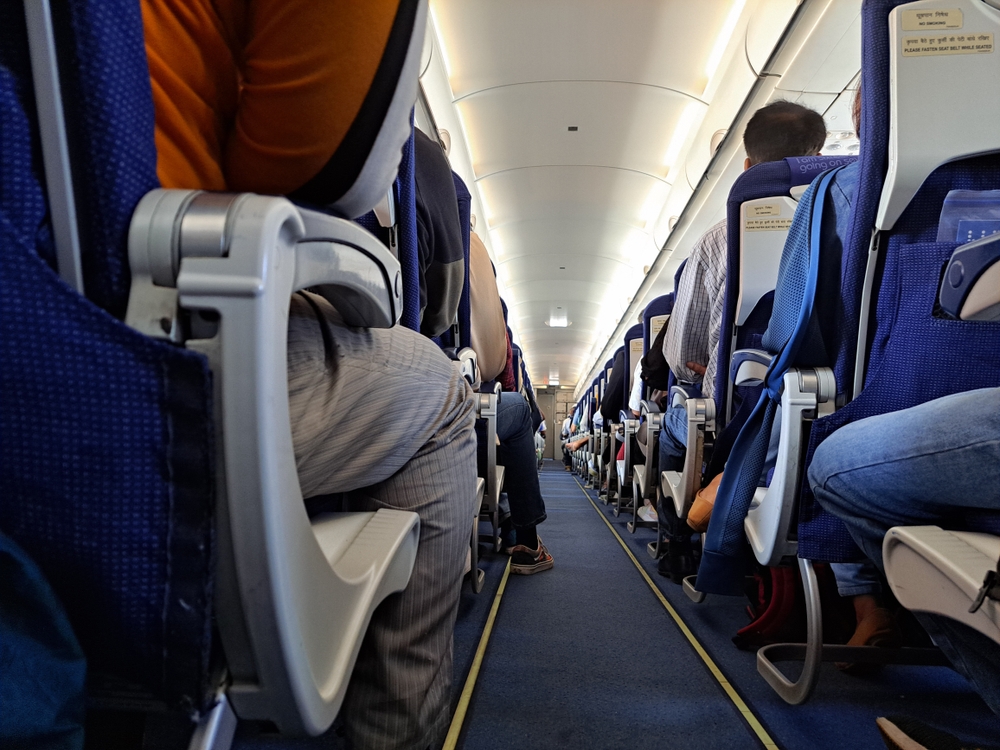
The policy draws a clear line at 350 miles. Passengers on flights covering that distance or more in Main Cabin and Comfort+ will still receive full beverage and snack service. Those on shorter routes will receive nothing, regardless of ticket price or loyalty status. That last point is worth sitting with, even if you’re a frequent flyer with status, economy passengers on sub-350-mile flights are out. Loyalty doesn’t get you a cup of coffee on these routes.
For families with little ones who rely on a juice box or a cookie to buy 20 minutes of peace on a flight, this is the kind of change that matters in a very practical sense. A 45-minute hop can feel a lot longer when you’re entertaining a four-year-old with no backup from the crew. You might want to revisit your pre-boarding airport routine, and if you’re looking for ways to make travel smoother with kids, these flight attendant travel hacks are genuinely worth a read before your next trip.
How Delta Compares to Other Airlines
The decision positions Delta as the most restrictive of the three major U.S. legacy carriers on this metric. United Airlines begins service at 300 miles, and American Airlines at 250 miles. So if you’re shopping flights on a short-haul route and this matters to you, American currently gives you the most runway before the service cutoff kicks in.
That said, the airlines have been creeping toward this territory for a while, and Delta moving to 350 miles may well set a new norm. Whether other legacy carriers follow Delta’s lead on the 350-mile threshold will be the story to watch in the coming months. American and Southwest currently sit at 250 miles, and United at 300 miles, which leaves both of them with room to follow Delta’s lead if they choose to.
The Part Nobody’s Talking About: The Upgrade
Here’s something that tends to get buried in the outrage cycle: this same policy update is actually an improvement for a lot of passengers. While Delta’s Express service will disappear on flights under 350 miles, flights in the 350, 499 mile bracket are upgrading from the limited Express menu to a full service menu. For the 600 daily flights that sit in the 350 to 499 mile range, they will see an upgrade to the full beverage and snacks menu.
Previously, approximately 600 daily flights received only Delta’s limited Express Beverage Service, which offered just water, coffee, and tea. Those passengers are getting the full cart, proper snacks, the full drinks menu, under the new guidelines. So while the headline focuses on what’s being taken away, roughly 600 flights are getting a genuine upgrade. It doesn’t cancel out the loss for short-haul passengers, but it’s worth knowing the full picture.
What This Means for You
The Delta flight snack policy 2026 takes effect May 19, 2026, eliminating all complimentary food and beverage service for Main Cabin and Delta Comfort+ passengers on routes of 349 miles or fewer, affecting approximately 450 daily flights. If your family flies any of those routes regularly, the simplest fix is to plan ahead at the airport rather than counting on the drink cart.
Grab water and snacks after clearing security. An insulated water bottle that makes it through TSA empty and gets filled at a fountain can save you real money over airport prices, especially if you’re traveling with multiple kids. If you have Delta Sky Club access, use it before boarding on these short routes, since nothing is coming your way in the air. And if you’re booking future flights and service matters, check the route distance before you commit to a carrier. At 250 miles, American Airlines still offers complimentary service, which currently gives it an edge on some of those short-haul corridors where Delta is now going dark.
For those flying 350 miles and beyond, nothing changes. For the rest: pack a snack. Airports have gotten pretty good at this.
One More Thing Worth Knowing Before You Book
Delta’s SkyMiles program won’t shield you from this change, but your credit card might. If you carry the Delta SkyMiles Reserve or Platinum American Express card, you may have access to Delta Sky Club lounges, and using that access strategically before a short-haul flight is now more valuable than it used to be. Load up on water, coffee, and a snack before you board, because the lounge is where your “in-flight service” is happening on these routes. If you’re not a lounge member, American Express Centurion Lounges and Priority Pass locations are scattered through most major airports too, and some Delta credit cards include Priority Pass access as a perk. It takes five minutes to check what you actually have before your next trip, and on a day when you’re wrangling kids through a terminal, knowing you’ve already handled the snack situation is one less thing to manage at the gate.
It’s also worth noting that this policy applies to the flight itself, not to what Delta sells on board. Delta’s buy-on-board options are still available on many flights, meaning you can purchase food and drinks even on routes under 350 miles if you want to. The word “free” is what’s disappearing, not the availability entirely. That distinction matters if you’re in a pinch and willing to pay, but it also underscores what this really is: a shift from complimentary to optional rather than a total service blackout. Whether you consider that a reasonable trade-off or a quiet revenue play probably depends on how often you fly those short corridors and how much you relied on that drink cart to begin with.
The Bottom Line for Traveling Families
Flying with kids means building in buffers everywhere you can. Buffer time, buffer snacks, buffer entertainment. Delta’s new policy is just one more variable to plan around, and the good news is it’s a predictable one. You now know the threshold, you know the date, and you know which routes are affected. That’s more information than most airline changes give you upfront. Pack accordingly, use the airport to your advantage, and know that on flights 350 miles and over, the service you’re used to isn’t going anywhere.
A.I. Disclaimer: This article was created with AI assistance and edited by a human for accuracy and clarity.