

A panel of 27 of the world’s leading dementia researchers dropped a significant update on July 31, 2024, presenting new findings at the Alzheimer’s Association International Conference (AAIC) in Philadelphia. The Lancet Commission on Dementia Prevention, Intervention, and Care published a report that highlights recommendations for policy makers and individuals to help reduce dementia risk worldwide, presenting new evidence that untreated vision loss and high LDL cholesterol are risk factors for dementia. Put plainly, two conditions that affect millions of adults in midlife – cholesterol that runs too high and eyesight problems that go untreated – have now been formally added to the list of things that can raise your chances of developing dementia later in life.
Before unpacking what that means for you specifically, a quick primer. Dementia is an umbrella term for a cluster of symptoms – primarily memory loss, difficulty thinking, and problems with daily functioning – that are serious enough to interfere with normal life. It is a general term used to describe problems with thinking and memory that are severe enough to interfere with a person’s daily life, and Alzheimer’s is the most common cause, but there are several kinds. The Lancet Commission is a group of international experts convened to produce evidence-based guidance on dementia prevention, intervention, and care. This is the third time the Commission has published such a report, and each version has been built on stronger and broader evidence than the one before it.
The phrase “modifiable risk factor” is the real headline here. It means something you can actually change. Not your age, not your DNA – but a health condition or lifestyle habit that, if addressed, may reduce the probability of your brain declining in a way that leads to dementia. That is a genuinely hopeful framing, and this report leans hard into it.
What the Lancet Commission 2024 Report Found
Addressing 14 modifiable risk factors, starting in childhood and continuing throughout life, could prevent or delay nearly half of dementia cases, even as people around the world live longer and the number of people with dementia is set to rise dramatically in all countries. That figure alone is worth sitting with for a moment. Nearly half. Not a marginal improvement but a substantial portion of cases that may be preventable with the right interventions.
The Lancet Commission updated its report in 2024, expanding the list of global dementia risk factors from 12 to 14, with the updated version including vision loss and elevated low-density lipoprotein (LDL) cholesterol levels. These two additions build on 12 risk factors identified in a previous 2020 report, which included hearing loss, high blood pressure, smoking, obesity, depression, physical inactivity, diabetes, excessive alcohol consumption, traumatic brain injury, air pollution, social isolation, and lower levels of education. The risk factors associated with the greatest proportion of people developing dementia in the global population are hearing impairment and high LDL cholesterol (7% each), along with less education in early life and social isolation in later life (5% each).
What makes this report especially credible is how it was put together. According to Dr. Eric Larson of the University of Washington, one of the report’s coauthors, what’s unique about the third report is that, as opposed to relying on individual studies, it relies on meta-analyses, or syntheses of multiple studies, to come up with estimates. A meta-analysis pulls together data from many separate studies, which makes findings far more reliable than any single piece of research could be. The Commission looked at 14 papers on vision loss and 27 on high cholesterol before concluding there was enough weight of evidence to include them.
It’s also worth noting what this type of evidence does and doesn’t tell us. These are observational findings – meaning researchers identified associations between risk factors and dementia, not ironclad proof that one causes the other. For Alzheimer’s and related dementias, no behavior or lifestyle factors have risen to the level of researchers being able to say this will definitely prevent these diseases. But there are promising avenues. The Commission’s position is that the evidence is now strong enough to warrant action – and that acting on these factors is good for overall health regardless of the dementia angle.
How Does High Cholesterol Increase Dementia Risk?
LDL cholesterol is commonly called “bad” cholesterol – and for good reason. It is a type of fat molecule carried in the bloodstream. When levels get too high, it starts to cause problems that extend well beyond the heart. High LDL cholesterol levels contribute to the buildup of plaque in blood vessels, which narrows arteries and restricts healthy blood flow and oxygen delivery over time. When blood flow to the brain gets diminished, brain cells don’t receive a constant supply of oxygen, which leads to damage to nerves and cognitive impairment.
The Lancet Commission’s 2024 report specifically flags midlife as the critical window. The new report adds two new risk factors associated with 9% of all dementia cases – with an estimated 7% of cases attributable to high LDL cholesterol in midlife from around age 40 years, and 2% of cases attributable to untreated vision loss in later life. That 7% figure sounds modest in isolation. But stack it alongside the other 13 modifiable risk factors and the cumulative picture is significant. Dr. Larson notes that if you take those numbers in isolation, maybe they don’t sound important – but when you add up all these risk factors that generally align with overall health, it’s part of a whole cascade of risk.
Beyond restricted blood flow, there’s also an inflammatory dimension. High LDL also causes inflammation in the brain, which can interrupt signaling or communication between neurons, damage brain tissues, and interfere with production of neurotransmitters – the chemical messengers that transmit signals between nerve cells. Neurons are the brain’s working cells. They carry every thought, memory, and movement instruction. Damage them chronically, and the result over decades is cognitive decline.
There is an important nuance worth flagging here. Research on the cholesterol-dementia relationship is genuinely complex. At the time of the previous Lancet Commission report in 2020, evidence related to LDL cholesterol was inconclusive. Since then, studies have reported that high LDL cholesterol in midlife is associated with a higher risk of dementia. It’s also worth knowing that research on whether cholesterol-lowering medications like statins directly reduce dementia risk remains mixed. Randomized controlled trials have failed to establish a convincing link between statin treatment and cognitive improvement to date, and statin treatment is not recommended for the prevention or treatment of dementia in contemporary clinical guidelines. What the Commission recommends is detecting and treating high LDL in midlife as part of overall cardiovascular care – and the brain benefits appear to follow from that broader health improvement.
For a deeper look at what research is uncovering about dementia signs to look for, there’s some fascinating work happening on that front too.
Can Untreated Vision Loss Lead to Dementia?
This one surprises people. Eyesight and brain health don’t seem obviously connected at first. But the link is more direct than you might expect.
When vision deteriorates, the brain receives less sensory input, which may accelerate cognitive decline due to reduced mental stimulation. Recent studies suggest that people with untreated vision problems face a significantly higher risk of developing dementia, possibly because poor eyesight leads to social isolation, reduced mobility, and less engagement with the environment – all of which are known risk factors for cognitive decline. Think about what poor vision actually prevents: reading, puzzles, recognizing faces, driving to see friends, watching a film. These are exactly the kinds of cognitively and socially stimulating activities that keep the brain active and connected.
Dr. Larson explains that it’s a good idea to do what you can to either prevent or treat vision impairment, especially due to cataracts, so that sensory input to the brain is as good as possible. Sensory input seems to nourish the brain and promotes social interaction, which taken together seems to delay the onset of dementia.
There’s also a structural reason the eyes and brain are so intertwined. The retina shares developmental and structural similarities with brain tissue, so changes in retinal blood vessels or nerve fiber thickness might reflect early signs of brain degeneration. Some researchers now believe that detailed eye scans could one day be used to detect early markers of cognitive decline – non-invasively and at relatively low cost. That work is still in the research phase, but the anatomical connection between eyes and brain is real and well-established.
When you look at the list of modifiable risk factors such as exercising, participating in social events, and engaging in cognitively stimulating activities, not being able to see can be a barrier to all of those things. Additionally, many of the other risk factors such as smoking, increased alcohol, cardiovascular disease, diabetes, and obesity are causes of vision loss – so it is cyclical in that the more we educate people on the importance of their eyes and overall health at all ages, the better they can see and preserve their vision, which enables them to continue living the life they enjoy and reduces dementia risk.
Crucially, the Commission’s concern is with untreated vision loss. Uncorrected vision loss increases a person’s risk of developing dementia. People who have corrected vision loss do not have an increased risk of developing dementia. That distinction matters enormously. Getting glasses, having cataract surgery, managing glaucoma – these interventions appear to close the gap. It’s not inevitable. It’s fixable.
What Does the Lancet Commission Say About Dementia Prevention?
The report is more than a list of risk factors. The new report outlines 13 recommendations for individuals and governments to help reduce risk, including preventing and treating hearing loss, vision loss, and depression; being cognitively active throughout life; using head protection in contact sports; reducing vascular risk factors such as high cholesterol, diabetes, obesity, and high blood pressure; improving air quality; and providing supportive community environments to increase social contact.
One of the most important things the Commission emphasizes is timing. The study indicated that addressing most risk factors in midlife – between ages 18 and 65 – had the greatest impact in delaying or preventing the onset of dementia later in life. In early life, less education was found to have the greatest impact, while social isolation, air pollution, and vision loss were found to have a more significant impact on risk in late life. In other words, your forties are not too early. They may actually be exactly the right time to start paying close attention to cholesterol levels, vision, hearing, and the full cluster of vascular health markers.
Professor Gill Livingston from University College London, the report’s lead author, says: “It’s never too early or too late to take action, with opportunities to make an impact at any stage of life.” That message holds whether you’re 42 and just received your first borderline cholesterol reading, or 65 and long overdue for an eye exam. Both are valid starting points.
The Commission also makes clear that some risk factors are harder for individuals to control alone – air pollution, social inequality, lack of educational access. Some dementia risk factors, such as alcohol consumption and physical exercise, can be managed by changing your lifestyle, but many must be addressed on a societal level. Social isolation, education inequalities, and air pollution are beyond individuals’ control and require public health interventions and joint action between government and industry. The individual and systemic levers both need pulling.
The Risk Factors That Were Already on the List
For context, the 12 original risk factors identified in the Alzheimer’s Association’s research-backed framework and confirmed by the 2020 Lancet Commission remain firmly on the list. These were categorized across life stages: early life (education); midlife (hearing loss, traumatic brain injury, hypertension, alcohol misuse, and obesity); and late life (smoking, depression, social isolation, physical inactivity, diabetes, and exposure to air pollution).
The reason the full list matters is that these risks interact. High LDL cholesterol doesn’t sit in isolation – it’s closely linked with obesity, high blood pressure, diabetes, and physical inactivity. Vision loss connects to social isolation, reduced physical activity, and depression. If you look at the midlife risks, a lot of them relate to the health of your blood vessels: cholesterol, physical activity, diabetes, smoking, hypertension, and obesity – these are all elements that contribute to the more rapid or earlier onset of damage to the circulatory system.
That circulatory thread is one of the clearest patterns in the data. A brain that’s well-supplied with oxygenated blood is a brain that functions better and ages more slowly. Anything that damages the vascular system – clogged arteries, chronic inflammation, uncontrolled blood sugar – appears to accelerate the kind of damage that ends in cognitive decline.
Practical Steps for Adults Over 40
The Commission’s recommendations translate into a clear to-do list for adults in midlife and beyond. None of these are radical departures from general health advice – but the dementia prevention angle adds new urgency to things many of us quietly keep putting off.
Get your cholesterol checked – and act on the results: The Commission specifically recommends detecting and treating high LDL cholesterol starting around age 40. A routine blood panel will give you your numbers. Studies suggest a healthy range is about 150 milligrams per deciliter for total cholesterol and at or below 100 mg/dL for LDL. If your LDL is elevated, talk to your doctor about options. Diet changes, increased physical activity, and medication where appropriate are all tools in play.
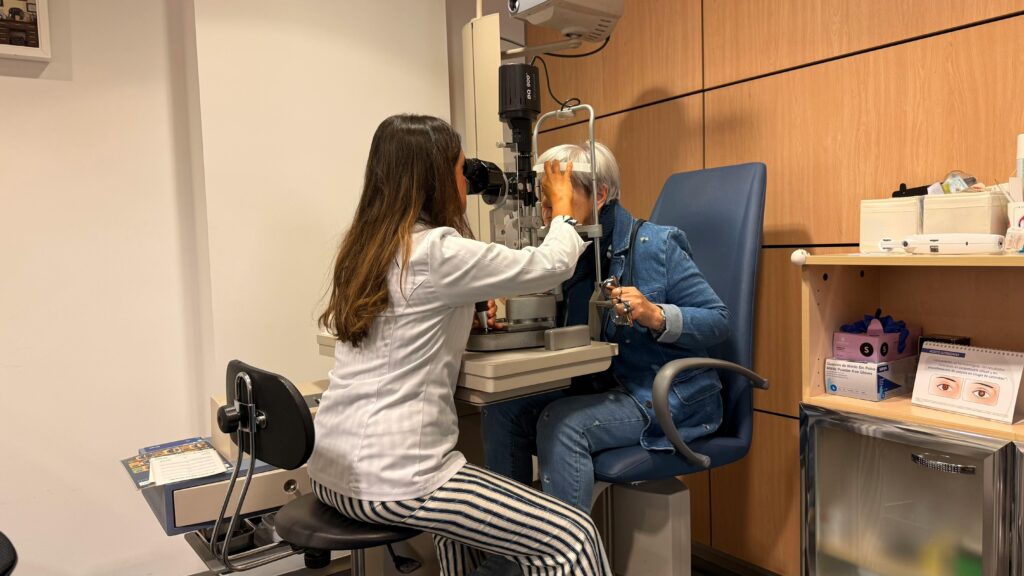
Book that eye exam you’ve been postponing: Regular comprehensive eye exams are the most direct way to catch correctable vision loss early. The American Academy of Ophthalmology recommends all healthy adults get a baseline eye exam with an ophthalmologist by age 40, and seniors over the age of 65 should see an ophthalmologist every one to two years. Conditions like cataracts, glaucoma, and age-related macular degeneration can often be managed or treated effectively when caught early – and that treatment appears to remove the associated dementia risk.
Protect your vascular health broadly: A good rule of thumb from University of Michigan neurologist Dr. Henry Paulson is: “If it’s good for your heart, it’s also good for your brain.” Eating a well-rounded diet full of fruits, vegetables, and healthy fats can help maintain a healthy weight and mitigate the risk of obesity, high blood pressure, high cholesterol, and diabetes, which are known to contribute to dementia in later life. The Mediterranean diet pattern – heavy on vegetables, whole grains, fish, olive oil, and legumes – comes up repeatedly in brain health research as a practical framework that addresses multiple risk factors at once.
Stay connected, curious, and moving: Physical activity, social engagement, and continued cognitive stimulation all feature on the Commission’s recommendation list. Experts recommend adults get 150 minutes of physical activity each week – at least 20 minutes a day. For social and cognitive stimulation, the goal is simply staying engaged: learning new things, spending time with people, and doing activities that require you to actually think. For parents of young kids, this might feel impossible to schedule – but even small, consistent habits add up over years.

Read More: Lifesaving Cholesterol Discovery Could Prevent Heart Disease and Stroke
What This Means for You
The 2024 report of the Lancet Commission on dementia prevention, intervention, and care adds compelling new evidence that untreated vision loss and high LDL cholesterol are risk factors for dementia. Together with the 12 previously identified factors, the full picture shows that close to half of all dementia cases may be preventable or delayable through changes we have the power to make. That does not mean dementia is always avoidable or that any single action is a guarantee – genetics, age, and other non-modifiable factors are still part of the equation. But it does mean the choices you make in your forties have a longer reach than many of us realize.
For anyone in the 25-to-50 age range, the takeaway is practical rather than alarming. Schedule the cholesterol check. Book the eye appointment. Pay attention to the vascular health factors that show up repeatedly on this list – blood pressure, blood sugar, body weight, smoking, physical activity – not because dementia is inevitable, but because addressing them now is one of the more powerful investments you can make in your future self. Dr. Larson notes that for the first time, the report emphasizes that the onset of dementia can be delayed and the duration that people suffer from dementia can be shortened. “From a socioeconomic point of view, these estimates of risk reduction are cost effective. There’s a real reason to believe that if we invest as society and as individuals in ways to reduce our risk, the payoff is worth the cost.” That’s about as clear a reason to act as any research panel has ever given.
This article is for informational purposes only and does not constitute medical advice. Always consult your healthcare provider before making changes to your health regimen.