

Eileen McGill Fox went looking for one answer and got eight she never expected. The Florida school teacher and mother of four had been married for nearly 30 years when she discovered that her husband had been unfaithful. What followed was a medical journey that started with a routine check-up and eventually led to a cancer diagnosis spanning multiple cancer types – a chain of events that has since made her one of the most outspoken patient advocates for HPV awareness in the country.
HPV, or human papillomavirus, is a sexually transmitted virus that most people carry at some point in their lives without ever knowing it. Over time, HPV can cause normal cells to turn into abnormal cells, which can later develop into cancer. The catch is that standard STI (sexually transmitted infection) panels do not routinely test for it, which is exactly how it slipped past Eileen Fox’s first round of health screenings. Understanding that gap is the key to understanding everything that happened next.
Who Is Eileen McGill Fox?
Eileen McGill Fox is a school teacher based in Florida. In her own words: “If it can happen to a married woman of 30 years, then it can happen to anybody.” Fox is now advocating for open conversations about sexual health and HPV to reduce the stigma surrounding these issues. She spent decades building a life around her family and her career – the kind of life most people would describe as ordinary in the best possible way. She was not someone who expected to become a medical case study or a public health figure. But that is exactly what she became.
The story quickly spread to major outlets across the US and internationally, prompting conversations about a virus that most people still do not fully understand.
How Eileen McGill Fox Discovered She Had Cancers After Routine Screening
After learning about her husband’s infidelity, Fox did what many people in her position would do. She went straight to a health clinic to get tested. Fox visited her healthcare clinic for an STI screening and was relieved to learn that she tested negative for syphilis, gonorrhea, and HIV. She thought she was in the clear. Most people would have.
But there was a problem that the standard panel could not detect. About a year later, during a routine Pap smear, Fox found out she had human papillomavirus – an STI that is not screened for in basic STI exams. A Pap smear (also called a Pap test) is a standard check that looks for abnormal cells in and around the cervix, the lower part of the uterus. It is not the same as a targeted HPV test, and the two are not always ordered together. For Fox, the result of that smear changed everything.
The virus put her at high risk for cancers of the cervix, reproductive tissue, and throat. What had started as a health check born out of personal betrayal had now become something far more serious. This is how the Eileen McGill Fox diagnosed with 8 cancers after routine screening story came to be – not through a single dramatic moment, but through a slow, painful chain of medical discoveries that unfolded over several years.
In February 2019, Fox received a diagnosis of one cancer type. Later in 2019, she was also diagnosed with a second cancer. Then in 2023, she was diagnosed with a third. Each diagnosis brought new treatments, new procedures, and new rounds of recovery. Since her diagnoses, Fox has undergone extensive medical treatment, including a hysterectomy, and continues to receive regular cancer care. She also undergoes repeated procedures to remove precancerous cells, a process that is as ongoing as it is physically difficult.
What Is the Connection Between Her Husband’s Infidelity and Her Cancer Diagnosis?
This is the question that sits at the center of her story, and the answer is both medically straightforward and personally devastating. Fox’s husband’s infidelity is understood to be the source of her HPV infection. The virus, once transmitted, embedded itself in her body and began its slow work long before any symptoms appeared.
The connection between the husband infidelity cancer diagnosis is not a matter of stress triggering cancer directly – it is a chain of medical cause and effect. Infidelity introduced HPV. HPV went undetected because standard STI panels do not screen for it. Undetected HPV led to cellular changes across multiple tissue sites. Those cellular changes progressed into cancer. The stress cancer link diagnosis discussion that sometimes surrounds this case is understandable, but the primary driver here is biological: a virus was transmitted, and it was not caught in time.
Approximately 99.7% of cervical cancers are due to untreated or chronic infection with human papillomavirus, a sexually transmitted virus that directly infects the cells of mucosal surfaces, according to a 2025 report published by the Centers for Disease Control and Prevention. That is not a small number. That is essentially every cervical cancer case. High-risk forms of HPV also cause virtually all cases of another cancer type, most cancers affecting the lower digestive tract, and some cancers of the reproductive tissue and throat, according to the National Cancer Institute’s Cancer Trends Progress Report.
It is estimated that by age 50, at least four out of every five women will have HPV at some point in their lives, according to Cancer Health. Most of those infections clear on their own. Many HPV infections resolve within one to two years, but infections that persist for many years increase a person’s risk of developing cancer. Fox was not lucky enough to be in the group whose infection cleared. And she had no idea it was there.
Why the Standard STI Panel Is Not Enough
This is arguably the most important public health lesson buried inside the Eileen McGill Fox’s story. When Fox went for her initial STI test, she was doing the responsible thing. She was tested, she came back negative, and she felt reassured. But the test she received did not include HPV – and that is not unusual.
HPV is an STI that is not screened for in basic STI exams. Most standard sexual health panels check for bacterial infections like syphilis and gonorrhea, and viral infections like HIV. HPV requires either a separate HPV-specific test or is picked up incidentally during a routine Pap smear, as it was for Fox. Cervical cancer screening is key to early detection and prevention, and both Pap smear tests and HPV tests are approved for screening, notes the Cancer Research Institute. But the two tests are not always automatically paired.
For women who have been in long-term monogamous relationships, there can be a false sense of security around sexual health screening. Fox’s case is a reminder that HPV can live quietly in the body for years and may only surface during a routine gynecological appointment. If she had skipped that annual Pap smear, she might not have found out at all – at least not until her cancers had advanced further.
For anyone reading this who has recently experienced a change in relationship circumstances, asking your doctor specifically about HPV testing alongside a standard STI panel is a straightforward step that Fox’s story makes a compelling case for. Regular Pap tests and HPV tests remain important regardless of vaccination status.
Stories like Fox’s are also a reminder of why women share their health experiences publicly – not for attention, but to make sure someone else does not make the same assumptions they did. Much like one woman’s courageous journey after a double mastectomy that resonated with readers for the same reason, Fox’s willingness to speak openly about her body and her health cuts through the silence that often surrounds these topics.
The HPV Vaccine: What Fox Learned Too Late
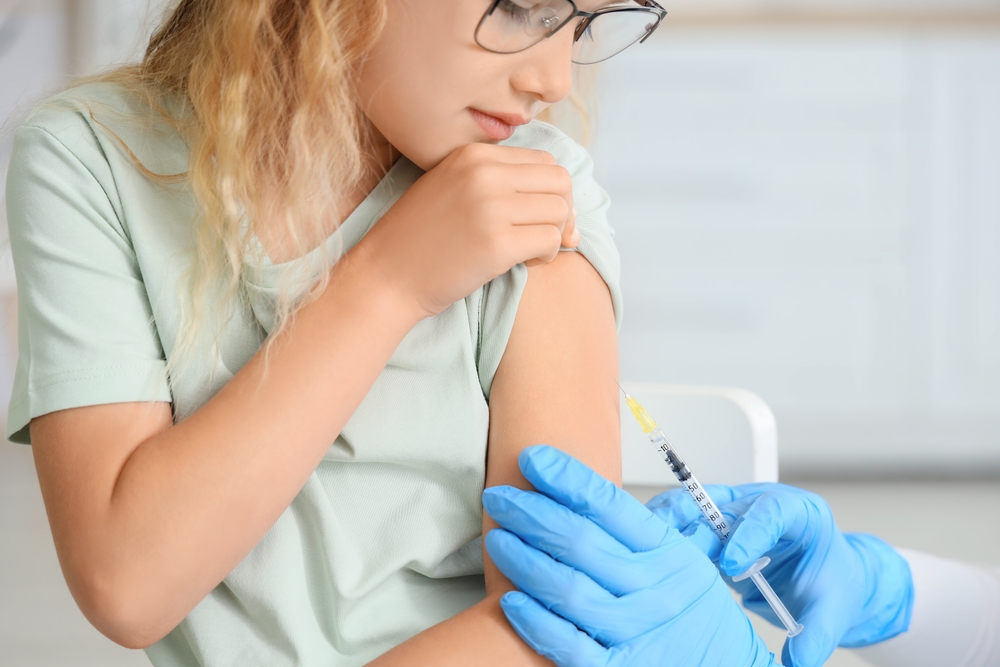
One of the most painful parts of this story is what Fox learned during her treatment: her cancers were likely preventable. Fox learned that HPV, and likely her later cancers, were preventable with the HPV vaccine, which protects against the types of HPV that cause the majority of HPV-related cancers, per the Centers for Disease Control and Prevention (CDC).
Fox later learned that HPV, and many of the cancers linked to it, are largely preventable through vaccination. However, the vaccine became available in 2006, by which time she was already married with children and had not considered getting it. This is the part of the story that keeps many parents up at night – the knowledge that a vaccine exists and that not everyone gets it.
HPV vaccination has the potential to prevent more than 90% of cancers caused by HPV, according to MD Anderson Cancer Center. That figure is remarkable for any vaccine, let alone one that targets cancer. The CDC recommends HPV vaccination for children at age 11 or 12 to protect against HPV infections that can cause some cancers later in life. HPV vaccination can be started as early as age 9 and is recommended through age 26 for those who were not vaccinated earlier.
Some adults aged 27 through 45 who are not already vaccinated may also decide to get the HPV vaccine after speaking with their doctor, as per Cleveland Clinic. So the window is not entirely closed for adults who missed the early recommended age – but a conversation with your doctor is the necessary first step.
The data on the vaccine’s real-world impact is striking. During 2008 to 2022, cervical precancer incidence decreased 79% and higher-grade precancer incidence decreased 80% among screened women aged 20 to 24 years – the age group most likely to have been vaccinated, according to the CDC’s Morbidity and Mortality Weekly Report. Those are not marginal improvements. Those are the numbers behind Fox’s belief that things could have gone differently.
What the Researchers Are Saying
Fox’s case is a personal story, but the medical community has been building context around it for years. Susan Vadaparampil, a researcher at Tampa’s Moffitt Cancer Center who studies vaccine uptake, told the Tampa Bay Times: “If you were in a room full of parents 20-plus years ago and you said, ‘There’s a vaccine that could prevent up to six different types of cancer in your child,’ people would probably be lining up.” She added that uptake has not translated as well as researchers had hoped.
Studies show that only 68% of people in the US are aware of HPV, its relationship to certain cancers, and the availability of vaccines to prevent infection, according to a 2025 analysis published via the CDC’s Preventing Chronic Disease journal. That awareness gap – roughly one in three Americans not fully understanding the HPV-cancer connection – goes a long way toward explaining why vaccination rates have not reached the levels public health officials hoped for.
As the incidence of cervical cancer has declined in the United States due mainly to cervical cancer screening, the incidence of HPV-associated cancers in other areas has been increasing, according to the National Cancer Institute. This underscores a central problem: HPV is not just a cervical cancer issue, and Pap smears alone cannot catch every cancer it causes. Fox’s multiple diagnoses across different sites in her body are a clinical illustration of exactly this point.
Every year in the United States, HPV causes about 36,000 cases of cancer in both men and women, the CDC reports. Fox is one person in that number – one woman whose story has now become part of the broader conversation about what happens when knowledge gaps and missed prevention opportunities intersect with a very common, very persistent virus.
Fox as a Patient Advocate: Removing the Silence
Fox is now advocating for open conversations about sexual health and HPV to reduce the stigma surrounding these issues. She emphasizes the need to employ clear and direct language when discussing preventative care. That is a harder task than it sounds. Many people – including many parents – find it difficult to discuss certain body parts and their associated health risks in plain language. Fox has made it her mission to do exactly that.
Her message, repeated in interviews and on social media, is that silence does not protect anyone. She is sharing her story with the world to make sure others know the risks of HPV and how to prevent them through vaccination, and has since become an advocate for reducing stigma. She wants other women – particularly married women who may have assumed they were not at risk – to take HPV seriously.
The routine cancer screening discovery that changed Fox’s life also gave her a platform she intends to use. She does not frame her story as one of victimhood. She frames it as information that belongs to everyone. When the stress of discovering a partner’s betrayal intersects with a health system that has a documented gap in standard STI screening, the result can be exactly what happened to her. And she believes that knowing this could stop it from happening to someone else.
Read More: Lifesaving Cholesterol Discovery Could Prevent Heart Disease and Stroke
What This Means for You

Fox’s cancer diagnosis carries a clear message that goes well beyond one woman’s story. If you have recently experienced a significant change in your relationship – separation, infidelity, a new partner after years in a monogamous relationship – ask your doctor about a dedicated HPV test, not just a standard STI panel. A negative result on a basic screen is not a complete picture. Anyone with a cervix still needs routine screening to catch cervical cancer in the early stages when it is most treatable, Cleveland Clinic advises – and that holds whether you are vaccinated or not.
For parents, the HPV vaccine conversation is one worth having now, before it becomes urgent. The CDC recommends the HPV vaccine for children at age 11 or 12 to protect against infections that can cause some cancers later in life. Vaccination can be started at age 9 and is recommended through age 26 for those who were not vaccinated earlier. More than 15 years of data show that HPV vaccination provides safe, effective, and long-lasting protection against cancers caused by HPV infections. Fox did not have access to that vaccine at the right time in her life. Your children do. That is not a small thing. That is a cancer-preventing opportunity sitting quietly on the routine pediatric schedule, waiting to be taken.
Fox’s story will not be easy to forget, and it is not meant to be. “If it can happen to a married woman of 30 years, then it can happen to anybody,” she has said – and she is right. The most powerful thing about her courage in speaking out is this: the information she is sharing is also the information that could change an outcome for someone who reads it today.
Disclaimer: This article was created with AI assistance and edited by a human for accuracy and clarity.