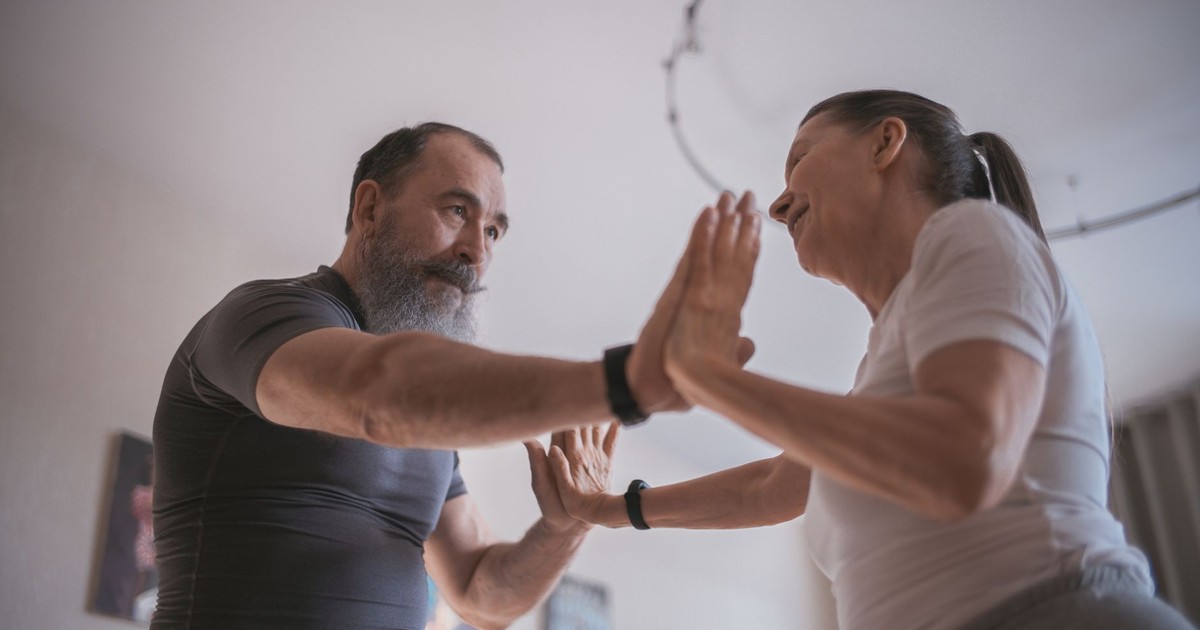

Every neurologist has a list. Every psychologist has a list. What almost never happens is that those two lists have the same thing at the top. Dancing does.
Not yoga, not crossword puzzles, not learning a language, though all of those turn up in the research too. When researchers and clinicians who spend their careers studying how the brain ages sit down and name the single activity that checks every box they care about, dancing is the answer that comes back with striking consistency across fields, decades, and study designs.
What you do with yourself after retirement turns out to be one of the most consequential health decisions you’ll make. Not because being busy is virtuous, but because the brain genuinely needs certain types of input to hold its structure and function. When those inputs stop, decline accelerates in ways that are measurable and, in many cases, preventable. Dancing delivers those inputs all at once, in a form that most people actually want to do twice a week.
The Three Boxes It Has to Check
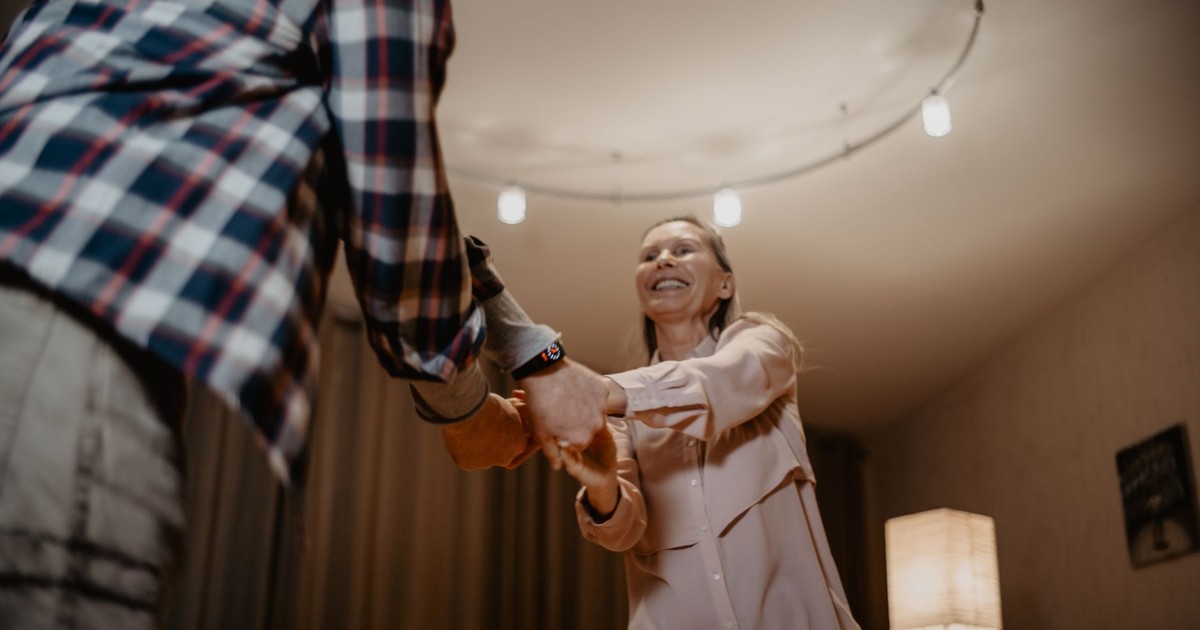
“The best strategy for maintaining good brain health is to combine physical exercise, mental challenges and social interactions,” according to Dr. Eva Feldman, a neurologist and director of the ALS Center of Excellence at University of Michigan Health. Physical, cognitive, social. Most activities check one, maybe two. A brisk walk checks physical and sometimes social. A crossword checks cognitive. Of all the hobbies that experts consistently point to as meeting all three criteria, dancing and joining a walking club lead the list. But dancing, in the research, is in a different category from walking. It addresses all three boxes at once rather than in sequence.
Hobbies that involve physical exercise increase blood flow to the brain, stimulate the birth of new hippocampal neurons (the hippocampus is the brain’s primary memory center), and strengthen the prefrontal cortex, which governs decision-making and impulse control. They also elevate mood and reduce stress hormones, which further protect the brain across years of regular practice. That is what aerobic exercise alone delivers. Add the cognitive load of learning and executing choreography, reading a partner’s cues, adjusting to live music, and remembering sequences, and you’ve added a second layer of neurological work that is qualitatively different from anything you can achieve on a treadmill.
Why Dancing Beats Everything Else on the List

The most widely cited study on this came from the Einstein Aging Study, published in the New England Journal of Medicine in 2003, which tracked participants’ participation in leisure activities, evaluating everything from reading and crossword puzzles to swimming, tennis, and dancing. Of all the physical activities studied, dancing was the only one that significantly reduced the risk of dementia. Regular dancing reduced that risk by 76 percent, more than twice as much as reading, which lowered risk by 35 percent.
That number stops people. Seventy-six percent is not a marginal effect. The reason dancing outperformed every other activity researchers measured comes down to what scientists call “dual-task” engagement. Unlike walking on a treadmill or swimming laps, dancing requires participants to simultaneously process music, coordinate complex movements, remember choreography, make rapid decisions about spatial positioning, and interact socially with partners or a group. That combination of physical and cognitive demands engages multiple brain regions at once and creates an unusually powerful stimulus for neuroplasticity, the brain’s ability to form new neural pathways and strengthen existing connections.
Dancing also “reduces the risk for developing depression, reduces dementia risk in older adults, and can be an effective treatment for people who already have a mental health condition,” according to Vonetta Dotson, Ph.D., professor of psychology and gerontology at Georgia State University. Brain health and mental health are not two separate problems requiring two separate solutions. Dancing addresses both through one activity.
What the Newest Research Found
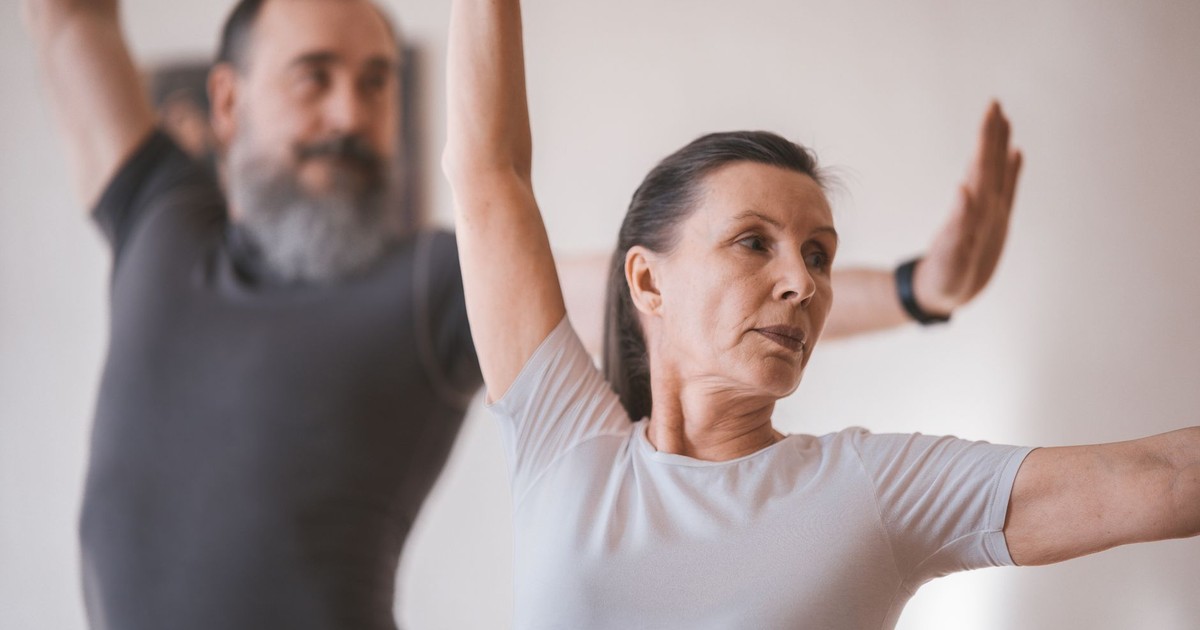
A 2025 study published in Innovation in Aging explored whether structured social dancing could biologically influence subjective cognitive decline (SCD), an early stage of cognitive vulnerability in which individuals feel their memory is worsening even before measurable impairment registers on clinical tests. The study was the first to demonstrate that dance engagement increases oxytocin levels, spontaneous neural activity in the medial orbitofrontal cortex (a brain region involved in emotional processing and decision-making), and resting-state functional connectivity between key brain networks. Dancing physically changed how participants’ brains were communicating with themselves, in a region central to both emotional regulation and cognitive function.
SCD, that sense that things aren’t quite as sharp as they used to be, even when tests say you’re fine, is now recognized as a meaningful early warning. If an intervention can act on the brain at that stage, before measurable impairment develops, the implications for a rapidly aging population are considerable. And this particular intervention requires no prescription, no clinic, and no equipment beyond shoes that let you move.
The Psychological Case Is Just As Strong

The neurological benefits tend to get the headline, but the psychological literature on dancing in later life is equally compelling. Neuroscientists Julia F. Christensen and Dong-Seon Chang, authors of Dancing Is the Best Medicine: The Science of How Moving to a Beat Is Good for Body, Brain, and Soul, found that in study after study tracking participants over 10 to 15 years, people with a dancing hobby had less risk of developing heart disease or dementia. Christensen, a former professional dancer turned researcher, has argued in interviews that music-driven movement activates emotional memory systems that other forms of exercise simply cannot reach.
The social component does work that is harder to measure but well-documented. Socialization is valuable because humans have an inherent need for community and interaction, and research consistently shows that the more socially connected you are, the lower your risk of dementia and cognitive decline. A partner dance class, a salsa night at the community center, a weekly ballroom session with people you come to know by their spin technique and their coffee order – that is not a supplement to the brain health benefits. It is inseparable from them. Isolation accelerates cognitive decline in ways that are as measurable as physical inactivity, and dancing addresses both simultaneously.
The psychological lift of dancing also connects to something retirement often disrupts without anyone naming it directly. Work, whatever its frustrations, provides structure, identity, regular social contact, and a sense of competence. When it ends, those things don’t automatically transfer elsewhere. Learning to dance, badly at first, better over months, reintroduces all of them. You have somewhere to be on Tuesday. You have a skill you’re building. You have people who notice when you get something right.
The “I’m Not a Dancer” Objection
The research does not care about your opinion of your own coordination. Dancing offers one of the most complete brain workouts available because it combines aerobic exercise, memory, coordination, rhythm, and social engagement, activating multiple brain systems at once, and none of that requires you to be good at it in any public or performative sense. Ballroom studios run beginner classes specifically for adults who have never danced. Community centers run line dancing sessions where nobody is watching anyone else. Zumba classes are full of people who chose them precisely because the format is too chaotic to feel embarrassed in. The dose is what matters, not the elegance.
For those with physical limitations, the form of dancing can adapt while the core benefits remain. Chair-based dance programs exist and have their own body of supporting research. Gentle partner dancing at a social pace still delivers the cognitive load of memory, rhythm, and social coordination. What the research rewards is not athletic performance but sustained, regular engagement with something that demands a little more of you than you could do automatically.
If you’re thinking about happiness in the second half of life, the research on what actually moves the needle in the years after 50 keeps returning to the same cluster of factors: purpose, connection, physical engagement, and learning. Dancing is possibly the only activity that delivers all four in one session.
Getting Started Without Overthinking It
The barrier for most people is not physical capacity or even shyness. It’s the moment of walking into a room of strangers and feeling like the one who doesn’t know what they’re doing. That feeling lasts approximately one class. Going back for the second one is the decision with the real neurological weight behind it. Experts consistently advise starting small, even ten minutes a day at first, and pairing a new activity with something already built into the daily routine, so the habit has something to attach to.
Ballroom dance studios often offer introductory packages specifically designed for adults starting late. Community recreation centers typically run group classes in swing, salsa, line dancing, and folk dance at costs far below private instruction. Online platforms have expanded access enormously for anyone who wants to start at home before committing to a class. The format is less important than the consistency and the social element, if at all possible. Dancing alone to YouTube has cognitive value. Dancing with other people has all of that plus the social layer, which is where a significant portion of the brain-protective benefit lives.
What Nobody Says Out Loud
Dancing will not stop the clock. It will not guarantee that you reach 90 with a perfectly intact memory and zero cognitive change. What the research shows, across decades, across disciplines, across study designs, is that it consistently reduces risk, slows decline, and protects function in ways that no other single activity matches. That is not nothing. That is, in fact, quite a lot for something that also happens to be enjoyable.
Retirement presents a genuine neurological problem that nobody frames that way. The structure, stimulation, challenge, and social contact that work provides, all of which protect the brain, disappear on a specific date, and the brain is left to find those things elsewhere or decline without them. Most retirement advice is about finances or travel or how to feel good about having free time. The research on what the brain actually needs in those years points somewhere more specific: regular, demanding, social, physically engaged activity. Dancing is just the thing that happens to do all of that better than anything else on the list.
You don’t have to love it immediately. You just have to try it more than once.
Disclaimer: This information is not intended to be a substitute for professional medical advice, diagnosis, or treatment and is for information only. Always seek the advice of your physician or another qualified health provider with any questions about your medical condition and/or current medication. Do not disregard professional medical advice or delay seeking advice or treatment because of something you have read here.
AI Disclaimer: This article was created with the assistance of AI tools and reviewed by a human editor.