

Nobody really says it out loud. Not at brunch, not in the early weeks of dating, not even to close friends when everyone’s being honest for once. The qualities that actually matter to women in a relationship tend to stay unspoken, partly because they’re hard to articulate and partly because there’s a long, undignified history of women being told their standards are too high the moment they name them. So instead, we talk about chemistry, or compatibility, or some vague sense of “connection” – and the real list stays in our heads.
Attraction and long-term compatibility are both more layered than a checklist. But that doesn’t mean the qualities themselves are vague. Research – and honestly, just paying attention – makes them pretty clear.
What follows is an honest accounting of qualities women value more than they typically come out and say. Not “good communication” in the abstract. The specific, real versions of these things – what they actually look like when present and what it costs when they’re absent.
1. Emotional Availability, Not Just Emotional Expression
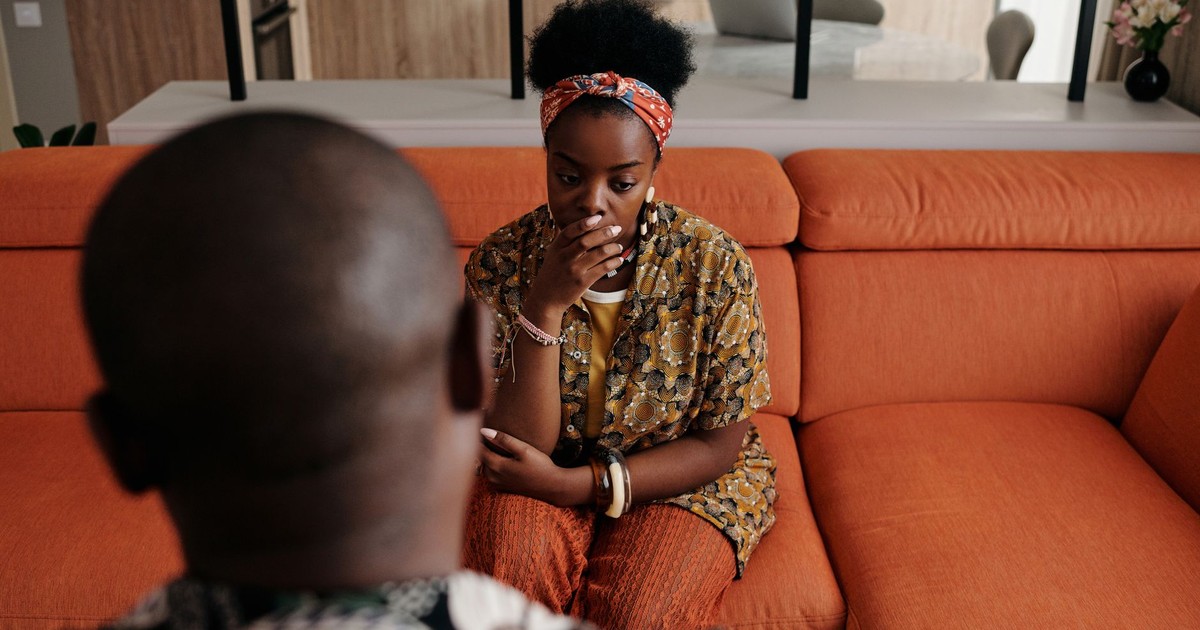
Emotional openness that looks right on paper can deliver almost nothing in practice. A man can talk about his feelings at length during a therapy-inflected first date and still disappear the moment something difficult needs to be held together. Emotional availability is different. It means staying present when someone else is struggling – not retreating, not fixing, not checking out until the temperature drops.
In an August 2025 survey of over 6,000 global daters conducted by Hinge Labs, women’s top traits in a “high-value” partner were emotional availability (35%), respect for emotional needs (25%), and consistent communication (22%). These numbers are striking not because they’re surprising but because they make explicit what women have been trying to communicate for years. Emotional availability ranked higher than looks, income, ambition, and almost everything else men tend to optimize for.
The distinction matters because a partner who expresses emotions isn’t necessarily one who can hold yours. Availability means the lights are on. It means when you come home from a bad day, or you’re worried about something that feels embarrassing to admit, or you need someone to stay in the discomfort with you rather than hand you a solution – they’re there. Its absence is what ends long relationships.
2. Consistent Follow-Through

The bar is genuinely low, and that is exactly the problem. Do what you said you would do, when you said you would do it. And yet consistent follow-through – actual, boring, unannounced reliability – is one of the qualities women cite privately as most decisive, and one of the hardest to find.
According to the same Hinge Labs survey, 72% of women across sexualities say they prefer effort over income, and 84% value well-planned dates more than expensive ones. The word “well-planned” is doing a lot of work there. It’s not about money or grand gestures. It’s about someone who made a decision and followed through on it. Women may not say “I want a reliable partner” on a date, but the first time someone cancels without notice, it registers deeply.
Reliability compounds. A partner who follows through on small things – arriving on time, remembering what you said two weeks ago, doing the thing they offered to do – builds a particular kind of trust that grand gestures cannot replicate. It signals that you are real to them, not abstract. That you exist in their life when you’re not physically standing in front of them.
3. Genuine Kindness (Which Is Not the Same as Being Nice)

Nice is easy. Nice is holding a door. Kind is something that costs something. Kindness toward people who can do nothing for you, kindness when no one’s watching, kindness that doesn’t evaporate the moment there’s an audience for something sharper – women clock the difference fast.
Research published in Evolutionary Psychology determined that kindness was the most important trait in a potential partner, with both men and women most valuing compassion – specifically, they prefer partners who are kind and understanding. The same research found that women value intelligence in their male romantic partners more than men value intelligence in female romantic partners, and that women were also more likely to view kind men as intelligent.
Kindness reads as intelligence to women because it requires paying attention, restraint, and social awareness. Snapping at a waiter, steamrolling a conversation, treating strangers as inconveniences – all of these register, whether or not the person doing it notices they’re being observed. The qualities women value most are the ones that cost something to demonstrate, not the ones that come free when conditions are comfortable.
4. A Sense of Humor That Goes Both Ways

The joke that connects perfectly when a man delivers it but is met with a long silence when a woman tells the same one is its own genre of experience. Shared humor – the kind where both people are funny to each other, where neither person is the permanent audience – is something entirely different from the ability to make someone laugh.
An Ipsos poll conducted in May 2025 found that women aged 16-24 ranked humor (60%) and kindness (53%) as their top priorities in a partner, placing both well above physical attractiveness or financial status. Research has clarified that the strongest relationships formed when both partners laughed together, suggesting mutual humor compatibility is key – not a performer and a crowd, but two people who find the world funny in the same directions.
Women want a partner who thinks they are funny. Not in a performative “yes, honey” way, but genuinely – someone who gets the joke before it’s finished, who plays back, who makes the grocery store somehow twenty minutes more entertaining than it needed to be. That reciprocity signals intelligence, attentiveness, and the particular safety of being truly known.
5. Emotional Stability Without Emotional Flatness
Emotional stability is the capacity to be affected by hard things without becoming destabilizing to everyone around you. It’s the difference between feeling the difficulty and becoming the crisis. It is not a man who never gets upset because he has outsourced all difficult feelings to the woman in his life to manage.
Research from 2025 found that 59% of women are now placing greater value on stability, seeking partners who are emotionally consistent, reliable, and have clear life goals, with 27% pushing these practical conversations to happen earlier in relationships than before. The timeline shift is telling. Women are no longer waiting until deep into a relationship to assess whether someone can hold it together under pressure. They’re looking for evidence earlier, because experience has taught them the cost of finding out late.
Emotional stability also means a partner who can handle a conflict without the whole thing becoming about managing his feelings. Who can hear something difficult without shutting down or escalating. Who can have an off week without the relationship becoming the casualty.
6. Intellectual Curiosity

Not a degree. Not a specific field of knowledge. Intellectual curiosity – the instinct to be genuinely interested in things, to follow a question past its obvious answer, to still be reading about something a week after it first came up. A partner who is curious about the world is a partner who is unlikely to run out of things to say, who approaches problems with openness, and who tends to be curious about the people around them too.
Research from the Institute for Family Studies, drawing on a 2025 YouGov survey of 3,000 Gen Z respondents, found that young women’s top priorities in a partner include kindness, emotional stability, and alignment on life goals. Intellectual compatibility runs underneath several of these priorities: wanting a partner with clear life goals and the emotional vocabulary to discuss them honestly is wanting someone who thinks.
The practical signal for intellectual curiosity is surprisingly easy to spot: someone who asks follow-up questions. Not to be polite, but because they actually want to know the answer. Someone who says “I never thought about it that way” and means it. Someone who reads, or listens, or watches things and then has actual opinions about them. It’s not complicated, but its presence changes the entire texture of a relationship.
7. Financial Responsibility Over Financial Success

This one gets misread constantly. Women do not want a rich partner as a category. Women want a partner whose relationship with money does not create chaos. These are different things in ways that become extremely apparent around the first shared lease, the first medical bill, the first conversation about whether you can actually afford that trip.
According to the 2025 Hinge Labs survey, 78% of heterosexual women said financial stability is important – but not because they expect luxury. Financial stability is about someone who pays their bills, has a plan, doesn’t spend money they don’t have on things they don’t need to impress people they don’t particularly like. It’s a proxy for self-regulation, for long-term thinking, for whether someone can be trusted with a shared life rather than just an exciting present.
The shift toward valuing overall reliability over status has been documented across multiple studies over the past decade. What women describe wanting is someone with a trajectory, not a number. Someone building something, not performing a level of success they haven’t actually reached. The specific number matters far less than whether the person in question has a functional relationship with reality.
8. Respect That Doesn’t Require an Audience

Public respect is easy. Private respect is the one that counts. The way someone speaks about you when you’re not in the room, whether your opinions change the outcome of decisions that affect you both, whether your time is treated as though it has the same value as theirs – these are the versions of respect that actually determine what a relationship feels like from the inside.
Women often describe this as being “taken seriously.” Not agreed with on everything, but genuinely considered. A partner who listens not to respond but to understand. Who doesn’t interrupt, or explain something back to you that you just said, or default to a dismissive “you’re being too sensitive” when something doesn’t register the way it should. Respect in its most everyday form is the decision to treat someone as a person with a full inner life rather than as a supporting character in yours.
Research from the Institute for Family Studies found that young women are notably more selective than young men across most qualities, with kindness and respect among the traits showing the largest gender gaps in stated priorities.
9. Self-Awareness, Even When It’s Inconvenient

The kind of self-awareness that actually matters in a relationship is the kind that surfaces during an argument. Not “I know I can be a lot sometimes” as a preemptive disclaimer that protects against accountability, but genuine reckoning with how one’s own behavior affects other people. A partner who can say “I was wrong” without it requiring a full trauma response from everyone in the vicinity.
Self-awareness also means someone who has done at least some examination of their patterns – who knows where their defensiveness comes from, who can see when they’re being unfair, who doesn’t require the other person to do all the emotional archaeology on their behalf. This is not about perfection. A person who is self-aware about their flaws and actively working with them is a very different partner than someone who has zero flaws as far as they’re concerned and is simply surrounded by people who keep misunderstanding them.
Women rarely list self-awareness on a first date, but its absence tends to become the central problem in most of the relationships they describe as draining.
10. Presence – Not Just Physical Proximity

Sharing space is not the same as being present. Anyone who has sat across from someone scrolling their phone during dinner already knows this in their bones. Presence means attention. Full, unperformed attention that makes the other person feel like they are the most interesting thing in the room, not because of effort, but because they genuinely are.
A 2015 study by Jeffrey Hall at the University of Kansas, published in Evolutionary Psychology, found that men’s humor production and women’s responsive laughter were both associated with women’s dating interest – and that shared engagement between two people was a strong signal of mutual connection. Connection is made in the moments of actual attention, not in the cumulative hours of physical nearness.
In an era of constant distraction, real presence is uncommon enough to be remarkable. Women who have been in relationships where the lights were mostly off – where presence was technically there but attention was always elsewhere – tend to identify full presence as something they want fiercely and probably undervalued for too long.
11. Shared Values, Not Just Shared Interests

Both people liking hiking or true crime podcasts is pleasant but ultimately does not predict whether a relationship survives the first serious disagreement about money, or children, or what home means, or how much effort goes into maintaining a friendship with your respective families. Shared interests are a beginning. Shared values are the architecture.
Research published in 2025 found that communication, respect, and emotional vulnerability continue to be the most attractive qualities partners can demonstrate, with 72% of singles globally reporting they are looking for a long-term partner in the next year. Values alignment means: do you both believe the same things about fairness? About how you treat people with less power? About what a Sunday morning should feel like? About what you owe each other?
Values alignment is the difference between two people building something together and two people tolerating each other’s vision of a life. It’s also one of the things that’s extremely difficult to assess early and almost impossible to ignore late. Women, increasingly, are trying to assess it earlier – which is why conversations that used to happen at the six-month mark are now happening in the first few weeks.
12. The Willingness to Be Vulnerable Without Making It a Performance

Vulnerability has had a rebranding, and some of the new model is less useful than the original. A man who performs vulnerability – who has learned that it’s attractive and now deploys it strategically, who cries on cue and then stonewalls when an actual rupture needs attending to – is not the same as a man who is genuinely capable of being uncertain, scared, or wrong out loud.
Real vulnerability is inconvenient. It doesn’t always happen at emotionally legible moments. It’s the admission that something hurt, made quietly and without a soundtrack. It’s saying “I don’t know what I’m doing here” about something that genuinely has stakes. It’s the thing that makes another person feel they are allowed to be imperfect too, because the standard isn’t performance – it’s honesty.
Women tend to describe this quality as being able to “be real” with a partner, which sounds simple until you’re in a relationship with someone who cannot do it. The absence of genuine vulnerability usually means one person carries more of the emotional reality of the relationship than the other, and that imbalance has a long and well-documented history of exhausting the person doing the carrying.
13. Ambition That Makes Room for Someone Else’s

Ambition in a partner is something women frequently say they want and frequently experience as the thing that leaves them last. Not because ambition is the problem, but because a certain kind of ambition treats everything outside its own trajectory as a logistical detail – including the relationship, including the other person’s goals, including the life that was supposed to be shared rather than managed around the schedule of someone more important.
The ambition women consistently describe valuing is directional and self-aware: a partner who is building something and curious about what the other person is building too. Who doesn’t need their path to be the priority path. Women who were surveyed about what they wanted in a partner most frequently listed kindness, emotional intelligence, shared values, ambition, and a willingness to commit to an equal relationship – and the phrase used most often was looking for someone capable of “adding to” or “enhancing” their life, meaning someone self-sufficient who adds something real, rather than requiring the relationship to be constructed around them.
Ambition that makes room is the kind that leaves space on the calendar, that celebrates someone else’s good news without making it about competition, that wants the relationship to go somewhere too. It’s also, not coincidentally, the kind that makes someone genuinely interesting to be with rather than impressive to mention.
Read More: A Study Suggests Women Who Date Younger Men Are Happier in Their Relationships
What This List Is Really About

Most of these thirteen things share a common thread: they are qualities that make a person feel like they exist, fully, in someone else’s life. Seen, taken seriously, attended to, known. Not as an idea of a person or a role to be filled, but as a specific human being with a specific inner world that is worth the attention.
None of these are unreasonable. None of them require someone extraordinary. They require someone who is paying attention, who has done at least some self-examination, who has decided that a relationship is something to be invested in rather than something to simply have. Most of it comes down to the same thing stated thirteen ways: be present, be real, be consistent. The qualities women value most are, at their core, just evidence that the other person is actually there.
What tends to go unspoken is not the list itself but the exhaustion of having wanted these things for a long time and often not found them, and of having been told in various ways that this meant the wanting was the problem. It wasn’t. It isn’t.
Disclaimer: This information is not intended to be a substitute for professional medical advice, diagnosis, or treatment and is for information only. Always seek the advice of your physician or another qualified health provider with any questions about your medical condition and/or current medication. Do not disregard professional medical advice or delay seeking advice or treatment because of something you have read here.
AI Disclaimer: This article was created with the assistance of AI tools and reviewed by a human editor.