

Nobody warns you that being in the same room as a neurodivergent person is a little like being observed. Not in a threatening way – more in the way a room feels different when someone in it is actually paying attention. While everyone else is nodding along or planning what they’re going to say next, the neurodivergent brain is cataloguing: the slight tension in someone’s jaw, the hum from the fluorescent light nobody else seems to register, the way the conversation changed tempo three exchanges ago. By the time anyone else notices something is off, the person with ADHD or autism has already filed four potential explanations and quietly ranked them.
This is not a superpower narrative, and it’s not a deficit one either. The neurodivergent brain processes the world through different channels – sensory, cognitive, emotional – and one of the most consistent findings in current research is that what looks like inattention from the outside is often the opposite. It’s a nervous system that never fully stops taking in data. The cost of that is real. So is what it picks up.
Here are seven things people with neurodivergent traits notice without anyone saying a word, and what the research behind those observations actually looks like.
1. The Specific Pitch of a Sound Nobody Else Reacted To

Before a neurodivergent person can engage in a room, they have already catalogued its acoustic texture. The refrigerator hum. The air conditioning register on the ceiling. The ambient noise that others tune out without noticing. These are not background noise to an autistic brain – they are foreground noise competing for attention with everything else.
Autistic people often report heightened sensitivity to sound, and a 2025 Scientific Reports study confirmed that auditory environments have a measurable indirect effect on quality of life, across all domains of autistic traits measured. What the study captured was not that sound is simply unpleasant – it’s that the architecture of everyday sound environments is genuinely different for an autistic person than it is for a neurotypical one. The hum others don’t consciously register is a sound they are actively working to filter.
This is why an autistic person might notice a change in ambient sound before knowing what changed, or identify a sound source in a building with the specificity of someone who has been tracking it the whole time. They have been. That precision comes from a nervous system that was never able to stop listening in the first place.
2. When Someone’s Tone Doesn’t Match Their Words

The gap between what someone says and how they say it is one of the most information-rich signals in any conversation – and it’s one that neurodivergent people often pick up on with unusual accuracy, even when they cannot always name what they noticed.
Differences in social behaviour are common in people with neurodevelopmental conditions, and a 2025 study published in BJPsych Open challenged the long-standing assumption that these differences reflect difficulty with social cognition. The more current framing, backed by this and other recent work, is that neurodivergent people often read social information differently – not less – but through a different channel. The difficulty is frequently not with perception, but with the real-time processing demands of masking, maintaining expected eye contact, and tracking the conversation simultaneously.
Someone with autism or ADHD can hear “I’m fine” and register every auditory quality that suggests it isn’t fine – the clipped pacing, the dropped register at the end of the sentence, the absence of the usual warmth. They may not volunteer that observation, partly because experience has taught them that pointing it out rarely goes as well as noticing it did. But they noticed.
3. A Change in Routine Before Anyone Announced It

Predictability is not just a preference for many neurodivergent people – it’s a functional requirement for the kind of cognitive load management that lets them operate in environments that were not designed for their nervous systems. The flip side of that reliance on routine is a finely calibrated sensitivity to when something has deviated from it.
A 2025 paper in Explorations in Neuroprotective Therapy proposed that neurodivergent traits can be understood as adaptive responses to environments that exceed nervous-system thresholds – drawing on cognitive ecology and sensory neuroscience to frame what looks like rigidity as a form of environmental attunement. The need for predictability, through this lens, is the brain’s way of conserving processing capacity for incoming sensory and social demands that neurotypical environments generate constantly.
This attunement makes neurodivergent people remarkably fast at detecting breaks in pattern. The meeting that usually starts at nine that starts at nine-fifteen. The person who normally responds immediately who took two hours. The chair that’s been moved. These are not trivial observations – they are the output of a brain that monitors its environment for variance because variance costs more when your baseline processing load is already high.
4. The Sensory Profile of a New Space, Immediately
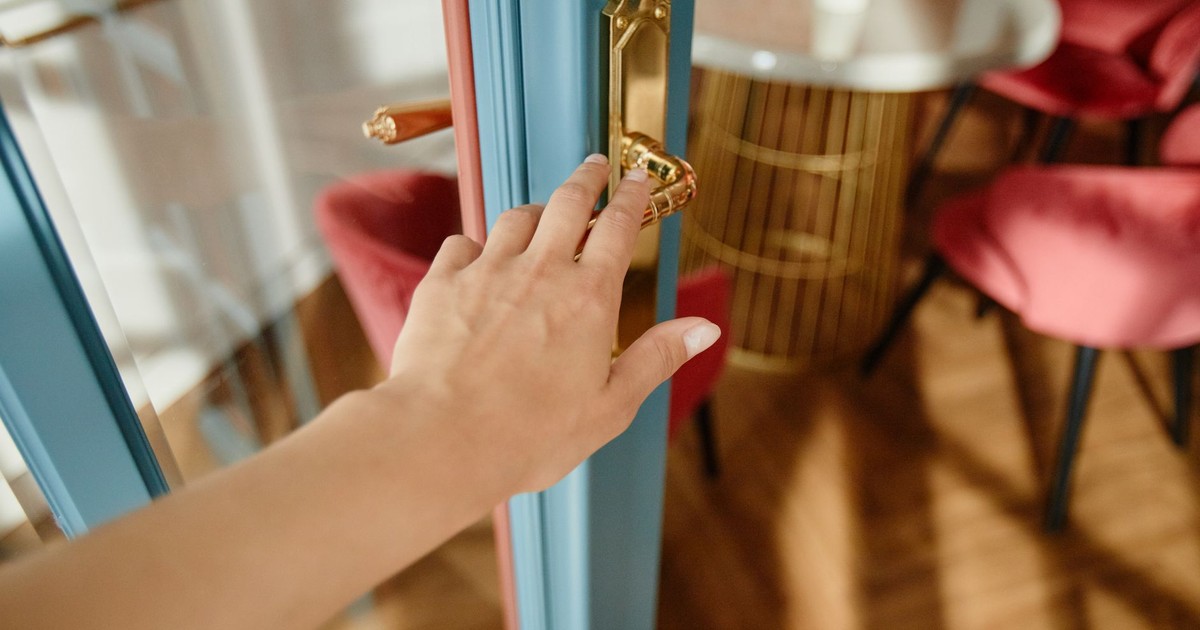
Walk into a new room with someone who has autism or sensory processing differences common in ADHD, and while you are deciding where to sit, they are already running an inventory. Lighting temperature. Fabric texture on the chairs. Whether there is a smell nobody introduced. How close the tables are to each other. Whether the music in the background is at a frequency that is going to make the next hour harder.
Autistic people can experience both hypersensitivity and hyposensitivity to a wide range of stimuli – most experience some combination of both – including sensitivity to bright lights or certain light wavelengths, sounds, smells, textures, and tastes. The same is true for many people with ADHD. A 2025 meta-analysis in JAACAP found that people with ADHD showed a ninefold increased risk of hypersensitivity compared to controls, with a person potentially being hypersensitive to auditory stimuli and hyposensitive to tactile input simultaneously – sensory profiles showing distinct combinations across different modalities.
None of this is an act of anxious scanning. It’s the nervous system doing what it does – taking in more of the physical room than most people around it. The person who says “something smells different in here” thirty seconds after arriving is not being dramatic. They are reporting accurately.
5. The Invisible Tension Between Two People in the Room

Group dynamics register differently for a neurodivergent person than they do for most. Not always more accurately in the traditional social-script sense, but at a different resolution. The patterns that other people process intuitively and subconsciously, a neurodivergent person is often processing analytically – watching for data points and building a model, rather than reading the room through the ambient social frequency everyone else tunes into automatically.
Research on prefrontal cortex function in ADHD documents measurable differences in how the brain regulates attention and filters incoming information. Rather than narrowing focus, the ADHD brain tends to scan its environment broadly, picking up anomalies and drawing connections across information that other minds treat as unrelated. That environmental scanning doesn’t switch off when the stimulus is social. Two people in a room who are being polite but are in the middle of an unresolved argument are still running behavioral patterns – slightly more formal with each other, slightly less likely to make eye contact, slightly more careful with word choice. A neurodivergent person tracking those anomalies will feel the tension in the room before anyone names it.
This can be a burden as often as it is useful. Knowing something is wrong without being able to verify it, and without a script for raising it, is not a comfortable place to sit for very long.
6. When Someone Is Masking – Because They Do It Too

Masking, for neurodivergent people, is the practice of suppressing or modifying natural behaviors to pass as neurotypical in social settings. It is exhausting, it is pervasive, and people who do it every day develop a recognition for it in others that has a specific quality – less like observation, more like fluency.
Someone who has spent years learning to mirror eye contact, control stim behaviors, and pace their speech for a neurotypical audience knows what that performance looks like from the inside. That knowledge translates into a particular sharpness when they encounter someone else doing the same thing – the slightly too-careful stillness, the practiced laugh, the answers that are technically responsive but just a beat more considered than the question warranted. A significant number of parents discover their own potential neurodivergence while researching a child’s diagnosis – because the traits that look one way in a child can look very different in an adult who has had decades to build workarounds.
The recognition is often mutual. Two people who are both masking in the same room can clock each other long before they’ve had a real conversation – a recognition that doesn’t quite fit into language, but that both parties understand clearly.
7. Details That Everyone Else Already Stopped Noticing
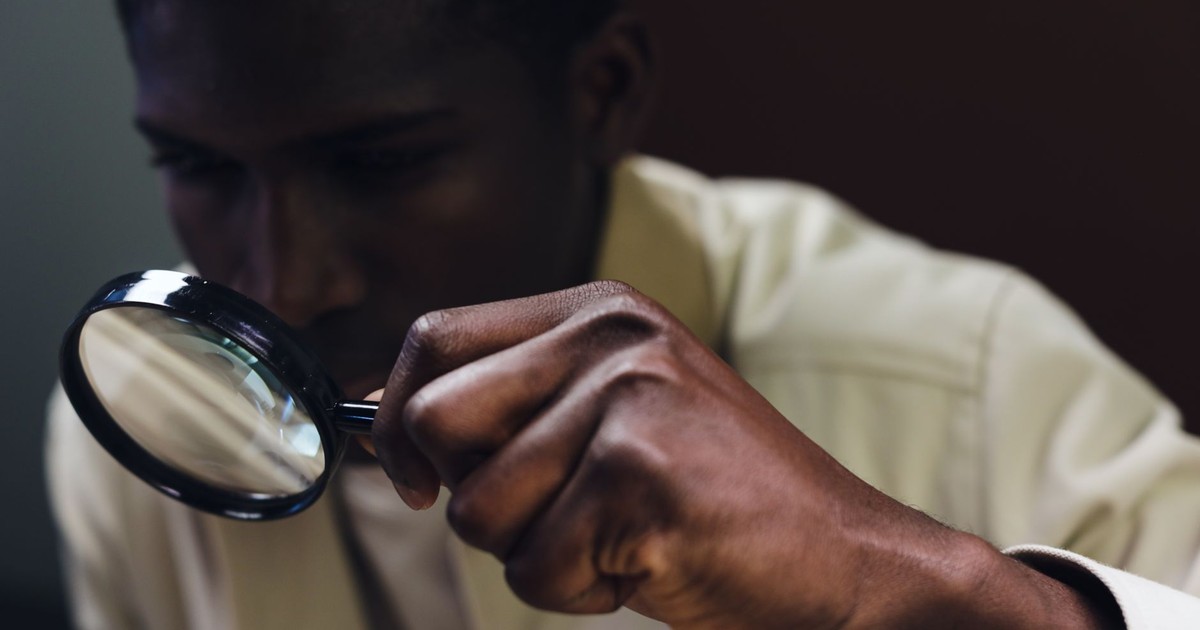
There’s a specific quality to the neurodivergent relationship with physical and informational detail: the brain doesn’t always apply the same automatic filtering that neurotypical brains use to decide what matters and what doesn’t. The result is a person who arrives at a dinner party and notices the picture frame that’s been rehung at a slightly different angle, the new dish soap in the bathroom, the crack in the ceiling that’s grown three inches. Not because they are looking for these things. Because the filter that would have discarded that information was set differently.
Research links ADHD to higher scores on certain creative and associative thinking tasks, with the ADHD brain’s default mode network remaining active during tasks that typically suppress it in neurotypical brains – functioning as an environmental scanning system that operates even when the task doesn’t require it. That default mode network activity is part of what makes it impossible to walk into a room and not absorb its details. It is also what makes it hard to stop.
For the people around them, this often reads as distraction or hyperfocus – and it can be both. But it’s also a genuinely different relationship with the environment: one where the detail that everyone else already filed under “irrelevant” is still available, still present, still part of the picture.
What This Is Really About

None of the seven things on this list are magic. They are not the product of some compensatory gift that balances out the documented difficulties neurodivergent people face in daily life, at work, in relationships, and in healthcare systems that still frequently miss them – particularly women, who are diagnosed later and masked more thoroughly than their male counterparts. These observations are the byproduct of a nervous system that processes the world at a different volume setting, with different filters, and through different cognitive channels.
The assumption behind “they didn’t notice” deserves questioning. The person who was diagnosed late, or who hasn’t been diagnosed at all, who seemed checked out at the family dinner or the meeting or the party: they were not, in all likelihood, not paying attention. They were often paying a different kind of attention, one that picked up the things nobody said out loud. Whether they could do anything useful with that information, given everything else their brain was managing at the same time, is a separate question entirely.
The neurodivergent experience of a room, a conversation, or a relationship is not a diminished version of the neurotypical one. It is a different one – higher in some frequencies, lower in others, and in a constant state of processing that most people around them cannot see and rarely think to ask about. The gap between what is noticed and what is said is not indifference. It is usually the opposite.
Disclaimer: This information is not intended to be a substitute for professional medical advice, diagnosis, or treatment and is for information only. Always seek the advice of your physician or another qualified health provider with any questions about your medical condition and/or current medication. Do not disregard professional medical advice or delay seeking advice or treatment because of something you have read here.
AI Disclaimer: This article was created with the assistance of AI tools and reviewed by a human editor.