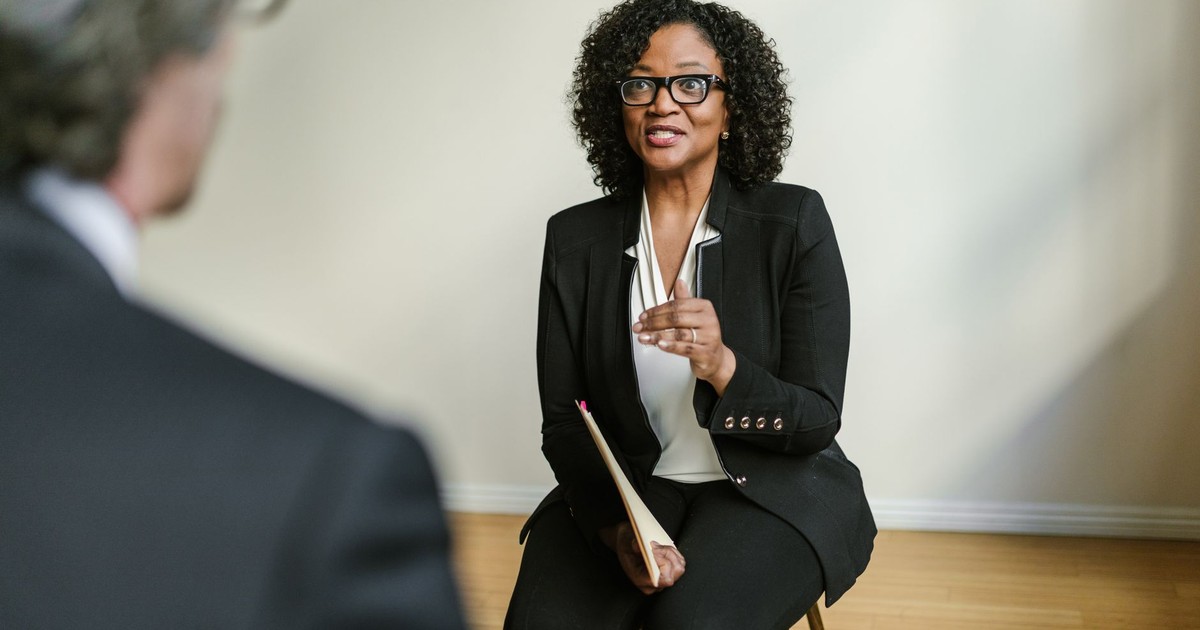

The conversation about what women earn versus what they’re owed has been going on for decades, and yet here we are in 2026 still having it. The number hasn’t moved much. The explanations keep shifting. And somewhere along the way, the narrative settled on a comfortable villain: women themselves, who supposedly just don’t ask.
If only they’d push a little harder, negotiate a little smarter, the story went, the gap would close. It turns out that story was always a little too convenient for the people who had no intention of paying anyone more.
The real picture is thornier, and more interesting. Women are asking. In many cases they’re asking more often than men. They’re doing the research, they’re making the case, and they are still walking away with less. The problem isn’t a negotiation skills deficit. It’s a set of structural and social forces that operate on women before, during, and after they try to negotiate – forces that have nothing to do with how assertively they walked into a room. Understanding those forces is the first step to working around them.
So here are the three ways women settle for less in salary negotiations, what the research actually says about why, and what you can do differently the next time you’re sitting across a table from someone who controls what ends up in your bank account.
1. Accepting the First Offer Because the Gap Starts Before the Conversation Does

The number a woman is offered on day one of a job shapes every raise, every promotion bump, and every future salary negotiation she will have for the rest of her career. Starting low doesn’t just mean earning less now. It means earning less compounded over forty years. A 20-year-old woman just starting full-time, year-round work stands to lose $407,760 over a 40-year career compared to her male counterpart. That staggering number is not the result of one bad negotiation. It is the accumulated weight of starting from a lower baseline and never fully catching up.
In 2024, women earned an average of 85% of what men earned, according to a Pew Research Center analysis of median hourly earnings of both full- and part-time workers. That 15-cent gap sounds almost polite written out that way. Spread it across a career and it stops sounding polite. Part of why the gap is so persistent is that many women accept initial offers without pushing back, often for reasons that feel rational in the moment. Fear of losing the offer entirely. Feeling like a first salary negotiation is not the right moment to push. Gratitude that the number is already higher than the last job paid.
If your previous salary was already below market rate – which is statistically likely, given the gap – then “better than last time” is not a benchmark that gets you to where you should be. Market research, done before you walk into that room, is the correction. Sites that aggregate salary data by role, industry, and city can tell you what the job is worth to employers right now, not what your last employer decided to pay you. Going in with a number grounded in that research, rather than your personal salary history, resets the anchor entirely. Name a specific figure rather than a range. Ranges signal to the other side exactly where you’ll land: the bottom.
2. Pulling the Punch Because the Stakes Feel Too High

Even among women who fully intend to negotiate, something happens in the room. The ask gets softened. The number comes down before it’s even said out loud. The language around the ask changes from “this is what I’m worth” to “I was hoping maybe possibly.” A lot of negotiation advice aimed at women has focused on fixing this by coaching women to be more assertive, more direct, more confident. That advice misses something important about why women pull back in the first place.
Research by Berkeley Haas Professor Laura Kray found that contrary to popular belief, professional women now report negotiating their salaries more often than men, but they get turned down more often. The data also shows something else: the perception that women don’t negotiate hasn’t caught up to reality. When researchers surveyed the public about their beliefs on gender and negotiation, people still believed that women were less likely than men to negotiate for better compensation or promotions. Women are navigating a room where the person across from them has often already decided she isn’t going to push very hard.
Still, how a woman frames a negotiation does affect how it reads to the person receiving it. One approach that researchers have found consistently effective is grounding the ask in external data rather than personal need or personal opinion. “Based on what I’ve found for this role in this market” is structurally different from “I feel like I deserve more.” The first positions the ask as a factual correction; the second invites a debate about your self-perception. Women who treat negotiation as a collaborative problem to solve – how do we get this number to reflect what the market and the role require – tend to face less resistance than women who frame it as a personal demand. This is not advice to be less assertive. It’s advice to be strategic about the frame, because the frame is what the other person reacts to first.
Preparation also changes what happens in the room in ways confidence alone cannot. Knowing your number and knowing why you arrived at it means you can hold it without wavering when the first response is silence or pushback. Silence is not a no. It is discomfort, and most managers have not been trained to negotiate well either. Letting the silence sit rather than filling it with a smaller number is one of the most useful things a woman can actually do in a salary conversation.
3. Giving Up After the First Rejection, Because Women Pay a Social Tax Men Don’t

Women are more likely than men – 38% vs. 31% – to say that after asking for higher pay, they were only given what had initially been offered. They asked. They were told no, or not right now, or the budget doesn’t allow it. And then many of them accepted that answer. Not because they lacked persistence. Because the research shows that persistence, for women, comes with a social cost that men don’t pay.
Women often face backlash for negotiating assertively, in part for violating traditional gender norms. Research shows that both men and women penalize women who ask for more. But with men dominating leadership positions in many organizations, men in particular may perceive the potential advancement of women as a threat to their status. In a 2024 study on gender and leadership, researchers from Luiss Business School, Columbia Business School, and Harvard Kennedy School found that men tended to feel anxious when women engaged in assertive behaviors, such as trying to negotiate a job offer. The backlash isn’t imagined. It is documented, measurable, and real. A man who pushes back on an offer is seen as confident. A woman who does the same is, too often, perceived as difficult. The bias is not in the ask. It is in how the ask is received, and that reception is shaped by who is sitting across the table.
Simply coaching women to be more persistent, without acknowledging what persistence costs them socially in certain environments, is incomplete advice. The more useful move is to negotiate in a way that makes it harder for the other person to code the ask as aggressive. Framing requests in terms of role expectations and market data keeps the conversation professional rather than personal. Where possible, following up a salary conversation in writing gives both parties a record and removes some of the charged interpersonal dynamic of a live negotiation. And asking directly whether there’s a specific timeline for revisiting compensation – rather than leaving it open – turns a rejection into a documented commitment, which is a very different thing.
Women with an advanced degree experience a significant wage gap of $15.66 on an hourly basis, or over $32,500 annually, according to Economic Policy Institute data from 2024. The gap is not smaller for women who are more educated, more credentialed, or more senior. In many cases it is larger. The negotiation problem, in other words, is not solved by credentials alone. Credentials get you in the room. What happens once you’re there is still subject to the same forces.
What This Is Really About

The idea that the pay gap persists because women don’t ask has always done a lot of work for the people who benefit from not paying women more. It makes a structural problem into a personal failing, and personal failings are much easier to ignore than systemic ones. The research now says clearly that women do ask, and that asking is not enough when the system receiving the ask is not neutral.
None of this means negotiating is pointless. When women negotiate salary, a clear-eyed understanding of what you’re up against is more effective than the assumption that competence and confidence will carry the day. Know the number you’re walking in with and why. Know what you’ll say when the answer is silence. Know what a rejection actually means – which is usually “not yet” or “we’d like to pay you less” rather than “your ceiling is here.” The gap between what you’re offered and what you’re worth is real, and closing even part of it, in this conversation and every one after it, builds in ways that accumulate steadily in your favor across a career.
Some of the forces working against women who negotiate salary are genuinely outside any individual’s control. The backlash is real. The perception gap is real. The fact that women are rejected more often despite asking more often is real. Naming all of that is not defeatism. It’s the clearest picture of the situation – and the clearest picture is always where the most useful strategy starts.
Disclaimer: This information is not intended to be a substitute for professional medical advice, diagnosis, or treatment and is for information only. Always seek the advice of your physician or another qualified health provider with any questions about your medical condition and/or current medication. Do not disregard professional medical advice or delay seeking advice or treatment because of something you have read here.
AI Disclaimer: This article was created with the assistance of AI tools and reviewed by a human editor.