

There is a particular social performance women have been perfecting for centuries, and it goes something like this: something genuinely aggravating happens, and instead of saying so, you laugh. You smile. You say “it’s fine” or “no worries” or “ha, yeah” – and then you carry the actual feeling home like a bag of groceries nobody offered to help with. Women’s frustrations humor is everywhere, from memes that go viral at 2am to the group chat that could be described, charitably, as a distributed therapy service. The joke is the container. The frustration is what’s inside it.
The things on this list are structural, repetitive, and backed by data going back decades. They are also, somehow, still presented to women as problems they are supposed to be patient about, educate others through, or cheerfully help fix. You are not imagining any of it. The list is longer than you want it to be.
Here are 20 things women have been expected to grin and bear – presented without the grin.
1. Getting Paid Less Than the Guy at the Next Desk
In 2024, women earned an average of 85 percent of what men earned, according to a Pew Research Center analysis of median hourly earnings of both full- and part-time workers. That number gets worse when you factor in race, motherhood, or simply getting older — with research consistently showing the gap widens significantly for women over 45.
Entire industries have been built around advising women to negotiate better, dress differently, or stop taking career breaks – as if the problem is personal strategy rather than systemic undervaluation. Women with advanced degrees are paid less per hour, on average, than men with only college degrees. The gender pay gap worsened following a year of cuts to the federal workforce and rollbacks of diversity, equity, and inclusion efforts. A narrowing trend that took years to build has reversed in two consecutive years. Women are expected to take this news calmly and get back to being grateful for the opportunity.
2. Doing More Unpaid Work Than Anyone Wants to Count
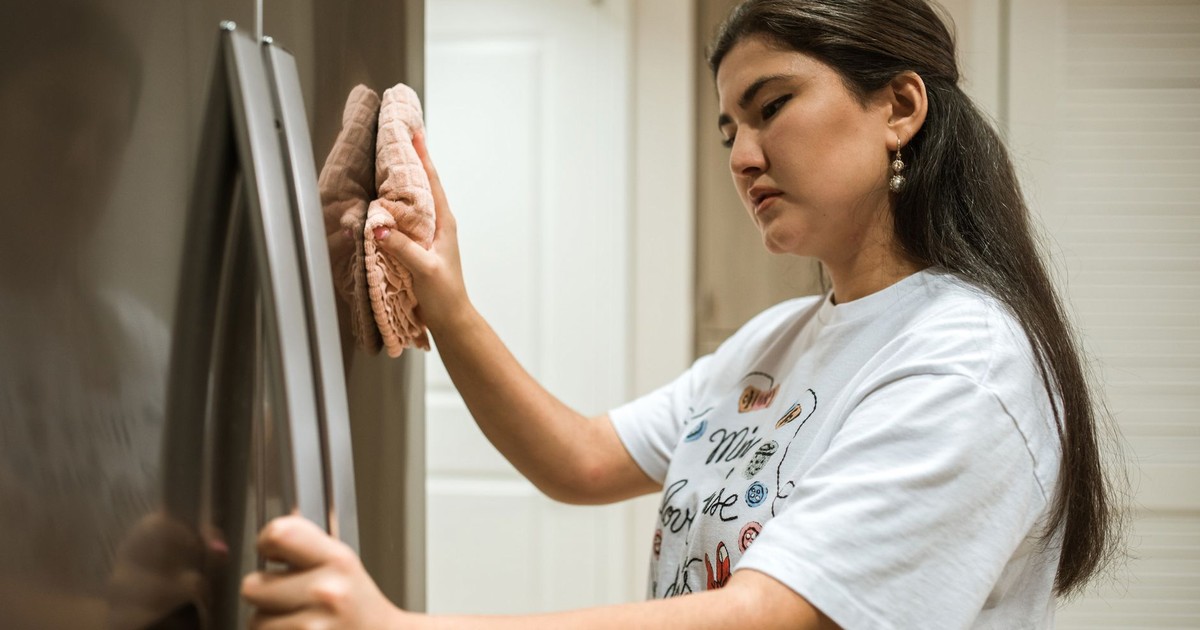
The second job most women have – the one without a salary, benefits, or a formal job title – runs around the clock. On average, women undertake 2.5 times more hours every day on unpaid care work than men. That covers cooking and laundry and the invisible coordination layer of a household: the doctor’s appointments, the school emails, the birthday cards, the mental list of who is running low on what.
Among full-time working parents, mothers do roughly twice as much combined childcare and household work as fathers. The pattern holds even without children in the home. Among childless full-time workers, women consistently spend more time on household work than men — a gap that persists across multiple datasets and measurement approaches.
The response to this, historically, has been a raised eyebrow and a suggestion to “communicate better” – as if the problem is a scheduling misunderstanding rather than a decades-long transfer of unpaid labor onto one gender.
3. Being Interrupted Mid-Sentence and Expected to Find It Endearing
The experience of being talked over in a meeting, then watching the same idea get praised when a man says it five minutes later, is so common it has its own vocabulary. Manterrupting. Bropropriation. The fact that there are words for it has not significantly slowed it down. The McKinsey Women in the Workplace 2024 report found that the share of women reporting being interrupted or spoken over dropped from 50 percent in 2019 to 22 percent in 2023 – then climbed back to 39 percent in 2024.
There is a specific kind of exhaustion that comes from constantly recalibrating how assertively you’re allowed to speak. Too quiet and you’re overlooked; too direct and you’re aggressive. The acceptable bandwidth for women’s communication in professional spaces is approximately three inches wide, and the goalposts move without notice.
Women become less likely to speak frequently after being interrupted, which has a knock-on effect on productivity and job satisfaction. The interruption compounds itself. Women speak less, get interrupted more, and are then told they need to put themselves forward. The circularity is breathtaking.
4. The Motherhood Penalty That Nobody Likes to Say Out Loud
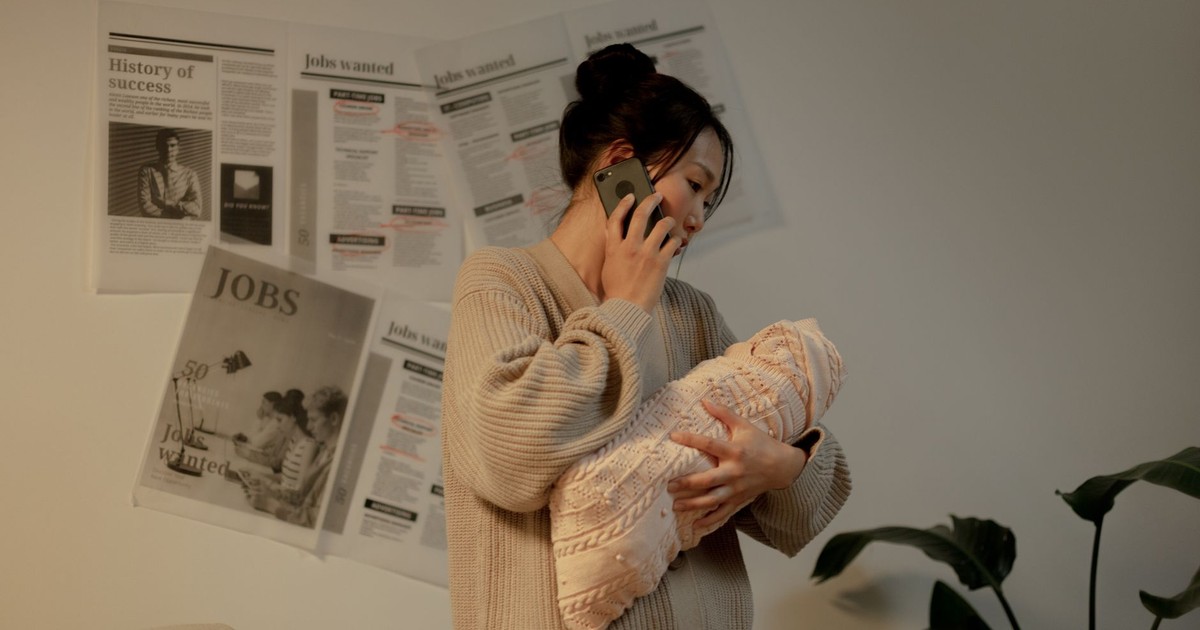
Having children carries a real financial cost for women that it does not carry for men in the same way. Research from the U.S. Department of Labor Women’s Bureau and the Urban Institute found that the lifetime earnings of mothers are reduced by 15 percent because of unpaid family caregiving, amounting to over $295,000 in inflation-adjusted dollars.
This is not a niche outcome. It is the predictable result of a system in which childcare is treated as a private family arrangement rather than a public infrastructure problem. Women are disproportionately likely to leave jobs when return-to-office mandates are put in place. The flexibility that allowed working mothers to stay in the workforce is being recalled, and the cost is accumulating, again, on women.
Nobody is calling it the fatherhood penalty. The asymmetry reflects which parent is still assumed, at the structural level, to be the default caregiver. Women absorb this assumption in salary negotiations, in performance reviews, and in the way certain colleagues look at them after they announce a pregnancy.
5. Being Told to Smile

Nobody is asking because they are concerned about your wellbeing. They are asking because your neutral face is making someone else uncomfortable, and your discomfort at being asked does not factor into the equation. The smile is not for you. It is environmental management, outsourced to the nearest woman.
It happens on the street, in elevators, and from managers delivering feedback. The underlying message is consistent across all of those settings: your face, at rest, is a problem you should be working harder to solve. Women have been laughing off frustrations like this for so long that the frustration itself starts to feel faintly ridiculous – which is, of course, the intended effect.
6. The Mental Load Nobody Acknowledges Until You Stop Carrying It

The mental load is not the tasks themselves – it is the remembering, planning, tracking, and anticipating that makes the tasks possible. It is knowing that the dentist appointment needs booking, that the pediatrician requires two weeks’ notice, that the school trip form was due yesterday, and that there are no clean school uniforms because someone forgot to run the wash. That someone was not unaware of the wash. They were just not the person who tracks it.
Forty-five percent of working-age women are outside the labor force because of unpaid care responsibilities, compared with only 5 percent of men. For women who are in the workforce, the load doesn’t disappear – it gets compressed into the hours before 7am and after 8pm. Even as men’s unpaid care work time increases globally, the gender gap is projected to remain above 9.5 percentage points of the day, or 2.3 hours, by 2030.
Suggesting that the mental load be redistributed is often received as an accusation rather than a practical proposal. Naming the thing accurately is treated as more provocative than the thing itself.
7. Being Called Aggressive for the Same Behavior That Gets Men Called Leaders

Most women have a version of this in their professional history. She says exactly what her male colleague said. He was confident; she was difficult. He pushed back on an idea; she was emotional. He ran the meeting at pace; she was too much. The content of the communication is identical. The reception is not.
This double standard operates so smoothly and consistently that it starts to seem like just the way things are. Women’s frustrations humor about this dynamic – the LinkedIn posts, the viral tweets, the “well-actually” memes – has been circulating for years without apparent effect. The promotions still go to the man who is “ready,” while the woman with equivalent qualifications is told she needs to build more confidence first.
8. The Return-to-Office Mandate That Disproportionately Pushes Women Out

Remote and flexible work arrangements, expanded dramatically during the pandemic, gave women something unprecedented: the ability to be present for caregiving without it automatically costing them their careers. Women made real gains because flexibility made it easier to balance caregiving with work in a way that hadn’t previously been accessible.
Then came the return-to-office mandates. Women are disproportionately affected. Working mothers with young children have continued to take big steps back, either exiting the labor force entirely or significantly decreasing their participation in the wake of stricter in-office requirements. The workplace reorganized briefly around the reality of women’s lives. Then it reorganized back.
9. Being Told You’re “Too Emotional” When You Have a Completely Legitimate Point

The accusation arrives at the exact moment when the point being made is clearest and most defensible. “You’re being emotional” takes the content of the argument off the table and replaces it with a conversation about your state of mind. Whether or not you were visibly emotional is almost beside the point. The word exists to suggest your reaction is disproportionate, which conveniently sidesteps whether your reaction is accurate.
Pointing this out tends to get the response “see, you’re getting emotional about it” – an elegant little trap. The only permitted response, apparently, is a serene nod. The bar for women’s communication is calibrated to an emotional register most human beings cannot sustain, and the failure to maintain it becomes evidence for the original claim.
10. Healthcare That Treats Women’s Pain as a Mystery or an Overreaction

Women are more likely to be told their pain is psychological, more likely to wait longer for pain relief in emergency departments, and more likely to have symptoms dismissed before a diagnosis is made. Conditions that primarily affect women – endometriosis, fibromyalgia, autoimmune disorders – can take years and multiple doctors before anyone takes them seriously.
The experience of navigating women’s health barriers in a system not designed to take you at your word is a specific and grinding kind of exhaustion. It teaches women to document, to minimize, to self-diagnose because the alternative is not being believed, and to arrive at appointments having already assembled a defense.
11. Paying More for Products That Are Functionally Identical to Men’s Versions

The pink razor costs more than the blue one. The women’s version of the deodorant, the shampoo, the dry cleaning service, the tailoring, the health insurance – all of it priced upward for the female consumer. The “pink tax” is a pricing pattern documented across dozens of product categories, where being a woman is treated as a premium characteristic the market is entitled to extract money from.
The frustration has a particular flavor because it is so utterly petty. This is not a grand structural inequity with contested causes. It is a razor. It is soap. It is the exact same pair of jeans, hemmed two inches shorter, priced forty dollars higher. When women raise it, the response is often a shrug and an invitation to just buy the men’s version – which is the one designed for a different body. The logic completes its own circle.
12. The Apology Reflex Nobody Asked You to Develop
“Sorry, can I just – ” “Sorry to bother you, but – ” “Sorry, this might be a dumb question – ” Women apologize before asking questions, before entering conversations, before taking up space they are entirely entitled to occupy. The reflex is so ingrained it often goes unnoticed – by the person doing it and by everyone around them.
The apology pre-empts the judgment. It is a protective move developed over years of learning that confidence without softening tends to provoke a negative response. The problem is that the apology also communicates uncertainty and diminishes the authority of whatever follows it. The behavior designed to protect ends up doing damage, and the solution offered – “just stop apologizing!” – skips entirely over the conditions that made the apology feel necessary in the first place.
13. Having Your Idea Bropropriated in a Meeting
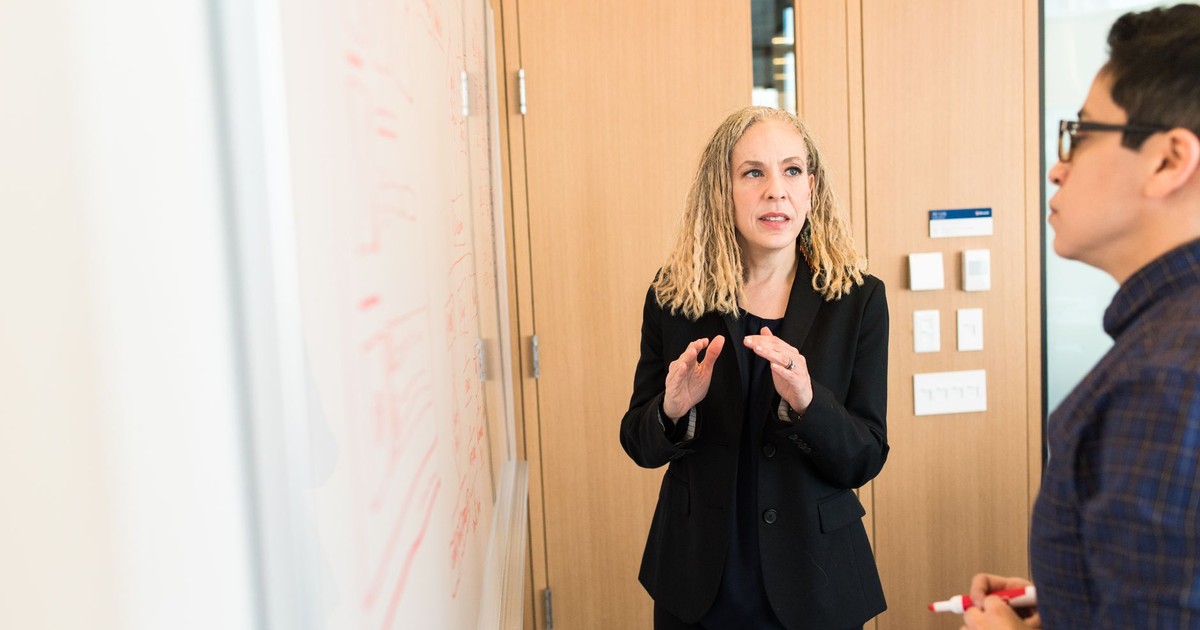
You said it. The room heard something else – or heard nothing at all. Then someone else said it. The room loved it. Ideas floated by women are less likely to be attributed to them, less likely to be elevated, and more likely to be credited to the man who repeated them with more volume five minutes later.
Women are 33 percent more likely to be interrupted than men and 20 percent less likely to receive credit for their contributions. The term “bropropriation” exists because the phenomenon is common enough to need a word. Whether or not the person doing it is conscious of what they’re doing almost doesn’t matter at the level of outcome. The idea doesn’t carry your name, the credit doesn’t go in your performance review, and somewhere at the table, someone is nodding along to your insight as though they’re hearing it for the first time.
14. Being Expected to Be the Office Caretaker

Someone has to organize the birthday card. Someone has to check for dietary restrictions. Someone has to notice that the new person seems lost and needs orienting. That someone is almost always a woman – not because it was assigned to her, but because the assumption that she will do it is so ambient that nobody stops to question it.
This is called “office housework,” and it operates like its domestic equivalent: invisible when done, glaring when not. The same person whose ideas are dismissed in the meeting is expected to ensure the meeting ran smoothly and the follow-up got organized. These two expectations coexist without apparent irony.
15. Street Harassment That Gets Minimized as a Compliment

“You should be flattered.” Women alter their routes, their clothing choices, their phone habits, and their plans based on safety calculations that most men do not have to make. This is not hypothetical caution. It is a daily operating condition.
The social expectation to receive this gracefully – to smile at the catcall, to not be rude to the man who follows you for a block while “just trying to compliment you,” to be flattered rather than calculating the threat – is one of the more brazen demands ever made of a demographic. The fact that calling it harassment is still regularly contested in public discourse is its own entry on this list.
16. The Double Standard in Aging
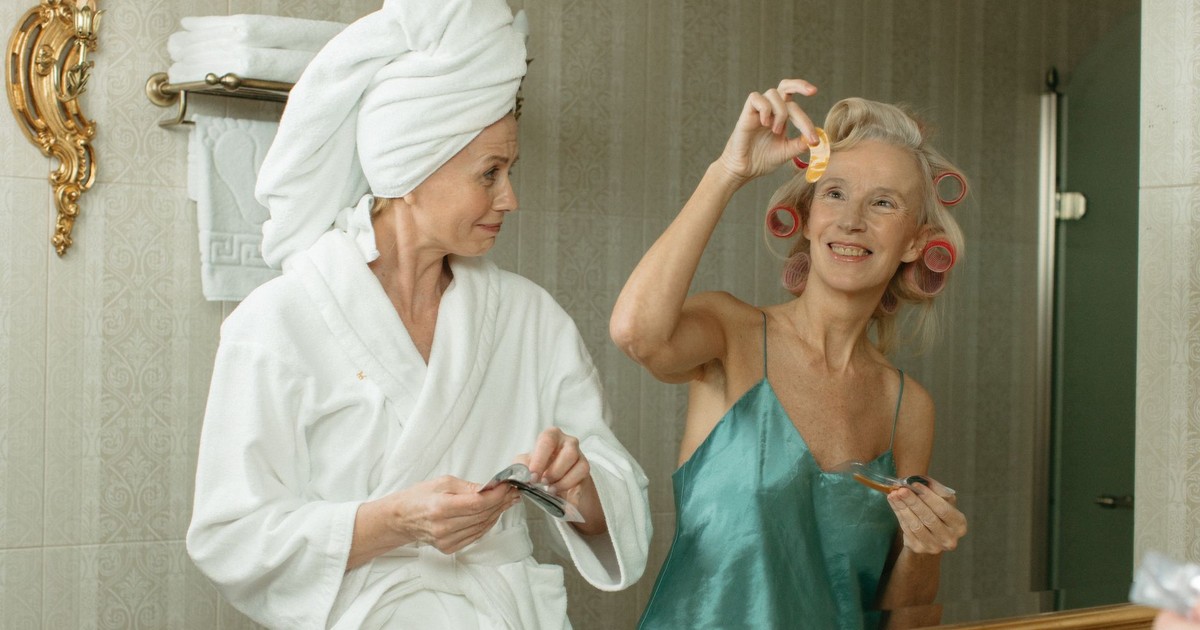
Men are described as distinguished. Women are just old. The grey temples on a male newscaster are gravitas. The same grey on a woman in the same role prompts a conversation about whether she’s lost her edge. Anti-aging is a billion-dollar industry aimed almost exclusively at women, and the message embedded in every ad is that looking your age is a personal failure you have the technology to correct.
Women are expected to age without looking like they are aging, to remain relevant in industries that worship youth, to be experienced without seeming dated, and to acknowledge the years without “letting themselves go” – a phrase never applied to men in the same breath. The women’s frustrations humor that has grown up around this double standard is extensive and sharp, and it has not moved the needle one inch on the underlying expectation.
17. Being Asked If You’re Sure You Want That Career
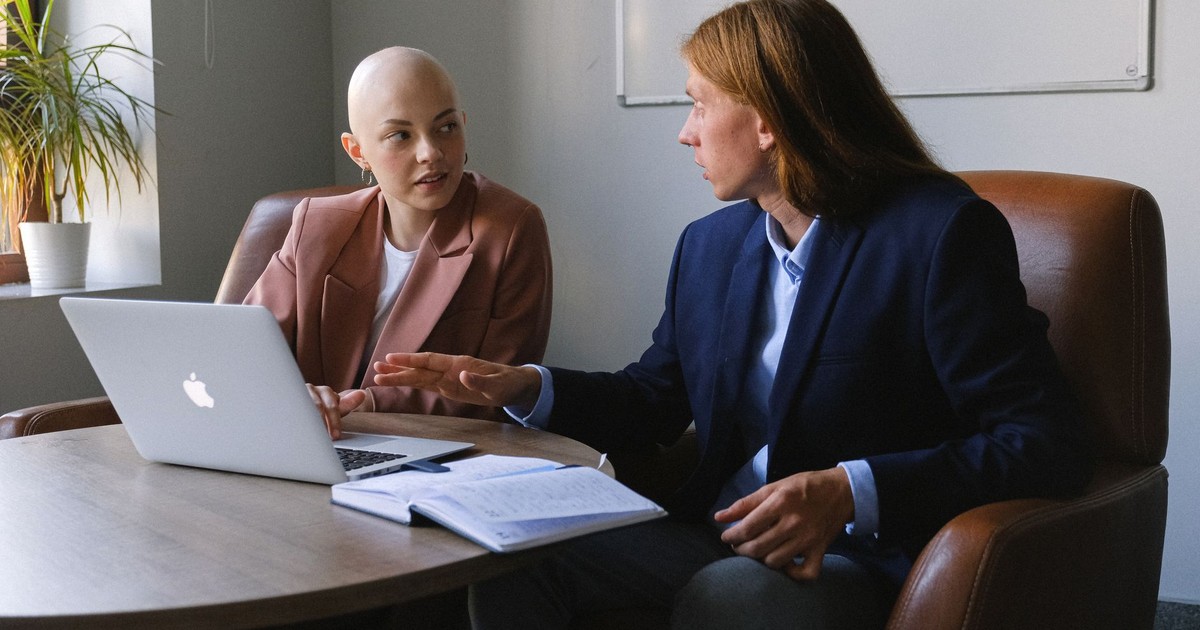
The question is never that explicit. It comes embedded in others: “Are you planning a family?” asked in a job interview. “Don’t you worry about the hours?” said to the woman taking on a promotion that the man beside her took without anyone worrying about his hours. “How are you going to manage?” asked with a facial expression that has already decided the answer.
Women have been advised for decades to not mention their families in interviews, to wear rings or not wear them depending on the calculation, to manage perceptions of ambition carefully in a way their male peers never have to. The advice reflects real conditions. What it doesn’t do is address why the advice is necessary: a woman’s commitment to her career is treated as provisional until proven otherwise, while a man’s is treated as a default.
18. Being Responsible for Everyone’s Emotional Climate

She noticed that he was upset before he said anything. She adjusted her tone, her approach, the topic she raised. She thought about how he would receive the news before she delivered it. She managed the temperature of the room while also participating in the room. This is emotional labor, and its distribution is not accidental.
The expectation that women will manage the emotional climate of their relationships, families, and workplaces – absorbing tension, smoothing conflict, anticipating needs, doing it all without being asked – is so embedded in the culture that it often doesn’t register as an expectation. It just registers as “how she is.” When she stops doing it, the room does not become neutral. It becomes chaotic, and she is asked, with some alarm, what has gotten into her.
19. Having the Same Conversation About “Likability” Forever
Women who are assertive lack warmth. Women who are warm lack gravitas. Women who are funny are not being taken seriously. Women who demand to be taken seriously have no sense of humor. The likability trap does not have an exit – only an ever-adjusting set of criteria that women are perpetually just missing.
Women in leadership positions are evaluated differently on interpersonal dimensions that do not apply to their male equivalents in the same role. The standards shift based on the evaluator, the industry, the woman’s race, her age, whether she’s a parent. The goalposts exist and they move. The advice to “just be yourself” is offered with the confidence of someone who has never had to calculate whether being themselves will cost them the room.
20. Being Expected to Find All of This Funny

Women’s frustrations humor is real and valuable – the ability to make a joke about something genuinely aggravating is a form of sanity preservation, not a sign that the aggravation doesn’t register. The memes are accurate. The group chat is doing important work. The thirty-second impression of the colleague who explained your own area of expertise back to you is a masterpiece of the form.
But humor flips into something else when laughing it off is taken as evidence that it wasn’t that serious, when the joke becomes the container for something that deserves to be named plainly. Women who are parents or primary caregivers earn $0.74 for every dollar earned by a man. The pay gap, the unpaid labor, the interrupted meetings, the dismissed pain, the managed emotions – these are not comedy material waiting to be reconsidered. They are things happening to real people in real time.
Being expected to be good-natured about your own diminishment is its own form of diminishment. You can hold both things at once – the joke and the weight behind it. But you don’t have to choose the joke.
Read More: 25 of the Most Influential American Women of Our Generation
Still Happening, Still Funny, Still Not Fine
Women’s frustrations humor works – really works, the kind that makes you exhale and feel briefly less alone in a group chat at midnight – because it acknowledges the distance between what’s presented and what’s true. The frustration is real. The performance of being okay with it is also real. The joke lives in that space.
None of the twenty things on this list are new. The data on the pay gap, the unpaid labor, the interrupted meetings, the dismissed medical complaints has been collected, published, shared, and cited for decades. Women have explained it, graphed it, made documentaries about it, and turned it into bestselling books. The social contract requiring women to be patient, to educate, to wait, to be grateful for incremental progress is not one that was signed by anyone alive today.
So by all means, laugh at the razor tax. Screenshot the mansplaining and send it to the group chat. The jokes are good and the solidarity is real. Just don’t mistake the laughter for acceptance. Some of these patterns are old enough to have their own grandchildren, and naming that is not negativity. It is accuracy.
Disclaimer: This information is not intended to be a substitute for professional medical advice, diagnosis, or treatment and is for information only. Always seek the advice of your physician or another qualified health provider with any questions about your medical condition and/or current medication. Do not disregard professional medical advice or delay seeking advice or treatment because of something you have read here.
AI Disclaimer: This article was created with the assistance of AI tools and reviewed by a human editor.