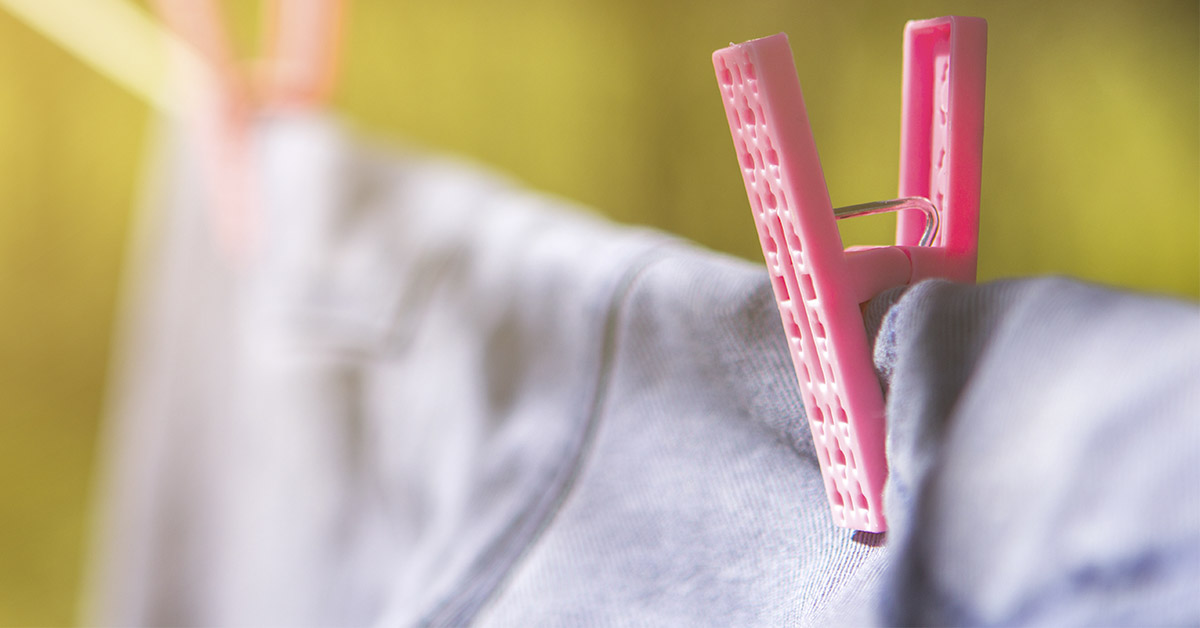

You hang your laundry outside to dry and come back to find a bee on your pillowcase, a wasp circling your favorite shirt, or a butterfly perched on a towel. They’re not there by accident. Your clothes are broadcasting signals across the yard in moisture, color, scent, and light, and insects respond to each one differently depending on what they need. The strongest signal happens in a spectrum you can’t see, which is exactly why you keep finding them there.
Your Detergent Is Glowing
Most commercial laundry detergents contain optical brighteners, fluorescent chemicals that absorb ultraviolet light and emit it back as visible blue light. This is how manufacturers make whites look whiter. The effect is subtle to human eyes, but many insects navigate primarily by UV light, so to them, your laundry isn’t subtle at all. It’s glowing.
According to textile research published in the International Journal of Creative Research Thoughts, optical brighteners work best when their absorption peaks fall in the 350 to 375 nanometer range. That overlaps with the same UV wavelengths bug zappers use to lure insects in, which means your freshly washed white sheets are working the same way. To a bee or butterfly, that pillowcase broadcasts in the same spectrum they use to find flowers, water, and mates. The brighter your detergent promises to make your clothes, the more visible they become to anything with compound eyes.
This explains why new white towels attract more attention than faded ones, and why sheets dried indoors draw fewer visitors than sheets hung outside under direct sunlight. UV activation is stronger in natural light, so your laundry becomes a beacon the moment you clip it to the line.
Switching to a detergent without optical brighteners, often labeled as unscented or hypoallergenic, reduces how much your laundry broadcasts to passing insects. It won’t make your clothes invisible to them, but it removes one of the strongest attractants. You’re essentially dimming the signal rather than shutting it off completely.
What They’re Looking For
Different insects are landing for completely different reasons, and some of those reasons are stranger than you’d expect.
Thirsty visitors
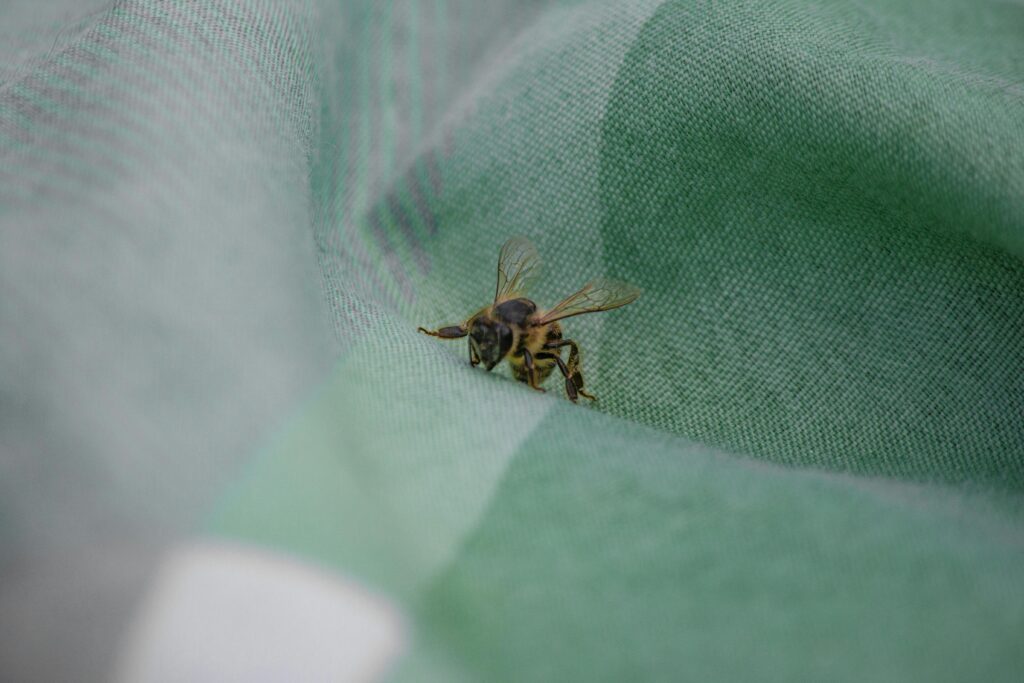
Bees need water constantly, both to drink and to cool their hives. In a 2018 study published in the Journal of Comparative Physiology A, researchers Helmut Kovac and Anton Stabentheiner at the University of Graz found that honeybees invest considerable energy collecting water for evaporative cooling, dispersing it on the combs, and fanning their wings when brood nest temperatures climb too high. But open water sources like ponds and birdbaths can drown them. Damp fabric offers a safer alternative because it can be drunk from the moisture held in the fibers without risking their lives. Wet laundry is the insect equivalent of a drinking fountain, and that is why once a bee lands on it, it will return and recruit others.
If you want to prevent these bees from landing on your laundry, set up a shallow dish of water with pebbles or corks for them to land on and place it away from your clothesline. After a week or two, foraging bees will learn to check the new source first and stop investigating your laundry.
Color chasers
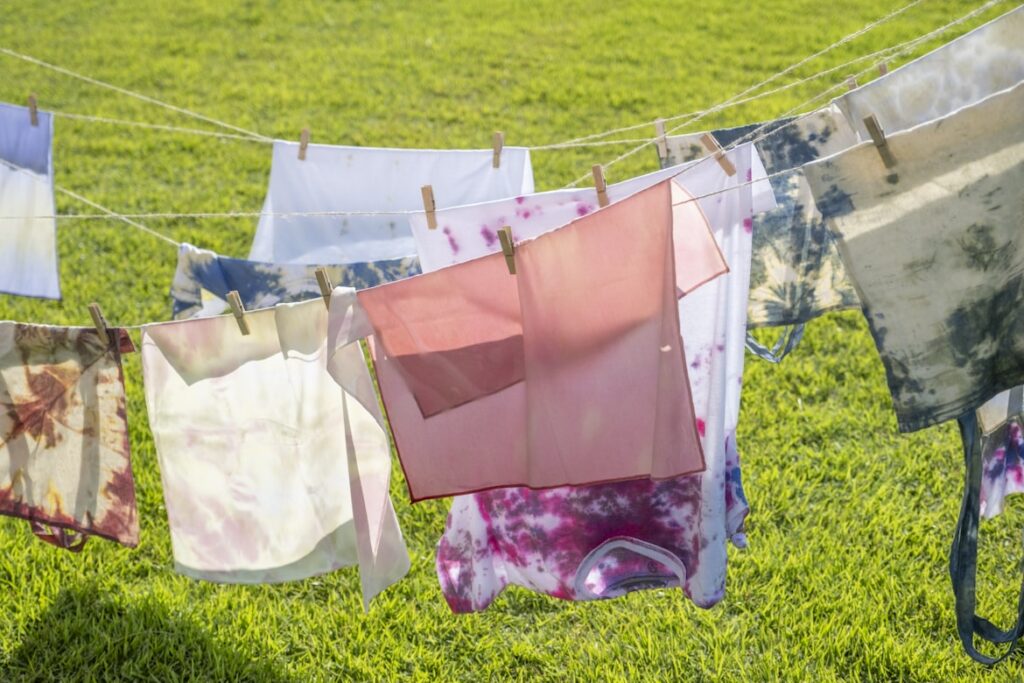
Image by: Unsplash
Bees evolved to find flowers, so their eyes are tuned to detect the colors and shapes that typically signal nectar. A yellow shirt or a blue towel triggers the same exploratory behavior as garden flowers, which is why they fly in for a closer look. They usually leave once their other senses confirm there’s no food, but the initial attraction is strong enough to bring them in repeatedly.
Darker colors work differently. Entomologists have long observed that honeybees associate dark colors with predators like bears, raccoons, and skunks, which is why traditional beekeeper suits are white. Dark laundry doesn’t attract bees, but it can put them on edge if they’re already nearby.
Mistaken identity
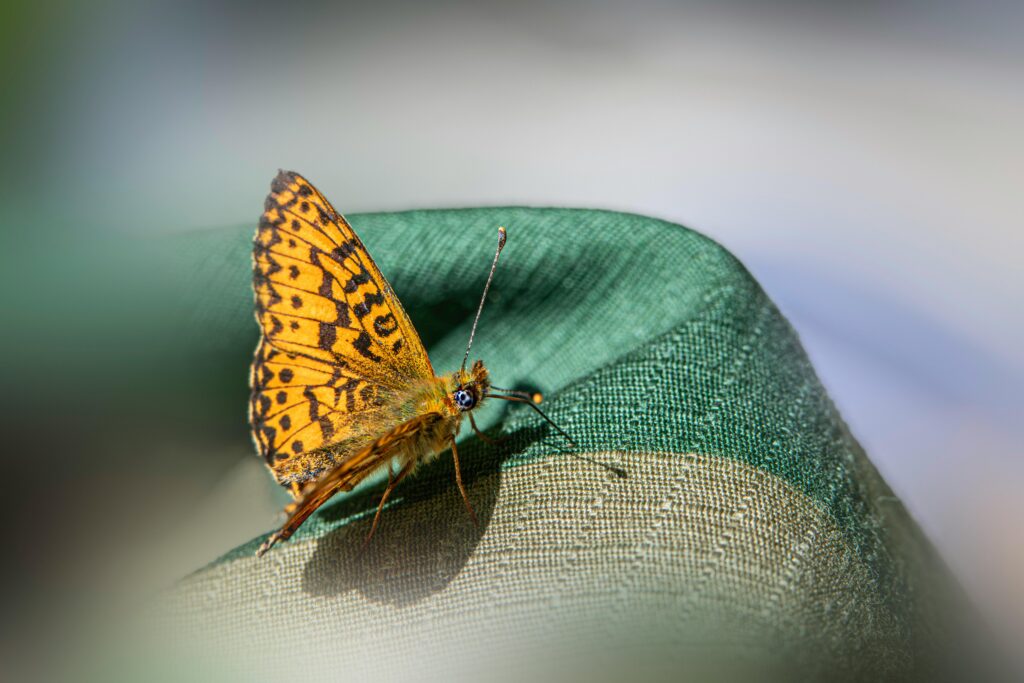
Butterflies land on your laundry thinking they’ve found a mate. In their landmark 1978 study published in Behavioral Ecology and Sociobiology, Harvard researchers Robert Silberglied and Orley Taylor demonstrated that butterfly wings reflect unique UV signatures that help them recognize their own species. These ultraviolet signals function as a private communication channel unavailable to predators. A red towel can reflect UV in ways that mimic those wing scales, triggering their mating response and drawing them in. Once they get close, their other senses correct the mistake within seconds, but from a distance, your laundry can genuinely look like another butterfly.
Scent followers
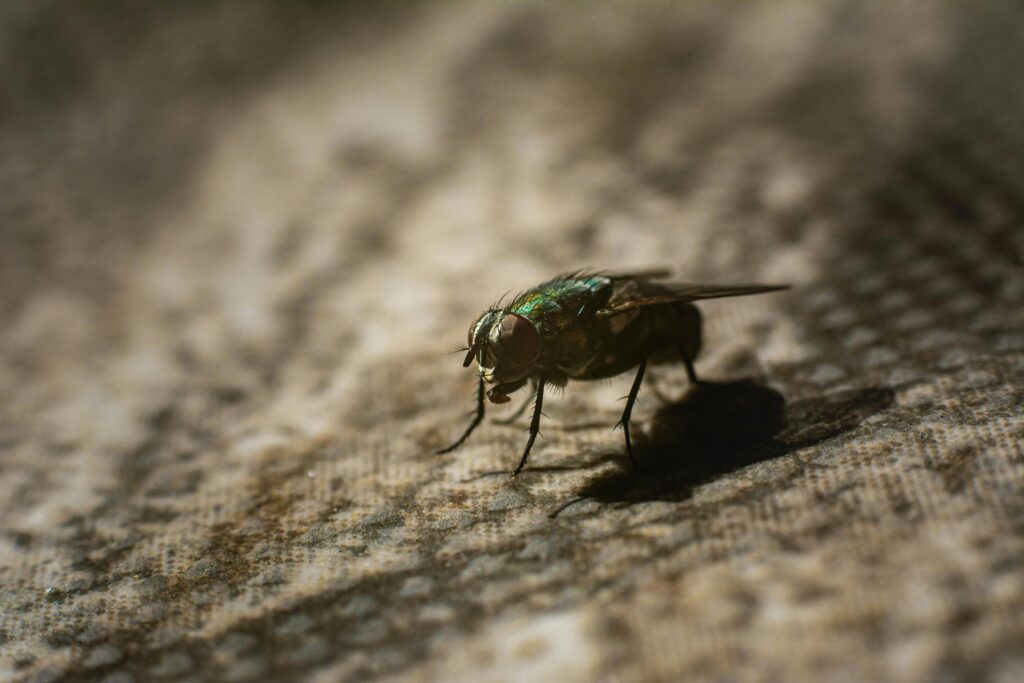
Even after washing, your fabric holds traces that flies can detect. Worn sheets and towels carry microscopic residue of salt, oils, and proteins from human skin. Flies feed on similar compounds when they encounter decomposing organic matter in nature, so they land on well-worn items more often than brand-new ones. Floral-scented detergents and fabric softeners add another layer of attraction because you’re essentially perfuming your clothes with what some insects register as food signals.
Material gatherers
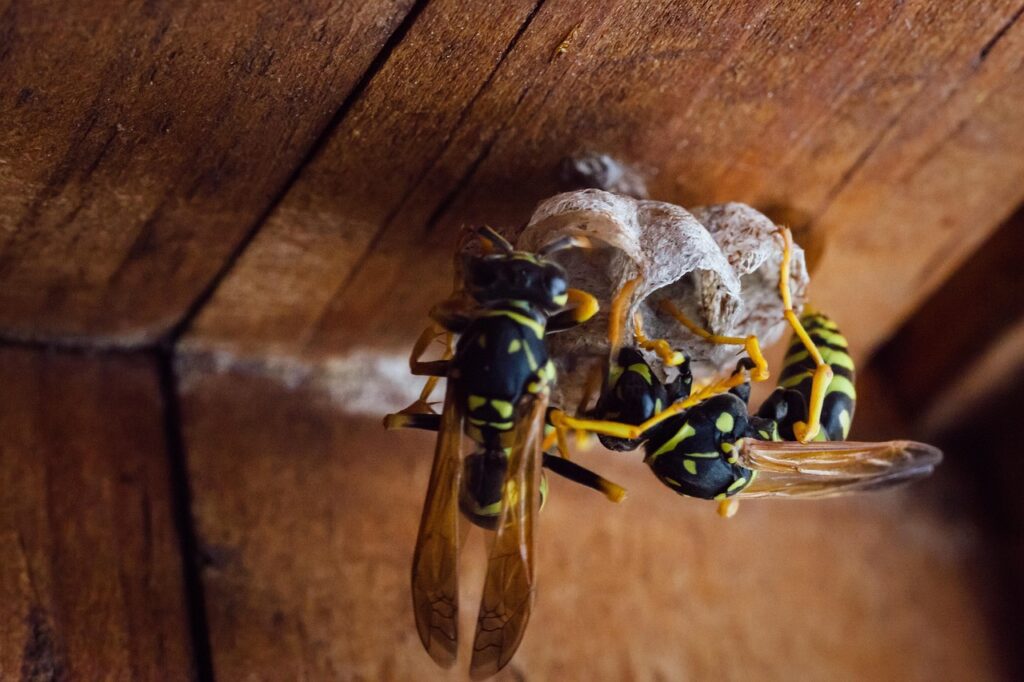
Wasps ignore the moisture, colors, and scents that pull other insects in. They build their papery nests by scraping wood fibers with their mandibles and mixing the pulp with saliva, so each wooden clothespin on your line becomes a convenient source of raw material. They’ll keep coming back as long as the wood is accessible. Switching to plastic pins solves the problem immediately.
Seasonal Shifts
These visitors don’t show up at the same rate year-round. Spring and early summer bring the most activity as colonies expand and workers forage constantly for water and building materials.
By fall, yellow jackets turn into a different problem entirely. Their colonies start collapsing as queens stop laying eggs, which leaves workers with nothing to do. They spent months hunting protein to feed larvae, and now there’s no brood. Researchers at the University of California’s Integrated Pest Management Program have documented how workers forage mainly for protein in spring and early summer, but by late summer, the colonies require large amounts of sugar to maintain the queen and remaining workers. Without that job, they switch focus and grow aggressive about finding calories before winter hits. Anything bright or sweet-smelling draws them in. The workers die within days of the first hard frost, leaving only newly mated queens tucked underground in protected spots.
In a 2003 study published in the Journal of Experimental Biology, Anton Stabentheiner and colleagues at the University of Graz demonstrated that 50 degrees Fahrenheit represents the lowest survivable temperature for bees in a winter cluster. When temperatures drop below that threshold, honeybees form a tight ball inside their hives, vibrating their flight muscles to generate heat and living off stored honey until spring. Solitary bees seal themselves underground and wait out the cold. Butterflies either migrate south or die after laying eggs that won’t hatch until spring.
A Few Things Worth Knowing
People still turn to old advice about keeping insects away from their wet clothes, and a lot of it gets things backwards.
White laundry seems like the safest choice, which is why plenty of people hang only whites, thinking bees will leave them alone. White fabric with UV brighteners actually becomes one of the most attractive things in your yard to them, while plain untreated colors in any shade draw less attention.
Floral-scented detergents get blamed for bee visits too, so people switch to unscented versions expecting fewer insects to show up. But according to research from NC State University’s entomology department, bees can use odor cues to locate flowers only when they’re already close. Vision is essential for finding targets at a distance, and they navigate primarily by UV light and color rather than fragrance. Your fabric softener’s lavender smell means nothing to them.
Bleach appears in advice threads as either a bee attractant or repellent, depending on who you ask, but the chlorine smell has nothing to do with whether bees land on your sheets. If bleached laundry is getting attention, it’s the brightness or dampness pulling them in, not the chemical scent.
Read More: Ultimate Guide to Laundry: How Often You Should Wash Everything
Living With Them
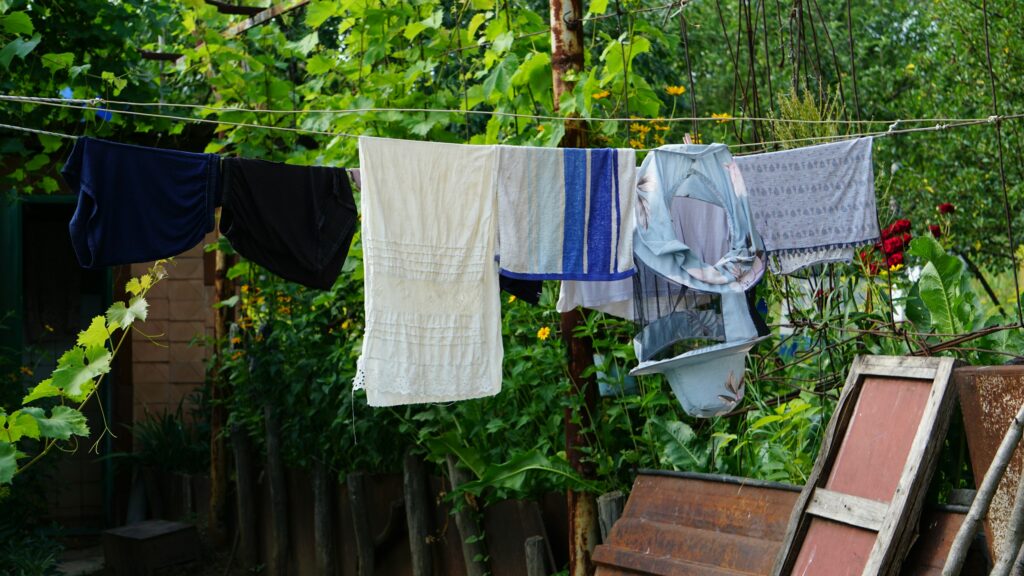
Finding insects in your laundry can be startling, but they’re not there to bother you. That bee on your pillowcase is just going about its business, following instincts that evolved long before clotheslines existed. The same insect that landed on your shirt is probably pollinating your garden and supporting the ecosystem around your home.
You can reduce visits by changing when and where you hang laundry. Timing matters because insects are most active during midday hours, so hanging clothes early in the morning and bringing them in before peak afternoon reduces the window when they’re likely to investigate. Location matters too. If your line sits near flowering plants, foraging bees will spot your laundry on their way past, so moving it farther away helps. Keep clothespins inside when you’re not using them, and shake each item as you remove it from the line to dislodge anyone hiding in the folds.
If you’re seeing the same insects repeatedly, a hive or nest might be nearby. Watch to see if they’re entering and exiting from the same spot, because that means you’re dealing with residents rather than random visitors. For honeybees, local beekeepers often respond to calls about wild colonies and can relocate them. For wasps and yellow jackets, professional removal is usually the safer option.
But most of the time, these visitors are just passing through. They landed because your laundry looked like an opportunity, and once they realize it isn’t, they’ll move on to the next flower, the next water source, or the next actual butterfly. Now you know exactly why they showed up in the first place.
Read More: 7 Unexpected Ways to Use OxiClean Outside the Laundry Room