

Every film set in Victorian England seems to make the same design choices. The streets are perpetually fog-choked, the interiors are drowned in shadow, the clothes are brown or grey or the particular shade of mud you get when you mix the two, and everyone walks around with the solemn expression of someone who knows they’ll be dead by forty. It is an aesthetic so thoroughly agreed upon by costume departments and production designers that it has become its own kind of truth. The problem is that almost none of it holds up.
These were sixty-four years of relentless invention: electric light, synthetic color, indoor plumbing, the germ theory of disease, the railway network, packed into a single reign. The people who lived through it were adapting, sometimes brilliantly, to a world changing faster than any generation before them had experienced. The Victorian life misconceptions we’ve absorbed from movies say less about history than they do about how much we love a good fog machine.
Here are five things Hollywood keeps getting wrong.
1. Everyone Was Constantly Shrouded in Darkness
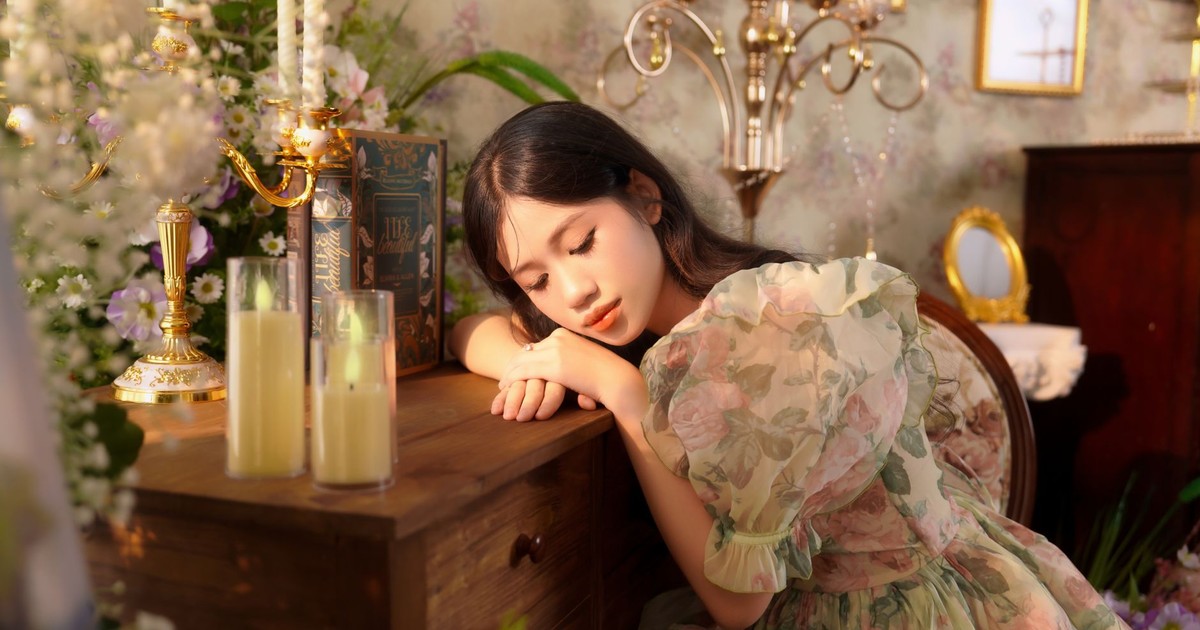
The defining visual of a Victorian interior in film is candlelight guttering in a drafty room, or a single gas jet making brave work of a very large hallway. It reads as atmospheric. It also reads as accurate, because we associate the past with dimness. The reality is messier and, genuinely, brighter.
During the 63 years of Queen Victoria’s reign, from 1837 to 1901, life in ordinary houses was transformed by a succession of technological developments, including light fittings capable of illuminating whole rooms at a time. The Victorian era was not a stable pre-electric world. It was the era in which electric light was invented, refined, marketed, and gradually installed in the homes of people who could afford to be early adopters. Gas lighting was restricted mainly to wealthy urban homes and public places, but electric lighting began in 1879 when Thomas Edison perfected the commercial incandescent lamp and, more importantly, a system to power it.
The transition was not a sudden flip from candles to bright rooms. Well into the 1920s, even when illuminated by electric bulbs, homes were dimly lit by contemporary standards. Candles, flames, and early bulbs gave off less light than modern ones, and homes had fewer fixtures. So the gloom was real, but it was the gloom of a technology mid-transition, not a civilization that had given up on seeing after dark. During the 1890s, as electric lighting gained in popularity, makers of gas lighting devices actually added electric lines and sockets to their gas jets, a detail that suggests people were neither resigned to the dark nor dramatically illuminated, but doing what people always do with new technology: using it alongside the old stuff until one of them wins.
The set designers who give every Victorian drawing room a permanent twilight are, in a way, right about the early decades and wrong about the last twenty years of the era. By the 1890s, the upper and middle classes were installing electric fittings in their homes with the same enthusiasm with which later generations would install cable television.
2. Everyone Dressed in Black or Brown
Period dramas have a uniform: desaturated. The palette of Victorian clothing in film hovers reliably around charcoal, navy, tobacco, and ivory, with the occasional rogue burgundy for a woman who is about to make a bad romantic decision. It projects seriousness, historical weight, and a certain damp Northern melancholy. It is also, from roughly 1856 onward, completely at odds with what the historical record shows.
The synthetic dye boom started with mauveine, the purple dye discovered in 1856 by 18-year-old chemist William Henry Perkin. Within decades, synthetic dyes were available in almost any shade imaginable, bringing with them a fashion revolution. Before Perkin’s accident, he was actually trying to synthesize quinine to treat malaria, natural dyes were expensive, labor-intensive, and prone to fading. After it, color became cheap, stable, and almost aggressively popular.
In 1856, an 18-year-old chemistry student was conducting experiments alone in his rooms over the Easter holidays. Perkin had been attempting to produce a synthetic version of quinine and instead found a reddish powder at the bottom of his beaker. When he purified and digested this unknown material with methylated spirits, it produced a dye that, when applied to fabric, was a luminous purple. The fashion world reacted with the restraint you might expect. Purple became the height of fashion in Paris and London in the late 1850s to early 1860s, with the frenzy over mauve becoming known as “mauveine measles.” Even Queen Victoria appeared in 1862 at the International Exhibition wearing a silk dress colored by mauveine.
What followed was an explosion of synthetic colors with names that read like a fever dream of Victorian exuberance: acid magenta, aldehyde green, Verguin’s fuchsine, Martius yellow, and Magdela red, all produced industrially, all available to anyone who could afford a length of fabric. The movies that dress the Victorian era in muted tones are drawing on photographs, which were black and white, rather than on the clothes themselves, which absolutely were not.
3. People Barely Bathed and Smelled Terrible
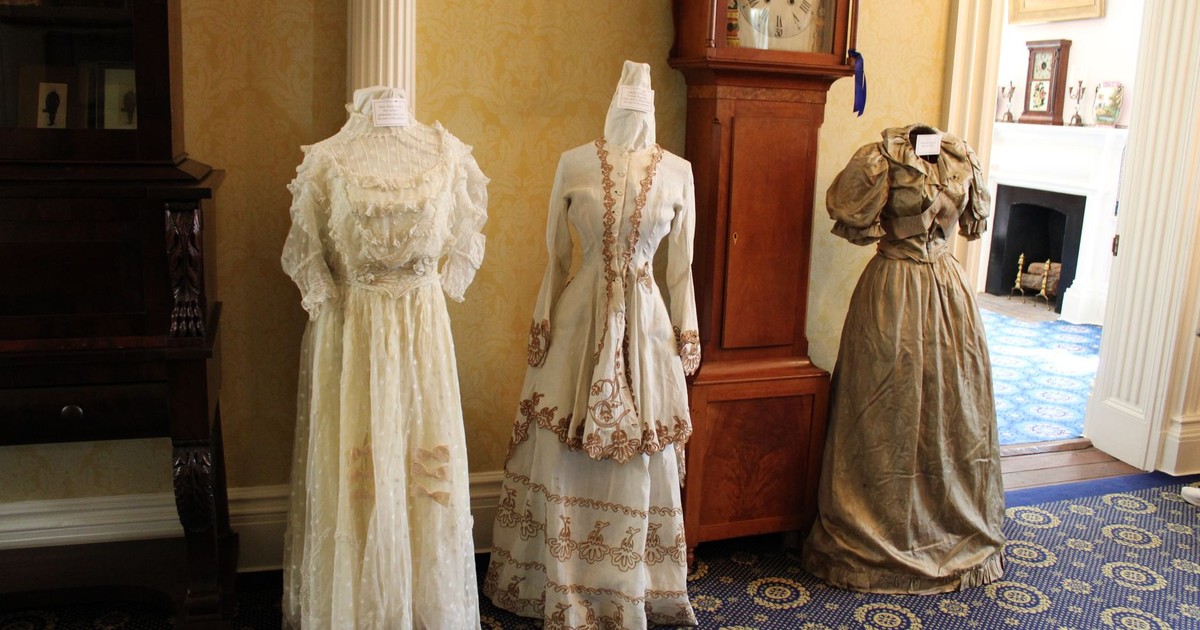
The Victorians, per popular understanding, were grimy people who considered bathing dangerous and relied on perfume to do the heavy lifting. The reality, as with most Victorian life misconceptions, depends enormously on who you were and when in the era you were living.
Victorians did bathe, but the frequency and method depended on social class. Those who could afford it had tin or copper bathtubs in bedrooms or washrooms, filled with heated water by servants. Some wealthier homes even had early indoor plumbing by the late 19th century. The image of universal filth is drawn from the worst conditions of urban working-class life, which were genuinely dire, and projected wholesale onto an entire society of wildly different circumstances.
The relationship with cleanliness was also genuinely different in its logic, not just its execution. Some Victorian doctors warned against bathing too often, believing that frequent washing could strip the body of its natural oils and cause illness. This belief, combined with the difficulty of heating water, contributed to infrequent full-body bathing among the working class. That is not the same as not caring about cleanliness. It is caring about cleanliness through a medical framework that has since been revised. In the Victorian era, hygiene was more than simply maintaining oneself. It was a sign of virtue and status in society. Queen Victoria herself encouraged her subjects to be clean by associating it with ethical conduct and social respectability.
The working class was genuinely constrained. Heating water was laborious, privacy was scarce, and public bathhouses, while they existed, required time and money that many people did not have. But the cinematic version, which has everyone unwashed and apparently fine with it, collapses a complex and class-stratified reality into a single comedic shorthand that the actual Victorians would have found both offensive and baffling.
4. Life Expectancy Was Shockingly Short
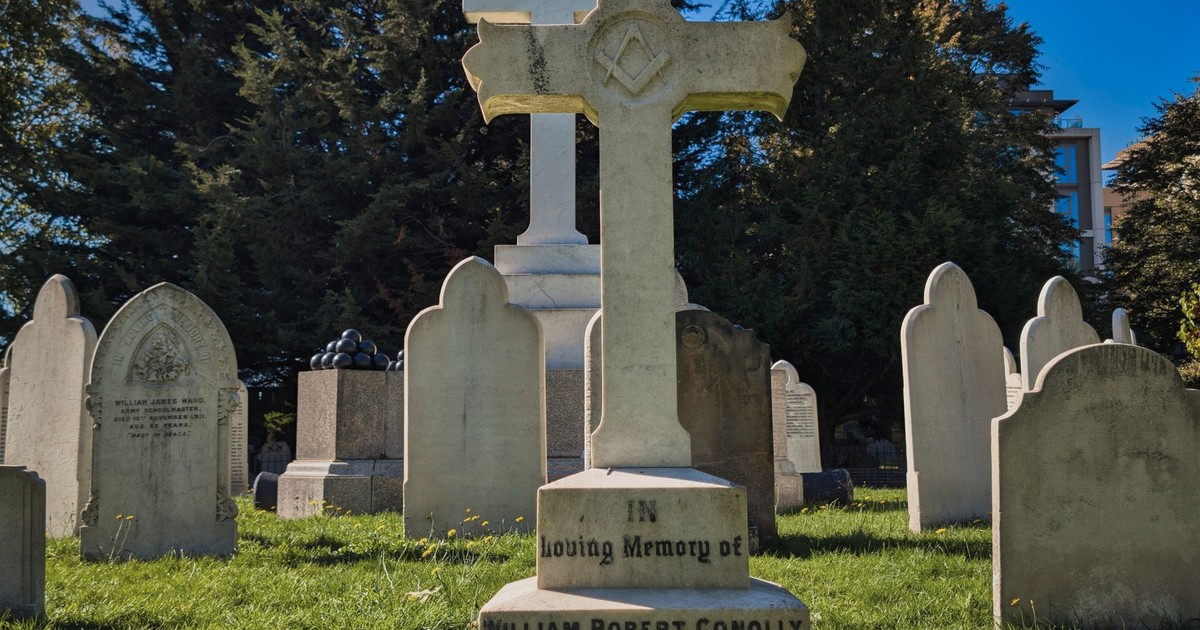
Ask most people what the average Victorian lifespan was and they will say something like forty, with the confident tone of someone who has retained this from a documentary. And they are not wrong about the number. They are wrong about what the number means.
According to English Heritage, average life expectancy at birth in Victorian England was low: 40 for men and 42 for women in 1850, rising to 45 for men and 50 for women by 1900. Those numbers are accurate. What they represent, however, is not a world where adults routinely died in their forties. They represent a world with catastrophic infant and child mortality dragging the average downward so dramatically that the number becomes almost meaningless as a description of adult experience.
In 1841, of every 1,000 babies born in England and Wales, nearly 14 percent died before their first birthday. By age five, over a quarter of the original 1,000 were dead. Those deaths were real and devastating, and Cambridge Group for the History of Population research into Victorian mortality patterns makes clear that the headline life expectancy figure obscures an enormous range of adult outcomes. A child who survived the first years of life faced a very different statistical horizon than the average-at-birth figure implies.
So the Victorian gentleman at sixty was not a medical miracle walking against statistical gravity. He was a person who had survived childhood and then, largely, continued to function. Films that kill off adult characters in their forties and fifties as if nature had simply made its appointment are misreading the data in a way that makes Victorian life seem far more uniformly grim than it was for anyone who made it out of the first decade alive.
5. The Victorians Were Repressed Prudes With No Sense of Humor

This is the big one, and the one that movie-makers return to most reliably: the buttoned-up, corseted, morally rigid Victorian who faints at the mention of an ankle and considers a piano leg indecent. It is a caricature so durable that it has survived well over a century of scholarly debunking. The Victorian era produced some of the most wickedly funny literature in the English language: Dickens, Wilde, Lewis Carroll, Jerome K. Jerome. It also produced a popular culture that included music halls, seaside entertainment, and comedy that did not shy away from physical humor or innuendo. These were not people who had organized their entire civilization around being tasteful.
The repression narrative exists partly because it is useful for period dramas. You can build an entire plot engine around the gap between what characters feel and what they are permitted to say. That gap was real. But the picture of universal Victorian prudishness erases the significant counter-current of bawdy humor, transgressive writing, and social subversion that ran through the era alongside its official morality. Oscar Wilde was not a lone eccentric. He was enormously popular right up until he wasn’t, and the speed with which Victorian society turned on him says at least as much about anxious self-policing as about genuine cultural consensus.
The corset, incidentally, another cinematic shorthand for Victorian female suffering, was both more complicated and more varied than movies suggest. Women wore them in different styles, adjusted them to their own comfort, and adapted them across the decades of the era as fashion changed. The image of a woman laced so tightly she cannot breathe is drawn from the extreme end of tight-lacing, which was a practice a significant portion of the medical establishment was loudly arguing against at the time, and which most women did not adopt. The policing of women’s bodies was very real in the Victorian period. The specifics of how it played out were considerably less uniform than a single costume detail implies.
What the Fog Machine Is Really Doing
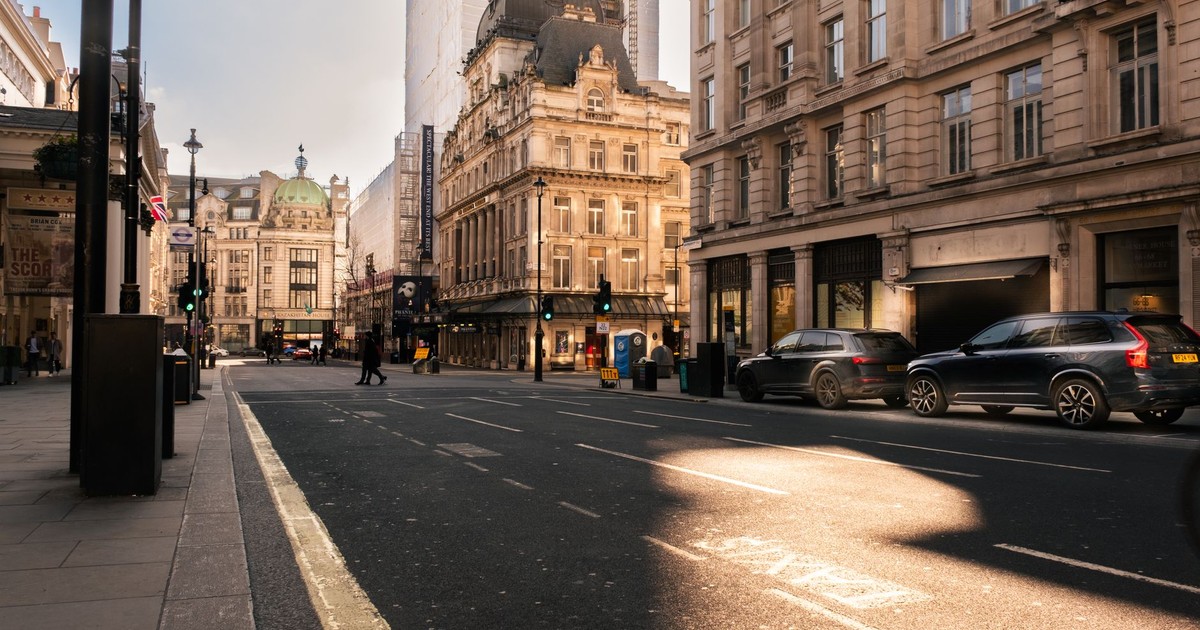
The Victorian era that Hollywood built is not really about history. It is a mood: a particular combination of gaslight and shadow that stands for the past in general, for a time when things were simpler or harder or more formally arranged than they are now. That mood is genuinely evocative, and a good period drama is allowed to use it.
What it costs, though, is the actual strangeness of the era, which was not the strangeness of grimness and restraint, but the strangeness of a world transforming at a pace people could barely track. Synthetic colors appearing from industrial chemistry. Electric light being wired into homes that had never held more than a candle. A generation of adults watching the entire material landscape of their childhood become obsolete before they were fifty. That story, of a world lurching into modernity whether anyone was ready or not, is considerably more interesting than the sepia-toned gloom that gets recycled every time a screenwriter types “INT. VICTORIAN DRAWING ROOM – NIGHT.”
The Victorians were not a cautionary tale dressed in brown wool. They were people living through one of the most disorienting periods of change in human history, doing their best, arguing about whether bathing too often was dangerous, and wearing the most aggressively purple clothing the world had yet produced.
Disclaimer: This information is not intended to be a substitute for professional medical advice, diagnosis, or treatment and is for information only. Always seek the advice of your physician or another qualified health provider with any questions about your medical condition and/or current medication. Do not disregard professional medical advice or delay seeking advice or treatment because of something you have read here.
AI Disclaimer: This article was created with the assistance of AI tools and reviewed by a human editor.