

You know it has happened when you start thinking of a particular year and realize it was not last year but four years ago. Not the vague sense that time passes, but the specific, vertiginous moment where the calendar simply refuses to match what your brain is reporting. The week you thought was two weeks ago was actually six months ago. The thing you did “recently” was, by the clock, more than a year back. Your perception of time and the calendar have stopped agreeing, and they show no signs of reconciling.
This is not a quirk of memory, and it is not simply the busy pace of adult life. Astrophysicist Neil deGrasse Tyson laid it out in an Instagram video that has been circulating widely in 2026: the reason time accelerates as you age has everything to do with how your brain processes and stores new information, and very little to do with the number of candles on your last birthday cake. The explanation is both genuinely fascinating and, depending on your temperament, either comforting or quietly devastating.
What Tyson describes, and what a growing body of neuroscience research now backs up in precise detail, is that time acceleration with aging is a feature of the brain, not the calendar. And because it is a brain phenomenon, there are real, specific things that can shift it.
Why a Childhood Summer Felt Like Forever

The brain of a child is running an extraordinary operation. Every face, every smell, every classroom, every walk home is arriving for the first time. When we’re young, every sight, sound, and experience is unfamiliar, so our brains work overtime to record it. That intense mental activity expands our perception of time. This is why a seven-year-old’s summer feels elastic, why waiting for a birthday feels like geological time, and why childhood memories tend to be so vivid even decades later. The brain was working at full capacity, flagging everything as important, logging each moment as a new data point.
As Tyson puts it: “When you’re young, everything is new. Your brain is constantly recording fresh memories, and the more memory your brain stores, the longer the experience feels.” The density of the memory log is what creates the sensation of duration. A week packed with firsts feels, in retrospect, like a month. A week of identical commutes and identical lunches folds into a single entry.
Steve Taylor, Ph.D., a psychologist and senior lecturer at Leeds Beckett University, makes the same point from the psychological side. “As children, we have so many new experiences, and so process a massive amount of perceptual information,” Taylor writes. “Children also have an unfiltered and intense perception of the world, which makes their surroundings appear more vivid.” As we get older, we have progressively fewer new experiences, and our perception of the world becomes more automatic. We grow progressively desensitized to our surroundings. As a result, we gradually absorb less information, which means time passes more quickly. The phrase he uses is worth pausing on: time is “less stretched with information.”
The Frames-Per-Second Problem
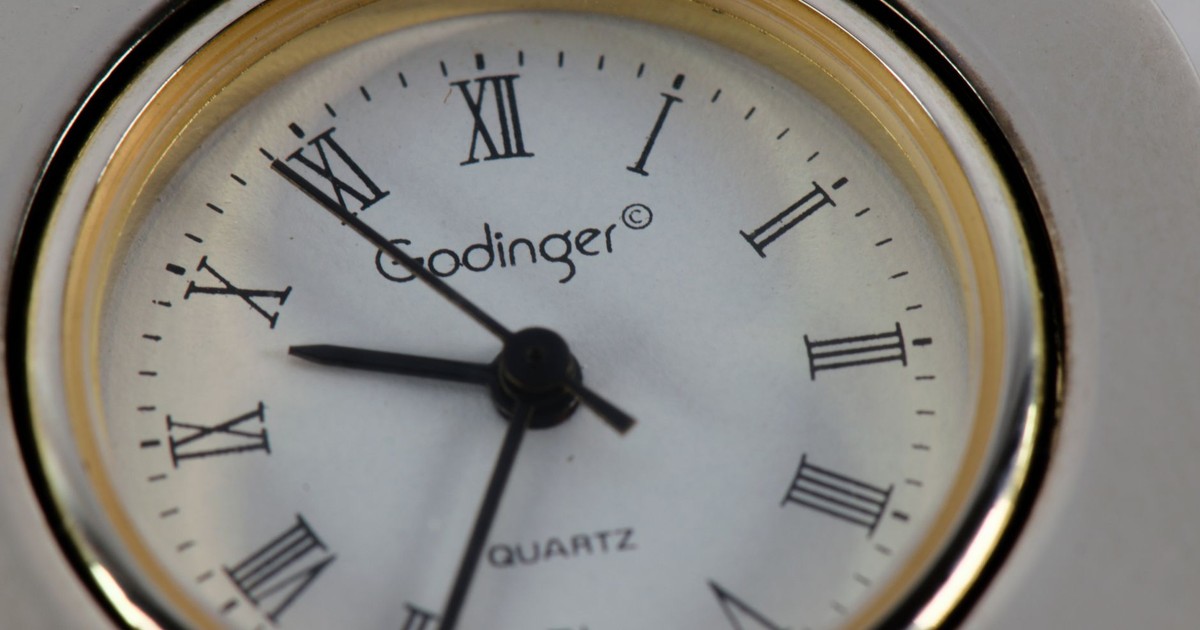
There is a more concrete way to think about this, and it comes from a theory proposed by physicist Adrian Bejan at Duke University. Bejan theorizes that the rate at which we process visual information slows as we age; as the size and complexity of networks of neurons in our brains increase, electrical signals must travel greater distances, leading to slower signal processing. The result is that we perceive fewer “frames-per-second” as we get older, and therefore time feels like it’s passing quicker. It’s like a flipbook – the fewer the number of pictures, the quicker you flick to the end.
Think about what that means in practice. A child’s brain is generating dense, high-resolution mental footage of the world. An adult brain, running on familiar roads and familiar routines, is generating something closer to a highlight reel. When you look back at a year that felt short, you are not imagining it. The footage is genuinely sparse.
The older we get, the more likely it is that we’re clocking up fewer and fewer new experiences with each year that passes. This is partly because the more stuff we experience, the less new stuff there is to experience. But part of it is due to human nature; with age, we can become increasingly stuck in old habits, overly comfortable with the familiar and unwilling to pursue novelty or challenge ourselves. That last part is worth sitting still with. The time acceleration caused by aging is real, but it is accelerated further by the habits that make adult life feel manageable. The routines that reduce cognitive load are also the routines that compress the clock.
What Brain Scans Actually Show

In 2025, researchers published findings that put a neurological explanation behind what Tyson and Taylor had been describing. Led by Selma Lugtmeijer of the University of Birmingham, the research team found that “neural states” – patterns of brain activity that represent distinct moments or events – become longer and less differentiated with age. In simpler terms, the older we get, the fewer mental “cuts” our brains make in the movie of our lives.
The study, published in Communications Biology, used brain scans from 577 participants aged 18 to 88, taken while they watched an eight-minute clip from Alfred Hitchcock. The findings were striking: younger brains flipped between neural states more often, while older brains lingered longer in each state. In visual and prefrontal regions – areas tied to perception and memory – the shift was particularly pronounced. The researchers’ conclusion was precise: fewer distinct “moments” registered means a subjective sense that time is moving faster.
This connects directly to what Tyson is describing, but at the level of brain circuitry rather than psychology. It is not just that adults have fewer new experiences – it is that their brains are, at a fundamental level, chopping experience into fewer discrete pieces. Each segment is longer, which means fewer of them fit into any given day, which means the day feels shorter. The archive never gets smaller, only larger, but the rate of new entries slows dramatically.
Understanding how brain aging affects perception is one of the more active areas in neuroscience right now, and the Lugtmeijer findings suggest the experience of time compression is not imagined – it has a measurable neural signature.
The Proportional Theory: Why Ten Feels Different From Forty

There is a second, older theory that layers onto the neuroscience, and it explains something the memory-density model alone does not fully capture. For a young child, a single year represents a large percentage of their total life experience. This makes that year feel significant and lengthy. As people age, each additional year becomes a smaller fraction of their overall life. This proportional shift can make time feel as though it is speeding up.
At age five, one year is twenty percent of your entire existence. At forty-five, it is barely two percent. Even if the raw memory density were identical, the proportional weight of that year in the context of everything you have already lived would be entirely different. The year does not just feel shorter because less happened – it also feels shorter because you are comparing it to a much longer baseline. This idea aligns with a logarithmic perception of time, where the rate of perceived acceleration increases over the lifespan. While this does not fully explain the phenomenon on its own, it complements the role of memory and experience.
Cindy Lustig, a psychology professor at the University of Michigan, points to routine as a key accelerant on top of both these effects. “When we are older, we tend to have lives that are more structured around routines, and fewer of the big landmark events that we use to demarcate different epochs of the ‘time of our lives,'” Lustig explains. Landmark events function like chapter breaks in a book. Without them, the pages blur together.
How to Actually Slow It Down
This is where Tyson’s argument pivots from description to something more useful. The same pattern that causes time acceleration in aging – reduced novelty, increased automation, fewer new memories formed – can be partially reversed. Not by wishing time would slow down, but by deliberately feeding the brain what it needs to generate denser memory logs.
Tyson’s prescription is direct: travel somewhere new, break a long-standing routine, learn a skill your brain has not yet mapped. Each of these works through the same pathway. A new environment forces the brain out of autopilot. It has to encode unfamiliar information. It throws more flags. The week becomes richer in stored moments, which means it feels longer both as it happens and in retrospect.
Research using immersive virtual reality in 2024 found that older volunteers underestimated simple time intervals by roughly 15 percent, highlighting how novelty actively sharpens the inner clock. This is an important detail: novelty does not just make time feel richer after the fact, looking back – it changes how time is experienced in the moment.
The same logic applies at a smaller scale than international travel. Eating at a different restaurant, taking a different route, having a conversation outside your usual circle, picking up an instrument or a language or a craft – all of it works because it forces active encoding. The brain stops coasting. By actively seeking new experiences and staying mentally engaged, we might just slow down our perception of time and make each moment count a little more.
There is also a case for mindfulness, not as a wellness practice but as a cognitive one. When you pay deliberate attention to what is in front of you – the specific texture of the afternoon, the particular quality of a conversation – you are essentially doing deliberately what a child’s brain does automatically. You are flagging more moments as worth encoding.
Read More: David Attenborough’s Longevity Secrets at Age 100
What This Is Really About

Here is the part Tyson does not dwell on but that is probably the part you are actually thinking about: the awareness that time is accelerating is not just a neurological curiosity. It arrives with a particular feeling, a reckoning about how much of life has already happened and how much of what remains might slip by in the same compressed way. The years with small children that were supposed to go fast. The ones that did, faster than anyone warned you. The decades that felt, in memory, like a long weekend.
The research says you can influence this, and that is genuinely true. Novelty, engagement, new experiences – these are not tricks or platitudes. They have measurable effects on how the brain processes time, and by extension, on how full a year feels when you look back at it. Tyson’s point is that time acceleration with aging is not fixed, that the brain responds to what you give it.
But you can also just acknowledge that this is a real thing that is happening, that it is not a failure of attention or gratitude, and that the gap between a childhood summer and an adult year is structural, not personal. You are not doing life wrong. You are doing it with a brain that has already catalogued a great deal of the world, and is moving through familiar territory faster as a result. Some of the compression is inevitable. The question is only what you choose to make unfamiliar – and whether that is one afternoon a week or one week a year, the brain will notice either way.
AI Disclaimer: This article was created with the assistance of AI tools and reviewed by a human editor.