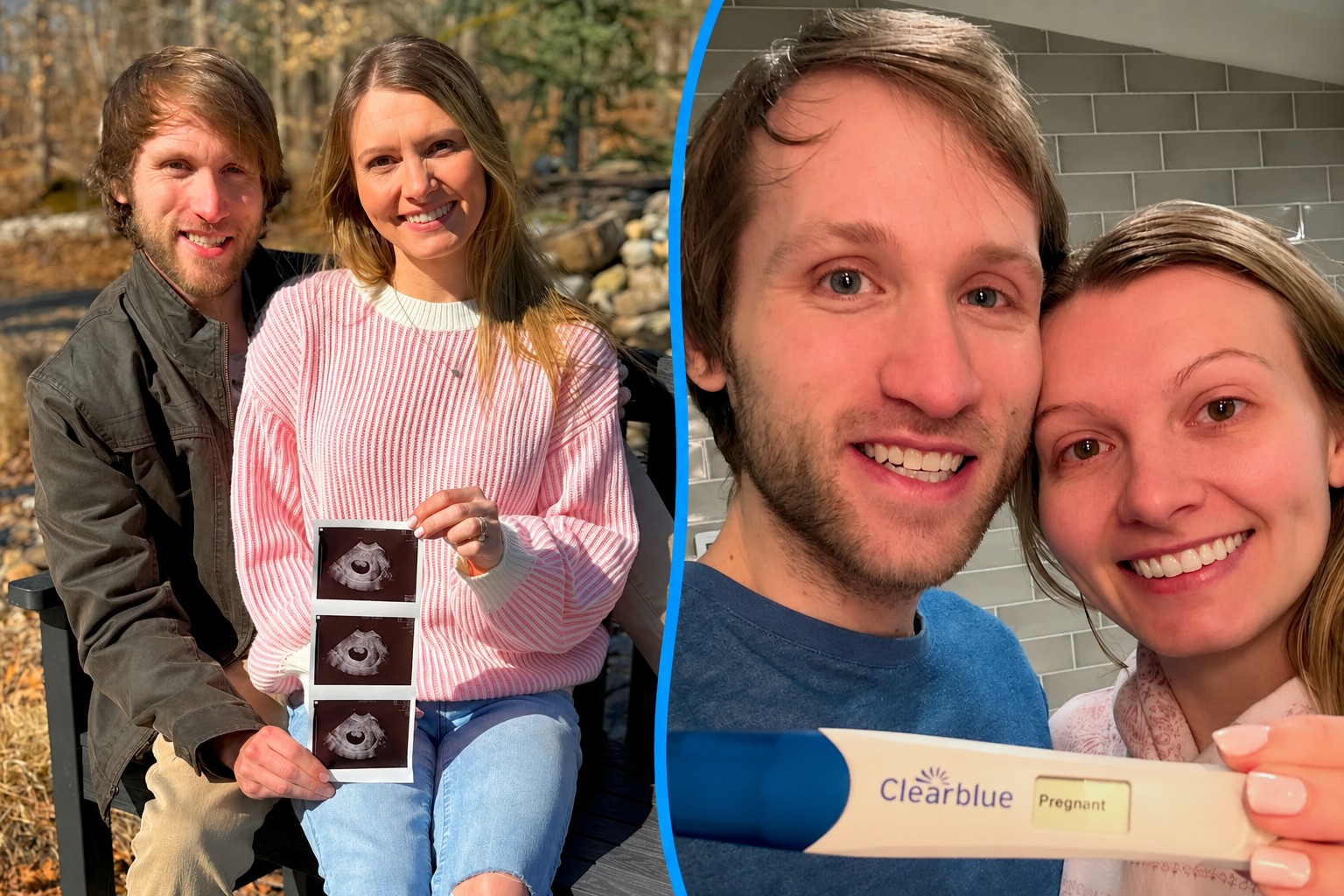

On June 3, 2026, Jesse Ridgway – the YouTuber and content creator known to more than 4.3 million subscribers as McJuggerNuggets – posted a statement on X that would be viewed more than 17.5 million times within 24 hours. In it, he and his wife, Ashley, announced they had made the decision to terminate their pregnancy after a diagnosis of Trisomy 21, more commonly known as Down syndrome, describing the experience as “extremely traumatic,” particularly for Ashley, who had undergone the procedure earlier that week. What followed was one of the most intense and polarizing online reactions to a personal medical disclosure in recent memory: death threats, comparisons to Adolf Hitler, and a public debate that cut straight through America’s most entrenched fault lines on abortion, disability rights, and the ethics of prenatal testing.
The story began not as a controversy but as a celebration. The couple married in October 2025, and in late March 2026, Ashley announced her pregnancy, with the couple sharing the news in a McJuggerNuggets YouTube video and posting ultrasound photos on Instagram. In April, Jesse shared on social media that the same genetic test meant to reveal the baby’s sex had also returned a result showing a 95% chance their son would be born with Down syndrome. The couple had filmed themselves opening and reading the results in real time – a video Ridgway described as profoundly traumatic to revisit.
The decision to terminate came after extensive conversations with medical experts, friends, and family. Ridgway said he initially felt optimistic about raising a child with the condition, but later learned more about the potential health complications and lifelong challenges often associated with the disorder. The public announcement ignited a firestorm that raised questions far beyond one couple’s private grief – about what prenatal testing actually reveals, what the medical realities of Down syndrome are, and who gets to make these decisions.
Who Is Jesse Ridgway?
Ridgway has spent two decades building an audience online and now counts more than 4.3 million subscribers on his main YouTube channel. He built his platform largely through the “Psycho Series,” a scripted but reality-style video franchise that earned him a dedicated fanbase beginning when he was a teenager. Ashley Ridgway is a vlogger, streamer, and content creator who has been married to Jesse since October 2025. Both maintained active presences on social media throughout Ashley’s pregnancy, inviting their audiences into the journey from the beginning – which made the eventual disclosure both more personal and more explosive.
The couple had been in the middle of filming a gender reveal video when they noticed preliminary markers for Trisomy 21 on the same prenatal report. Ridgway told the Los Angeles Times in a phone call that they “were filming and ready to celebrate with our audience and were blindsided,” and that reverting to honesty with his followers is what led to the events of the following 48 hours.
The Announcement and the Backlash
On June 3, 2026, Ridgway announced publicly that he and Ashley had decided to terminate the pregnancy approximately two months prior. He wrote on X that “the choice was not made lightly,” and added, “I signed on to be a parent, come what may… but I just didn’t fully understand what Down syndrome entailed.”
The response was immediate and severe. Within 24 hours, Ridgway, who has 4.34 million YouTube subscribers, posted a follow-up statement describing being called “murderous pieces of shit, evil, compared to Hitler” and receiving “NON-STOP DEATH THREATS.” He wrote that even his six-year-old dog’s Stage 4 kidney disease had been weaponized against him by critics.
Conservative commentator Matt Walsh called Ridgway’s original statement “the most evil thing I’ve ever read on this platform,” while anti-abortion activist Abby Johnson called him a “monster of a man.” The post had been viewed more than 17.5 million times on X by Thursday.
Catholic podcaster Timothy Gordon, whose eighth child has Trisomy 21, urged people to reject Ridgway’s reasoning and accused him of “murdering his own child.” Journalist and anti-abortion activist Ben Zeisloft called on Ridgway to seek “repentance,” writing that “added inconveniences” do not justify ending a baby’s life.
Pro-life advocacy groups released formal statements condemning the couple. Susan B. Anthony Pro-Life America wrote that research shows 99% of individuals with Down syndrome live happy lives with families who love them, and argued that families deserve truthful information and that children should never be discriminated against. Students for Life President Kristan Hawkins characterized the decision as “morally bankrupt eugenics.”
Ridgway pushed back directly. He said he had “never seen such hate and vitriol” directed at people “grieving” and making an “impossible decision.” He criticized those invoking religion as “hypocritical” and rejected the claims of critics who said they would have acted differently. He explained his decision to go public by saying, “I think if we share this, it will have a net positive for other people, and they can feel more comfortable and less shame confronting these things.”
What Is Trisomy 21? The Medical Reality
Down syndrome is a genetic condition in which a person is born with an extra chromosome, specifically an extra copy of chromosome 21. This extra chromosome changes how the brain and body develop during fetal growth, causing both physical and mental challenges. Each year, approximately 5,775 babies born in the United States have Down syndrome.
The medical profile of Down syndrome is broad and variable, but certain health challenges are statistically common. Between 50 and 65% of all babies born with Down syndrome are also born with a congenital heart defect, and babies with Down syndrome can be affected by a wide variety of heart conditions, many of which require surgery, while some milder conditions may resolve as the child grows. Children with Down syndrome also face significantly elevated risk for obstructive sleep apnea (between 50 and 75%) and recurring ear infections (between 50 and 70%).
Ridgway detailed this medical landscape in his public post, listing heart defects, hearing challenges, vision problems, impaired immune function, developmental and learning disabilities, delayed physical development, poor muscle tone, structural facial differences, and decreased lifespan as factors that had informed the couple’s thinking.
The Question of Severity and Quality of Life
The medical picture for Down syndrome is genuinely mixed, and that complexity sits at the center of the public debate the Ridgways’ disclosure ignited. While many individuals with Down syndrome can lead full lives with the right support, the condition varies considerably in severity. Advances in cardiac surgery and specialized care have materially improved survival rates over recent decades. A 2023 study published in the Journal of Pediatrics, which drew on data collected through the Metropolitan Atlanta Congenital Defects Program, a population-based surveillance system administered by the Centers for Disease Control and Prevention, found that five-year survival for children with Down syndrome and congenital heart defects improved steadily from 85% to 93% for those born between the 1980s and 2010s.
At the same time, the CDC’s Down syndrome fact page notes that babies born with very low birth weight or a congenital heart defect are less likely to survive their first year, and that racial disparities exist, with Black infants facing lower first-year survival rates. The condition is lifelong, management-intensive, and, in the majority of cases, involves varying degrees of intellectual disability alongside the physical health profile.
The Screening Process and Its Limitations
One important and often misunderstood dimension of the Ridgways’ case is the nature of the test result itself. Jesse described a 95% probability result from a non-invasive prenatal test (NIPT). According to the National Down Syndrome Society (NDSS), the current generation of NIPT blood tests, which can be conducted as early as 10 weeks of gestation, can detect up to 98.6% of fetuses with Trisomy 21. However, the NDSS also emphasizes that all mothers who receive a positive result on this test are encouraged to confirm the diagnosis with a definitive diagnostic procedure, since prenatal screening tests are routinely offered to women of all ages, but a positive screening result only signals that the chance of Down syndrome appears high.
The definitive diagnostic procedures for Down syndrome are chorionic villus sampling (CVS) and amniocentesis, both of which carry up to a 1% risk of causing a miscarriage but are nearly 100% accurate in diagnosing the condition. Amniocentesis is usually performed in the second trimester between 15 and 22 weeks of gestation, while CVS is performed in the first trimester between 9 and 14 weeks.
It is not publicly confirmed whether the Ridgways proceeded to confirmatory diagnostic testing beyond the initial NIPT result. Screening tests are not definitive and can produce false positives, a point that has featured prominently in commentary from both medical professionals and critics of the couple’s decision.
Termination After Down Syndrome Diagnosis: What the Data Shows

The Ridgways’ decision, while uniquely public, is far from unusual. The data on Down syndrome pregnancy termination in the United States reveals a pattern that many people – including, by his own account, Jesse Ridgway himself – find surprising.
Down syndrome is the most common chromosomal disorder, affecting approximately 1 in every 700 births. A systematic review of published literature in the United States has estimated that termination rates range from 67% to 85% among the overall population of individuals with a positive prenatal diagnosis of Down syndrome.
A 2012 peer-reviewed study published in Prenatal Diagnosis, which analyzed U.S. data from 1995 through 2011, provides the most detailed breakdown. Across 24 accepted studies, the weighted mean termination rate was 67% among population-based studies, 85% among hospital-based studies, and 50% among anomaly-based studies. The research also found evidence that termination rates have decreased in more recent years compared to earlier decades.
Ridgway himself noted that genetic counselors had told him up to 90% of women terminate after a Trisomy 21 diagnosis, and described being “way higher” than he expected – attributing the perception gap to the fact that most terminations happen privately and carry social stigma. The figures cited by his counselors are consistent with older European datasets. A 1999 systematic literature review – among the earliest comprehensive analyses – found termination rates as high as 92% following a prenatal diagnosis of Down syndrome in some populations.
Prenatal screening is widespread in the United States, with an estimated 25% to 50% of pregnant people undergoing non-invasive prenatal testing (NIPT), which can flag Down syndrome as early as nine to ten weeks – often before many legal abortion cutoffs. The combination of early detection capability and the documented termination patterns is what makes Down syndrome such a recurrent focal point in U.S. abortion policy debates.
The Legal and Political Dimension

The Ridgways terminated their pregnancy in 2026, a legal landscape profoundly altered by the Supreme Court’s June 2022 decision in Dobbs v. Jackson Women’s Health Organization, which returned abortion regulation to individual states. After Roe v. Wade was overturned, U.S. abortion law became a state-by-state patchwork, with some states allowing broad access including for fetal anomalies, while others impose strict bans – sometimes targeting Down syndrome specifically – meaning options vary widely depending on where a patient lives.
Legislation specifically targeting Down syndrome as a grounds for abortion has been introduced at both the state and federal levels. At the federal level, the Protecting Individuals with Down Syndrome Act has been reintroduced in multiple congressional sessions. The bill, introduced by Representative Ron Estes of Kansas along with multiple co-sponsors, seeks to amend Title 18 of the United States Code to prohibit discrimination by abortion against an unborn child on the basis of Down syndrome. The bill has not passed into law.
The legality of abortion in the United States and the restrictions imposed on the procedure vary significantly among states, with no uniform federal law. Some states prohibit abortion at any stage of pregnancy with few exceptions, while others permit it up to a certain point in pregnancy, and some allow it throughout a pregnancy.
The political debate around Down syndrome specifically tends to split along three distinct lines. The pro-choice position holds that the decision should remain with the pregnant person given the emotional and medical complexity. Disability rights advocates warn that terminating pregnancies on the basis of a Down syndrome diagnosis can devalue disabled lives and raise concerns about stigma and support systems. The pro-life position goes further, arguing that such abortions are discriminatory and should be restricted or banned.
Disability Rights Advocates and the Tension Within
One of the most intellectually difficult aspects of this debate is that the disability rights community does not speak with one voice on Down syndrome pregnancy termination. Many disability advocates oppose specific bans not because they endorse termination but because they argue that legislation invoking Down syndrome as a protected category does not, in practice, improve conditions for people living with the diagnosis. As Planned Parenthood Action has noted in opposing state-level equivalents of the federal bill, the policy is not supported by the National Down Syndrome Society, which focuses on educating women and their families about Down syndrome when they undergo prenatal genetic testing – not on restricting their choices.
The National Down Syndrome Society, for its part, has consistently advocated for what it describes as accurate and up-to-date information being delivered to families at the time of diagnosis. The NDSS advocates for increased FDA oversight of NIPT screening tests and calls for accurate information on Down syndrome to be delivered to women and families at the time of a positive result. The organization’s position is grounded in the view that informed families, not legislative mandates, produce better outcomes for the Down syndrome community.
What the Ridgways Said After the Backlash
On June 5, 2026, Ridgway spoke with media outlets directly, including an interview reported via multiple outlets. He remained resolute. He explained that when it comes to being a first-time parent or trying to start a family, “you don’t know until you’re thrust into this situation,” and that both he and Ashley were “always just trying to make the best decision you can to benefit your child and your own life.”
He described one of the hardest parts of the experience as coming to terms with the fact that they had already begun preparing for the baby’s arrival. “We were imagining for months what our lives would be,” he said. “You get the nursery ready. Ashley was already buying clothes, and we’re thinking of what could be.” After making the decision public, the couple faced an onslaught of criticism including death threats.
Jesse described Ashley as a “bad-ass” in the face of the harassment, and both have spoken about the physical and emotional toll of the procedure and its aftermath. In addition to Ashley’s physical recovery, Jesse said the emotional impact has been far more difficult for both of them, though they remain hopeful about trying to have a child again in the future.
Jesse and Ashley, who married in October 2025, are still planning to have children. “In as soon as potentially a month, a month and a half, we can start trying again,” Ridgway said.
Key Takeaways
The story of Jesse and Ashley Ridgway is, on one level, a specific and deeply personal account of a couple’s response to a devastating prenatal diagnosis. On another level, it is a case study in how a single disclosure on social media in 2026 can detonate every live wire in American public life simultaneously – abortion rights, disability politics, online harassment, the psychology of grief performed in public, and the gap between what people believe about prenatal testing and what the data actually shows.
Several facts stand out as relevant for anyone trying to understand the broader landscape. Down syndrome pregnancy termination, at a rate somewhere between 67% and 85% in the United States by the most rigorous available research, is far more common than most public discourse acknowledges. That silence is not random – as Ridgway observed, the privacy of those decisions is both protective and isolating, and the shame that attaches to them is real.
The medical picture for Down syndrome is genuinely complex. Outcomes have improved substantially in recent decades, particularly for children with congenital heart defects who now have access to surgical interventions unavailable to earlier generations. At the same time, the condition involves significant, lifelong, and highly variable health challenges that cannot be predicted with certainty from a prenatal screen. Neither screening nor diagnostic tests can predict the full impact of Down syndrome on a baby, a limitation that matters enormously to every family navigating a positive result.
What the Ridgway case also illustrates is the stakes of making a private medical decision in a fully public life. Whether or not one agrees with the choice they made, the threats and abuse directed at a couple already processing grief constitute a separate moral failure – one that no position on abortion law or disability rights actually requires. Jesse Ridgway said he hoped their disclosure would reduce stigma and help other people feel less alone. The response they received suggests how far there is still to go before that is possible.
What This Conversation Costs

The harshest thing about the Ridgway story is not the backlash – ugly as it was. It is the reminder of what it costs to be honest in public about a decision that most families make in private, with no audience, no comment section, and no death threats arriving at 2 a.m. The couples who received the same diagnosis in the same week and said nothing are not morally different from Jesse and Ashley. They were just quieter, and quieter was safer.
Grief does not get less complicated because other people have opinions about it. A prenatal diagnosis of Down syndrome asks a family to absorb an enormous amount of information about an uncertain future, very fast, in a moment when they were expecting a gender reveal. The Ridgways made their call. The majority of couples in their position, according to the published research, make the same one. Most of them never say so out loud. The fact that Jesse and Ashley did – and what happened next – is not a lesson in what the right choice is. It is a lesson in what public honesty currently costs in America, and in whether that price is one any private person should have to pay.
Disclaimer: This information is not intended to be a substitute for professional medical advice, diagnosis, or treatment and is for information only. Always seek the advice of your physician or another qualified health provider with any questions about your medical condition and/or current medication. Do not disregard professional medical advice or delay seeking advice or treatment because of something you have read here.
AI Disclaimer: This article was created with the assistance of AI tools and reviewed by a human editor.