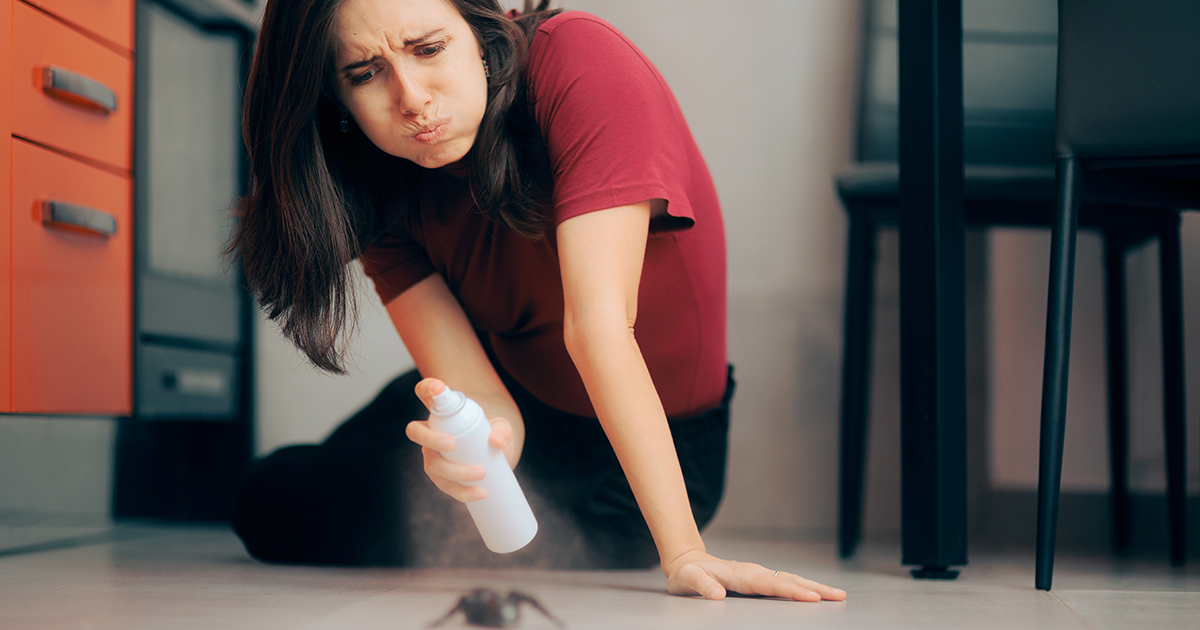

Every summer, the same thing happens. You spend a weekend cleaning up the yard, wiping down the kitchen, running the fan to keep the back door open – and by mid-July, you’ve still got ants marching across the counter and a mosquito situation that is getting personal. The house is not dirty. You are not negligent. But something in the daily routine is rolling out a welcome mat that you didn’t know you’d laid.
This summer, homeowners may notice even more pest activity than usual. According to Aptive’s entomologist Isaac Rockwell, the winter of 2025-26 was the second warmest on record in the U.S., and mild winters allow more pests to survive into spring, which leads to larger populations throughout the summer. So the conditions are already working against you before you’ve made a single mistake. The good news is that most of the mistakes are not dramatic oversights – they are ordinary habits that happen to create exactly the food, water, and shelter conditions ants, mosquitoes, cockroaches, and flies need to thrive.
After a winter of unusual precipitation patterns, the National Pest Management Association produced the Spring and Summer 2026 Bug Barometer, a forecast using weather patterns, long-term climate data, and pest biology to help homeowners prepare for what’s coming in their specific region. The picture it paints is not a relaxing one. But knowing which summer pest mistakes are genuinely moving the needle means you can stop doing the things that don’t help and fix the ones that do.
1. Ignoring Standing Water, Including the Spots You’ve Forgotten Exist
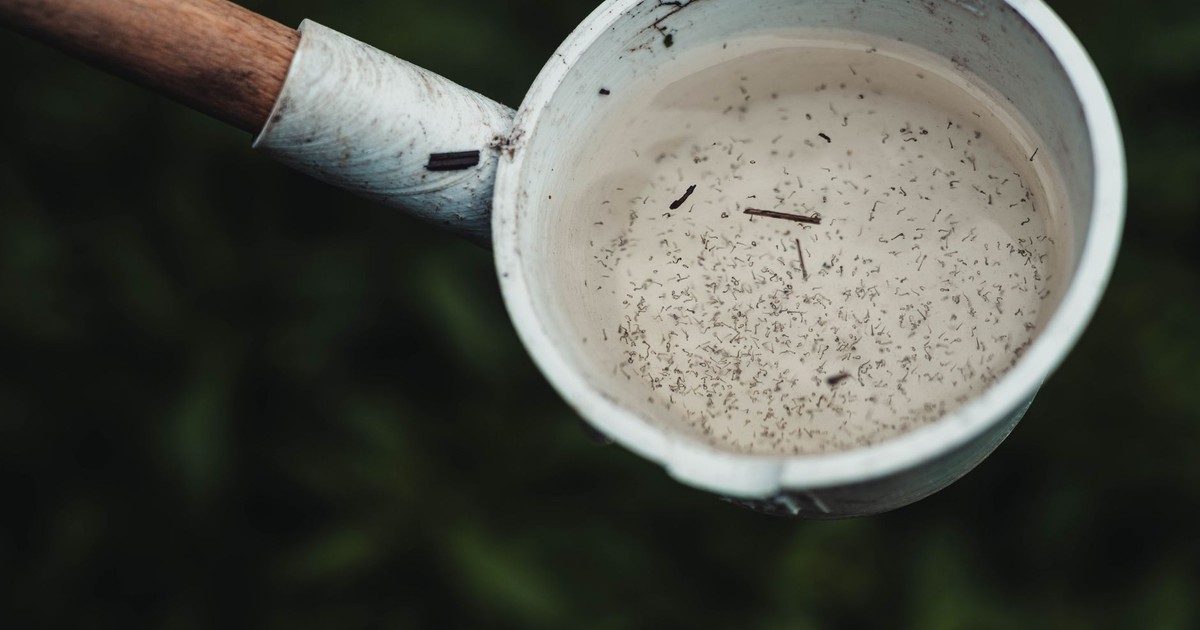
The mosquito problem in your yard almost certainly did not start with mosquitoes. It started with water. Not a pond, not a swamp – just the saucer under a flowerpot, the crease in a tarp, the low corner of the lawn that never quite drains after rain. After a blood meal, a female mosquito will look for standing water to lay her eggs, and it doesn’t take much. According to Terminix’s mosquito life cycle guide, even a tablespoon of water on a bucket lid or a clogged gutter can be enough.
Eggs laid on water may hatch within 24-48 hours under ideal conditions. That timeline is worth taking seriously because it means a single missed week of yard checks during a hot August is enough to take a calm backyard and turn it into a breeding operation. The full life cycle from egg to biting adult can complete in as little as seven to ten days in peak summer heat, which means the mosquito that bit you on a Tuesday may have hatched from the birdbath you forgot to empty on the previous Sunday.
The fix is less about chemical treatment and more about audit. Walk the yard every week and look for anything holding still water: upturned lids, forgotten children’s toys, the crevice behind the air conditioning unit, the gutter that’s been on the to-do list since April. Change birdbath water every two to three days. If your lawn has a low spot that puddles after rain, it is worth addressing with topsoil or drainage, not just ignoring until fall. Mosquito populations are large this summer. This is the single highest-leverage thing you can do to reduce them.
2. Stacking Mulch Too Close to the Foundation

Mulch is one of those things that gets a pass because it looks tidy and intentional. Freshly laid beds with a thick dark border around the house read as “cared for.” What they also read as, if you are an ant, a cockroach, or a termite, is “ideal habitat.”
According to Patriot Pest Solutions, overgrown vegetation and dense organic material trap moisture, block sunlight, and reduce airflow, three conditions that accelerate pest activity. Stink bugs, spiders, and cockroaches commonly use dense plant growth as a staging ground before entering through gaps in the home’s exterior. Mulch does the same thing when it’s piled up against the siding or the base of the door frame. It holds moisture against the wood, creates a dark covered corridor for insects to travel through, and puts the organic material they want within inches of the entry points they need.
The rule most pest professionals use is a minimum six-inch gap between mulch and the foundation wall, and keeping the mulch layer to two to four inches deep. Anything thicker starts to hold water instead of draining it. Cedar mulch has some natural insect-deterring properties due to its oils, which can help, but it is not a substitute for keeping it away from the structure itself. If the beds around your foundation are currently packed up against the siding, that is one of the more common summer pest mistakes that ends up costing people a lot in fall treatments.
3. Leaving Food Sources Accessible, Including the Ones Outside

Most people are reasonably careful about not leaving food on the kitchen counter overnight. The gaps tend to be elsewhere: the crumbs behind the toaster that get wiped every few weeks instead of every few days, the recycling bin with residue on the bottles, the dog’s bowl left full on the back porch, the trash can under the sink with a lid that doesn’t seal properly.
Food crumbs, pet food, and open trash invite ants, cockroaches, and rodents both indoors and outdoors. Storing food in sealed containers and cleaning up promptly denies pests the resources they need to stay. Outdoors, the list extends further than most homeowners think: a grill with grease buildup on the grates, fallen fruit from a backyard tree left to rot on the ground, a compost bin without a secure lid, a bag of birdseed stored in the garage with a loose top. All of it registers as food to insects and rodents that are already spending more time near your home because of the warm summer conditions.
The most useful kitchen habit is the one you do before bed: counters wiped, dishes not left soaking, trash emptied or tightly sealed. Outside, the main habits are keeping grills clean after every use, picking up fallen fruit as it drops (not once a week), and making sure any outdoor trash cans have lids that actually close and latch, not just rest on top.
4. Not Sealing the Entry Points You Can’t See From Eye Level

There’s a specific kind of optimism that homeowners have about the structural integrity of their homes. The windows look fine. The doors close properly. Nothing seems obviously open. And yet ants materialize in the bathroom, flies appear inside the garage, and you find yourself wondering how they are getting in when everything looks sealed.
Cracks as small as 0.125 inch allow some insects to get inside. Sealing cracks around windows, doors, siding, utility pipes, behind chimneys, and underneath wood fascia with good quality silicone or silicone-latex caulk is one of the most effective exclusion steps available. The places most often missed are not the obvious door and window frames; it’s the points where pipes and wires enter the building (the gap around the dryer exhaust vent, the space where the cable line comes through the exterior wall), the weep holes in brick veneer, and the expansion gaps in siding that look decorative but aren’t sealed.
The summer inspection worth doing is a slow walk around the entire exterior at ground level, then again at eye level, looking specifically at utility penetrations and the junctions between different building materials. Wherever two surfaces meet and are not caulked, that is a potential entry. Window screens with small tears are worth replacing rather than ignoring – a tear that looks like nothing to you looks like a door to a fly.
5. Using Outdoor Lighting That Attracts Flying Insects

Porch lights and pathway lighting are functional and they look good, and if you have the wrong bulbs in them you are essentially running a nightly recruitment drive for every flying insect within range. Traditional incandescent and even some LED bulbs emit wavelengths of light that are highly attractive to moths, flies, gnats, and other flying insects, which then congregate near the light source, which is typically right next to the door you’re walking in and out of all evening.
The switch that makes the most difference is moving exterior fixtures to warm-toned LED bulbs or yellow “bug light” bulbs, both of which emit less of the blue and ultraviolet light spectrum that insects are drawn to. Position matters too. A light mounted directly above the door is more problematic than one mounted on a post several feet away, because insects attracted to the post light don’t end up hovering directly at your entry point. This is also relevant for natural mosquito repellent plants around patios and decks; the light situation compounds or mitigates how many insects are circling the area where you’re actually spending time.
Motion-activated lights are another practical option, because they reduce the total hours that lights are burning and therefore limit the window during which flying insects are being pulled toward your home. If you entertain outside in the evenings regularly and the light situation has never been addressed, this is one of the lower-effort summer pest mistakes to correct and one of the more immediately noticeable in its results.
6. Overlooking Gutters and Roof-Level Drainage

Gutters are tedious to think about and easy to forget for months at a time, which is exactly why they appear on almost every pest professional’s list of the most commonly overlooked problem spots. A clogged gutter does multiple things that invite pests simultaneously: it holds standing water (mosquito breeding ground), it keeps the fascia board and roof edge damp (termite and carpenter ant territory), and it creates a sheltered, debris-filled channel that provides nesting material and cover for rodents and wasps.
Clogged gutters can hold standing water, which creates breeding conditions for mosquitoes. But the problem extends beyond mosquitoes. Damp, decomposing leaf matter in a gutter is attractive to a broad range of insects that are already active in summer heat. When that material sits long enough, it starts to behave like soil, which means you end up with organic debris holding moisture against the structure of your roof at exactly the point where wood meets water.
Clearing gutters twice a year is the standard recommendation, but if you have overhanging trees dropping leaves and debris throughout summer, once in fall and once in spring is not enough. A midsummer check is worth adding to the calendar, especially in a year when rising spring temperatures are triggering pest pressures sooner than usual, with summer conditions spiking fly activity and prompting cockroach and ant invasions indoors following heavy rainfall. After a heavy rain, gutters that overflow or drain improperly are worth checking within a day or two, because that standing debris-laden water is a resource that insects will find before you do.
Read More: Spray this Simple 2-Ingredient Mixture & You Will Never See Spiders or Insects in Your Home
The Thread Running Through All of It

Most of these mistakes share the same logic: they create the three things pests need most, which are food, water, and shelter. When you look at the list that way, fixing any one of them is not just solving a single problem; it’s reducing the overall hospitality score of your home to insects and rodents that are, this particular summer, more active and more numerous than they’ve been in recent years.
You don’t have to overhaul everything at once. The highest-impact changes are the standing water audit (done weekly, takes ten minutes), the gap between mulch and foundation, and the gutter check. The lighting and sealing work can follow. None of it requires a professional on the first pass, though if you are already seeing signs of infestation rather than just potential for one, that calculus changes. The point of catching summer pest mistakes early is that prevention is not glamorous, but it is considerably less stressful than treatment in August when you’ve already got a situation on your hands.
Disclaimer: This information is not intended to be a substitute for professional medical advice, diagnosis, or treatment and is for information only. Always seek the advice of your physician or another qualified health provider with any questions about your medical condition and/or current medication. Do not disregard professional medical advice or delay seeking advice or treatment because of something you have read here.
AI Disclaimer: This article was created with the assistance of AI tools and reviewed by a human editor.