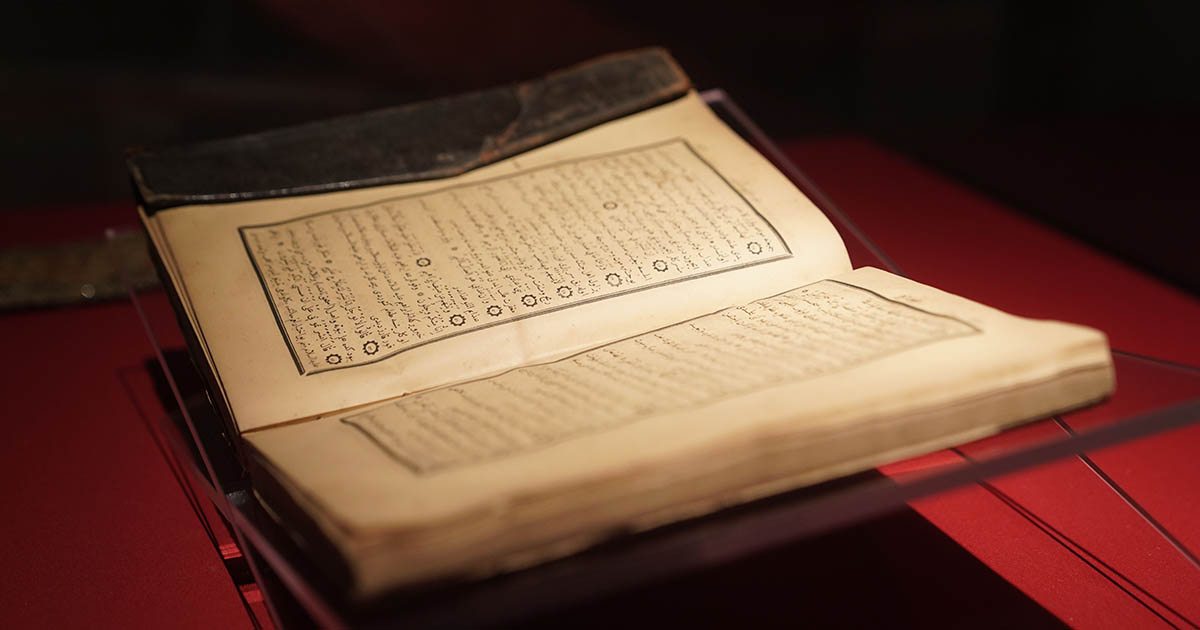

A Babylonian clay tablet from the early second millennium BCE recorded that if a lunar eclipse cleared from south to north, the kingdom of Akkad would fall – and the scribes who read it were not writing poetry. They were writing a memo to the palace.
The warnings were never meant to be read casually. Written in cuneiform in the early second millennium BCE, 4,000-year-old Mesopotamian warnings have finally been interpreted from four tablets that had been sitting in the British Museum for well over a century. The specific contents of those tablets, once deciphered, were not vague or metaphorical. They were direct, conditional, and unsettling in their specificity, linking the movement of the moon to the deaths of kings, the fall of dynasties, and the spread of plague across entire civilizations.
Divination was not just a spiritual practice; it was a core aspect of governance. The men and women who composed, copied, and interpreted these texts held positions of immense political power. When the gods spoke through an eclipse or a deformed sheep’s liver, a king’s survival could depend on who was reading the signs and what they concluded. The spiritual warnings ancient texts preserved were never passive observations. They were calls to action, and ignoring them, in almost every tradition, was a form of suicide.
The Babylonian Eclipse Tablets: When the Moon Predicted Death

The texts analyzed by researchers are believed to have originated in the ancient Babylonian city of Sippar, located in modern-day Iraq. Scholars Andrew George and Junko Taniguchi, publishing their findings in the Journal of Cuneiform Studies, described a system of celestial omen-reading that was as rigorous and systematized as any modern bureaucratic procedure. Ancient peoples believed that “events in the sky were coded signs placed there by the gods as warnings about the future prospects of those on earth.” “Those who advised the king kept watch on the night sky and would match their observations with the academic corpus of celestial-omen texts.”
The actual content of the warnings is stark. One of the omens states that if “an eclipse becomes obscured from its center all at once [and] clear all at once: a king will die, destruction of Elam.” Another warns that if “an eclipse begins in the south and then clears: downfall of Subartu and Akkad.” These were not interpreted as possibilities. They were treated as scheduled events that could be confirmed, anticipated, and – crucially – potentially averted.
The tablets also reveal that “an eclipse in the morning watch” signaled “the end of a dynasty” in the Mesopotamian city of Akkad. One omen asserts that “an eclipse in the evening watch… signifies pestilence,” referring to a deadly epidemic that could sweep across borders and rampage every nation in the region.
The Logic of Conditional Doom
Although omens foretold future events, the concept of predestination probably did not exist in ancient Mesopotamian thought, and one’s future was not set in stone. Omens were therefore viewed as foretelling a conditional future, rather than one that was irrevocable.
This stemmed from the Mesopotamian belief that there was an assembly of gods – similar to a modern parliament – that convened to decide the course of worldly affairs and the fate of mortals. These decisions were passed on to human beings in the form of omens, auspicious ones as signs of consent, and inauspicious ones as warnings of impending disaster. As these decisions were not irrevocable, one’s future could be changed through the performance of ritual measures provided by the Namburbi texts.
The practical response to a dire celestial warning could be extraordinary. The Assyrian king Ashurbanipal reportedly kept a library of omen texts and consulted them regularly. In one case, after a lunar eclipse was interpreted as a threat to the crown, a substitute king was briefly installed – literally a stand-in to absorb any cosmic punishment fated for the true monarch. The substitute would reign for a designated period, after which the true king would reclaim power – having effectively transferred the predicted catastrophe to a proxy.
The Šumma Ālu: Ten Thousand Omens Catalogued
Beyond celestial warnings, the Babylonians compiled terrestrial omens with equal obsessive thoroughness. The Šumma ālu ina mēlê šakin is a collected series of cuneiform texts of ancient Mesopotamia amounting to one hundred and twenty clay tablets. The title translates as If a City is Situated on a Height, and it lists over ten thousand omens. These ranged from the behavior of animals to the configuration of houses, covering virtually every observable phenomenon in daily life.
A cuneiform calendar dated at 850 BC, consisting of daily instructions for the seventh month of the year, read: “Avoid eating garlic in the second day or risk a death in the family.” Alongside dietary warnings, the system catalogued human behavior, architecture, and even the movements of insects as potential divine signals. Hepatoscopy – the examination of animal livers or gall-bladders – was a widely practiced divination method. The liver was considered a particularly sacred organ, believed to be a locus of divine communication. The process involved sacrificing an animal, typically a sheep, and carefully inspecting the liver for signs and anomalies. Skilled priests, known as baru, undertook this examination, meticulously studying the liver’s size, shape, color, and texture.
The Roman Sibylline Books: Sacred Warnings That Governed an Empire

The Sibylline Books were a collection of oracular utterances, set out in Greek hexameter verses, that – according to tradition – were purchased from a sibyl by the last King of Rome, Lucius Tarquinius Superbus, and consulted at momentous crises through the history of the Roman Republic and the Empire.
Their presence in Rome was connected, according to tradition, to a legend from the reign of Tarquinius Superbus, who was the city’s final king and ruled from approximately 534 to 509 BCE. As the story, later recorded by Livy and Dionysius of Halicarnassus, related, a veiled woman approached the king and offered to sell him nine books filled with divine knowledge. When he refused her price, she burned three of the books and offered the remaining six at the same original price. He refused again. She burned three more and offered the last three at the original cost. He paid.
The Pax Deorum and Warnings of Divine Anger
The contents of the Sibylline Books were tightly controlled. The books were closely guarded and kept in a room beneath the Temple of Jupiter on the Capitol. In times of great danger, they were consulted by the decemviri sacris faciundis – ten men who held office for life and were exempt from all other public duties. They were responsible for keeping the books in safety and secrecy. These officials, at the command of the Senate, consulted the Sibylline Books in order to discover not exact predictions of future events in the form of prophecy, but the religious observances necessary to avert extraordinary calamities – such as comets, earthquakes, showers of stones, and plague.
According to Roman belief, disasters such as plagues and natural omens were taken to indicate a breakdown in the pax deorum – the harmony between gods and mortals – and the Sibylline Books were used to determine the required action to restore balance. The instructions within the scrolls were rarely specific about dates or names. Rather than predicting events in detail, the verses embodied a way of thinking that held correct religious practice and civic order as inseparable, and where divine punishment followed any failure to maintain the proper forms of worship.
According to Roman tradition, government officials consulted these texts whenever strange omens appeared or the state faced disaster. During plagues, military defeats, or unusual natural events, priests would search the verses for guidance on how to restore harmony with the gods. In this way, prophecy functioned less as a prediction of the future and more as a tool for managing uncertainty.
Destruction and Loss
The original Sibylline Books were closely-guarded oracular scrolls written by prophetic priestesses – the Sibylls – in the Etruscan and early Roman Era, as far back as the 6th century BCE. These books were destroyed, partially in a fire in 83 BCE, and finally burned by order of the Roman General Flavius Stilicho (365 – 408 CE). The Senate subsequently dispatched envoys across the Mediterranean to reconstruct the collection. The replacement prophecies were gathered especially from Troy, Erythrae, Samos island, Africa (modern Tunisia), and from Sicily and Tibur in Italy.
Only fragments of the original Sibylline Books have survived, the rest being lost or deliberately destroyed. What remains is largely considered pseudonymous material composed centuries after the originals – a testimony, in itself, to how desperately Rome’s successors wanted to replicate the authority those warnings had carried.
The Egyptian Book of the Dead: Warnings for the Journey Beyond
A Text Designed for the Most Dangerous Passage
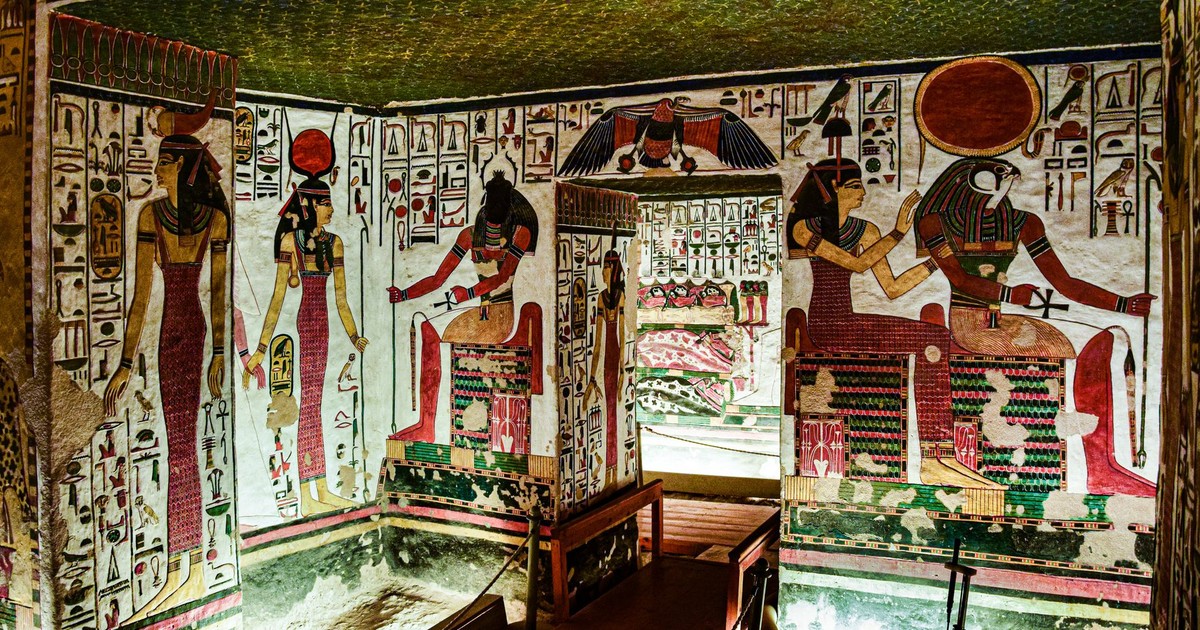
The Book of the Dead is the name given to an ancient Egyptian funerary text generally written on papyrus and used from the beginning of the New Kingdom (around 1550 BC) to around 50 BC. “Book” is the closest term to describe the loose collection of texts consisting of a number of magic spells intended to assist a dead person’s journey through the Duat, or underworld, and into the afterlife, written by many priests over a period of about 1,000 years.
The original Egyptian title was not “Book of the Dead.” Its original name in ancient Egyptian is transliterated as rw nw prt m hrw, which may be translated as Book of Coming Forth by Day or Book of Emerging Forth into the Light. The modern name, adopted by 19th-century Egyptologists, inadvertently frames as morbid what Egyptians understood as a survival manual.
The Warnings Within the Spells
Comprising almost 200 spells and statements, the Books of the Dead were primarily written on papyri for non-royal members of society from the New Kingdom through the Ptolemaic Period, and placed in their tombs to assist them through trials and tribulations in the afterlife.
Many spells were designed to thwart specific demons and obstacles on the journey through the afterlife. There were spells for transferring the ka – the life force – into statues and ones for restoring limbs and sensory organs snatched by monsters. One spell repels a gruesome crooked-legged scarab.
The spells were inscribed on long rolls of papyrus, some in excess of 78 feet long, often leaving blank spaces for the deceased’s name, so scribes could prepare the Book of the Dead in advance and fill in the name when needed. The warnings within the text were granular and specific, accounting for dozens of distinct threats the soul might encounter, from hostile supernatural gatekeepers to tests of moral integrity that, if failed, resulted in permanent obliteration rather than resurrection.
The earlier Pyramid Texts contain spells that could be used to call upon the gods for their aid in the afterlife. Remarkably, if the gods refused to comply, the Pyramid Texts provides spells that the deceased pharaoh could use to threaten them. Even within the framework of divine warning, the Egyptians preserved a conception of human agency so robust that the dead were expected to argue back.
Biblical Prophetic Warnings: The “If-Then” Architecture of Ancient Hebrew Texts
Conditional Warnings as a Governing Framework
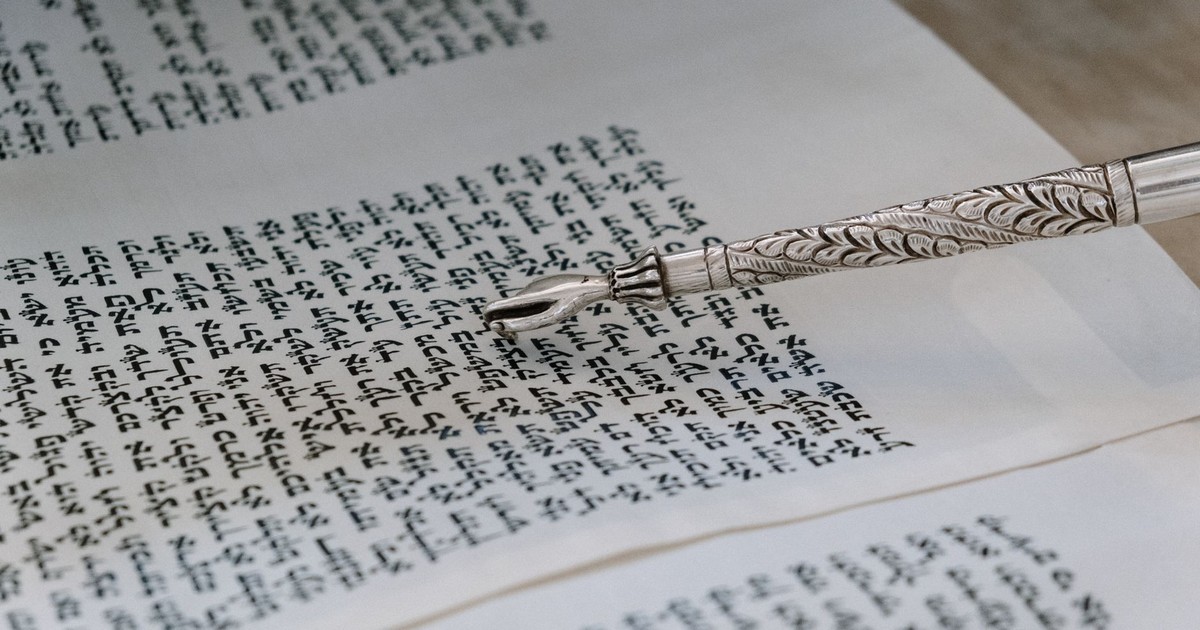
The pre-classical Hebrew prophets made “if, then” warnings, hoping to guide according to God’s will and divine Law. The structure was deliberate: warning was not fate but instruction. Prophets including Samuel, Elijah, and Elisha operated within sanctuaries and monarchies, issuing warnings that functioned as political counsel embedded in theological authority.
Classical prophecies also came later, in the books Isaiah through Malachi, during the neo-Assyrian Empire’s takeover and after the collapse of Jerusalem – dating to the fifth through eighth centuries BC. These texts addressed national catastrophe directly, framing conquest and exile not as random misfortune but as the consequence of specific failures, catalogued in detail. The Book of Deuteronomy contains extensive passages listing precise calamities that would follow covenant violations – drought, military defeat, famine, exile – constructing a direct causal chain between conduct and cosmic consequence.
The Book of Revelation, written in the late first century CE, operates in a related but more apocalyptic register. Those who interpret the Book of Revelation often focus on the themes of war, disease, natural disasters, and rampant death. Biblical scholars argue that the Book of Revelation is a theological work, heavily laden with symbolism, meant to instill hope in Christians and not primarily intended as a prophecy of future events. Yet the warnings it encodes – against idolatry, moral compromise, and institutional corruption within the early church – were clearly aimed at a specific, contemporary readership experiencing persecution under Rome.
The Enuma Anu Enlil: Celestial Divination as State Science

A Systematic Corpus of Sky-Based Warnings
The Babylonians excelled in celestial divination, developing an advanced understanding of the stars and their influence on human affairs. The Enuma Anu Enlil, a series of cuneiform tablets, documented celestial omens, representing the Mesopotamians’ meticulous observations of the night sky. This text, considered one of the largest collections of astrological omens in the ancient world, ran to approximately 70 tablets containing thousands of individual predictions tied to astronomical phenomena.
Astrological observation was part of an elaborate method of protecting the king and regulating his behavior in conformity with the wishes of the gods. By cross-referencing the various features of an eclipse against an “academic corpus of celestial-omen texts,” royal advisors were able to decipher the intentions of the heavens and assist the king in avoiding a nasty outcome.
The professional class dedicated to reading these warnings was substantial. Court astronomers maintained nightly sky watches and dispatched written reports to the palace, cataloguing every anomalous phenomenon and cross-referencing it against the accumulated omen literature. Rulers sought the advice of astrologers who monitored the night sky and compared their observations with omen texts. If the prediction was dire, such as “the king will die,” additional rituals would be performed, including divination from animal entrails, to determine whether the king was in danger. Kings did not have to accept their fate lying down, as protective rituals could be employed to counteract unfavorable omens. If divination results indicated danger, appropriate rituals were believed to nullify the bad omen and counteract the evil forces behind them.
The Tombs That Talked Back: Curse Inscriptions as Protective Warnings

Warnings Written for the Dead and the Living Alike
Not all spiritual warnings in ancient texts were directed skyward. Some were aimed directly at the living, inscribed on tomb walls, burial vessels, and funerary objects as deterrents against desecration and theft.
One Mesopotamian curse inscribed on a bowl wished the victim’s “tongue may dry up in his mouth… that his legs may dry up, that sulfur and fire may burn him, that his body may be struck by scalding water, that he may be choked, estranged, and disturbed in the eyes of all who see him.” The second tomb found under the Nimrud Palace contained a curse threatening the person who opened the grave of Queen Yaba – wife of powerful Tiglath-Pileser II – with eternal thirst and restlessness, with a specific warning about placing another corpse inside.
These texts operated on a different premise from celestial or prophetic warnings. Where eclipse omens addressed the fate of kings and nations, tomb curse inscriptions were aimed at individuals – and at precisely the wrong kind of individual. The warning was not conditional in the Namburbi sense. It was absolute, written for an audience who was not supposed to exist: whoever had the audacity to open the sealed chamber.
Disasters were seen by Romans as manifestations of divine disapproval, and unusual phenomena as portents of catastrophe. To hear of such phenomena could create panic in a society riddled with superstitions, particularly in times of crisis. Tomb inscriptions extended this logic to the personal level: any violation of the burial space was itself a catastrophic omen, inviting divine punishment not as a natural consequence but as a directly targeted supernatural response.
What These Warnings Were Really About

The spiritual warnings found across ancient texts – whether Babylonian cuneiform, Egyptian papyrus, Roman oracle scrolls, or Hebrew prophetic books – share a structural logic that transcends geography and theology. Each tradition encoded warnings not as passive observations but as active interventions designed to change behavior, avert disaster, and maintain the delicate reciprocity between humanity and the divine. The Babylonians built an entire bureaucratic apparatus to read, record, and respond to celestial warnings. The Romans stored theirs in a vault beneath their most sacred temple and consulted them only when facing existential crises. The Egyptians inscribed theirs on linen and papyrus and buried the warnings with their dead, sending the knowledge forward into an afterlife where it would be needed most.
What unites these traditions is the absence of fatalism. In those systems, ignoring an omen wasn’t just foolish – it was dangerous. If the gods had spoken and you failed to listen, catastrophe wasn’t just possible. It was deserved. Natural disasters weren’t environmental; they were divine. A flood wasn’t simply a meteorological event; it was judgment.
That architecture of conditional doom – act correctly and avert the catastrophe; ignore the warning and earn the consequence – remains the most distinctive feature of spiritual warnings ancient texts carried forward through the centuries. Whether those warnings originated from the gods of the Euphrates valley, the prophetesses of the Etruscan hills, or the prophets of the Judean highlands, they all agreed on one fundamental premise: the universe communicates, and silence in the face of its warnings is never neutral. The archive, in every one of these traditions, only ever grew larger. Nobody burned the tablets because the omens stopped coming.
AI Disclaimer: This article was created with the assistance of AI tools and reviewed by a human editor.