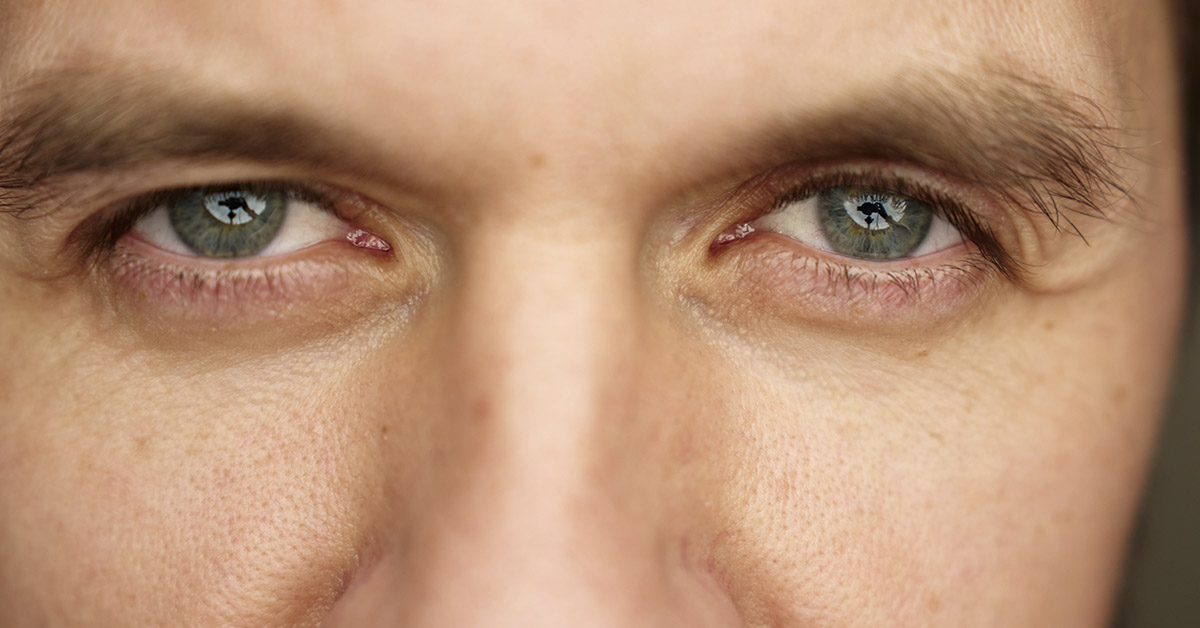

If you have ever scrolled through Reddit’s r/FindTheSniper community, you already know how this goes. Someone posts a perfectly ordinary photo or a messy room, a forest trail, a pile of tools, and then casually says, find the hidden object. Thousands of people zoom in, squint, argue in the comments, and swear the object is not even there. And then someone spots it in seconds and ruins it for everyone else.
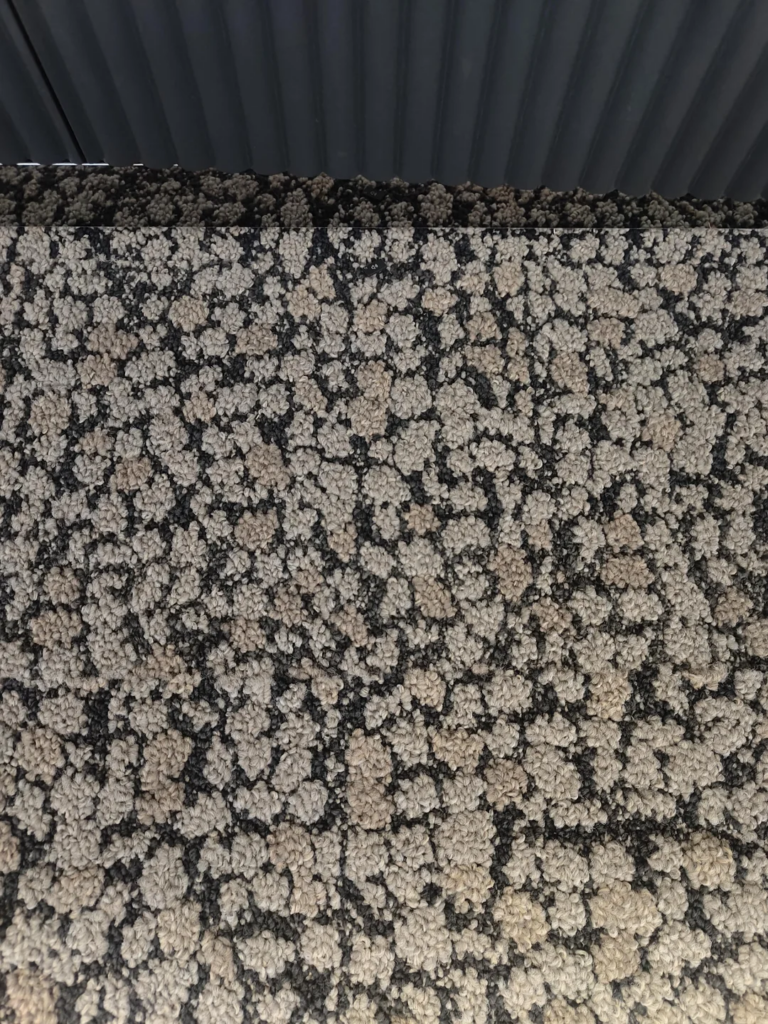
This image feels exactly like that. Somewhere in this scene is a single keyboard key that slipped off a laptop and landed on the floor. It is not glowing, centered in the image, orframed helpfully. It is just there, blending in like it was always meant to be part of the floor.
Most people miss it the first time, and honestly, that is kind of the fun of it. At first glance, your brain just sees a floor. Pattern. Texture. Maybe the leg of a chair. Maybe a shadow. It processes the big shapes and moves on. The missing key, that tiny square of plastic, disappears into everything else. You could stare straight at it and still not really see it.
Round One
So here is the test. Without zooming in too fast. Without frantically scanning every corner like you dropped something important. Can you find the keyboard key in under ten seconds?
If you can, that is impressive. Some people like to call it sniper vision. That sharp ability to notice small, almost invisible details hiding in clutter. It is not about perfect eyesight, but more about how your brain sorts information, what it decides matters, and what it quietly ignores.
If you cannot find it right away, do not feel bad. This is not just a random photo. It is a tiny experiment in attention. Your brain is constantly filtering the world, cutting out what seems irrelevant. A small key on a patterned floor does not exactly demand attention.
And here is the strange part. Once someone circles it for you, once you finally spot it, you will wonder how you ever missed it. It suddenly feels obvious. Almost embarrassingly obvious. That shift, from invisible to completely clear, is what makes posts in communities like r/FindTheSniper so addictive.
So, go on, take a look. The key is there. The question is, can you see it?
Need a Hint? Read Carefully.
If you are still scanning and starting to doubt yourself, here is a gentle nudge. Do not look for something that stands out. That is the trap.
Instead, look for something that almost matches its surroundings but feels slightly too geometric. The floor has patterns and texture. The key has sharper edges and a cleaner shape. Your brain might be blending it in because the color is similar, but the shape is not.
Try this. Divide the image into four sections and scan slowly from left to right, top to bottom. Do not let your eyes jump around randomly. Also, pay attention to areas where light changes into shadow. Small dark objects love to hide near contrast shifts.
And one more clue. It is not sitting in the open center of the image. Your brain keeps checking the obvious spots first. Look somewhere you might normally ignore.
Answer: The key sits in the upper middle half of the image, just below the shadow line from the door.
Round Two: Can You Spot What Is Hiding in the Rocks
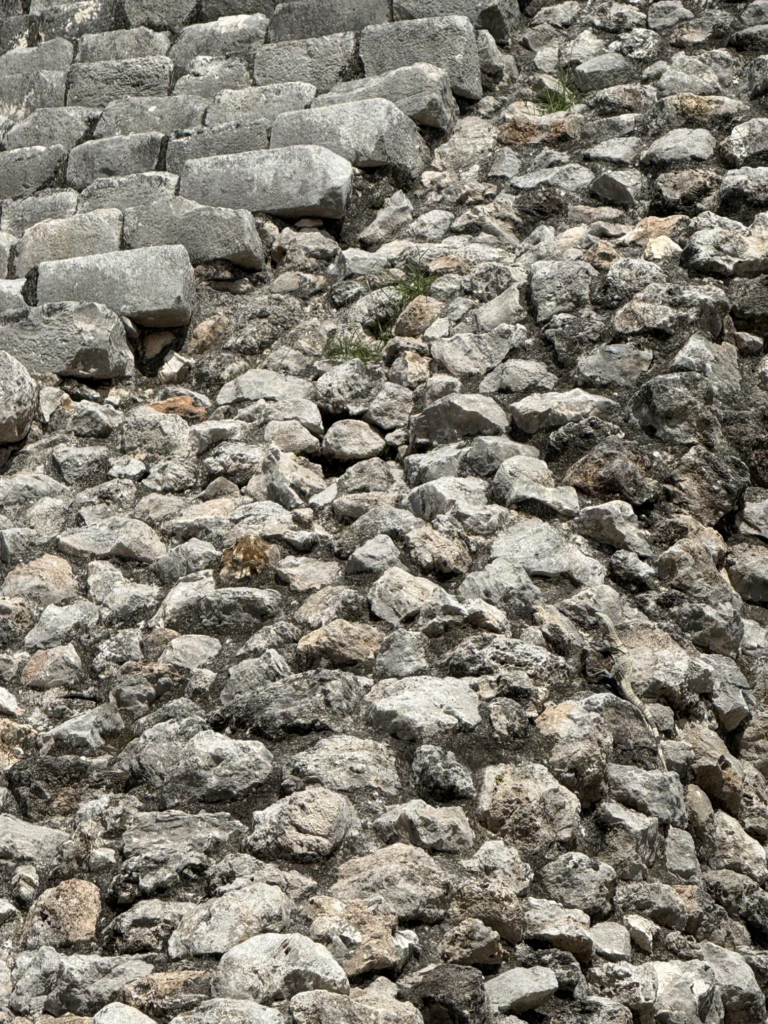
At first glance, this image just looks like a pile of rocks. Uneven stones. Broken concrete. Light gray, dusty textures everywhere. Nothing unusual. Nothing dramatic. And that is exactly why it is difficult.
Somewhere in this mess of stone and shadow is something living. It is not brightly colored or posed. It is doing what nature does best, blending in so well that your eyes slide right over it.
Before you keep reading, pause. Give yourself ten seconds. Do not zoom in right away. Do not wildly scan the entire image. Instead, slow down. Let your eyes adjust. Look at the patterns in the rocks. Notice how your brain starts grouping similar shapes together. That grouping is the trap.
Your brain loves efficiency. It wants to categorize things quickly so it can move on. When everything looks similar in color and texture, your mind assumes it is all the same type of object. That makes it incredibly easy to miss something that technically does not belong, but visually fits in.
Need a Hint?
If you are still searching, here is a subtle hint. Do not look for something that stands out in color. Instead, look for something that stands out in form. Nature creates irregular shapes, but living creatures often have smoother curves or slightly repeated patterns. A curve that feels too intentional. A line that feels too clean.
Try scanning from the bottom right corner upward. Pay attention to any shape that looks slightly more structured than the surrounding rocks. You are not looking for something large. It is relatively small compared to the stones around it, and part of it is partially obscured. Your brain may be dismissing it as just another crack or shadow.
Once you see it, you will probably say the same thing everyone says in these challenges. How did I not notice that? That change from invisible to obvious is the whole reason images like this go viral. They are not testing your eyesight. They are testing how your brain filters chaos.
Answer: An Iguana can be found on the right, close to the middle area. Notice its striped tail that stands out.
Round Three, Now With a Grid to Help You
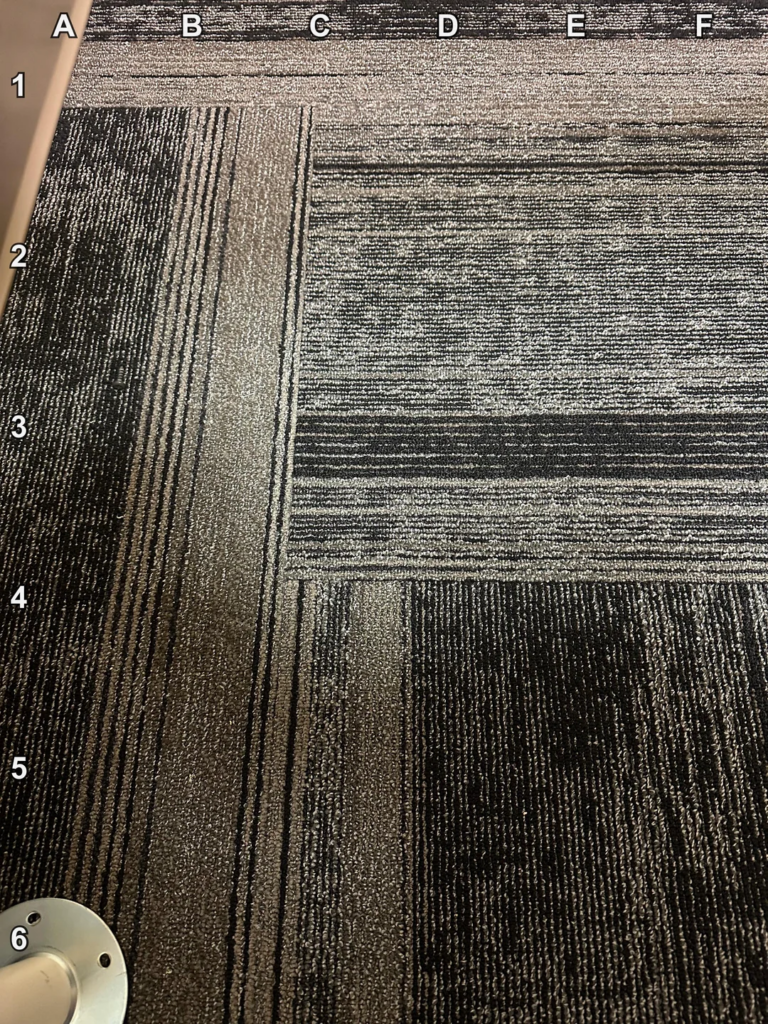
This time, the challenge looks almost unfair. At first glance, it is just carpet. Patterned squares. Stripes running in different directions. Light and dark panels stitched together in a way that already feels busy. Nothing obviously hidden or jumping out.
But if you look closer, you will notice something different about this image compared to the others. Along the top are letters, A through F. Down the side are numbers, 1 through 6. It almost looks like a battleship board or a spreadsheet. That is not accidental. Somebody added a grid reference system to help you. And strangely enough, that simple addition makes a big difference.
Before we talk about why, pause and try to find the missing object. Yes, there is something here that does not belong. It is small. It blends in. And just like the others, your brain might skip right over it. Give yourself ten seconds.
Now, here is why the letters and numbers help. When an image feels overwhelming, your brain struggles because it does not know where to begin. Too many repeating textures. Too many similar colors. It becomes visual noise. You scan randomly, your eyes bouncing from one dark patch to another, hoping something feels off.
The grid changes that. Instead of thinking about searching everywhere, your brain shifts to something more structured. It starts thinking, check A1. Then B1. Then C1. It turns chaos into sections, where smaller pieces feel manageable and less intimidating. Psychologically, this reduces cognitive overload.
Your working memory can only handle so much information at once. When you divide an image into labeled zones, you are lowering the mental load. You are telling your brain, do not process the whole thing at once. Just process this square.
It also helps in another way. If you are searching with someone else, you can say, I see something near D4. Or check B2. That shared reference system prevents vague directions like, no, more left. No, your other left. The grid creates clarity, and clarity reduces frustration.
Even with the grid, many people will still miss the object. Because structure helps, but it does not replace attention. If you move too quickly through each square, you are still just skimming. So slow down, and pick a square. Study the texture. Look for something slightly too geometric. Slightly too solid. Slightly too intentional compared to the woven pattern of the carpet.
It is there. And if you find it faster this time, it might not mean your eyesight improved, or it might mean the grid gave your brain permission to focus.
Answer: The missing object can be found in Section 3A.
Final Round: The Object Hiding in Plain Sight
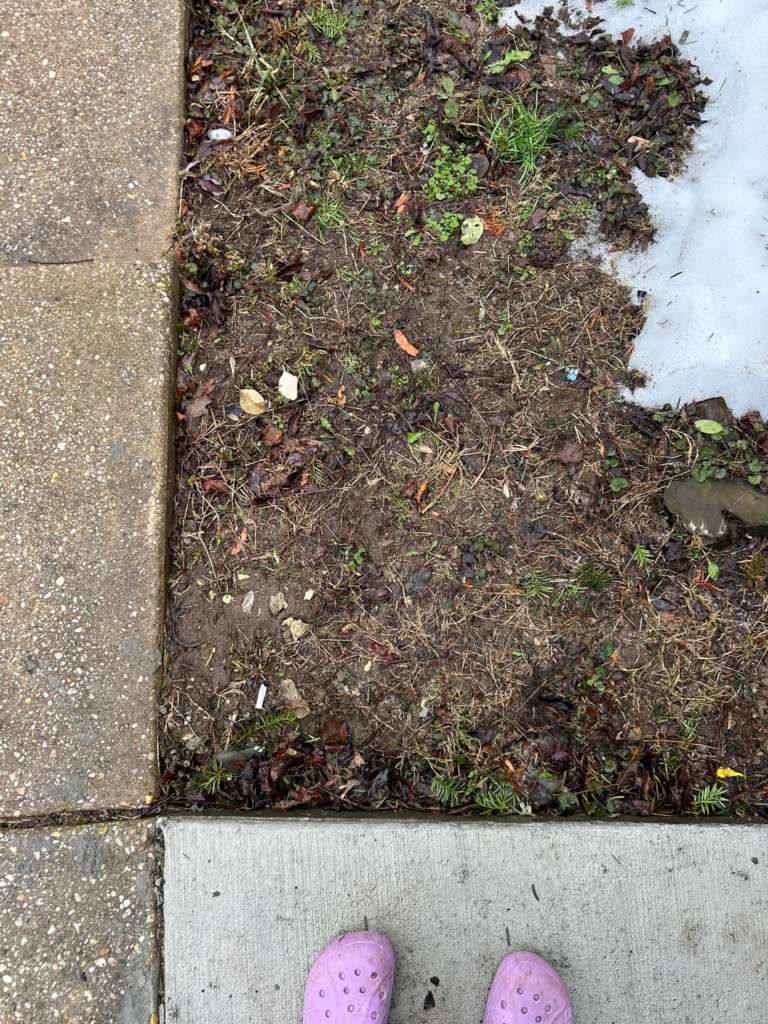
At first glance, it does not even look like a challenge. It just looks like a normal outdoor scene. A patch of dirt and leaves with a bit of grass. Concrete slabs frame the edges. And at the bottom, a pair of pink Crocs stands there, like nothing unusual is happening.
Somewhere in that messy patch of earth is a small object that does not belong. It is not brightly colored enough to scream for attention, nor is it placed in the center. It is just sitting there, blending in with twigs, leaves, and bits of debris.
Before you read further, stop and give yourself ten seconds again. This time, notice how your eyes behave differently. In the earlier images, you were scanning the carpet and rocks. Now you are looking at organic clutter. Dirt. Brown tones. Random textures. Your brain labels it all as background almost instantly.
When your brain categorizes something as unimportant background, it reduces the amount of attention it gives it. It saves energy. Evolution taught us to scan for movement, contrast, and threats. A tiny still object in a pile of dirt does not trigger urgency, which is exactly why you might miss it.
Read More: Eye Puzzle: Can You Spot The Ms?
Here is a Small Hint
Do not look at the pink shoes. They are distracting you. Your brain loves bold color, so it keeps returning to it. Instead, focus on the dirt area between the concrete slabs. Look for something slightly smoother than the soil around it. Something that reflects light just a little differently.
It is small. Very small. If you are struggling, try narrowing your focus to one quarter of the dirt patch at a time. Block out the rest mentally. Slow your scan down, nd let your eyes adjust to subtle differences in texture.
Once you see it, the pattern repeats. You will wonder how you missed it. It will feel obvious, almost like it was highlighted all along. But it wasn’t. Your brain simply needed more time to override its assumption that everything there was just natural debris.
And that is the real theme with these images. Sniper vision is not about superhuman eyesight. It is about attention. It is about resisting the brain’s urge to skim and questioning what your mind labels as background.
Answer: The foot is a small black rubber you can find on the edge of the patch of snow.
How’d You Do?
So, did you have sniper vision, or did the images win this round?
The objects were never truly invisible; they were just hidden inside visual noise. Your brain kept trying to simplify the scene, grouping rocks as rocks, carpet as carpet, dirt as dirt. It filtered out the details to save energy. That is what makes these challenges so addictive.
They force you to slow down. To override autopilot and actually look instead of just glance. Sniper vision is not about perfect eyesight. It is about attention, patience, and resisting the urge to rush. And now that you have trained your eyes a little, you might start noticing things you used to miss.
A.I. Disclaimer: This article was created with AI assistance and edited by a human for accuracy and clarity.
Read More: Spot the Threes. A Simple Quiz That Could Say Something About Your Personality