
The phone goes first. Before the alarm even registers, before you’ve made the decision to be awake, a hand reaches for the nightstand. Most people unlock their phones within 90 seconds of opening their eyes, not because they’re expecting anything urgent, but because it’s the first reflex the day demands.
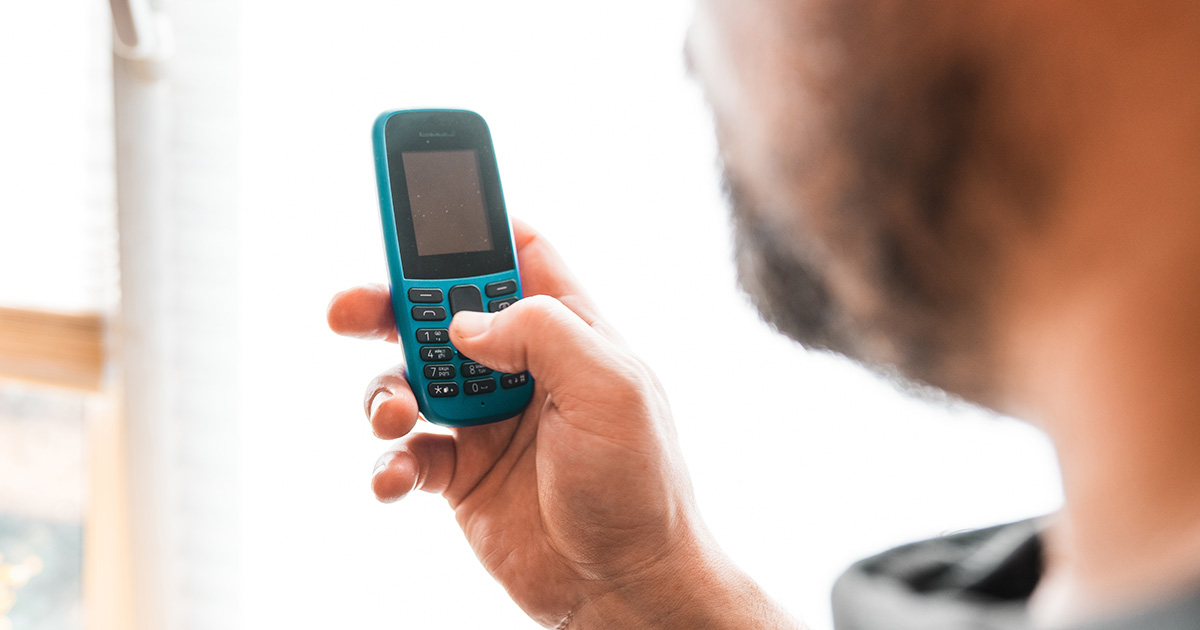
Jose Briones hit 12 hours of daily smartphone use during the pandemic. He tried removing apps from his home screen. He tried screen-time trackers. Nothing held. “I just came back to my smartphone again and again and again,” he told Katie Couric Media. So he ditched the smartphone entirely and got a basic device that could call and text, and that was the end of its ambitions.
Briones is not an outlier anymore. Across the US, UK, and Europe, a growing number of people are making the same swap, from a pocket-sized supercomputer to something that would have looked unremarkable in 2003. The reasons vary. Some are driven by anxiety. Some by the creeping sense that they can’t finish a thought. Some just got tired of watching their evenings evaporate into the scroll.
The Case Against the Smartphone You Already Know
Image Credit: Pexels
Excessive smartphone use produces feelings of loneliness, anxiety, and depression. That’s the conclusion of a 2025 review in Frontiers in Psychiatry, which surveyed the existing evidence on smartphone dependence and its effects on both physical and mental health.
Every notification pulls the brain out of whatever it was doing. Over a full day, those interruptions stack. The brain never fully settles. Focus becomes harder to sustain. The capacity for boredom, which is actually the brain’s entry point into creativity and deep thought, gets crowded out by the next stimulus before it can develop into anything.
Then there’s the content itself. Social media feeds are built on the same psychological loop that makes slot machines effective: variable reward, delivered unpredictably, which keeps the brain seeking the next hit. A basic feature phone, by design, offers nothing comparable.
What the Research Actually Shows
A 2025 randomized controlled trial published in BMC Medicine investigated the impact of a three-week screen time reduction to two hours per day in healthy students on stress, well-being, depressive symptoms, and sleep quality. Depressive symptoms decreased by 27% in the intervention group from the start to end of the three-week period. Sleep quality improved. Stress levels dropped. The kind of changes people spend months trying to achieve through other means showed up in three weeks, primarily by taking away the device.
One caveat the researchers noted is honest and important: after the three-week intervention ended, smartphone screen time increased rapidly and mental health indicators started to revert to pre-intervention levels. This isn’t a knock on the findings, it’s a map of exactly why the dumb phone option is compelling for people who’ve already tried the softer interventions. App timers and screen-time reports require daily willpower to enforce. A basic phone enforces itself.
Overuse of smartphones has been associated with negative effects on physical health and psychological functioning, including reduced quality of sleep when used before bedtime, according to a 2025 study in Frontiers in Psychiatry. The relationship between screen time and sleep isn’t about willpower, it’s about access. Remove the device from the bedside table entirely, and the problem resolves without a fight.
People who make the full switch consistently describe the first week as uncomfortable, and the second as revealing. They start noticing how often they used to reach for the phone without any particular reason, not because anything was there, but because the reaching had become habitual, a way to manage ten seconds of stillness. Without the device to fill that gap, the stillness just sits there. Eventually, that stops feeling threatening and starts feeling like room.
What You Actually Gain
The most commonly reported dumb phone benefit isn’t what most people expect. It isn’t the extra hours reclaimed (though those are real). It’s the return of a specific kind of mental capacity: the ability to be somewhere without simultaneously being somewhere else.
Dumbphone users report feeling more clear-headed and less distracted than before they switched, deriving a certain “joy of missing out” from not knowing what’s trending. “I’m more calm, more present, definitely less anxious because I have more control, and I have more time to think and process my emotions,” one early adopter said. The fear of missing out, the anxiety that something is happening elsewhere that you should know about, is partly a product of having a device that makes checking effortless. Remove the device, and the FOMO doesn’t have a delivery channel. It fades for lack of fuel.
There are also practical gains that don’t get as much airtime. Battery life on a basic feature phone is measured in days rather than hours, which changes the relationship to charging entirely. The phone becomes a tool you pick up when you need it, not a tether that determines how far you can wander from a power outlet. A typical feature phone can last three to five years without performance degradation, compared to the two to three year lifecycle of most smartphones, and batteries often survive multiple days on a single charge, eliminating daily charging anxiety.
Privacy is another dimension that doesn’t always make the headline benefits list but matters to people once they start thinking about it. Dumb phones offer a level of anonymity and security that their smart counterparts can’t match. Some models have no GPS capability at all, meaning they cannot be tracked. For people who’ve started paying attention to how much location data they generate in a typical day, this is not a small thing.
The question of relationships comes up in almost every account of someone making the switch. Not in the sense that the phone was actively damaging their relationships, but in the more low-grade way: the half-presence. The dinner conversation where someone’s eyes drift to a notification. The Saturday morning where an hour disappears before anyone has said good morning. The phone sitting face-up on the table during every family meal, just in case. A basic phone, carried the same way, doesn’t generate any of that. It rings if someone calls. Otherwise it sits in a pocket and stays there.
The Growing Wave
The trend is particularly pronounced among younger adults. Morning Consult survey data from 2024 found that 28% of Gen Z adults and 26% of millennials reported interest in acquiring a dumb phone, more than double the rate of Gen X and baby boomers. These are generations that grew up entirely inside the smartphone era and are now the ones most visibly trying to get out of it. On TikTok, related hashtags have drawn tens of millions of views, with users documenting their experiences and the mental clarity they describe finding afterward.
Once dismissed as relics of the early 2000s, dumb phones are now being embraced by digital minimalists, parents, professionals, and privacy advocates. The demographic spread is wider than the coverage suggests. It isn’t just people going off-grid for a month. It’s a high school teacher who realized she was grading papers with one eye on a group chat. It’s someone who noticed they couldn’t get through a paragraph of a book without checking the phone beside them. It’s people who’ve tried every version of the soft fix and found that none of it had staying power.
In recent years, digital burnout has become a real phenomenon, and more people are doing something about it by switching to a simpler, distraction-free device. The word “burnout” gets used loosely, but the experience underneath it is specific: a kind of exhaustion that sleep doesn’t fix, because the thing causing it continues through the night on the nightstand.
The Part Nobody Warns You About
Making the switch isn’t seamless, and the honest accounts say so. The first thing people miss isn’t social media. It’s maps. The moment you’re trying to find a parking lot you’ve never been to, or figuring out which bus gets you across town, the absence of a smartphone becomes concrete. Most people who make a permanent switch end up downloading maps ahead of time on a tablet at home, or just getting more comfortable asking people for directions, which turns out to be its own small reward.
Messaging apps are the other sticking point. WhatsApp groups, work Slacks accessed on the go, iMessage threads that are years old, these don’t transfer. Most dumb phones don’t support messaging apps, so users typically revert to SMS or use a secondary device for app-based communication. A lot of people land on a compromise: the dumb phone as their primary number and a tablet or old smartphone on Wi-Fi only for the things that genuinely require it. No SIM in the old phone means no notifications pulling them away unless they go looking. That’s a meaningful distinction.
The transition period is real, and it’s worth treating honestly rather than glossing over it. The discomfort is part of the point. It’s the discomfort of noticing how often you were using the phone as a nervous tic, a gap-filler, a way of avoiding the ten-second wait in line without having to just stand there.
The Honest Bottom Line
The dumb phone benefits aren’t magic. They are, at their root, the benefits of subtraction. Take away infinite scrolling and what’s left is your actual day, the conversations, the books, the long walks, the boredom that tips into something better. The research from BMC Medicine shows that even a temporary reduction in screen time produces measurable improvements in mood, sleep, and stress levels within three weeks. The catch is that those gains reverse when the smartphone comes back. A dumb phone doesn’t have a “come back” option.
What people describe, months into the switch, is less dramatic than the conversion narrative might suggest. It’s not a transformation. It’s a recalibration. The phone becomes the size of its actual job, a device for calling and texting, rather than the gravitational center of every waking hour. The notifications that used to feel urgent start to look, in retrospect, like a very convincing simulation of urgency. The brain, given enough uninterrupted time, remembers how to focus. The version of you that can finish a thought, sit through a meal, or read fifty pages without checking anything turns out to have been there all along.
AI Disclaimer: This article was created with the assistance of AI tools and reviewed by a human editor.