

Most mornings in your 60s arrive with a new kind of negotiation. The body that used to power up reliably now requests more time, more coffee, and occasionally a gentler relationship with stairs. This is not a character flaw and it is not a failure of discipline. Biology has something to say about it, and the interesting part is that biology also has something to say about what you can do with the next decade.
One study found that aging does not unfold at a predictable, uniform pace but instead arrives in bursts. Researchers tracked the levels of more than 135,000 molecules and microbes in 108 healthy volunteers aged 25 to 75, and found that changes in many molecule and microbe levels clustered around two distinct time points: ages 44 and 60. In other words, sixty is a genuine biological inflection point – not just a round number on a birthday cake.
The good news is that an inflection point cuts both ways. It’s a moment of acceleration, but it’s also an opening. The habits you build right now have an outsized effect on what the next two decades actually feel like. The eight strategies below aren’t about reversing time or outsmarting biology. They’re about making your 60s the decade where you decide what slow aging in your 60s actually looks like for you – and then do it deliberately.
1. Lift Something Heavy, Twice a Week

Strength training is the closest thing to a longevity pill that researchers have found, and they keep finding it. A January 2025 NBC News report noted that a study found doing 90 minutes of strength training each week was associated with a nearly four-year reduction in biological age, based on 4,800 responses to the National Health and Nutrition Examination Survey. Four years. From two sessions at the gym.
The mechanism isn’t mysterious. Muscle mass and bone density decline with age, and strength training directly counteracts both. Muscle tissue is metabolically active – it burns energy at rest, supports insulin sensitivity, protects joints, and reduces fall risk, which matters enormously once you’re past 60. Losing muscle is not an inevitable fact of aging; it’s a consequence of not asking your muscles to do anything difficult.
You don’t need to become a competitive powerlifter. Two sessions a week of resistance work – bodyweight squats, resistance bands, free weights, whatever form fits your life – is enough to begin reversing the decline. The goal is progressive challenge, meaning you add a little more resistance as your body adapts. That’s the whole secret.
2. Eat More Plants (Without Making It a Personality)

A plant-heavy diet keeps appearing in the longevity literature the way old friends keep appearing at reunions – reliably, and with mounting evidence behind them. Mounting evidence suggests that plant-based diets may help slow biological aging. The mechanism runs through inflammation: the chronic, low-grade kind that accumulates across decades and accelerates cellular aging faster than almost anything else.
This does not require going fully vegan or swearing off anything in particular. What the evidence consistently points to is a plate where plants do most of the work – vegetables, legumes, whole grains, nuts, fruit – and where ultra-processed foods step back. The more plants, the more fiber and polyphenols (compounds in plants that act as cellular protectants), and the lower the inflammatory load. Your gut microbiome, which plays a direct role in immune regulation and how fast you age, also runs on fiber.
Think about it in terms of additions rather than subtractions. Add a handful of greens to what you’re already eating. Add beans to the soup. Add berries to breakfast. The cumulative effect of eating this way for years is genuinely protective, and it doesn’t require a dramatic dietary overhaul to get started.
3. Take Your Sleep as Seriously as Your Exercise

Sleep is where most of the cellular maintenance happens. It’s when your brain clears metabolic waste, when inflammatory markers reset, when tissues repair. Poor sleep accelerates biological aging markers like telomere shortening and inflammation. Telomeres are the protective caps on the ends of your DNA strands – think of them like the plastic tips on shoelaces. When they shorten, the DNA underneath becomes more vulnerable, and the cells they protect age faster.
The quality of sleep matters as much as the quantity. If you’re getting enough hours but still waking up exhausted, your sleep is probably fragmented or you’re not cycling through enough REM and deep sleep. After 60, sleep architecture reorganizes: the deeper, more restorative stages become shorter and lighter stages become more predominant – a shift that happens even in healthy adults. A consistent bedtime and wake time, keeping the bedroom cool and dark, avoiding screens in the hour before bed, and limiting alcohol (which disrupts deep sleep significantly) all make a measurable difference to sleep quality.
If you’ve spent years treating sleep as the thing you do after everything else is done, this is the decade to stop. Prioritizing seven to eight hours isn’t laziness. It’s maintenance work.
4. Move Gently Every Day, Not Just on Workout Days

Structured exercise sessions matter, but so does what happens in between. Daily movement – walking, gardening, stretching, taking the stairs – reduces chronic inflammation, keeps joints mobile, and supports cardiovascular health in ways that two or three gym sessions per week alone do not fully cover.
A review published in the Canadian Medical Association Journal in January 2025 found that 150 minutes of moderate physical activity per week is linked to a 31% lower risk of death from any cause in older adults. That’s about 20 minutes a day – a number that becomes significantly less intimidating when you stop thinking about it as “exercise” and start thinking about it as just being a person who moves.
Walking after meals, in particular, does useful work for blood sugar regulation. A ten-minute walk after eating dampens the post-meal glucose spike that, when repeated across thousands of meals, contributes to metabolic aging. None of this requires gear, a gym membership, or a schedule overhaul. It requires choosing to move.
5. Manage Stress Before It Manages You

Establishing a foundation of exercise, nutrition, sleep, and stress management early on is crucial for long-term health, according to Stanford Medicine experts. Stress management appears on every longevity list, and it deserves its place there – not because life can be made stress-free, but because chronic, unmanaged stress is one of the most direct accelerants of cellular aging.
When your body perceives stress, it releases cortisol. One-time cortisol spikes are fine; the body handles them. The problem is sustained cortisol elevation, which happens when the stress is ongoing and unaddressed. Chronic high cortisol suppresses immune function, disrupts sleep, promotes inflammation, and accelerates the cellular wear that leads to faster aging. Your body is essentially running its alarm system continuously, and the hardware wears out.
Practices that lower cortisol include meditation, deep breathing, time in nature, regular social time, and physical activity. None of them require an hour a day or a retreat in the mountains. Ten minutes of deliberate quiet in the morning, a daily walk outside, a weekly call with a friend – the consistency matters more than the duration. The goal isn’t the elimination of stress, which is not achievable. The goal is building a routine that regularly brings the nervous system back down.
6. Invest in Your Friendships Like They’re Infrastructure

This one tends to get filed under “nice to have” when it is, in fact, structural. Research drawing on data from more than 2,100 participants in the long-running Midlife in the United States project found that adults with higher cumulative social advantage – meaning long-standing, robust relationships with family, friends, and in religious and community groups – had biological markers showing slower cellular aging and reduced levels of chronic inflammation compared to their less-connected peers.
That’s not a soft finding. That’s measurable biology. The social connections you maintain in your 60s are doing work at the cellular level, influencing the same inflammatory and immune pathways that diet and exercise target through different routes. Loneliness and social isolation, by contrast, are associated with higher levels of chronic inflammation and faster biological aging – effects comparable in scale to smoking.
The practical implication is to treat your friendships with the same intentionality you’d bring to any other health habit. Schedule the dinner. Make the call you’ve been putting off for three weeks. Join the thing. None of this requires a dramatic expansion of your social life – it requires consistency with the people already in it.
7. Protect Your Brain with Cognitive Challenge

The brain operates on a use-it-or-lose-it principle that becomes more consequential after 60. Cognitive reserve – the brain’s resilience against age-related decline – is built over a lifetime, but it can still be meaningfully expanded in your 60s through sustained mental challenge. Learning new things, specifically skills that require real effort and have a learning curve, is what actually builds that reserve.
This means activities that genuinely tax you: learning an instrument, studying a language, picking up a craft that requires coordination and problem-solving. Not Sudoku (though Sudoku is fine). The distinction matters because novelty and difficulty are what prompt the brain to form new neural connections. A puzzle you’ve done a hundred times is comfortable but not challenging; a piece of music you cannot yet play requires the kind of effortful engagement that builds long-term cognitive resilience.
Reading, creative work, taking a class, mentoring someone – these all count. The point is sustained engagement with something that requires you to think, not occasional passive absorption. The brain responds to demand the same way muscles do. Give it something to do.
8. Get Preventive Care While You Still Have the Advantage

The most overlooked habit on any longevity list is the least glamorous one: actually going to the doctor for screening and prevention rather than waiting for something to go wrong. As Stanford Medicine experts note, “it’s never too late to start” – but starting before a problem becomes serious is a structurally different situation than starting after.
At 60, the screenings that matter include blood pressure, cholesterol, blood glucose, bone density, colorectal cancer screening, and cardiovascular risk assessment. Many of the conditions that accelerate aging most aggressively – metabolic syndrome, hypertension, pre-diabetes, early cardiovascular disease – are largely silent in their early stages. They don’t announce themselves until they’ve been building for years. A routine check-in catches them while they’re still manageable.
This also applies to vision, hearing, and dental health, all of which interact with broader systemic health in ways that are consistently underestimated. Hearing loss left unaddressed, for example, is associated with accelerated cognitive decline. The preventive work is not dramatic. It is a calendar appointment, a blood draw, a conversation with a doctor. The return on that small investment is enormous.
Read More: David Attenborough’s Longevity Secrets at Age 100
What to Do With All of This
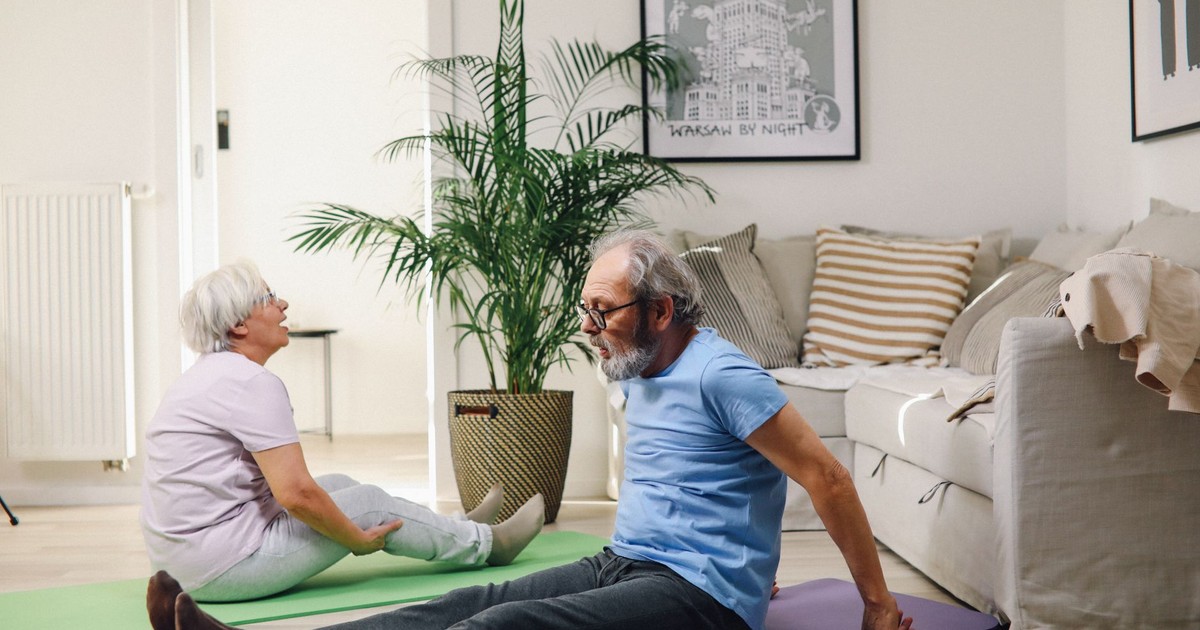
None of these eight habits are new information in isolation. You have heard most of them before in some form. What changes in your 60s is the stakes – the biological reality that this is a period of genuine cellular acceleration, and that the choices you make now have a compounding effect on what the next two decades feel like.
The most honest thing to say is: you do not have to do all eight at once. Trying to overhaul everything simultaneously is how people burn out and go back to doing nothing. Pick the one that you’ve been meaning to start the longest and start there. The sleep, or the strength training, or the phone call to the friend you haven’t talked to since spring. One thing, done consistently, creates conditions for the next thing. That’s how it actually works – not as a program, but as a practice that accumulates.
The biology is real, the acceleration is real, and so is the window. Your 60s are not a closing door; they are one of the few moments in adult life where your choices carry this much weight. That’s not a threat. It’s actually an interesting amount of power to have.
Disclaimer: This information is not intended to be a substitute for professional medical advice, diagnosis, or treatment and is for information only. Always seek the advice of your physician or another qualified health provider with any questions about your medical condition and/or current medication. Do not disregard professional medical advice or delay seeking advice or treatment because of something you have read here.
AI Disclaimer: This article was created with the assistance of AI tools and reviewed by a human editor.