

The wellness industry will tell you that self-care is a discipline. Wake up earlier. Go to bed earlier. Stop eating sugar, start eating fiber, drink more water, move your body for at least thirty minutes a day, and for the love of everything, fix your sleep hygiene. All of that is well-meaning, most of it is true, and approximately none of it addresses the specific hollowness that descends on a Tuesday afternoon when you have eaten the vegetables and logged the steps and still cannot shake the feeling that you are running on fumes.
That hollowness is not a nutrition deficiency. It is the kind of depletion that happens when the parts of yourself that have nothing to do with your body get systematically starved: your curiosity, your sense of humor, your ability to say no without a three-paragraph explanation, your relationships that exist solely because they feel good and not because they are logistically necessary. Those parts do not get replenished by a smoothie.
Self-care alternatives to the diet-exercise-sleep trifecta are not fringe ideas or indulgences for people with too much free time. They are the aspects of wellbeing that the clinical advice tends to skip past on its way to telling you to eat more leafy greens. Here are eight of them.
1. Letting Something Genuinely Delight You

Not in the “find joy in small things” motivational-poster sense. In the sense of actively seeking out something that makes you feel alive and ridiculous and completely absorbed for an hour. A documentary about deep-sea creatures that you will think about for the rest of the week. A playlist so specific in its vibe that it feels personally curated by the universe. A cookbook you read cover to cover with no intention of making any of it.
The brain has a reward system that requires actual stimulation, not just the absence of stress. Curiosity, wonder, and absorption in something genuinely interesting activate different neural pathways than rest does, and rest alone cannot substitute for them. When you notice something lights you up in a way that is completely disproportionate to its importance, that disproportionate response is data worth paying attention to.
This is not about productivity or enrichment. You do not need to learn a new language or develop a skill that will eventually go on a resume. The pursuit can be completely useless. Usefulness is not the point.
2. A Creative Outlet That Has No Audience

A 2025 scoping review found that engaging in hobbies can be therapeutic for promoting mental health, with creative hobbies such as painting and writing shown to reduce symptoms of stress, anxiety, and depression. But the benefit has very little to do with how good you are at the thing.
A Drexel University study found that approximately 75 percent of participants’ cortisol levels were lowered after making art, and prior experience with art-making was not required to achieve that reduction. The creative act itself is what does the work, not the competence or the outcome. You do not have to be good at the thing to get the benefit. You just have to do it without someone else watching and waiting to evaluate it.
A creative project that lives on social media is a performance. A creative project that lives in a notebook under your bed, or in a folder on your desktop that you have never shared with anyone, is something different entirely. It belongs to you in a way that very few things do once you become the person responsible for everyone else’s needs.
3. Real, Meaningful Social Connection

There is a specific type of social interaction that masquerades as connection while actually depleting you: the birthday party you attend out of guilt, the work event you stay at an hour too long, the group chat you are nominally part of but emotionally nowhere near. None of that counts. Social connection plays a vital role in preventing mental health problems, maintaining good mental health, and aiding in recovery from both moderate and severe mental health conditions.
The World Health Assembly adopted its first-ever resolution on social connection in May 2025, urging member states to develop policies to promote it for mental and physical health. Governments are passing resolutions about it.
Social contact is being in the same room. Social connection is a conversation that ends and leaves you feeling less alone than before it started. One of those two things is actual support that refills something. The other is just attendance.
4. Saying No to Something You Would Usually White-Knuckle Through

There is a version of care that involves adding things to your life: more habits, more practices, more supplements, more intentional mornings. And then there is the version that involves subtracting: the obligation you agreed to months ago when it seemed manageable, the event you do not want to attend, the favor that would cost you a full Saturday and you are running out of Saturdays.
Saying no is not a communication strategy. It is a physiological intervention. Chronic stress from over-commitment keeps the body’s stress response in a near-constant low hum, which wears down the immune system, fragments sleep, and makes everything harder. Removing one genuine source of dread from the calendar is removing a stressor.
The hard part is that saying no to something that feels obligatory requires tolerating the discomfort of someone else’s disappointment. That discomfort is real. But so is the relief that follows, which tends to outlast the discomfort by several weeks.
5. Spending Time in Nature Without Agenda

Not a hiking regimen. Not a wellness walk with a podcast. Not thirty minutes of cardio that happens to take place outdoors. Just time outside with no particular purpose: sitting, looking at something, existing without a list in your head that you are working through. A 2025 Behavioral Sciences study found that time outside, even as brief as 10 minutes, can provide a mental health boost and reduce stress.
Ten minutes is almost nothing. It is the time it takes to drink a cup of coffee standing at a window, except you are outside and the window is not there. Most people have ten minutes somewhere in the morning or the afternoon that they currently spend scrolling through something that does not actually relax them.
The nervous system responds to effortful achievement differently than it responds to passive presence. A walk with a step-count goal is a task. Sitting on the back steps and watching a bird do something for five minutes is something else.
6. Protecting Some Hours That Are Genuinely Yours

Most people who feel burned out do not feel burned out because they worked too many hours in a week. They feel burned out because they cannot locate a single hour in the week that belongs to them entirely: that no one can interrupt, that has no productive outcome attached to it, that will not be used as evidence of something they should have done differently.
Research consistently links disrupted or poorly structured daily routines to higher rates of anxiety and depression. A routine that never carves out time for you specifically is still a routine that produces those outcomes. Structure without space is not care; it is scheduling.
This is not the same as leisure time. Leisure time is often colonized by tasks that feel lighter (returning texts, scrolling, tidying) and still leaves you without the experience of genuine rest. Hours that are yours require a small act of protection: a door closed, a phone in another room, an agreement with the people in your house that this particular window is not available. The agreement is harder to make than the time is to use, but it is the actual intervention.
7. Laughter That Surprises You

The wellness industry has extremely little to say about laughter, possibly because it cannot be bottled, monetized, or scheduled into a morning routine. You cannot do laughter in an intentional way any more than you can intentionally stumble. It has to catch you.
What you can do is put yourself in proximity to things that might do the catching: the friend whose sense of humor is exactly yours, the TV show that makes you laugh out loud alone in the room, the group text that occasionally produces something so absurd you screenshot it and think about it later. Those things are not trivial. The physiological response to genuine laughter (the sharp exhale, the momentary suspension of whatever you were grinding on before it happened) is one of the fastest stress-interruption responses the body has access to.
Laughter is also a reliable indicator of where your actual energy lives. The people who make you laugh are almost always the people who cost you the least. That ratio is worth noticing and worth acting on, in ways that do not require a grand gesture.
8. Finishing Something Small
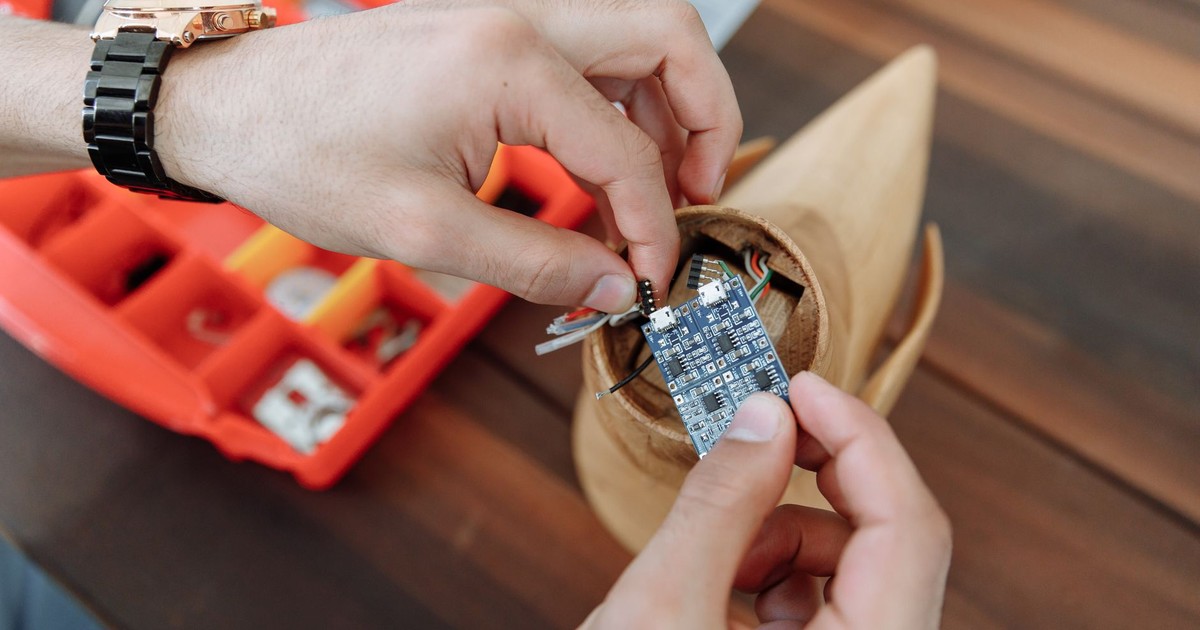
Not a project. Not a goal. Something small enough that you can complete it in an afternoon without planning or preparation: organizing one drawer, finishing the book that has been on your nightstand since March, writing back to the email you have been avoiding for three weeks, planting one thing in the garden.
Engaging in hobbies can contribute to personal growth, reduce stress, and foster social connections through community involvement and active participation. Part of what makes small completions restorative is the same principle: they return a sense of agency that sustained overwhelm tends to erode. When everything on your list is large and ongoing (the relationship that needs work, the career question that needs answering, the house that perpetually needs something), the act of finishing something, anything, reminds the nervous system that completion is possible.
Small finished things also have a quality that large ongoing projects cannot provide: they are done. Nobody can add a follow-up task to a drawer that is already organized. The email has been sent. The book is finished and you can put it away. The garden has one thing in it that was not there yesterday. Done is underrated as a feeling, and it is available in small doses without requiring the stars to align.
The Part the Wellness Industry Leaves Out

Self-care alternatives to the standard advice exist because the standard advice, good as it is, addresses the body and largely ignores the rest of you. The part that needs to feel seen by a friend, the part that needs to make something for no reason, the part that simply wants to leave a party early because it is not enjoying itself. Those parts are not metaphors. They are real aspects of psychological health that deteriorate under chronic neglect in ways that no smoothie or step count will reverse.
None of what is on this list requires a budget, a schedule overhaul, or a personality change. Most of it requires only the decision to treat your own interior life as something worth maintaining, with the same low-grade diligence you already apply to everyone else’s. You have been managing other people’s wellbeing with extraordinary consistency. The infrastructure is already there. It just needs to be pointed inward occasionally.
Disclaimer: This information is not intended to be a substitute for professional medical advice, diagnosis, or treatment and is for information only. Always seek the advice of your physician or another qualified health provider with any questions about your medical condition and/or current medication. Do not disregard professional medical advice or delay seeking advice or treatment because of something you have read here.
AI Disclaimer: This article was created with the assistance of AI tools and reviewed by a human editor.