

A nine-year-old is old enough to notice when something feels off inside her but not old enough to name it. She might pick fights more than she used to, or go quiet in a way that reads as a mood but isn’t really. She might start saying she’s tired all the time, or stop wanting to do the thing she loved last year. Parents file all of this under “growing up,” and sometimes that’s exactly what it is. But sometimes the picture is more specific than that.
Researchers at UC San Francisco followed more than 9,500 children across the country for two years, starting when they were 9 and 10 years old. The more time those kids spent on screens for non-educational reasons, the more likely they were to develop more severe symptoms of depression, anxiety. Inattention. Aggression, according to a 2024 study in BMC Public Health drawn from the Adolescent Brain Cognitive Development Study. The effects were small but consistent.
The findings appeared in BMC Public Health in October 2024. The ABCD Study is not a one-time survey. It follows the same kids, tracks the same variables, and builds a picture that a snapshot cannot.
What the Study Actually Found
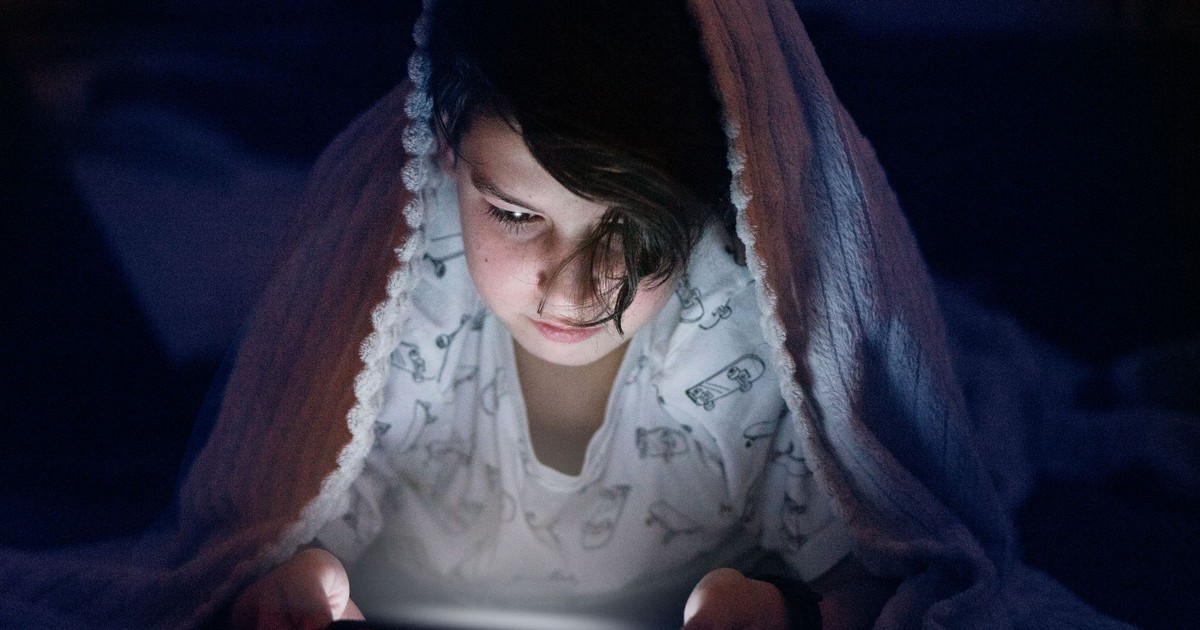
The study followed a diverse group of kids from around the country for two years and found that more screen time was associated with more severe symptoms of depression. Anxiety, inattention. Aggression. The research team, led by Dr. Jason Nagata of UCSF Benioff Children’s Hospital’s Division of Adolescent and Young Adult Medicine, was careful about its language. So should anyone reporting on it. The study does not claim that screens cause depression. It found associations, using “linked” and “associated” deliberately. The difference between correlation and causation is not a technicality. It is the whole question.
The effects were small but consistent. Screen time was closely tied to depressive symptoms and, to a lesser extent, conduct, somatic, and attention deficit/hyperactivity symptoms. When researchers say “small,” they don’t mean unimportant. They mean that the effect size is modest at the individual level. But modest effects across a population of children, playing out over years, add up. Given the ubiquity of screen time, even small effects might translate into meaningful public health burdens when considered at the population level.
The study also looked at which types of screen use were most strongly linked to depressive symptoms. Video chat, texting, videos, and video games had the greatest associations with depressive symptoms. Video chatting and texting registered associations just as strong as gaming. How a child uses a device matters as much as how long they use it. The category of “screen time” is not as simple as the debate often makes it sound.
The Displacement Theory
One of the most compelling threads in this research is not about what screens do to children’s brains directly. It’s about what screens push out. “Screen use may replace time spent engaging in physical activity, sleep, socializing in-person and other behaviors that reduce depression and anxiety,” said lead author Jason Nagata, associate professor at UCSF Benioff Children’s Hospital’s Division of Adolescent and Young Adult Medicine.
Instead of asking “is the screen itself harmful,” you can ask “what is the screen taking the place of?” A child who spends four hours on a device is a child who is not spending those four hours running around outside. Sitting across a table from a friend, learning to tolerate boredom, or sleeping. Those things are not abstract goods. They are, as the research suggests, the specific ingredients that buffer against exactly the symptoms the study found.
Read More: 15 Parenting Trends to End Now, According to Everyone
The concept of displacement also helps explain something parents already sense. That the problem is the screen and, even more, the shape of the day around it. A child who gets three hours of unstructured outdoor time, sits down to dinner with her family, plays with the dog, and then watches two hours of a favorite show is not in the same situation as a child who goes from school directly to a device and stays there until bedtime. The hours look similar on paper. The lives do not. If you’re trying to get a broader sense of how early screen exposure fits into the developmental picture, research on the two ages when screen time affects children most severely offers useful context.
The Race Gap Nobody Expected

White adolescents had significantly stronger associations between screen time and depressive, attention-deficit/hyperactivity, and oppositional defiant symptoms compared to Black adolescents. They also had stronger associations between screen time and depressive symptoms compared to Asian peers. There were no differences by sex.
This finding drew less attention than the overall headline, which is a shame, because it complicates the story in genuinely interesting ways. “One of the reasons we think this is, that for minority youth, screens and social media may help them with connections with peers who share similar backgrounds and expand support networks,” said Dr. Jason Nagata of UCSF Benioff Children’s Hospital.
For some children, a screen is a portal to isolation. For others, it is a portal to community that might not exist otherwise, a way to find friends who share your culture. Your interests, or your identity in a town or school where those people are hard to come by in person. The same device. The same number of hours. A different function and a different outcome. Screen time recommendations designed for one population may not map cleanly onto another. Any intervention strategy has to account for what the screen is actually doing in a particular child’s life.
Nearly half of the 9,538 study participants were not white, and about half were female. That diversity is deliberate and important. Studies that draw conclusions from predominantly white, affluent samples have a habit of being applied universally anyway. This one was designed to resist that tendency.
The Hours Are Already High
A typical teen spends about eight hours a day on screen media for entertainment. While a typical tween spends about five hours. More than 4 in 10 teens are spending 10 or more hours a day, according to the 2026 Common Sense Media Census.
Five hours a day for a child who is 9 or 10. Put that next to a school day. Put it next to the time needed for sleep, homework, meals, and anything resembling outdoor activity, and the arithmetic becomes uncomfortable quickly. There is not a lot of room left in the day, and what gets crowded out tends to be the things that are harder to sell to a child. Unstructured time. Face-to-face interaction, boredom that leads somewhere.
The UCSF study’s children were 9 and 10 when it began, right at the edge of the age range where devices typically become a constant presence. The habits forming now, in that specific window, are the habits that will carry into adolescence. If teen anxiety signs sometimes seem to appear out of nowhere, the ABCD Study suggests the soil was being prepared for years before the symptoms surfaced.
What Parents Can Actually Do With This
The research does not hand parents a number. It does not say “three hours is fine, four is too many.” The lead author noted that parents can play an essential role in helping to mitigate the negative effects of excessive screen time. The study doesn’t prescribe a specific limit. The reflexive response to screen-time research is usually to try to cap the hours. Is both impractical and, based on this research, probably not the whole answer.
The displacement framework suggests a more useful question: what is screen time replacing in your specific child’s day? If the answer is sleep, that is a different problem than if the answer is thirty minutes of otherwise idle time before dinner. If a child is using a device to maintain friendships that do not exist within walking distance. That is different from a child who has gone completely internal and uses screens to avoid the discomfort of boredom or social contact altogether.
What the research supports is paying attention to function, not duration alone. What type of screen activity is your child doing? Is it passive or interactive? Is it social or solitary? Is it eating into sleep, exercise, or in-person connection? Those questions will get you further than a timer. The 9,538 children in the ABCD Study were not all doing the same thing. The ones most linked to depression symptoms were the ones texting, video chatting, watching videos. Gaming. Not necessarily the ones who happened to look something up or finished homework on a laptop.
The Small-But-Consistent Principle

Researchers use “small but consistent” to be precise. Parents can use it differently, as a kind of permission structure for proportion. This research is not telling you that your child’s device is going to ruin her. It is telling you that the relationship between how much time she spends on screens and how she feels emotionally is real. It is directional. It held up across two years and 9,538 children of different backgrounds, races, and regions.
That is not a reason for panic. It is a reason for attention. The same kind of attention you probably already bring to sleep, to nutrition, to who her friends are and whether she seems like herself lately. Screen time belongs in that category now. Not because a screen is a monster. Because the evidence is consistent enough to earn a place in the rotation of things you watch for.
The displacement question is probably where most parents will find the most traction. Not: “how many hours is my child on a device?” but: “what is the shape of her day, and are the things that protect her still in it?” Sleep. Movement. Time with people she loves, face-to-face, with the phone in another room. Those are not new recommendations. They are old ones that the data keeps landing back on, with more specificity each time.
The One Thing This Research Won’t Do

It will not tell you exactly what to do, and you probably already knew that before you got here. The relationship between screens and children’s mental health is real enough to take seriously and complicated enough to resist a clean prescription. A 9-year-old who has three close friends she mostly talks to online is not the same as a 9-year-old who has stopped talking to anyone at all. The same five hours can mean very different things.
What the UCSF research gives you is a foundation. More screen time linked to depression in 9- and 10-year-olds is not a scare headline. It is a finding that held up in one of the most rigorous longitudinal studies of child development ever conducted. Small effects, consistent across a large and diverse group of children, over two years. That is not proof that your child’s specific situation is a problem. It is an invitation to look at the whole picture of her day and ask yourself, honestly, whether the things that protect her are still there.
Some of them might be. Some of them might have been slowly replaced by something that glows. That is not a catastrophe. It is just where you start.
Disclaimer: The author is not a licensed medical professional. The information provided is for general informational and educational purposes only and is based on research from publicly available, reputable sources. It is not intended to constitute, and should not be relied upon as, medical advice, diagnosis, or treatment. Always consult a licensed physician or other qualified healthcare provider regarding any medical condition, symptoms, or medications. Do not disregard, avoid, or delay seeking professional medical advice or treatment because of information contained herein.
AI Disclaimer: This article was created with the assistance of AI tools and reviewed by a human editor.