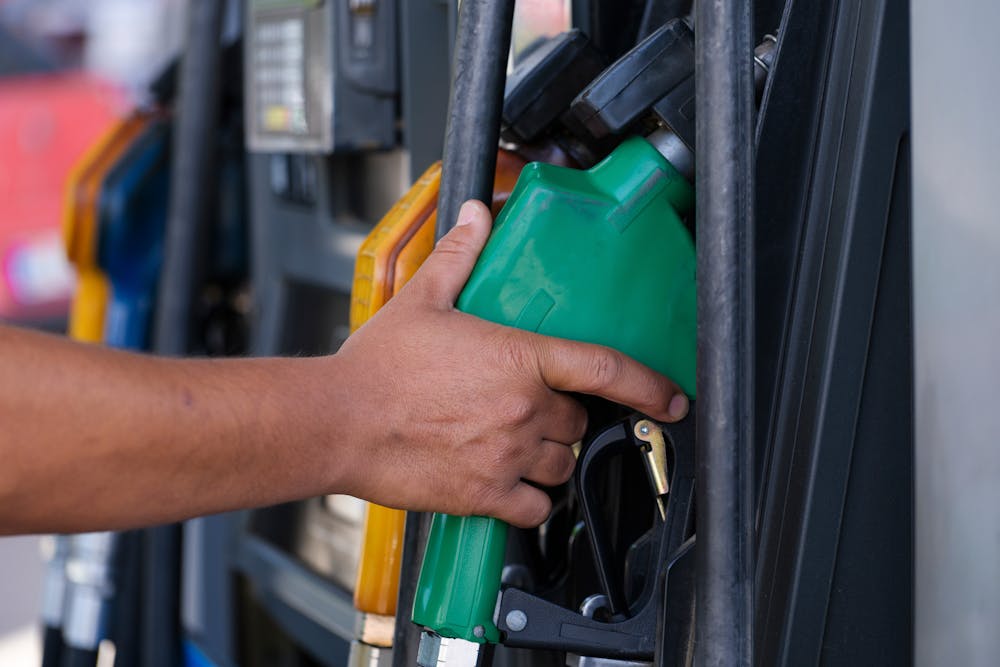

Gas is one of those expenses that sneaks up on you like a subscription you forgot to cancel. You fill up Monday, turn around, and somehow it’s Thursday and the warning light is already flirting with the orange zone again. You didn’t drive anywhere dramatic. You did school pickup, ran to Target, sat in that inexplicable traffic jam on the interchange for nineteen minutes going nowhere. And yet, here you are, pulling back in to spend another $65 you hadn’t planned on.
The standard advice – drive less – is genuinely unhelpful for most families. The school is where the school is. The job is where the job is. The pediatrician, the grocery store, the kid who forgot his cleats at practice: none of these are optional. Driving isn’t a lifestyle choice for most of us; it’s the infrastructure that holds the schedule together. So the question isn’t how to drive less. The question is how to spend less on every mile you do drive.
The good news is that the biggest fuel savings aren’t hiding inside an expensive car upgrade or some elaborate life reorganization. They’re sitting in the habits you already have and the cards already in your wallet – they just need a little attention. Here are eleven things that actually make a dent.
1. Back Off the Throttle Above 50 mph

This one feels counterintuitive because the highway feels efficient – you’re moving fast, making good time, not stopping. But aerodynamic drag doesn’t care about your feelings. It increases exponentially with speed, which means your engine is working dramatically harder at 75 mph than it is at 60 mph, burning through fuel at a rate the speedometer doesn’t advertise.
The U.S. Department of Energy’s fueleconomy.gov confirms that gas mileage decreases rapidly at speeds above 50 mph, and that every 5 mph you drive over that threshold is like paying an additional $0.32 per gallon. Do that math against your regular commute and the number gets uncomfortable quickly.
The practical fix isn’t driving 50 mph on the freeway, which will get you honked at and possibly rear-ended. It’s the difference between sitting at 80 mph and cruising at 65-70 mph. Reducing your highway speed by just 5 to 10 mph can boost your fuel economy by 7% to 14%, meaning that if you typically cruise at 70 mph, dropping to 60 or 65 could meaningfully extend every tank, especially on longer drives. It also, not for nothing, tends to be less stressful. Two birds.
2. Stop Leaving Your Engine Running for No Reason
The school pickup line is a particular offender here. So is sitting in a parking lot scrolling your phone with the AC on, warming the car up for five minutes before a two-mile drive, or waiting in a drive-through for a very mediocre coffee. All of that time, the engine is burning fuel while the car goes literally nowhere.
Idling burns a quarter to a half gallon of fuel per hour depending on engine size and whether the AC is running – and it only takes about 10 seconds’ worth of fuel to restart the vehicle. So the old logic about not turning the car off because restarting uses more fuel is simply wrong. The restart costs almost nothing. The idle costs a lot.
Drivers of passenger cars should turn off their engines if they’re stopped for more than 30 seconds. That applies to the parking lot, the pickup line, the bank drive-through, and the railway crossing. If you’re not moving, and you’re not about to move, turn it off. This one change alone, done consistently, puts real money back over the course of a month.
3. Check Your Tire Pressure (Seriously, Just Check It)
This is probably the most repeated fuel-saving tip in existence, which means most people have heard it and approximately none of them have checked their tire pressure recently. The thing is, it actually works. Tires lose air gradually – about 1 PSI per month under normal conditions – and most drivers have no idea their tires are soft until a warning light comes on.
Keeping tires inflated to the proper pressure can improve gas mileage by 0.6% on average, and up to 3% in some cases, while underinflated tires lower mileage by about 0.2% for every 1 PSI drop across all four tires. That sounds minor until you consider that most cars are running several PSI low without the driver noticing, and that the compounding effect over thousands of miles is a meaningful amount of money. The correct pressure is found on a sticker in the driver’s side door jamb or in your owner’s manual – not the maximum pressure printed on the tire’s sidewall, which is a different number entirely.
Cold weather makes this worse, because temperature drops cause tire pressure to drop further. A quick check at the gas station when you’re already filling up takes about two minutes and costs nothing. Most pumps still have free air. There’s no reason to skip it.
4. Clean Out the Back of Your Car
Most family cars are carrying an unacknowledged cargo: the emergency bag that’s been there since 2022, three reusable grocery bags you keep forgetting to bring inside, a set of baseball gear for a season that ended, a bag of donations you keep meaning to drop off, and approximately fourteen water bottles. All of that weight adds up, and your engine pays for every pound of it.
Keeping unnecessary items in your vehicle, especially heavy ones, drains fuel economy – an extra 100 pounds could reduce your MPG by about 1%, with the penalty hitting smaller vehicles harder than larger ones. One percent sounds small, but if your car is carrying a consistent extra 200 pounds of miscellaneous life, that’s 2% of every tank, every day, for no reason at all.
While you’re at it, check the roof. A large, blunt rooftop cargo box increases aerodynamic drag and can reduce fuel economy by 2% to 8% in city driving, 6% to 17% on the highway, and 10% to 25% at interstate speeds between 65 and 75 mph. If you’re not actively using the roof box, take it off. It’s doing nothing up there except costing you money.
5. Skip Premium Gas Unless Your Manual Actually Requires It
The gas station wants you to feel like premium fuel is better for your car. The word “premium” is doing a lot of heavy lifting for what is essentially a marketing distinction. For most passenger vehicles, regular unleaded is exactly what the engine is calibrated to use. Paying 30 to 50 cents more per gallon for premium accomplishes nothing except leaving less money in your account.
The key distinction is between a manufacturer that requires premium and one that merely recommends it. If your manual says “premium required,” then yes – use it, because your engine’s compression ratio demands it and using regular can cause long-term damage. If it says “premium recommended” or says nothing at all, standard regular unleaded is fine. Filling up a regular-engine car with premium does not improve performance, increase efficiency, or protect the engine. It just costs more.
Check the owner’s manual once, make a note of it, and stop second-guessing yourself at the pump. For the vast majority of cars on the road – including most family SUVs and sedans – regular is the right choice. The word “premium” has no bearing on whether you’re taking good care of your vehicle.
6. Use Cruise Control on the Highway
This one is under-used, particularly because people assume they’re already driving consistently and don’t need it. The reality is that most drivers make micro-adjustments constantly – speeding up slightly on a downhill, easing off on a flat stretch, then pushing back up when they notice they’ve slowed – and all of that tiny variation burns more fuel than holding a consistent, computer-controlled speed does.
Using cruise control on the highway helps maintain a constant speed and, in most cases, saves gas; on newer cars it also comes with additional safety features that help maintain proper following distance. The fuel savings aren’t dramatic in isolation, but combined with staying at a moderate speed in the first place, it adds up meaningfully on any drive over thirty minutes.
The exception is hilly terrain, where cruise control can actually downshift and burn more fuel trying to maintain speed on inclines. On flat highway stretches, though, it’s one of the easiest hands-free improvements to your fuel economy you can make. Set it and let the car do the math for you.
7. Combine Your Errands Into One Trip
Every cold start costs you more than a warm one – that’s not intuition, it’s physics. A cold engine operates less efficiently until it reaches its optimal operating temperature, and the fuel it burns during that warm-up period is essentially overhead. When you make five separate short trips on five separate occasions, each one starts cold. When you combine those five into one loop, you pay the cold-start cost once.
Several short trips each taken from a cold start can use twice as much fuel as a single trip covering the same distance when the engine is already warm. That’s a meaningful penalty, and it applies to the classic scenario of popping out for one errand, coming home, then going out again an hour later for another. The mental overhead of trip-stacking is real, especially when you’re managing a household schedule, but the fuel math is hard to argue with.
A five-minute pause at the beginning of the week to mentally group errands by geography – all the west-side stops in one loop, school pickup folded into the grocery run, the pharmacy on the way home rather than a special trip – tends to pay off not just at the pump but in time. Fewer trips, fewer restarts, fewer occasions where you realize you forgot something and have to turn around.
8. Sign Up for Gas Station Loyalty Programs
Every major gas station chain has a loyalty program, and most of them require nothing more than a phone number entered at the pump. You are already buying gas. You might as well be accumulating something while you do it.
Stacking a weekly T-Mobile Tuesdays discount with Shell Fuel Rewards status, for example, can yield up to a 15-cents-per-gallon discount on fill-ups. That’s not nothing – on a 15-gallon fill-up, that’s $2.25 back for typing in a phone number. 7-Eleven’s 7Rewards program offers 11 cents a gallon off for the first seven fill-ups, then at least 5 cents a gallon regularly, with occasional deeper discounts beyond that.
The programs vary by chain, but the baseline concept is consistent: you get a small per-gallon discount for identifying yourself as a returning customer. Most of these programs are free to join, available through an app or just a phone number at the pump, and require zero effort to maintain. If you’re already loyal to a particular station out of habit, you’re leaving money on the table every single fill-up by not signing up.
9. Link Your Grocery Shopping to the Gas Pump
This is one of the most underused combinations in household budgeting. Major grocery chains have built fuel discount programs that let you earn cents-per-gallon discounts just by doing the grocery shopping you were going to do anyway. You don’t have to change stores, spend extra money, or do anything unusual. You just need to register for the loyalty card and remember to use it.
The fuel saver model works similarly across most major chains: every dollar spent equals one point, and 100 points equals 10 cents off per gallon – the more you accumulate, the more you save. Kroger, Albertsons, Safeway, Harris Teeter, and their affiliated brands all run programs along these lines. Most programs cap redemptions at $1 off per gallon, but even a consistent 20 to 40 cents off per gallon, earned just by scanning a card at checkout, adds up to a real annual saving for anyone filling up weekly.
The other move worth knowing: many of these programs award double or triple points on gift card purchases. If you’re buying gift cards for restaurants, home improvement stores, or retailers you already use, buying them through your grocery store’s loyalty program can dramatically accelerate the fuel points you’re earning.
10. Consider a Warehouse Membership for Gas

Costco and Sam’s Club both operate fuel stations at their warehouse locations, and both consistently price their gas below the market rate in their surrounding areas. If you’re already a member for the bulk shopping, the gas perk is essentially free. If you’re not a member and you’re a high-mileage household, the math is worth running.
A Business Insider analysis across 13 U.S. cities found Costco gas priced $0.11 to $0.55 cheaper per gallon than local gas stations. At the high end of that range, a household filling a 15-gallon tank weekly would save over $400 per year on gas alone – more than enough to offset the cost of an annual membership. The Costco Anywhere Visa card earns 4% cash back on eligible gas purchases for up to $7,000 per year, after which the rate drops to 1%.
Sam’s Club runs a similar setup, though the premium fuel savings require a Plus membership tier. The key calculation is simple: if you live near one of these warehouses and fill up regularly, the membership pays for itself in fuel savings before you’ve bought a single rotisserie chicken.
11. Use a Cash-Back App or Gas Rewards Credit Card
Between grocery rewards, station loyalty programs, and warehouse memberships, you’ve already got several savings layers working for you. The final layer is the payment method itself. A cash-back credit card that earns a higher rate on gas purchases, used consistently, adds another percentage on top of everything else. Done without carrying a balance, it costs nothing extra and earns something real.
Joining fuel rewards programs can be worthwhile alongside a good gas credit card – the BP Earnify program, for instance, lets members save 5 cents per gallon, earn 1 point per dollar on fuel, and 2 points per dollar in the convenience store. For drivers who don’t want to track multiple cards, cash-back apps like GasBuddy and Upside show participating stations nearby with active cash-back offers, letting you compare prices and incentives in one place before you commit to a pump.
The one caveat: if you’re carrying a credit card balance, the interest will eat your rewards and then some. In that scenario, paying with a debit card and stacking the free loyalty programs is the smarter move. The goal is saving money, not technically earning rewards while paying 24% APR on the balance.
The Part Nobody Talks About
None of this is a single dramatic fix. There’s no one tip that cuts your fuel bill in half. What there is, instead, is a cluster of small adjustments that each chip off a few percentage points – and when you’re doing four or five of them consistently, the aggregate starts to feel meaningful. Lower your highway speed a bit, check your tire pressure monthly, sign up for the free loyalty programs, use cruise control, stop warming the car up for five minutes before a two-minute school run. Stack those habits and you’re looking at a genuinely different number at the end of the month.
The other thing worth saying is that a lot of these habits – less aggressive driving, fewer cold starts, less unnecessary idling – also tend to reduce wear on the vehicle, which matters in a different column of the budget altogether. Brakes last longer. The engine works less hard. You end up at the mechanic less often for the kinds of problems that come from a car that’s been pushed around unnecessarily. Gas savings is the headline, but the full picture is a car that costs less to own in general. That’s a version of the math that rarely gets mentioned, and it might actually be the more compelling number.
AI Disclaimer: This article was created with the assistance of AI tools and reviewed by a human editor.