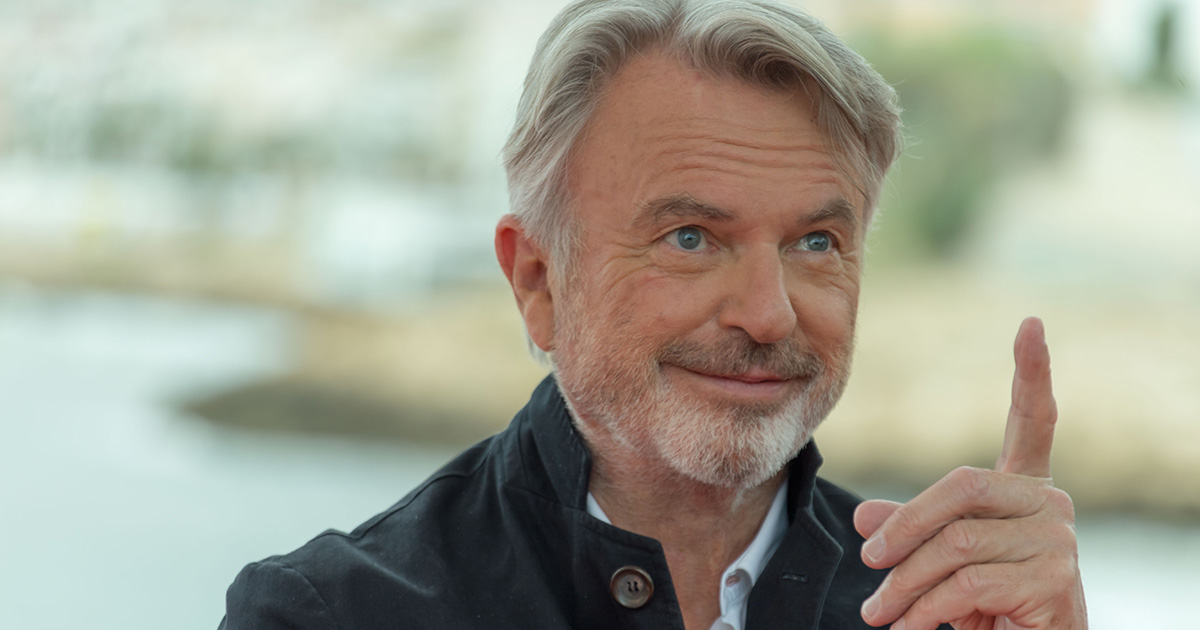

The last photo Sam Neill posted to his own Instagram was a smiling selfie taken at a music awards ceremony in Sydney. He’s beaming alongside singer Kate Ceberano. Former New Zealand Prime Minister Jacinda Ardern is somewhere in the background. He captioned it, “Great night in Sydney. Four women I have idolised for decades were honoured.” It was June 11, 2026. Thirty-two days later, he was gone.
Sam Neill, the legendary New Zealand actor who starred in Jurassic Park and Peaky Blinders, died on Monday, July 13, 2026, in Sydney, Australia, at age 78. His family broke the news in a statement posted to his Instagram page, using the Māori word whānau for extended family: “The loss was sudden and unexpected but blessed by the fact that Sam remained cancer free.” No cause of death was given. The family said Sam “was surrounded by family and passed with the dignity that has characterized his whole life,” and expressed gratitude to the staff at St. Vincent’s Private Hospital in Sydney for their care.
Just three months before his death, Neill had shared what many described as one of the most remarkable medical recoveries in recent Hollywood memory. He had beaten cancer. Against considerable odds, he had won.
A Life That Began in Northern Ireland and Ended in Sydney
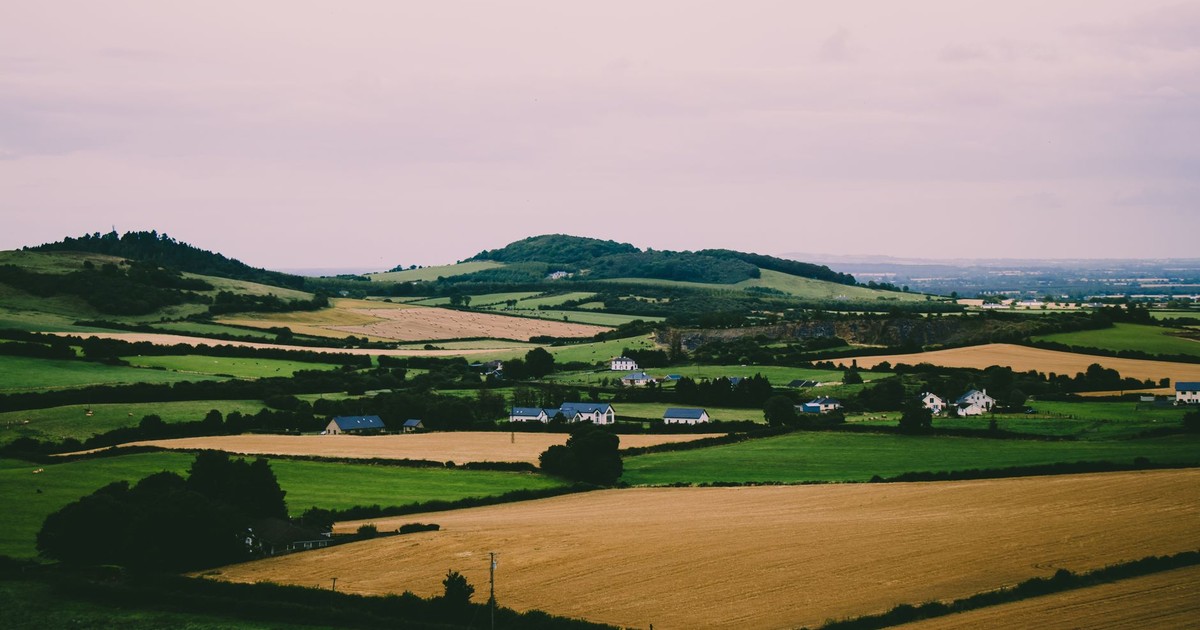
Born in 1947 in Northern Ireland, Neill emigrated to New Zealand at age seven. He was born Nigel Neill, but told interviewers he started going by Sam because there were too many Nigels at his school. His family settled in Dunedin on the South Island, and he was sent to boarding school in Christchurch.
In his 2023 memoir, Did I Ever Tell You This?, he wrote that “to land in a primary school with a plum in the voice and Nigel for a name was asking for trouble.” Sam was, he wrote, “easy to say, sounds friendly, sounds a bit blokey and has a touch of Labrador about it.” The memoir was composed in a matter of months, written while he was receiving chemotherapy.
After college, Neill took the lead in Sleeping Dogs in 1977, the first feature made in New Zealand in more than a decade. Critics described him as “versatile” and “reliably excellent,” with starring roles across genres ranging from a submarine officer in the 1990 action-thriller The Hunt for Red October to the anti-Christ in 1981’s Omen III.
Dr. Alan Grant and the Role That Defined a Generation
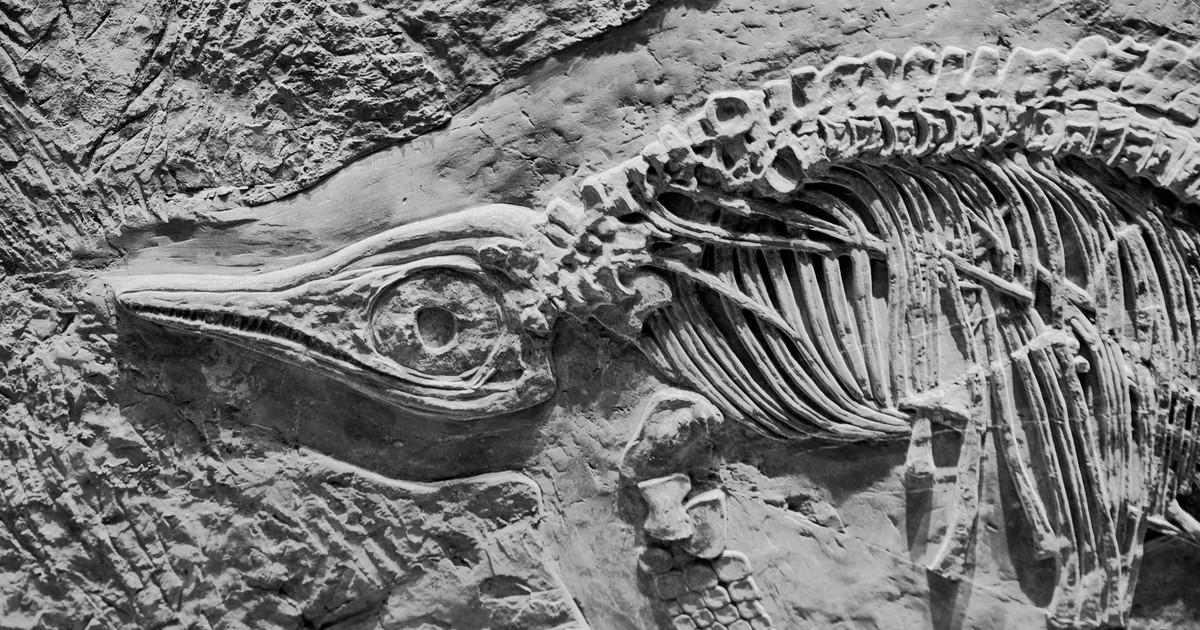
Neill achieved his highest level of fame in Jurassic Park, playing paleontologist Alan Grant, a scientist summoned to an island where a theme park has been built to house herds of cloned dinosaurs. He co-starred alongside Laura Dern, Jeff Goldblum, and Richard Attenborough. The film came out in 1993 and the three of them became, in the years since, something genuinely rare in Hollywood: a cast trio that the public never stopped loving, not as nostalgia but as ongoing affection.
In the 2010s, Neill maintained his presence in TV and film with roles in the British crime drama Peaky Blinders and in New Zealand filmmaker Taika Waititi’s 2016 comedy adventure Hunt for the Wilderpeople. He had more than 150 screen credits.
He was awarded many accolades throughout his career, including the Officer of the Order of the British Empire in 1991 and a knighthood from New Zealand in 2022. When he was presented the Screen Legend Award at the 2025 New Zealand Screen Awards, he accepted the honor with his characteristic self-deprecating charm: “If you stick around long enough, you probably, you know, qualify, and I’ve been just sort of sticking around.” The line got a laugh. It always did.
The Cancer That Almost Took Him
Neill first realized something was wrong when he noticed swollen glands while doing press for Jurassic World Dominion. Soon after, he learned that he had Stage 3 blood cancer.
Neill was diagnosed with angioimmunoblastic T-cell lymphoma in 2022 and publicly disclosed the diagnosis in 2023, a rare type of non-Hodgkin lymphoma. The disease is aggressive, fast-moving, and not easy to treat. Chemotherapy kept the disease in check for years but eventually stopped working. Neill later described reaching a moment where it “looked like I was on the way out, which wasn’t ideal, obviously.”
His physicians then enrolled him in an Australian clinical trial of CAR T-cell therapy, a form of immunotherapy, according to the American Cancer Society, that trains a patient’s own immune cells to identify and destroy cancer cells. The treatment worked. In April 2026, Neill told Australia’s 7NEWS he had found success with the therapy. “I’ve just had a scan just now and there is no cancer in my body,” he said. “That’s an extraordinary thing.”
That interview, given just three months before his death, is now one of the most bittersweet pieces of footage connected to his story. He was genuinely relieved. He meant every word.
The Final Weeks: Awards, Olive Trees, and an Old Friend
Neill was active on social media in the weeks before his death, sharing a smiling selfie from the 2026 Australian Recording Industry Association Hall of Fame Awards on June 11. In one photo, he beams alongside event honoree Kate Ceberano. Other behind-the-scenes shots feature musicians Vika and Linda Bull, Jenny Morris, and former New Zealand Prime Minister Jacinda Ardern.
His caption for the post captured him completely: four women he had idolized for decades, a great night in Sydney, the pleasure of being somewhere that mattered. He had also been photographed at the Sydney Film Festival in June, appearing in front of the event’s blue backdrop, remaining active throughout that month.
That same day as the ARIA awards post, Neill shared a very different kind of update from his own backyard. In a video posted to Instagram, he was seen raking beneath an olive tree. “Harvesting our olives this week,” he wrote. He added that the crop was small that year and he wasn’t sure why. A post like that could only come from a person who is still fully engaged in being alive.
The late actor also recently reunited with former Jurassic Park co-star Jeff Goldblum back in early May, when Goldblum made a stop at the Sydney Opera House as part of his The Night Blooms World Tour. Neill posted a video highlighting his own surprise on-stage appearance during the concert, as he walked out holding a sign with one of Goldblum’s iconic Jurassic Park lines. “ON STAGE WITH JEFF GOLDBLUM. A privilege. Poor Jeff had ostensibly LOST his most famous line: ‘Life…uh…finds a way,'” Neill captioned the post. He called Goldblum his “Pittsburgh Pal” and told his followers to go see the show if it came to their city.
This is who he was in those final weeks: harvesting olives on a Tuesday, crashing his friend’s concert at the Sydney Opera House, posting smiling selfies at midnight. Not a man winding down. A man living.
The Tributes That Followed
Laura Dern issued a statement following her co-star’s passing. “Sam was my beloved lifetime friend,” she wrote. “He showed me the depths of loyalty, protectiveness and love always with the driest of wit.”
Steven Spielberg paid tribute via Amblin Entertainment’s Instagram. “I owe a debt of gratitude to Roger Donaldson, Gillian Armstrong, Graham Baker and Phillip Noyce for casting Sam Neill in the roles that brought him to my attention and led to his playing Dr. Alan Grant in Jurassic Park,” Spielberg wrote. “Sam was exceptionally collaborative. It was a stretch for him to play a character who acted as though children were messy and smelly because this was the opposite of the loving father he was to his children.” Spielberg added: “I adored making all the Jurassic movies with him. Along with Laura Dern and Jeff Goldblum, we will always have our Jurassic family and Sam will never be forgotten.”
New Zealand Prime Minister Christopher Luxon mourned Neill as “one of the greats.” “He started out when there was barely a film industry to speak of,” Luxon wrote. “For more than fifty years he took New Zealand stories to the world and his talents helped make our film industry into what it is today.”
Australian Prime Minister Anthony Albanese said Neill had starred in “so many beloved Australian stories and he earned a special place in Australian hearts. Wry and dry, thoughtful and laconic, Sam fought illness with the same dignity, humour and conviction that gave strength to his every performance.”
There is something in both of those tributes that goes beyond the standard political condolence. Two prime ministers, from two different countries, both claiming him. He belonged to both places and neither completely. Much like the man himself, who spent his life moving between Jurassic-sized blockbusters and intimate New Zealand films, between Hollywood awards and grape harvests in Central Otago.
The Farm, the Wine, and the Life He Chose to Live
The actor, who was married and divorced twice, spent much of his later years in Australia and at his vineyard in New Zealand’s Central Otago. Under his Two Paddocks brand, he produced Pinot Noir and Riesling wines from his winery in the Central Otago region of New Zealand’s South Island. He named his farm animals after Hollywood icons, posted their adventures on social media, and seemed to find the whole thing genuinely amusing.
In a 2024 interview with the Australian Broadcasting Corporation, he said he was not afraid of dying, but it would be “very irritating.” “I’m not in any way frightened of dying,” Neill said. “I’d be annoyed because there are things I still want to do. Very irritating, dying, but I’m not afraid of it.”
He had four children: Tim, his son with ex-wife Lisa Harrow; Elena, his daughter with ex-wife Noriko Watanabe; Maiko, Watanabe’s daughter from her first marriage whom Neill adopted; and Andrew, who was adopted by other parents but with whom he later reunited. He also had several grandchildren. In the 2023 memoir, he wrote about wanting another decade or two to watch the olive trees and cypresses mature, to see the grandchildren grow up. The farm had terraces he’d built himself. He wanted to be there for all of it.
What His Final Days Tell Us
The family’s statement holds something true: “sudden and unexpected but blessed by the fact that Sam remained cancer free.” They weren’t downplaying the loss. They were acknowledging that the thing they feared most, the thing that had shadowed the last four years of his life, was not what took him.
What remains is a career that stretched from a film set in New Zealand in 1977 to a Sydney awards ceremony in June 2026. More than 150 screen credits. A knighthood he initially kept turning down because it felt like too much fuss. A wine label he started because he loved the land. A social media feed that, right up to the end, read like dispatches from a person who was fully present in his own life. Not coasting. Not nostalgic. Right there, beaming in a selfie, very glad about where he was.
Some people leave a record of winding down. Neill left the opposite: a video about olive trees, a stage prank with an old friend, a caption that said exactly what he meant. The archive he leaves behind is not a monument to a long career. It is evidence of a person who was still curious, still engaged, still texting his Pittsburgh Pal.
AI Disclaimer: This article was created with the assistance of AI tools and reviewed by a human editor.