

Death is supposed to be the end. That is the whole point of it – the finality, the door swinging shut, whatever comes after. And yet, every civilization that has ever scratched meaning into clay or stone or papyrus has also found a way to imagine the door swinging back open. Resurrection mythology is not a footnote in the history of human belief. It is one of the most persistent, cross-cultural threads woven into the fabric of how people have always made sense of mortality. Long before there was a Christianity to frame it, there were gods dying and returning, goddesses stripped bare at the gates of the underworld and walking back out, heroes pulled from the jaws of death by grief and devotion and the stubborn refusal of the living to let them go.
Most people in the Western world encounter resurrection as a specifically Christian story. The death and rising of Jesus at Easter is so central to that tradition that it shapes entire calendars, entire lives, entire arguments at family dinners. But the scholar in you might notice something curious: the emotional architecture of that story – the sacrificed god, the mourning followers, the triumphant return – appears in texts that predate it by centuries, sometimes millennia. That is not a slight against any faith. It is actually far more interesting than a slight. It raises the question of what resurrection mythology is doing, why human beings across continents and centuries keep returning to this same story, and what it says about us that we never seem to stop needing it.
The answer, as it turns out, involves an Egyptian god whose body was scattered across the earth by a jealous brother, a Sumerian queen who descended through seven locked gates to the land of the dead, a Greek god torn apart by Titans who couldn’t keep him down, and a Norse deity whose death was so cosmically wrong that it broke the world. The resurrection story is not one story. It is dozens of them, each shaped by the landscape and the fears of the people who told it – and each one trying to say the same thing about why winter ends.
The Scholar Who Opened the Archive
The concept of the dying-and-rising god was first proposed in comparative mythology by James Frazer’s The Golden Bough, published in 1890, which associated the motif with fertility rites surrounding the yearly cycle of vegetation. Frazer’s idea was that the pattern – a god who dies and returns – was not unique to any one culture but was instead a kind of universal template, rooted in the agricultural reality that the land dies every autumn and lives again every spring. His exhaustive survey of world mythologies originally aimed to show their inadequacies but ended up influencing entire academic departments in comparative mythology and comparative religion.
The implication was unsettling to some and liberating to others: if the story of a god dying and returning appears everywhere, then it belongs to everyone. A dying-and-rising god, also called a life-death-rebirth deity or resurrection deity, is a religious motif in which a god or goddess dies and is resurrected – and examples are most often cited from the religions of the ancient Near East, with those traditions going on to influence Greco-Roman mythology. The archive is much larger and older than most people realize.
Osiris: The Original Scattered God
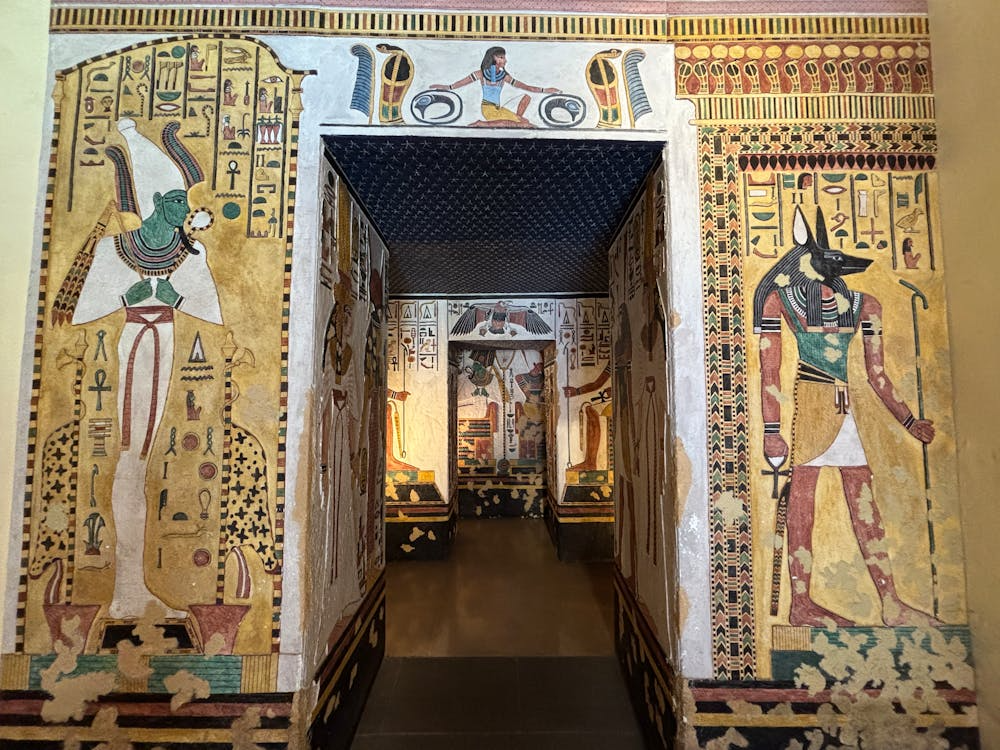
The Egyptian god Osiris is probably the oldest major resurrection figure in the popular imagination, and his story is one of the stranger ones when you look at it directly. There are many variations on his myth, but each centers on his love for his sister-wife Isis, a jealous brother named Set who murders him, and his son Horus, who avenges his father’s death. In every variation, Isis copulates with Osiris’s briefly resurrected body before he perishes again, and in one telling, his body parts are scattered across the planet, which Isis must collect before stitching him back together.
What makes the Osiris story so enduring is how cleanly it maps onto the physical world his worshippers were living in. Osiris was associated with the annual flooding of the Nile River and the crops dependent upon its rising, and he was also linked to the positioning of the stars Orion and Sirius at the beginning of each new year – another resurrection motif. The god did not return from the dead as a dramatic miracle. He returned as the river flooding its banks. He returned as grain pushing through the soil. His resurrection was not supernatural; it was agricultural, personal, and completely reliable. You could set a calendar by it.
The cutting down of barley and wheat was related to the death of Osiris, and the sprouting of shoots was thought to be based on his power to resurrect the farmland. For the people planting along the Nile, every harvest season was, in miniature, a resurrection myth playing out in real time.
Inanna: She Who Went Down and Came Back Changed
If Osiris is the god who returns because the earth needs him to, Inanna is the goddess who goes looking for what is waiting in the dark and comes back transformed by it. Her story is the older one. The Descent of Inanna, dating to approximately 1900 – 1600 BCE, chronicles the journey of Inanna, the great goddess and Queen of Heaven, from her realm in the sky down into the underworld to visit her recently widowed sister Ereshkigal, Queen of the Dead.
What follows is one of mythology’s most psychologically interesting journeys. Inanna’s descent to the underworld is marked by her passage through seven gates, each representing a stage of transformation. At each gate, she is stripped of one of her divine symbols – her crown, her lapis beads, her breastplate, her ring of power – until she arrives at the throne of her dark sister with nothing. She is killed. She hangs as a corpse on a hook in the underworld. Through the intervention of Enki, the god of wisdom, Inanna is eventually resurrected and ascends from the underworld, transformed.
The resonance of this story is not accidental. The descent to the underworld is a recurring element found in mythologies throughout the world and specifically in the traditional hero’s journey – the reasons mythological characters travel there vary, but metaphorically the descent usually represents a transformation for the character, and when the character returns, he or she is fundamentally changed by the travel and is thereafter a different person, typically with more wisdom and strength. The archive of descent stories – Orpheus going after Eurydice, Hercules dragging Cerberus up from Hades, Persephone’s seasonal disappearance – all owe something to Inanna going first.
Dionysus: Twice-Born and Still Going
The Greek god Dionysus, patron of wine and divine madness, carries the epithet “Twice-Born” for a reason. In Greek mythology, Dionysus was a horned child who was torn to pieces by Titans who lured him with toys, then boiled and ate him – Zeus destroyed the Titans as a result, and from their ashes humans were formed. Dionysus’s grandmother Rhea managed to put some of his pieces back together, principally from his heart that was spared, and brought him back to life.
The echoes between Dionysus and Osiris were not lost on the ancient world itself. In the Greek interpretation of the Egyptian pantheon, Dionysus was often identified with Osiris, and stories of the dismembering of Osiris and his reassembly and resurrection by Isis closely parallel those of the Orphic Dionysus and Demeter – in fact, as early as the fifth century BC, the two gods had been syncretised as a single deity known as Dionysus-Osiris. These cultures were not borrowing from each other clumsily. They were recognizing something familiar in the other’s story, which is itself a kind of evidence that the story taps into something structural in human thinking.
While much speculation has been offered as to why resurrection cycles persisted, the annual birth, death, and rebirth of the soil provides an important clue – the plants that grow, wither, and die seasonally, only to return to nourish us once again, make for a convenient segue to the concept of souls. Dionysus is, at his root, a harvest god. The vine dies back every winter and explodes into extravagant life every spring. His resurrection is not metaphorical. It happens in every glass of wine, in every vineyard turning green in March.
Persephone: The Resurrection That Explains Everything
Of all the death-and-return stories in world mythology, the myth of Persephone may be the one that does the most practical work. It does not just describe resurrection – it uses resurrection to explain why the world behaves the way it does.
When Hades, lord of the underworld, fell in love with Persephone and carried her off to be his queen, Demeter began mourning for her daughter and the earth’s plants began to wither. In order to prevent life on Earth from dying, Zeus ordered Hades to release Persephone – but because she had already eaten some of the food of the dead, she would have to return to the underworld for one third of every year. So whenever her daughter returns to Hades, Demeter mourns, and this is why winter descends on Earth, while growth only resumes properly when Persephone returns to the world of the living.
The genius of this story is that it anchors an abstract concept – the return from death – to something every person in the ancient Mediterranean experienced every year without fail. You did not have to take the resurrection on faith. You watched it happen. The snow melted, the shoots appeared, Persephone was back. The myth and the world confirmed each other, over and over, season after season.
The Motif That Crosses Every Border
What is striking about resurrection mythology is how reliably it appears in cultures with no documented contact with each other. The Norse god Baldr, the beloved son of Odin, is killed by a mistletoe dart orchestrated by the trickster Loki and descends to the realm of the dead, with prophecy holding that he will return after Ragnarök – the world’s end – to rule a renewed earth. Attis, the Phrygian vegetation deity worshipped across the ancient Near East, dies and is reborn in a spring festival that Roman soldiers carried across the empire. Adonis, whose name may derive from the Semitic word for “lord,” bleeds to death from a boar’s wound and returns each year to Aphrodite from the underworld – while the women of ancient Greece wept for him at an annual ritual called the Adonia.
Given any working definition of myth, the stories of many religions, both ancient and modern, share common elements – and among the most widespread of those similarities is the story of a god who undergoes death and resurrection, the life-death-rebirth deity. The pattern appears so persistently and across such geographic distances that scholars have proposed various explanations: a shared human psychology confronting mortality, the universal agricultural experience of seasonal death and renewal, or simply the fact that the story of someone coming back from the dead is the most satisfying story a human being can tell.
Whatever the cause, the effect is the same. Thousands of years before any single religious tradition claimed the story as exclusively its own, people were already writing versions of it in clay, carving versions of it into temple walls, and living through ritual versions of it every spring.
What the Body of Stories Is Really About
Every resurrection story in world mythology is, on its surface, about a god returning from the dead. But spend time with enough of them and a different reading emerges. They are stories about what cannot be destroyed. The dismembered god who is reassembled. The goddess stripped of all her symbols of power who walks out of the underworld anyway. The beloved son killed by treachery who the world waits for. The pattern underneath all of them is not really about death at all. It is about endurance – about the insistence that the thing you love most is not permanently gone, that winter has a predetermined end, that the worst thing that can happen is not the last thing that happens.
Resurrection mythology has survived every civilization that created it, outlasted the cultures that built temples to these gods, and arrived in the present moment still doing the work it was always doing: holding the unbearable weight of loss against the equally stubborn weight of hope. The archive never gets smaller, only larger. Which is perhaps the most human thing about it – that every generation, looking at the same cold ground and the same bare trees, decides again that something is going to come back.
Read More: 10 Predictions Jesus Made That History Actually Confirmed
Why We Keep Telling This Story
There is something worth sitting with in the sheer repetition of this. Inanna, Osiris, Dionysus, Persephone, Baldr – these are not variations on a single original story. They developed across different continents, different languages, different relationships between a people and their particular patch of earth. And yet here they all are, doing the same thing: dying, and coming back. Not because the story was borrowed, but because the story was needed.
The need, when you look at it honestly, is not theological. It is human. Every one of these myths was told by people who watched things they loved disappear: harvests, seasons, people. The resurrection story is what you build when you cannot accept that disappearance as the final word. It is not wishful thinking dressed up in mythology – or not only that. It is an argument the human mind keeps making to itself, generation after generation, that absence has a shape and that shape eventually turns around.
You do not have to believe in any of these gods to feel the weight of what they were carrying. The story was never really about gods anyway. It was about the people who needed them – who needed to look at a dead field in January and find a way to believe, based on nothing but the fact that it had happened before, that something green was coming. Resurrection mythology is that belief, formalized into narrative, handed down until it became the most told story in human history. The gods kept dying. The people kept insisting they would return. Both things are true, and both things are us.
AI Disclaimer: This article was created with the assistance of AI tools and reviewed by a human editor.