
More than 130,000 American veterans are legally blind. Most of them navigate a world in which asking for help is the only option available: a stranger to read a menu, a family member to sort mail, a caregiver to describe what’s on a shelf. The technology to change that has existed in some form for years, but the price tag, the learning curve, and the absence of training infrastructure have kept it out of reach. On June 12, 2026, that calculus changed.
Meta CEO Mark Zuckerberg announced that the company would donate Ray-Ban Meta AI smart glasses, at no cost, to every legally blind veteran in the United States. More than 130,000 veterans are eligible. By any measure, it ranks among the largest technology donations ever directed at the veteran community. The program is being coordinated through the Blinded Veterans Association, and the application portal is already open.
The program did not originate in a boardroom. It started with one veteran.
What the Glasses Actually Do
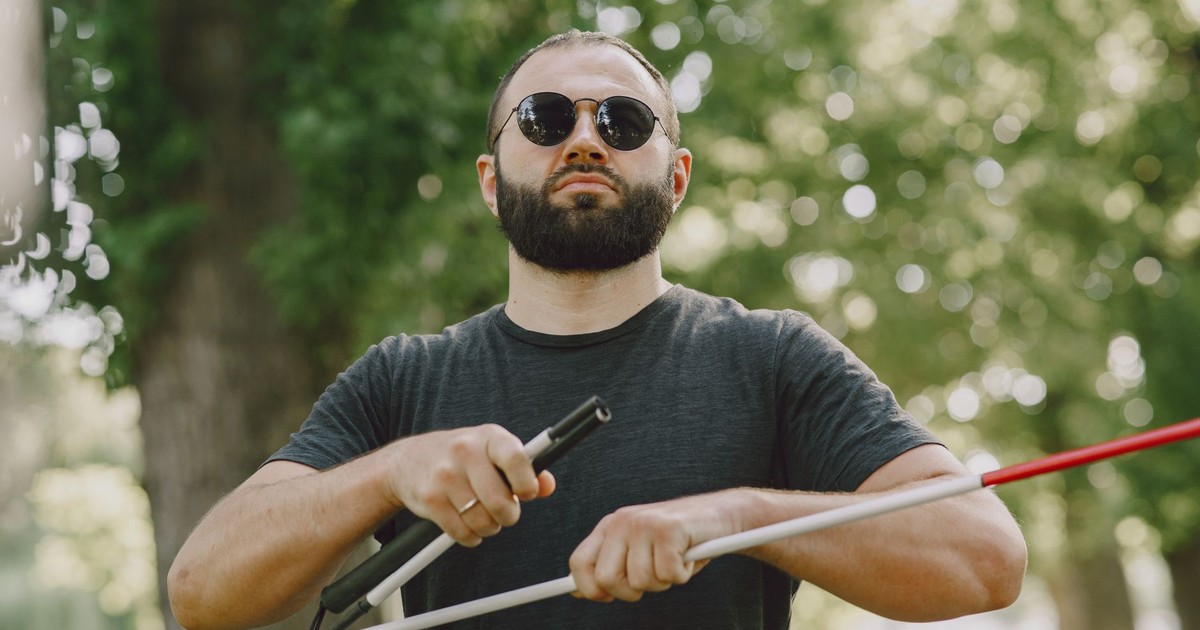
It is easy to read “AI smart glasses” and picture something out of a science fiction film, so it is worth being specific about what these actually are and what they can do in an ordinary afternoon.
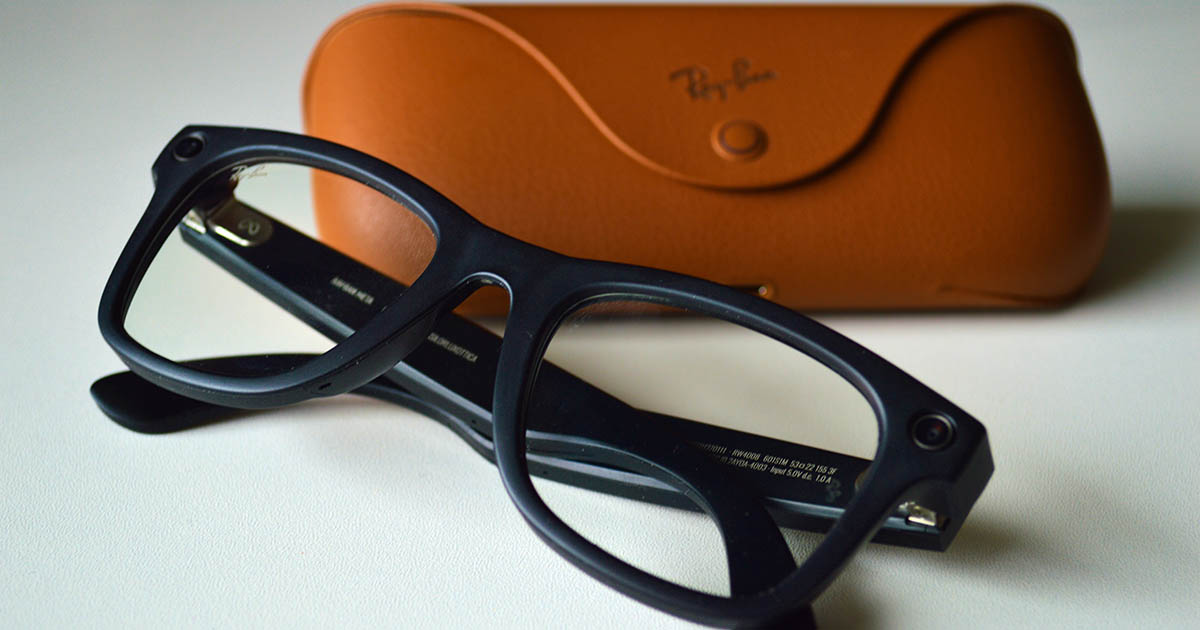
The Ray-Ban Meta smart glasses combine classic Ray-Ban design with built-in cameras, open-ear speakers, microphones, and Meta AI. Unlike traditional eyewear, they combine cameras, microphones, speakers, and artificial intelligence to help users interact with the world around them using voice commands. The glasses look, to anyone in the room, like a standard pair of Ray-Bans. There is no cane, no headset, no device that announces to every stranger passing by that the person wearing them needs assistance.
The glasses are equipped with artificial intelligence capabilities that allow users to interact with the world around them through simple voice commands. The smart eyewear can identify objects, read printed text aloud, answer questions about a user’s surroundings, assist with navigation, and help manage everyday tasks. A veteran can ask the glasses to identify a product on a grocery shelf, read a prescription label, describe a room, or help locate an item on a countertop. Those are not edge-case features designed to impress at a product launch. They are the difference between a person managing their own household and a person who has to ask for help every hour of the day.
The glasses also integrate with Be My Eyes, a service that provides additional visual assistance to people who are blind or have low vision. That layering matters – it means the technology is not a single tool operating in isolation but part of a broader ecosystem designed around real-world use.
The Man Who Helped Build It
The story of how Army veteran Don Overton went from recipient to collaborator deserves more than a passing line. Overton worked closely with the company’s wearables team, helping design features that address veterans’ daily challenges. That means the product being donated to 130,000 veterans was not built by engineers imagining what blindness must be like from the outside – it was built with input from someone who had lived it for decades.
Overton lost his sight in a bunker explosion during Operation Desert Storm while serving in the 82nd Airborne Division. His words about the experience are direct: “When I lost my eyesight in Desert Storm from a bunker explosion, I also lost my independence. The moment I put on my Ray-Ban Meta glasses, I got my independence back.” He did not just become a spokesperson for the technology. He sat with the engineering team and told them what actually mattered to a person navigating daily life without sight, and the product that came out the other side reflects that.
Meta President and Vice Chairman Dina Powell McCormick said: “When Don Overton worked with our wearables team at Meta to build features that made the Ray-Ban Meta glasses more meaningful to the everyday lives of veterans, we at Meta knew we had to find a way to reach every blind veteran in America.” That statement frames the donation not as a marketing decision or a charitable tax maneuver but as the direct result of one person’s lived experience reshaping what a product could be.
The program also arrives timed to America’s 250th anniversary. The initiative involves multiple partners, including the Tunnel to Towers Foundation, Homes for Our Troops, Lighthouse Guild, and the American Council of the Blind. The scale of the coalition is part of what makes this more than a press release – it reflects real infrastructure required to get technology into the hands of people who need it, across the entire country.
The Organization Behind the Distribution

For families and veterans reading this and wondering how something this large actually gets executed, the answer runs through an organization that has been doing exactly this kind of work since 1945. The Blinded Veterans Association is the only national Veterans Service Organization chartered by the United States Congress and exclusively dedicated to assisting America’s blinded veterans and their families. Approximately 100 war-blinded soldiers from World War II founded BVA on March 28, 1945.
This is not a new organization stepping in to capitalize on a headline. The BVA Congressional charter designates the organization as the official advocate and representative for all blinded veterans before the executive and legislative branches of government. It has been fighting for these veterans in Washington for eighty years, and now it is the primary channel through which the Meta glasses program will actually reach people.
The BVA is encouraging eligible nonprofits to apply through TechSoup to receive Meta AI glasses for the blinded veterans in their communities. Approved organizations will then complete a BVA-created train-the-trainer course so that they can distribute the glasses and train receiving veterans on their use. That train-the-trainer structure addresses one of the most common failure points in technology donation programs: getting the device into someone’s hands without teaching them how to use it is barely better than not giving it at all.
BVA National Executive Director Lea Rowe put it plainly. “The Blinded Veterans Association was built on a simple, powerful promise: blinded veterans helping blinded veterans. Our partnership with Meta brings that mission to life at an unprecedented scale,” she said.
What the Training Actually Looks Like
The glasses come with genuine support, not just a user manual and a wish of good luck. Veterans receiving the glasses will have access to educational materials, webinars, in-person support opportunities, and guidance specifically designed for blind and low-vision users. The BVA will also provide specialized instruction covering everything from activating voice commands to reading documents, managing phone calls, and performing daily tasks more effectively with the technology.
The Blinded Veterans Association hosts monthly live webinars in partnership with TechSoup, where veterans can ask questions and receive real-time troubleshooting support. Beyond the webinars, Meta and partner organizations host events across the country where veterans can receive their glasses and get hands-on guidance from trained staff.
This is the part of the program that does not get enough attention in the headlines. Technology handed to someone without support is just an object. Technology handed over with patient, ongoing instruction from people who understand both the device and the specific challenges of vision loss – that is something else entirely. For many veterans, that training component may be just as important as the glasses themselves.
The tank-wheelchair created for disabled veterans is another example of how the most meaningful assistive technology tends to be the kind developed with the user at the center, not designed for them from the outside.
Who Is Eligible and How to Apply

Only veterans who are legally blind and members of the Blinded Veterans Association are eligible for the glasses. Membership in BVA is not a bureaucratic obstacle – it is how the organization tracks recipients, coordinates training, and ensures ongoing support. Distribution requires BVA membership, and registration can be done online. Honorably discharged veterans or active duty service members who qualify for the VA Blind Rehabilitation Service are eligible for BVA membership.
Eligible veterans can request their pair of Ray-Ban Meta AI glasses through bva.org/glasses. Veteran organizations seeking to help their members or other eligible blinded veterans receive glasses can apply through TechSoup.
The cost to eligible veterans is zero. At retail, Ray-Ban Meta glasses typically cost between $299 and $499, depending on style, lenses, and prescription options. For a veteran living on a fixed income, that price point is not a small barrier – it is an impassable one. The donation removes it entirely.
A Program Designed From the Inside Out

What makes this initiative different from the usual cycle of corporate philanthropy is the origin story. This did not begin with a board deciding it needed a veterans initiative ahead of a product cycle. The program was inspired by U.S. Army veteran Don Overton, and it is completely free for veterans, giving them AI technology so they can read documents, navigate their surroundings, and live more independently. Overton did not come to Meta as a patient – he came as a collaborator. He sat with the engineering team and told them what actually mattered.
By pairing life-changing AI with dedicated, hands-on training, BVA is putting true autonomy directly into the hands of 130,000 veterans. That word – autonomy – is the right one. Independence and autonomy are not the same thing. A person can technically be independent and still feel dependent on every system around them. Autonomy is the experience of moving through your own life on your own terms. That is what Overton described when he put the glasses on. That is what this program is attempting to scale.
What This Means Right Now
The application portal is open. Veterans interested in receiving a free pair of Ray-Ban Meta AI glasses can become a free member of BVA by filling out the membership application at bva.org/glasses. The glasses, the training, and the ongoing support are all part of the same package – not tiers that unlock at different price points, not a waitlist that stretches years into the future, but a program that is accepting applications now.
For families with a legally blind veteran in their lives, this is worth knowing about and worth sharing. The announcement made news for a day in the cycle. The glasses will last considerably longer than a news cycle, and the independence they return to the people wearing them is not a temporary thing. Overton lost his sight in 1991. He spent decades navigating a world that was not built for him. The moment he put the glasses on, something shifted – not in the world, but in his ability to move through it. Over 130,000 veterans are about to find out what that shift feels like.
AI Disclaimer: This article was created with the assistance of AI tools and reviewed by a human editor.