
Joshua Spriestersbach told everyone who would listen that he was not Thomas Castleberry. He told the police officers who arrested him. He told the public defenders assigned to his case. He told the psychiatrists and health workers at the Hawaii State Hospital, where he was eventually transferred and held against his will. He told them for more than two years. Every single time, the system decided that a man insisting on his own name was proof that something was wrong with him.
In March 2026, a settlement agreement confirmed what anyone paying attention already knew: the system had been catastrophically wrong. Spriestersbach, who was wrongfully arrested and detained at a Hawaiʻi state psychiatric hospital for two years, is set to receive a $975,000 payout from the City and County of Honolulu.
Spriestersbach was homeless and had schizophrenia when he told the truth repeatedly while the people holding the keys labeled that truth as delusion. Every institution that was supposed to catch the mistake decided, at each turn, that catching it was someone else’s problem.
How a Name Became a Nine-Year Trap
According to AP, the error began in 2011 when Spriestersbach, then sleeping at Kawananakoa Middle School, was asked for his name by an officer. He withheld his first name, providing only his grandfather’s surname, Castleberry. The officer found a 2009 warrant for a man named Thomas Castleberry and arrested Spriestersbach, despite his protests that he was not the man they were looking for.
The bench warrant for Spriestersbach was later dropped after he missed a court date, but the mistaken identity continued to follow him. In 2015, officers encountered him again. They confirmed through fingerprints that he was not Thomas Castleberry, according to the lawsuit Spriestersbach filed in 2021. The police department’s records were never updated.
When officers found him outside a Chinatown shelter in 2017, Spriestersbach was 46 years old. A Honolulu police officer arrested him on a warrant intended for Thomas Castleberry, a convicted drug user, car thief, and burglar. No one checked fingerprints to verify they had the correct person.
When Spriestersbach insisted he was not Thomas Castleberry, he was deemed delusional and sent to the state psychiatric facility, where he spent more than two years forced to take powerful antipsychotic medication that he did not need, Hawaii News Now reports.
The Bureaucratic Logic of Disbelief
Police officers, public defenders, and health workers all had the chance to correct the mistake that led to Spriestersbach’s detention, according to his complaint, but nobody did so. “Prior to January 2020, not a single person acted on the available information to determine that Joshua was telling the truth, that he was not Thomas R. Castleberry,” the complaint states.
They determined he was delusional and incompetent simply because he refused to admit that he was Thomas R. Castleberry. His insistence on his own identity was used as evidence against his sanity. The more clearly he told the truth, the more the system interpreted his clarity as a symptom.
The truth only came out after a staff psychiatrist at the hospital, Dr. Allison Garrett, reviewed outside records and found that Spriestersbach had been treated on the Big Island at the same time Castleberry was alleged to have committed crimes on Oahu. Garrett then contacted the Attorney General’s Office, which sent an HPD detective to the hospital to compare Spriestersbach’s photographs and fingerprints to those of Castleberry. Spriestersbach was released in January 2020 once that comparison confirmed he was not the man named in the warrant. The same basic step that should have been taken in 2017, and was in fact taken and then ignored in 2015, was what finally freed him. As one legal commentator put it: “It could have been cleared up very quickly had they just gone down to the police department, run his fingerprints, and checked out his story.”
The Settlement, and What It Actually Covers

Hawaii News Now reports that Spriestersbach will receive $1.775 million as part of a global settlement. That total is divided across multiple defendants. The state will pay $200,000, related to the public defender’s office failing to act on Spriestersbach’s repeated claims of mistaken identity. The City and County of Honolulu will pay $975,000, tied to the Honolulu Police Department’s arrest of Spriestersbach without conducting a fingerprint check to verify his identity.
A majority of Honolulu council members approved the city settlement, though one member voted with reservations. The state portion was still working through the legislative approval process as of early 2026.
In filings, the Hawaiʻi Innocence Project emphasized that responsibility does not lie with a single entity, noting that police officers, public defenders, the state attorney general’s office, and hospital staff all “share in the blame for this gross miscarriage of justice.” The lawsuit further contended that city practices, particularly the failure to properly identify homeless and mentally ill individuals and to correct erroneous records, were “the moving force” behind his wrongful arrest and prolonged psychiatric hospital wrongful detention.
Spriestersbach’s attorneys argued that this was not a rogue officer or a single bad actor. It was a systemic failure, one where the city’s procedures for handling unhoused people created the conditions for exactly this kind of catastrophe.
What Two Years at Hawaii State Hospital Actually Means
Spriestersbach spent more than two years in the Hawaii State Hospital forced to take powerful antipsychotic medication he did not need. Antipsychotic drugs carry documented risks including involuntary muscle movements, sedation, metabolic changes, and long-term neurological effects. He was receiving them not because he had been clinically assessed and found to need them, but because the institution believed he was someone he was not, and his denial of that identity was read as a psychotic symptom.
The lawsuit also uses images of Joshua Spriestersbach and Thomas Castleberry to make the case that officials should have known they were not the same person. According to Honolulu Civil Beat, the images were included in the lawsuit to demonstrate that the two men did not look alike.
Legal experts believed the price tag for the settlement would exceed $1 million, even though wrongful conviction payouts in Hawaii are set at $50,000 for every year served. Spriestersbach was not wrongfully convicted. He was never convicted of anything. He was held in a psychiatric facility under another man’s name, which put him in a legal category that the standard wrongful conviction framework was never designed to address. His attorneys had to argue for compensation on different grounds entirely.
The Systemic Question Nobody Wants to Answer
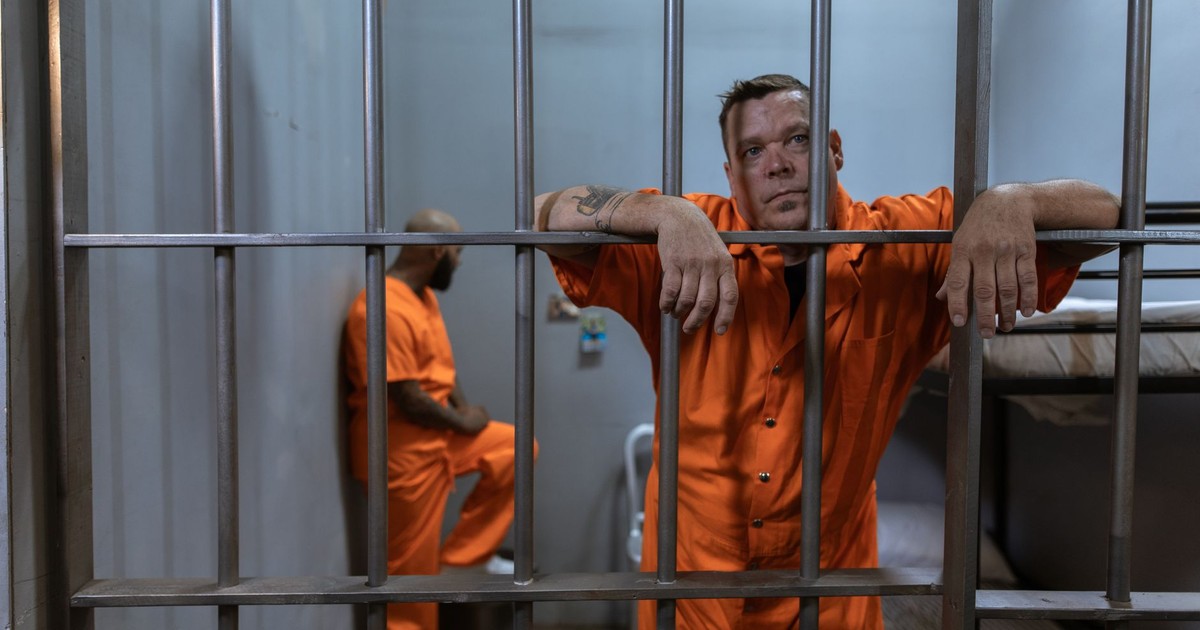
The lawsuit contended that the city’s failure to properly identify homeless and mentally ill individuals and to correct erroneous records was “the moving force” behind this wrongful arrest and prolonged detention. That framing moves the conversation away from individual negligence and toward institutional design.
Spriestersbach was doubly vulnerable: he was unhoused, and he had a schizophrenia diagnosis. Both of those things made him easier to dismiss and harder for the system to see clearly. When he said he was not Thomas Castleberry, the context of his life, sleeping outside, having no fixed address, carrying a mental health diagnosis, worked against his credibility at every stage. The very circumstances that made his situation most precarious were the ones the system used to justify not listening to him.
As one attorney put it: “Everyone that had a hand on this case screwed up. Nobody caught this mistake and they should have. Because they didn’t, now they’re going to have to pay for it.”
That is accountability in the narrowest possible sense. It answers the question of who pays. It does not answer whether the conditions that produced this outcome, insufficient identity verification for unhoused people, records that were corrected but never updated, a psychiatric system that can interpret a patient’s own testimony as a symptom, have changed.
What the Money Cannot Buy Back

Joshua Spriestersbach spent more than two years inside a state psychiatric hospital not because of anything he did, but because a name in a database was never corrected. He spent those years being medicated against his will, being told he was someone he was not, and having the people with the authority to free him decide, again and again, that his account of reality was the problem.
Spriestersbach was expected to receive the settlement money in the summer of 2026, pending legislative and city council approval. The years do not come back. The medication he was given cannot be untaken.
Spriestersbach kept telling the truth, and for two years, telling the truth made things worse for him. That is not a flaw in one officer’s judgment or one public defender’s caseload. It is a structural outcome, and a settlement, however significant, is a reckoning with the cost of it rather than a solution to the condition that caused it.
Disclaimer: This information is not intended to be a substitute for professional medical advice, diagnosis, or treatment and is for information only. Always seek the advice of your physician or another qualified health provider with any questions about your medical condition and/or current medication. Do not disregard professional medical advice or delay seeking advice or treatment because of something you have read here.
AI Disclaimer: This article was created with the assistance of AI tools and reviewed by a human editor.